



Voters in up to six states could decide on ballot measures establishing or changing vote requirements for initiatives and amendments in 2026. Five states have already certified their respective measures for the ballot, and one is a proposed legislative referral that requires additional votes for certification.
Measures certified for the ballot
Five states have ballot measures that are certified: California, Missouri, North Dakota, South Dakota, and Utah. All of them are legislatively referred constitutional amendments and are set to appear on the ballot in Nov. 2026.
- California: This referral, Assembly Constitutional Amendment 13, would require citizen-initiated constitutional amendments that propose increased voter approval requirements for state or local measures to be approved by the same majority requirement that it proposes. For example, a proposal seeking to raise the vote threshold to 60% for initiatives would also need to receive 60% of the vote to pass. Currently, initiated constitutional amendments in California need to be approved by a simple majority.
- Missouri: This referral would require a simple majority in each of the state's congressional districts to approve citizen-initiated constitutional amendments, replacing the current requirement that just requires a simple majority statewide. If passed, this measure would not apply to amendments referred to the ballot by the state legislature. Missouri would also be the first state to require voter approval based on its districts.
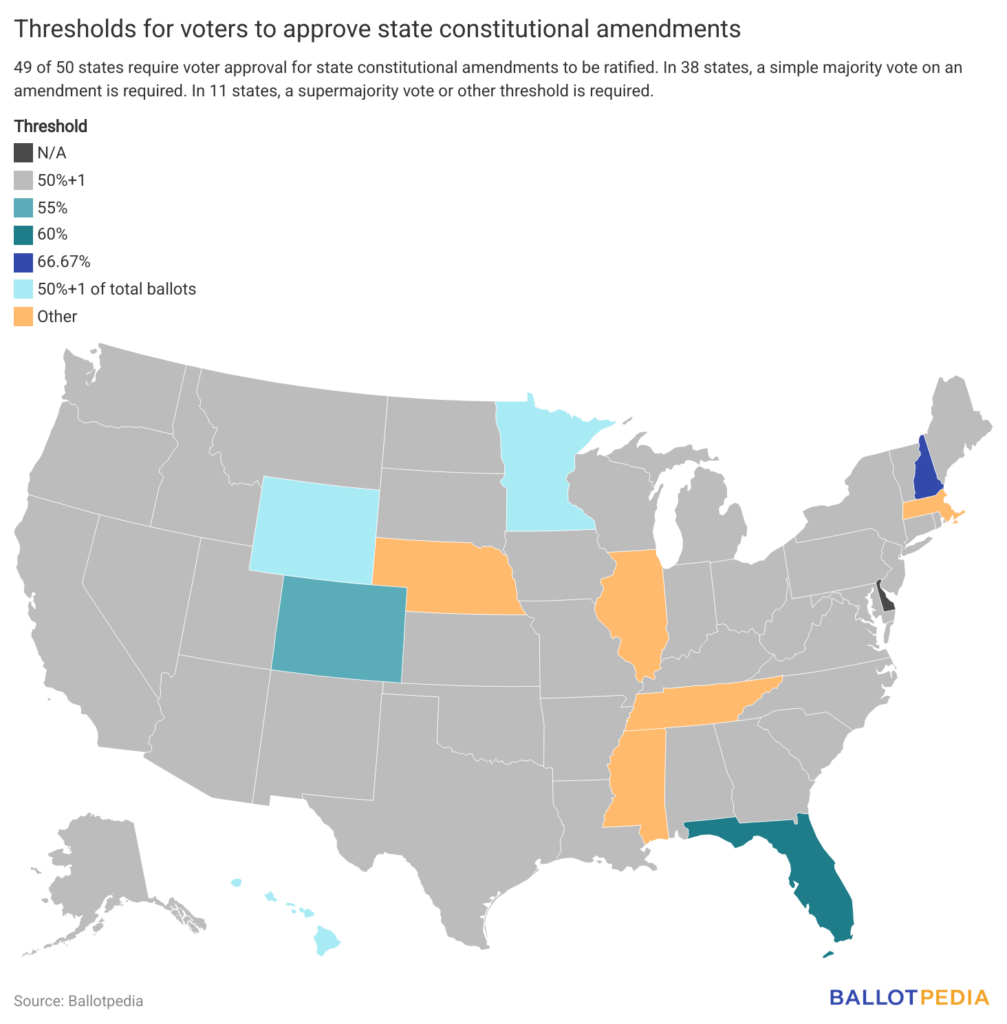
- North Dakota: This measure would require amendments to receive a 60% supermajority vote for adoption, applying to both measures proposed by initiative petition and those proposed by the state legislature. Currently, constitutional amendments in North Dakota must be approved by a simple majority (50%+1) of votes.
- South Dakota: This referral, named Amendment L, would also require a 60% supermajority to approve constitutional amendments, thereby replacing the current simple-majority requirement. If passed, the measure would apply to both citizen-initiated and legislatively referred constitutional amendments.
- Utah: Similar to North Dakota and South Dakota, this referral would raise the vote requirement from a simple majority to 60%, but this measure would apply only to initiatives that increase or expand taxes. If passed, however, it would not apply to legislatively referred tax measures.
Measures that require additional legislative votes
The one measure related to changing supermajority requirements that has not yet been confirmed for the ballot is from Hawaii. The measure is a legislatively referred constitutional amendment, and would be voted on in Nov. 2026 if certified. The amendment would remove the requirement that state constitutional amendments be approved by a majority of all votes cast in the election. This change would mean that blank votes on an amendment would no longer have the same effect as no votes.
For a legislative referral to be certified for the ballot in Hawaii, either a two-thirds vote of the state legislature during one legislative session or a simple majority in two successive sessions is required. That would amount to at least 35 votes in the Hawaii House of Representatives and 17 in the Hawaii State Senate. This amendment was introduced to the state Senate on Jan. 23, 2025, as Senate Bill 1225, and passed by a vote of 19-6 on March 4, 2025.
Supermajority requirements for ballot measures
Currently, 11 states that provide for legislatively referred constitutional amendments require a supermajority vote or other threshold for approval. Delaware is the one state where voter approval is not required for state constitutional amendments.
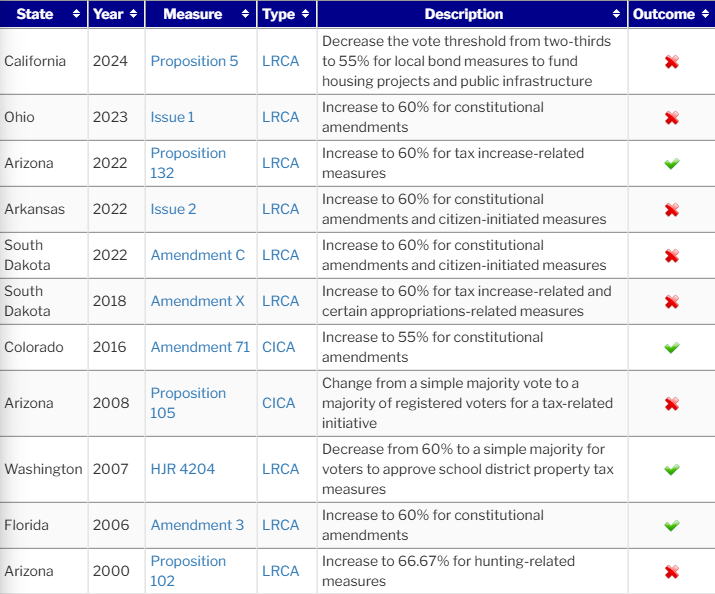
From 2000 to 2024, voters decided on 11 ballot measures regarding supermajority requirements. Of these, four measures were approved, and seven were defeated.
Additional reading: