


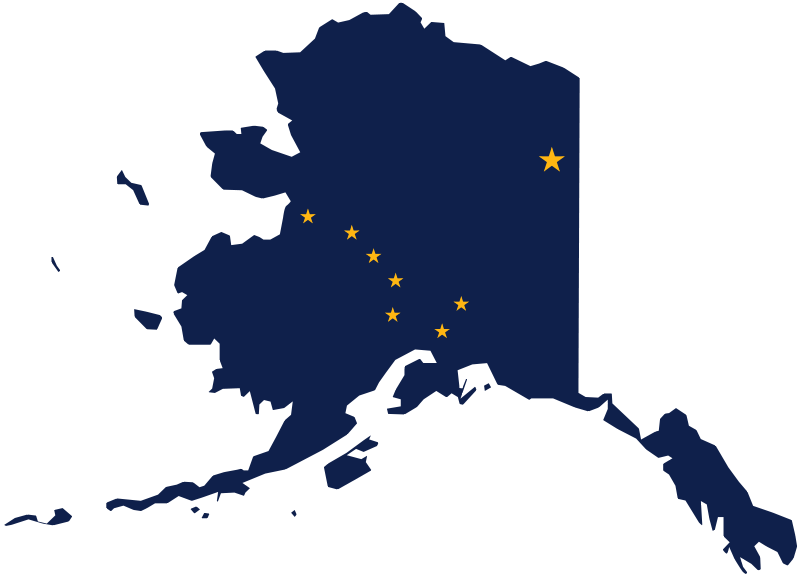
Proponents of a ballot initiative designed to prohibit noncitizens from voting in Alaska submitted 50,000 signatures to the Division of Elections on Jan. 19, 2026. The initiative requires 34,098 valid signatures to qualify for the November 2026 ballot, pending certification by the Division of Elections.
Alaskans for Citizen Voting is supporting the initiative. The initiative would amend an existing Alaska law regarding voter qualifications. Currently, the law reads: "A person may vote at any election who is a citizen of the United States.” Under this initiative, the law would read, “Only a person who is a citizen of the United States … may vote at any election."
Former State Sen. John Coghill (R-B) said the initiative would clarify Alaska law, saying, "The framers of our state’s constitution intended that the voting privilege should be granted only to U.S. citizens. Recent actions in other states require Alaska to clarify our law. The response during the signature collection phase shows that many Alaskans agree."
State Sen. Bill Wielechowski (D-K) said that the initiative could be misleading, saying, “I think it may spread misinformation to people. People will look at it and say, ‘Oh, there must be a reason this is on the ballot. There must be noncitizens who are voting.’ And to the extent noncitizens are voting, they’re breaking the law.”
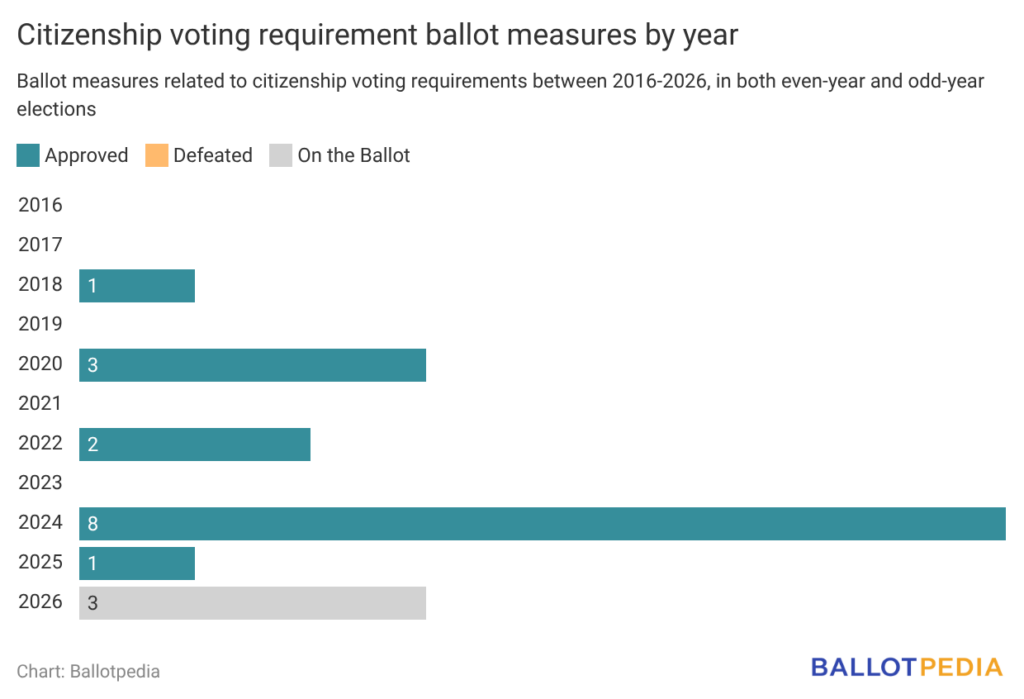
Ballot measures to prohibit noncitizen voting have become more common in recent years. From 2018 to 2025, voters approved 15 ballot measures adding language about citizenship requirements for voting. In 2024, eight statewide measures to prohibit noncitizen voting were approved by voters—the greatest number of noncitizen-voting related measures to appear on statewide ballots in any election year.
In 1996, the U.S. Congress passed a law prohibiting noncitizens from voting in federal elections, including those for the U.S. House, the U.S. Senate, and the presidency. This law does not apply to elections for state and local offices. Every state requires voters to attest that they are U.S. citizens when registering to vote.
While no state constitution explicitly allowed noncitizens to vote in state or local elections, some states have jurisdictions that allow noncitizens to vote in some or all local elections. The District of Columbia and certain municipalities in California, Maryland, and Vermont allow noncitizens to vote in some or all local elections. Meanwhile, 18 states include language explicitly prohibiting noncitizen voting in their state constitutions.
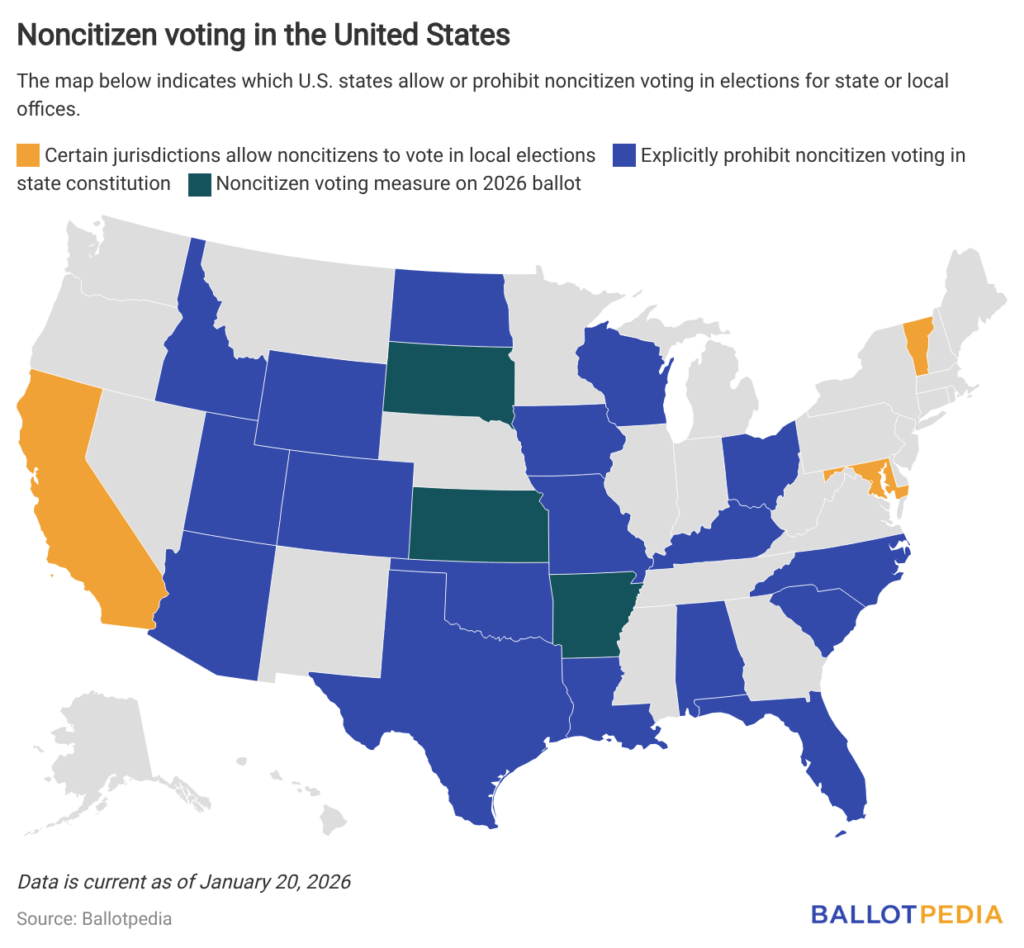
In 2026, voters in three states—Arkansas, Kansas, and South Dakota—will decide on citizenship voting requirement ballot measures. Three other states—California, Michigan, and West Virginia—have potential measures on citizenship voting requirements that may appear on the ballot.
Additional reading: