


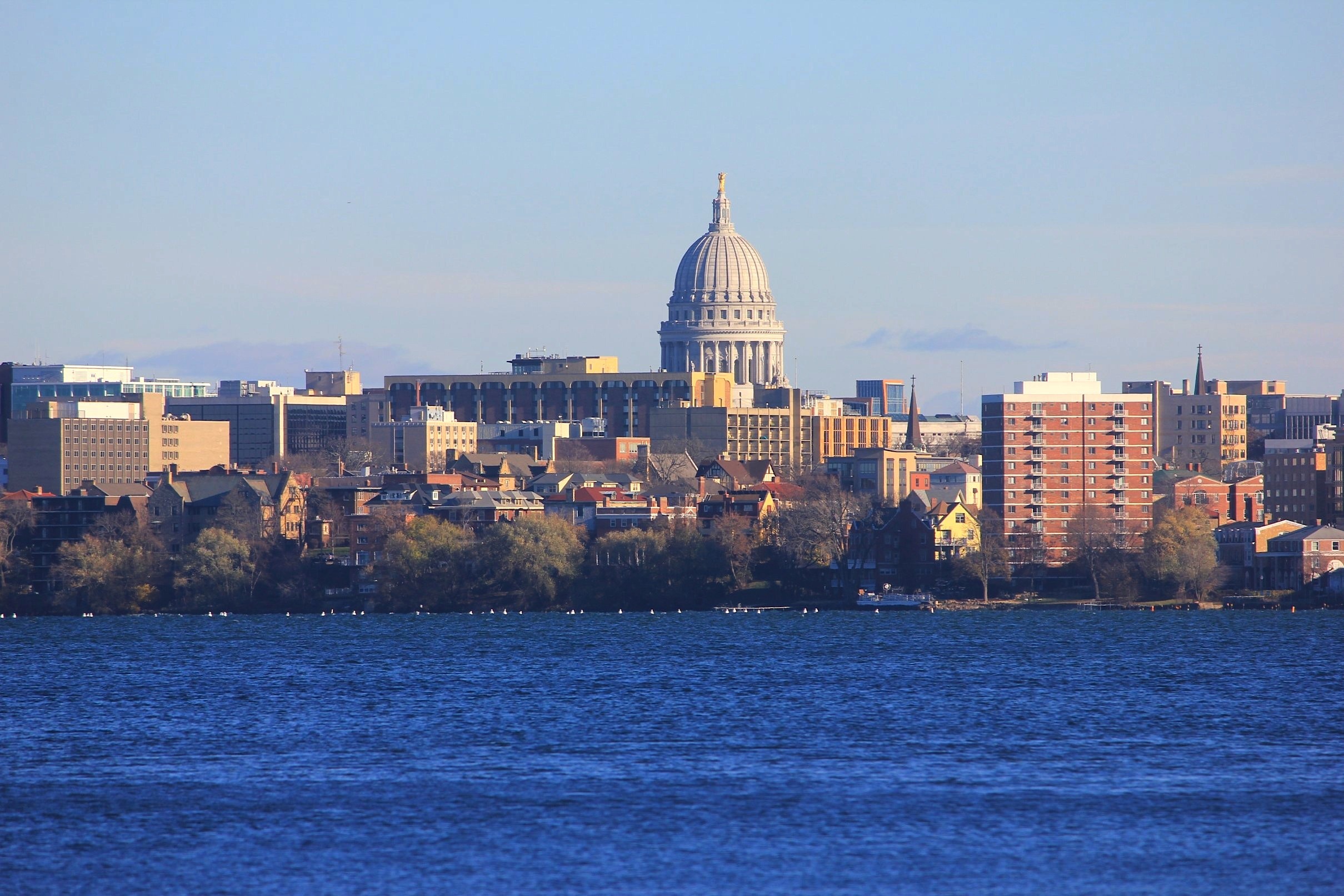
The Wisconsin State Legislature advanced two proposed constitutional amendments on Jan. 21, 2026, for the statewide general election ballot for Nov. 3, 2026.
Both amendments were also approved during the previous legislative session. In Wisconsin, a proposed constitutional amendment must receive majority approval in each legislative chamber during two consecutive sessions before it can be placed on the ballot.
Votes on both amendments largely followed party lines in both sessions. Wisconsin has a divided government, with a Democratic governor and Republican control of the legislature. Constitutional amendments do not require the governor's approval and are placed directly on the ballot.
Assembly Joint Resolution 10
The first constitutional amendment, Assembly Joint Resolution 10 (AJR 10), would prohibit state or local governments from ordering the closure of places of worship during a declared state of emergency, including a public health emergency. In the Assembly, the vote was 56-43. In the Senate, the vote was 18-15. Republicans, along with two Assembly Democrats, supported AJR 10, while remaining Democrats opposed the amendment.
State Rep. Ron Tusler (R-3), who voted for the amendment, cited government actions during the COVID-19 pandemic. He said, "The events of 2020 exposed a troubling inconsistency in how we apply constitutional rights. While liquor stores, bars, and casinos remained open under the label of 'essential,' houses of worship were shuttered, even when their leaders followed the same or stricter health protocols. This disparity sent a damaging message that faith, and those who practice it, are somehow less important or less worthy of protection. ... [The amendment] doesn’t dictate how a congregation must operate, it simply says the decision to gather belongs with the faithful, not the government."
State Sen. Chris Larson (D-7), who voted against the amendment, said, "None of us want to be in a position to prevent large, meaningful gatherings of our neighbors from taking place, and thanks to virtual meeting technology, we don’t have to. We do have a responsibility as government officials to preserve the lives of our constituents to the degree that we can. AJR 10 prevents public health officers from doing their jobs, endangering countless lives in any future pandemic. To date, Wisconsin has lost nearly 19,000 lives to COVID-19. How many more might be lost in a future pandemic if this constitutional amendment passes?"
Assembly Joint Resolution 102
The second constitutional amendment, Assembly Joint Resolution 102 (AJR 102), would prohibit governmental entities, including agencies, school districts, and public universities, from discriminating against, or granting preferential treatment to, a person or group on the basis of "race, sex, color, ethnicity, or national origin in public employment, public education, public contracting, or public administration." In the Assembly, the vote was 54-45. In the Senate, the vote was 18-15. The vote in both chambers was along party lines, with Republicans supporting and Democrats opposing.
State Sen. Stephen Nass (R-11) said, "Preferential treatment to any individual or group is wrong, no matter who it targets or what the reason. Past discrimination, however wrong, cannot be corrected with more discrimination. Old Wounds cannot be healed by inflicting new ones." Dan Lennington, the managing vice president and deputy counsel for the Wisconsin Institute for Law & Liberty, said the amendment would "end discriminatory DEI programs throughout Wisconsin."
State Sen. Dora Drake (D-04) said the constitutional amendment was designed "to promote manufactured discrimination and conceal their incompetence and neglect to help all Wisconsinites." She added, "They’re saying that this constitutional amendment would prevent discrimination, but then it’s preventing the government from taking actions when discrimination actually happens, so essentially, you’re outlawing accountability when discrimination does occur."
Senate Joint Resolution 116
A third constitutional amendment—Senate Joint Resolution 116 (SJR 116)—could also appear on the ballot. SJR 116 would prohibit the government from using a partial veto to create or increase any tax or fee. The amendment was approved during the previous legislative session and received second-session approval in the state Senate on Jan. 21. It also requires approval in the state Assembly to be placed on the ballot.
Additional reading: