On Feb. 9, U.S. Rep. Jerrold Nadler (D-N.Y.), who is not seeking re-election this year, endorsed Micah Lasher (D) in the Democratic primary election to succeed him in representing New York's 12th Congressional District.
In doing so, Nadler joined 17 other retiring members of the U.S. Congress who have so far endorsed candidates in primary elections to succeed them.
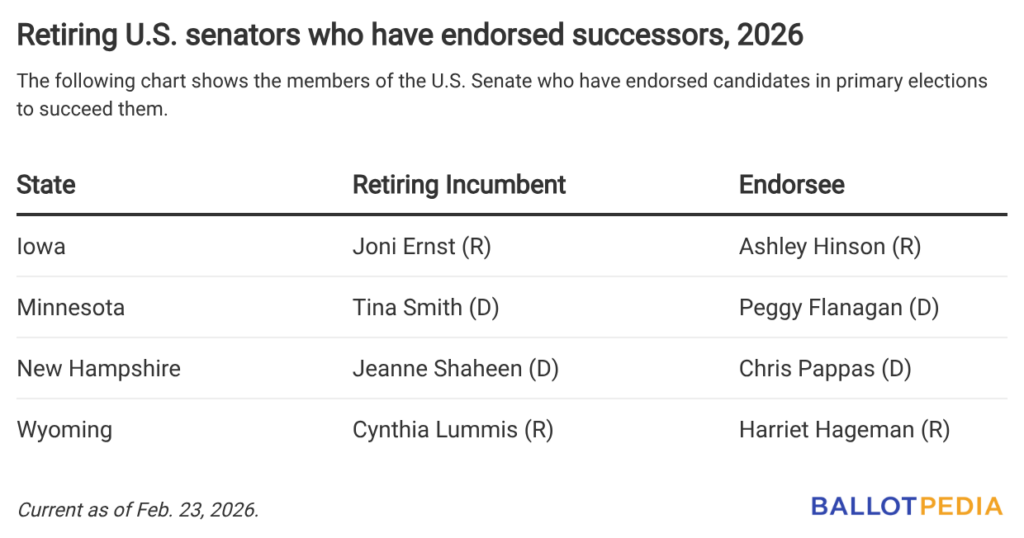
Four of the eight U.S. senators (50%) who are not seeking re-election this year have endorsed a candidate in the respective primaries to succeed them. Two of those endorsed candidates are Democrats, and two are Republicans.
All four of those endorsed candidates are running in contested primaries.
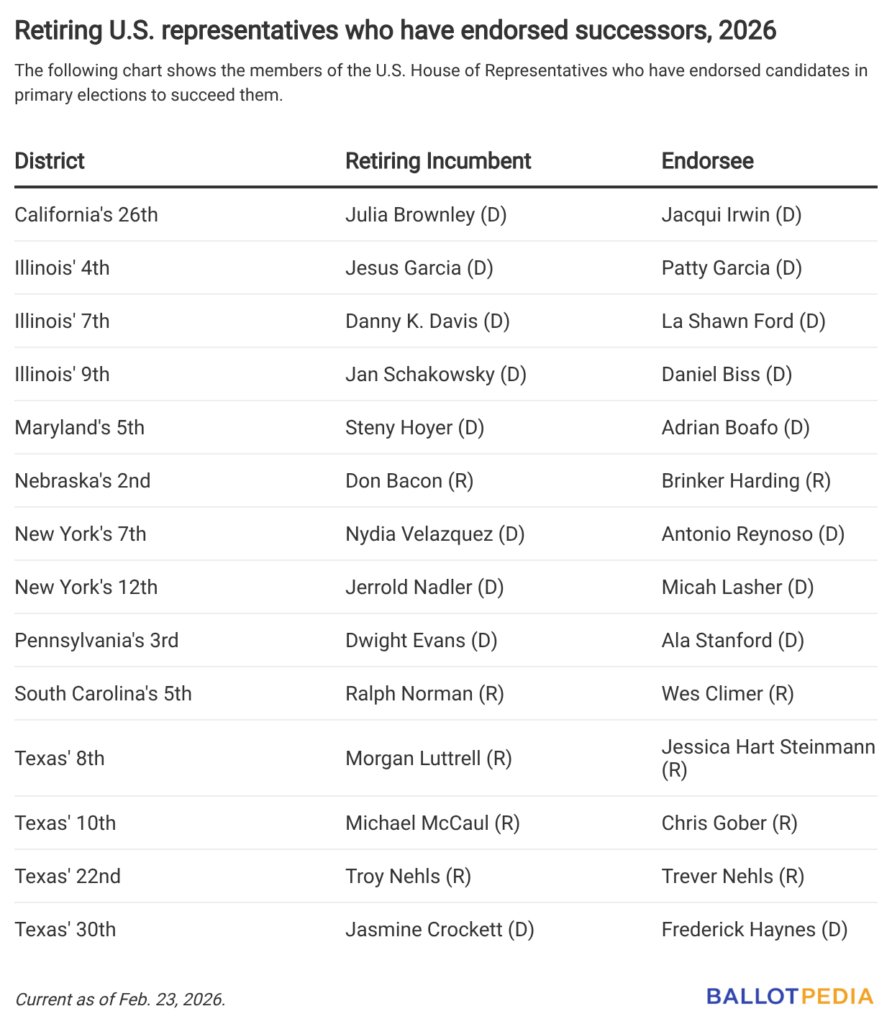
Fourteen of the 51 U.S. representatives (27.5%) who are not seeking re-election this year have endorsed a candidate in the respective primaries to succeed them. Nine of those endorsed candidates are Democrats, and five are Republicans.
Twelve of those endorsed candidates are running in contested primaries, while two are not. The two candidates who are not running contested primaries are Patty Garcia (D), running in Illinois' 4th Congressional District, and Brinker Harding (R), running in Nebraska's 2nd Congressional District.
However, receiving a retiring incumbent's endorsement does not necessarily translate into electoral success for the endorsed candidate.
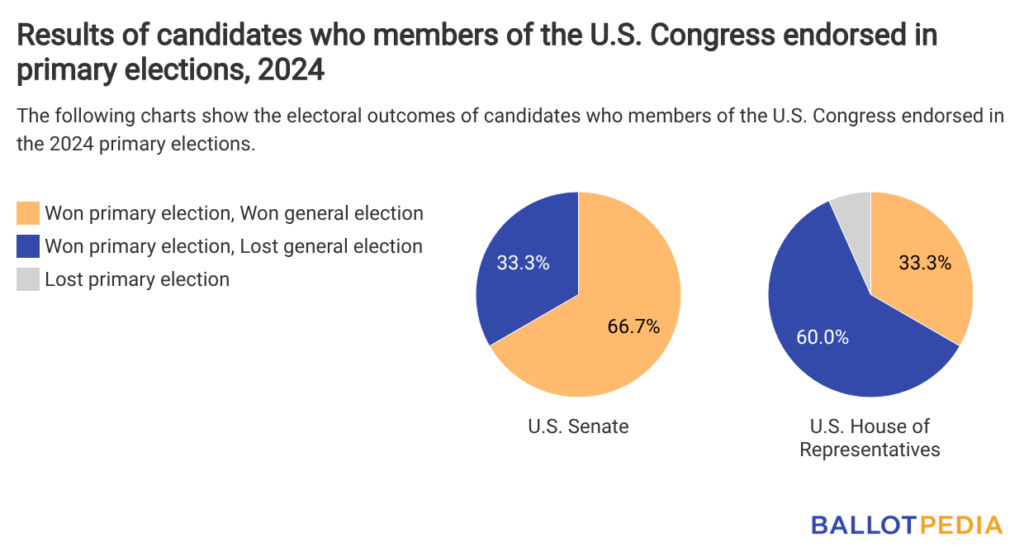
In 2024, three of the eight U.S. senators (37.5%) who did not seek re-election endorsed a candidate in the respective primaries to succeed them. Two of those endorsed candidates were Democrats, and one was a Republican.
One of those endorsed candidates ran and won a contested primary, but lost the general election. The two endorsed candidates who did not run in contested primaries went on to win their respective general elections.
In 2024, 14 of the 45 U.S. representatives (31.1%) who did not seek re-election endorsed a candidate in the respective primaries to succeed them. Nine of those endorsed candidates were Democrats, and five were Republicans.
Thirteen of those endorsed candidates ran in contested primaries. Five of the candidates who ran in contested primaries lost, and the eight who won their contested primaries also won their respective general elections. The one endorsed candidate who did not run in a contested primary lost the general election.