


Welcome to the Thursday, March 19, 2026, Brew.
By: Lara Bonatesta
Here’s what’s in store for you as you start your day:
- West Virginia becomes the fourth state to put a citizenship voting requirement amendment on the 2026 ballot
- A look at the March 17 primary election results
- How you can make a difference for millions of voters this year…
West Virginia becomes the fourth state to put a citizenship voting requirement amendment on the 2026 ballot
On March 14, the West Virginia Senate passed Senate Joint Resolution 9 (SJR 9), making West Virginia the fourth state that will decide on a citizenship voting requirement amendment this year.
On Nov. 3, West Virginia voters will decide on the constitutional amendment that says only U.S. citizens can vote in elections in the state.
The amendment would change the wording in the West Virginia Constitution from “Citizens of the state shall be entitled to vote” to “only citizens of the state who are citizens of the United States are entitled to vote.”
The West Virginia Legislature put the amendment, Senate Joint Resolution 9 (SJR 9), on the ballot, with the House of Delegates voting 97-0 on March 13, and the Senate voting 34-0 on March 14.
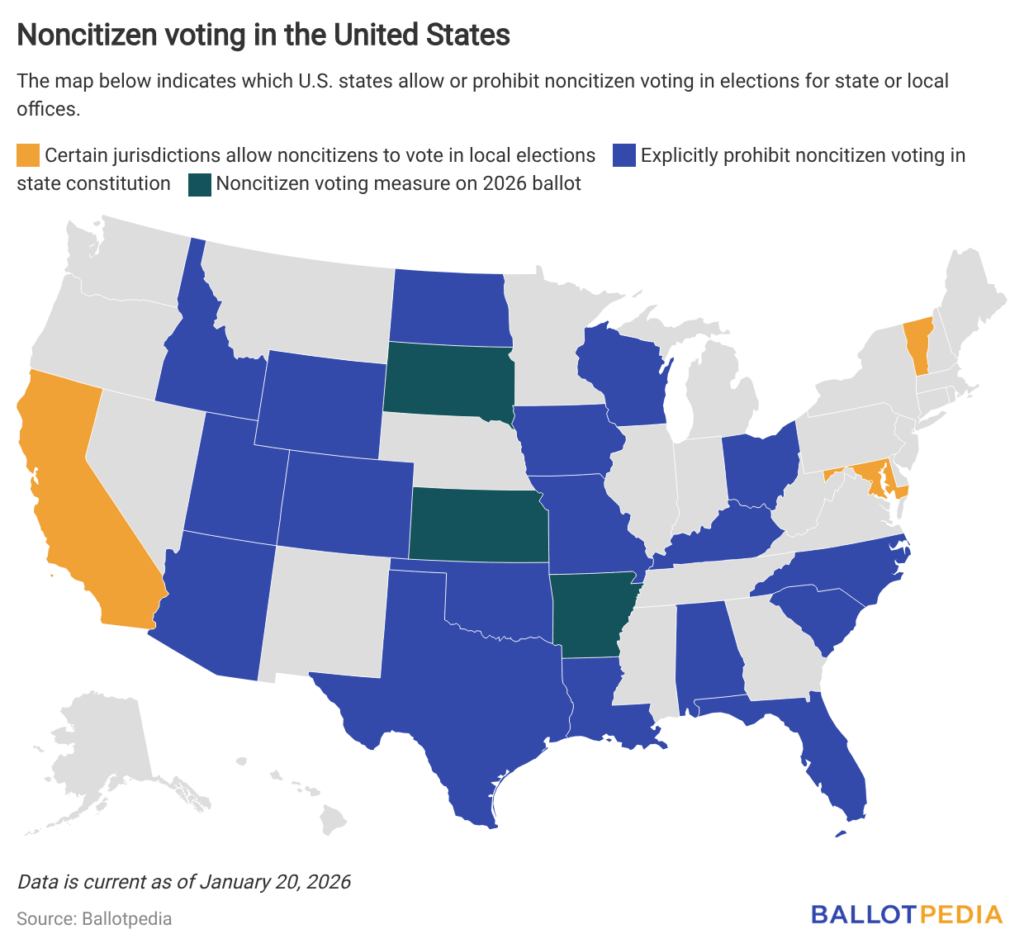
Voters in at least three other states — Arkansas, Kansas, and South Dakota — will decide on constitutional amendments this year to prohibit noncitizen voting. Initiative campaigns in both Alaska and Michigan have also submitted signatures to place measures on the ballot.
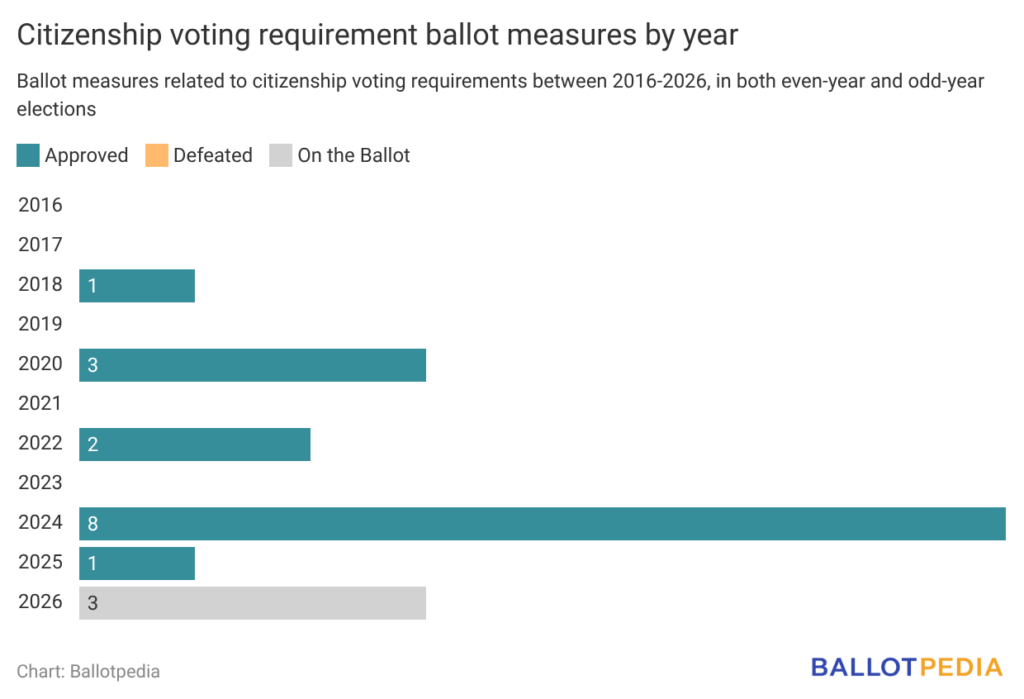
Ballot measures to prohibit noncitizen voting have become more common in recent years. From 2018 to 2025, voters approved 15 ballot measures on citizenship requirements for voting. In 2024, voters approved eight statewide measures to prohibit noncitizen voting — the most of this type of measure to appear on statewide ballots in any election year.
In 1996, Congress passed a law prohibiting noncitizens from voting in federal elections. This law does not apply to elections for state and local offices. Every state requires voters to attest that they are U.S. citizens when registering to vote.
While no state constitution explicitly allows noncitizens to vote in state or local elections, some states have jurisdictions that allow noncitizens to vote in some or all local elections. The District of Columbia and certain municipalities in California, Maryland, and Vermont allow noncitizens to vote in some or all local elections. Meanwhile, 18 states explicitly prohibited noncitizen voting in their state constitutions.
West Virginia’s citizenship requirement for voting amendment will appear alongside a homestead tax exemption amendment. Click here to learn more about West Virginia’s 2026 ballot measures.
A look at the March 17 primary election results
Illinois held statewide primaries on Tuesday, and there were elections in Oregon, Pennsylvania, and Virginia. Here’s a look at results as of 4 p.m. EST on March 18.
Congressional primaries
Lieutenant Governor Juliana Stratton (D) won Illinois’ U.S. Democratic Senate primary with 40.1% of the vote. Other notable candidates included U.S. Reps. Robin Kelly (D-2) and Raja Krishnamoorthi (D-8). On the Republican side, Don Tracy (R) won with 39.9% of the vote.
The winner of the general election in November will succeed U.S. Sen Dick Durbin (D), who was first elected in 1996. This is the first open Senate seat in Illinois since 2010. Three independent race forecasters have rated the general election as Solid or Safe Democratic.
While Krishnamoorthi raised more money than Stratton, Stratton received an endorsement and financial backing from Gov. J.B. Pritzker (D). According to Politico, “The result strengthens Pritzker’s standing within his party at a critical moment, as he prepares for a November gubernatorial campaign for his third term and looks ahead to a potential presidential run in 2028.” Several labor unions, including the Teamsters and the American Federation of Government Employees, and former Lt. Gov. Sheila Simon (D), endorsed Krishnamoorthi. The Congressional Black Caucus Political Action Committee, BradyPAC, and Sen. Chris Murphy (D-Conn.) endorsed Kelly.
There were nine contested Democratic U.S. House primaries and 11 contested Republican primaries. Between 2014 and 2024, there were an average of 8.3 Democratic primaries and an average of 7.3 Republican primaries per year.
This year’s primaries also had the most open seats and the most total candidates (105) since Ballotpedia began collecting such data in 2014. Six incumbent U.S. Representatives did not run for re-election.
Here are some noteworthy results from U.S. House primaries Ballotpedia identified as battlegrounds:
- Illinois' 2nd Congressional District Democratic primary: Cook County Commissioner Donna Miller defeated former U.S. Rep. Jesse L. Jackson, Jr. and nine other candidates in the open race to replace Kelly. Jackson previously represented the district from 1995 to 2012. According to Politico, groups including the American Israel Public Affairs Committee (AIPAC) and Affordable Chicago spent money supporting Miller's campaign. Meanwhile, the group, Leading the Future PAC, which received funding from OpenAI stakeholders, supported Jackson.
- Illinois' 7th Congressional District Democratic primary: State Rep. La Shawn Ford defeated Chicago City Treasurer Melissa Conyears-Ervin and 11 other candidates in the open race to succeed retiring incumbent Danny Davis (D). The last time the seat was open was 1996, when Davis was first elected. According to Politico, several satellite groups spent money supporting and opposing candidates. These included a group affiliated with AIPAC, which supported Conyears-Ervin, and a pro-cryptocurrency group, Fairshake, which spent money opposing Ford.
- Illinois' 9th Congressional District Democratic primary: Evanston Mayor Daniel Biss defeated Kat Abughazaleh and 13 other candidates in the open race to succeed retiring incumbent Jan Schakowsky (D). The last time the seat was open was 1998, when Schakowsky was first elected. Schakowsky, Sen. Tammy Duckworth (D), and Sen. Elizabeth Warren (D-Mass.) endorsed Biss. U.S. Reps. Jamaal Bowman (D-N.Y.), Ro Khanna (D-Calif.), Rashida Talib (D-Mich.), and Ilhan Omar (D-Minn.) endorsed Abughazaleh.
State executives
Illinois held primaries for governor, lieutenant governor, attorney general, secretary of state, comptroller, and treasurer.
Governor and Lieutenant Governor: Pritzker, who is seeking a third term, was unopposed in the Democratic gubernatorial primary. In the Republican primary, Darren Bailey defeated Ted Dabrowski and two other candidates. This means the November general election will be a rematch of the 2022 election in which Pritzker defeated Bailey 54.9%-42.4%.
Illinois does not have gubernatorial term limits. The last governor to serve more than two terms was Jim Thompson (R), who served four consecutive terms from 1977 to 1991.
Gubernatorial and lieutenant gubernatorial candidates in Illinois run together on a single ticket in both the primary and the general elections. Christian Mitchell (D) is Pritzker’s running mate. Aaron Del Mar (R) is Bailey’s running mate.
Other state executive offices
Incumbent attorney general Kwame Raoul, secretary of state Alexi Giannoulias, and treasurer Mike Frerichs, all Democrats, were unopposed in the primaries for their offices. In November, Raoul will face Bob Fioretti (R), and Giannoulias will face Diane Harris (R). There were no Republican candidates for treasurer.
As of this writing, one state executive election – the Democratic primary for Comptroller – was still uncalled. Margaret Croke had 34.6% of the vote, Karina Villa had 32.2%, Holly Kim had 24.4%, and Stephanie Kifowit had 8.7%. Only one candidate – Bryan Drew (R) – ran in the Republican primary. Incumbent Susana Mendoza (D), who first took office in 2016, did not run for re-election.
State legislative elections
Among Illinois’ 157 state legislative elections, there were 28 contested primaries. These included 17 Democratic primaries and 11 Republican primaries.
Two incumbent state legislators were defeated in the primaries. In House District 40, Miguel Alvelo-Rivera (D) defeated incumbent Jaime Andrade (D). In House District 94, Joshua Higgins (R) defeated Norine Hammond (R). An average of three incumbents were defeated per year in even years from 2010 to 2024.
Heading into the 2026 elections, Democrats have a 40-19 majority in the Illinois Senate and a 78-40 majority in the Illinois House.
Other local elections
Ballotpedia covered 1,183 local elections involving 1,605 candidates on March 17 in Illinois. Illinois is one of 31 states in which Ballotpedia is expanding our coverage to include all local elections in 2026. Click here to learn more about that coverage.
Additionally, voters in 31 counties had non-binding advisory questions about the federal school choice tax credit on their ballots. According to the Illinois Policy Institute, a think tank that supports the Education Freedom Tax Credit, a majority of voters in all of the municipalities that had these questions on the ballot voted “Yes” on them. For more background on those questions, see our Brew coverage from March 13.
Other states
In addition to the statewide primary in Illinois, there were also elections in Oregon, Pennsylvania, and Virginia on Tuesday.
- Republicans retained control of three state legislative offices – Pennsylvania House of Representatives Districts 79 and 193, and Virginia House of Delegates District 98.
- In Oregon, there was a recall election targeting Seaside City Council member Seamus McVey. According to the unofficial election results published at 8 p.m. on March 17, there were 176 votes in favor of the recall and 140 against it.
Click here to see all election results from Tuesday, March 17. The next statewide primary elections will be on May 5 in Indiana and Ohio. Click here for a list of 2026 election dates.
How you can make a difference for millions of voters this year…
A candidate’s name on a ballot isn’t enough for a voter to make an informed decision.
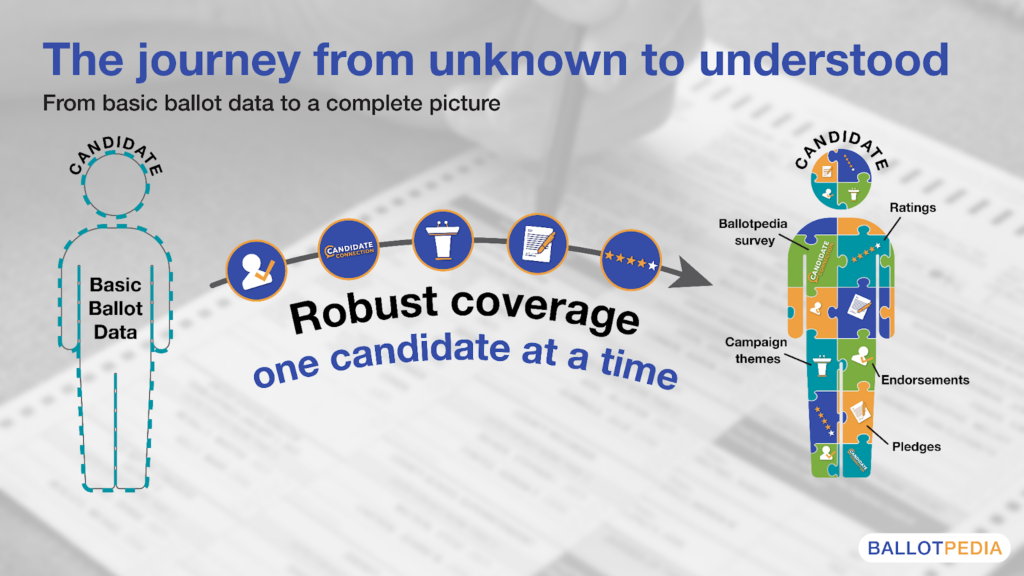
Voters need to know what a candidate stands for, what they hope to do in office, and what they believe in. That’s why Ballotpedia focuses on gathering and providing voters with vital pieces of what we call “robust information” – things like responses to our Candidate Connection survey, campaign themes, endorsements, pledges, and ratings.
This kind of information is especially important in local elections, where the decisions local officeholders make can directly affect our daily lives.
But it takes a lot of work to research, screen, and verify this information. Monthly donors help make this work possible.When you become a monthly donor, you’re helping make sure voters have the information they need to make informed and confident decisions on election day. There’s never been a greater need for your help than right now – in this important election year. Join us. Click here to make your contribution today!