


Welcome to the Thursday, March 26, Brew.
By: Briana Ryan
Here’s what’s in store for you as you start your day:
- Colorado voters to decide on ballot measures on sex requirements for school sports teams and surgeries for transgender minors
- Four candidates are running in the May 19 Democratic primary for Pennsylvania's 7th Congressional District
- Eight officials have faced recall elections so far this year — here who's next
Colorado voters to decide on ballot measures on sex requirements for school sports teams and surgeries for transgender minors
On March 16 and 17, two measures related to sex and gender were certified for the Nov. 3 ballot in Colorado. One would require interscholastic sports teams to be designated based on sex. The other would prohibit healthcare professionals from performing surgeries on persons under the age of 18 for the purpose of treatment in response to a minor's perception of sex or gender.
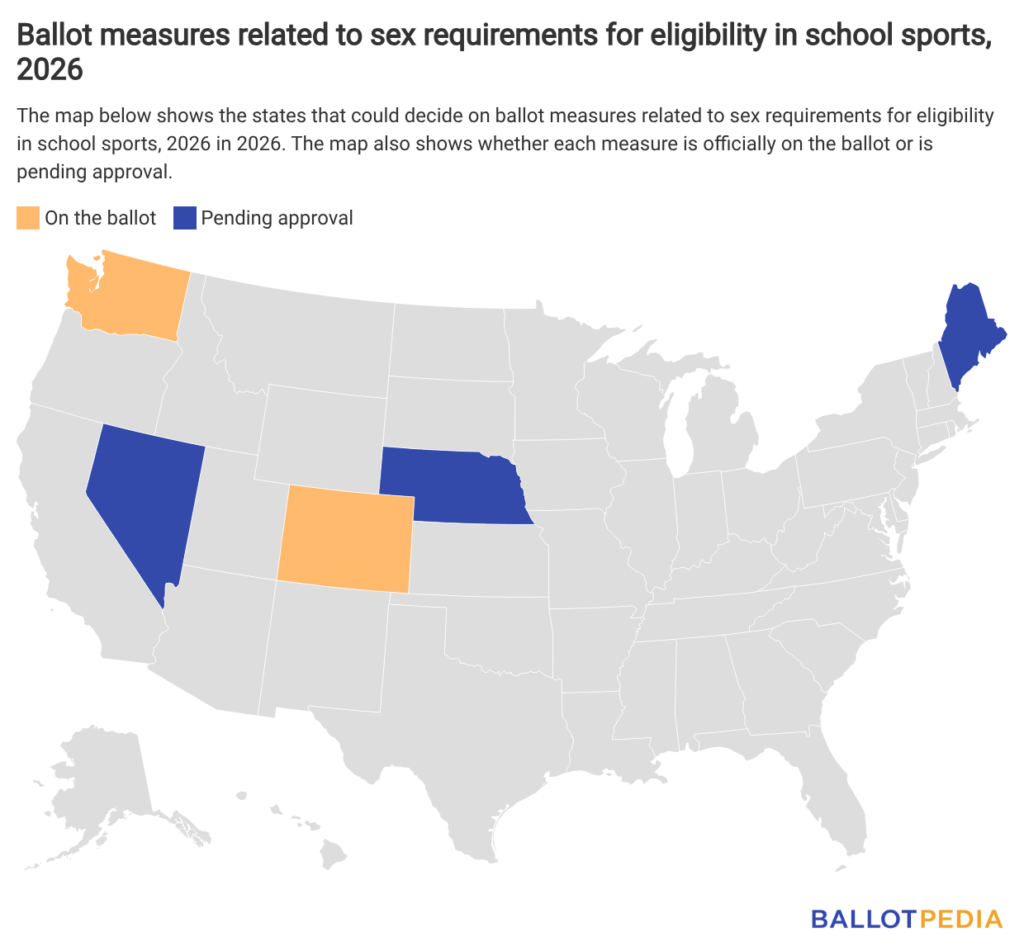
Colorado is the second state, along with Washington, to place a statewide measure on sex requirements for school sports eligibility before voters. Maine, Nebraska, and Nevada are in the process of qualifying similar measures for this year’s ballot that would require participation in school sports to be based on sex.
Colorado Secretary of State Jena Griswold (D) announced that a 5% random sample of the submitted signatures for both measures projected that the petition contained more than 110% of the 124,238 valid signatures required, meaning both qualified for the ballot.
Protect Kids Colorado sponsored both measures. The organization's website describes its mission as "[protecting] kids from becoming victims of a dangerous and false ideology." Protect Colorado also sponsored a third measure — Initiative 108 — that Colorado voters will decide on Nov. 3. This measure would increase the penalties for the sexual trafficking of a minor, raising it from a Class 2 felony to a Class 1 felony. It would also require a life sentence for the felony, without the possibility of parole or release.
Sex Requirement for School and College Sports Initiative
Initiative 109, the Sex Requirement for School and College Sports Initiative, would require school- and association-sponsored athletic teams to be classified in one of three categories based on sex: (1) males/men/boys, (2) females/women/girls, or (3) coeducational or mixed. Teams designated for females would not be open to male students or participants. Teams designated for males would not be open to female students or participants unless no corresponding female team is offered for that sport. The measure would not limit participation in teams designated as coeducational or mixed.
The measure would define females as "person[s] whose biological reproductive system is organized around the production of ova," and males as "person[s] whose biological reproductive system is organized around the production of sperm." Each school's governing body would be required to adopt a policy implementing the measure.
Prohibit Surgeries for Treatment in Response to Minors' Perception of Sex or Gender Measure
Initiative 110, the Prohibit Surgeries for Treatment in Response to Minors' Perception of Sex or Gender Measure, would prohibit healthcare professionals from performing surgeries on minors "for the purpose of altering biological sex characteristics." It would also prohibit the use of state and federal funds, Medicaid reimbursements, or insurance coverage to pay for such surgeries. The phrase altering biological sex characteristics would be defined as "treatment in response to a minor's perception of sex or gender" and would exclude treatment for medically verifiable disorders of sex development or acquired physical or chemical abnormalities and male circumcision.
Other ballot measures related to sex and sports eligibility
The measures in Colorado and Washington are the first related to sex requirements for eligibility in school sports to qualify for the ballot in U.S. history.
The measure in Washington would prohibit biologically male students from participating in sports designated for female students. It would also require verification of their sex by a healthcare provider based on "reproductive anatomy, genetic makeup, or normal endogenously produced testosterone levels."
Campaigns in Maine, Nebraska, and Nevada are in the process of qualifying measures for this year's ballot that would require participation in sports to be based on sex. Here’s where each of those measures stand:
- The measure in Maine is an indirect initiated state statute. On March 17, the Maine Secretary of State announced that the measure’s sponsor had collected enough certified signatures to go before the Maine Legislature for consideration. The Legislature has until the end of the legislative session to approve the initiative. If the Legislature and the governor approve the initiative, it becomes law. If the Legislature or the governor does not approve the initiative, it goes to voters for approval.
- The measure in Nebraska is an initiated constitutional amendment. It has been cleared for signature gathering and the sponsors must collect the needed signatures by July 3.
- The measure in Nevada is also an initiated constitutional amendment. It has been cleared for signature gathering and the sponsors must collect the needed signatures by June 24.
Click here to learn more about all the ballot measures that Colorado voters will decide on this year.
Four candidates are running in the May 19 Democratic primary for Pennsylvania's 7th Congressional District
Four candidates — Bob Brooks (D), Ryan Crosswell (D), Lamont McClure (D), and Carol Obando-Derstine (D) — are running in the May 19 Democratic primary for Pennsylvania's 7th Congressional District. The winner will face incumbent Ryan Mackenzie (R) in the general election.
NBC News' Dylan Ebs and Melanie Jackson wrote that the primary "has turned into a crowded microcosm of the different approaches Democrats are taking to appeal to voters, define their party and frame themselves as strong candidates in the age of President Donald Trump."
In the 2024 general election, Mackenzie defeated then-Rep. Susan Wild (D-Penn.) 50.4% to 49.4%. That election had the narrowest margin of victory (MOV) of any U.S. House race in Pennsylvania in 2024 and the eighth-narrowest MOV nationwide. In the 2024 presidential election, Trump defeated Kamala Harris (D) in the district 51.1% to 47.9%.
Brooks worked as a firefighter for 20 years and is president of the Pennsylvania Professional Fire Fighters Association. Pennsylvania Gov. Josh Shapiro (D) and U.S. Rep. Chris Deluzio (D-Penn.) endorsed Brooks.
Crosswell worked as a federal prosecutor for 10 years and is a Lieutenant Colonel in the Marine Corps Reserve. U.S. Rep. Derek Tran (D-Calif.) and VoteVets endorsed Crosswell.
McClure served as Northampton County Executive from 2018 to 2026. He previously served on the Northampton County Council from 2006 to 2013. Bethlehem Mayor Bob Donchez and Lehigh Valley Labor Council President Jim Irwin endorsed McClure.
Obando-Derstine is a former nonprofit executive director who worked as a senior advisor to former U.S. Sen. Bob Casey (D-Penn). Wild and EMILY'S List endorsed Obando-Derstine.
Click here to read more about the Democratic primary for Pennsylvania's 7th Congressional District. Also, if you're a Pennsylvania voter, check out our Sample Ballot Lookup here to prepare for Election Day.
Eight officials have faced recall elections so far this year — here who's next
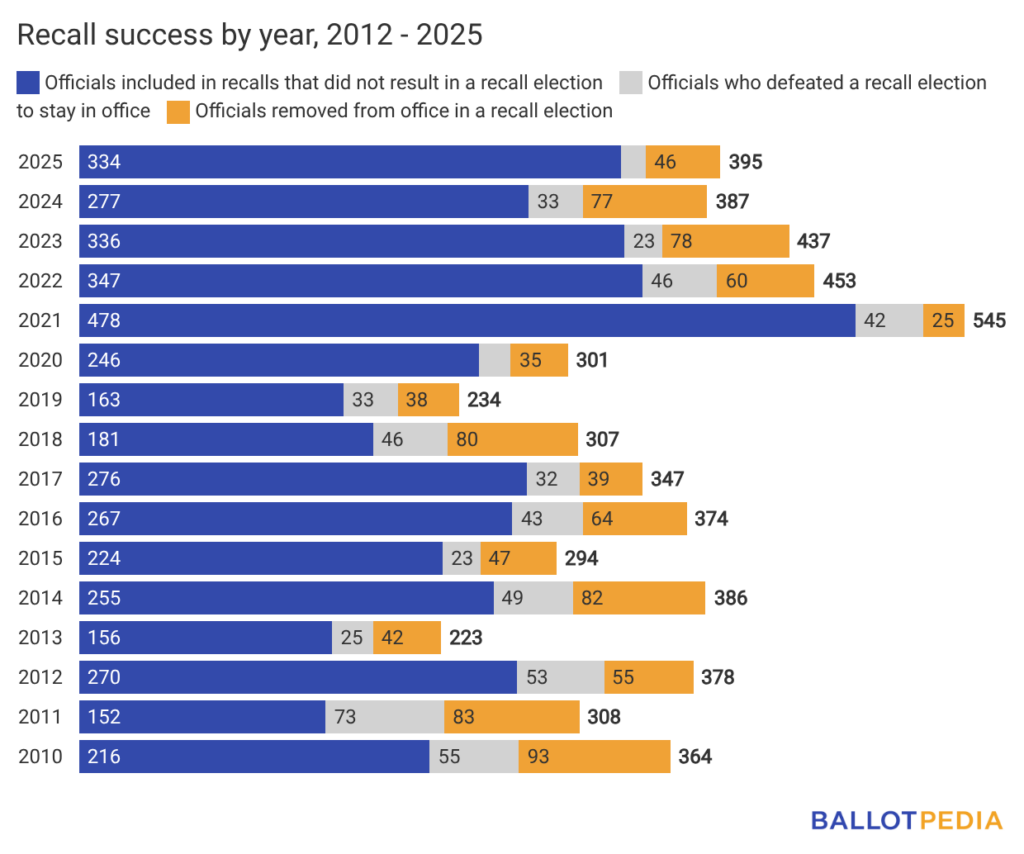
So far, voters have removed six of the 174 elected officials named in recall efforts this year. Of the two other elected officials who have faced recall efforts so far this year, voters did not recall one and results are still pending for the other official.
That’s a success rate of 3.5%. From 2010 to 2025, the average recall success rate was 17%.
Recall elections have already happened against seven elected officials, while 20 have been scheduled for future dates. Here’s a look at a few of the upcoming recalls:
- On April 7, a recall will be held in Collbran, Colorado, against Trustee Jessica Price. Voters will decide whether to remove Price from office and, if so, which candidate should replace her. If Price is not recalled, she will remain in office, and any votes cast for a replacement candidate will not count.
- On April 28, a recall will be held in Avenal, California, against Mayor Alvaro Preciado and City Councilmembers Leticia Gamez, David Reynosa, and Pablo Hernandez. The efforts stemmed from a proposal to replace the city’s fire service contract with a volunteer-only department.
- On April 21, a recall will be held in Treasure Island, Florida District 3 City Commissioner Arthur Czyszczon. The effort began after he sent sexually suggestive texts to a constituent using a city-issued phone, which recall organizers believed qualified as grounds for recall under Florida law.
A political recall is the process by which citizens can remove elected officials from office before the end of their term. This process typically includes recall organizers circulating petitions, election officials evaluating petition signatures, and a recall vote if organizers collect enough valid signatures.
City council members have so far had the most recall petitions filed against them among all office types this year, at 82. School board members came in second with 35 petitions, and mayors were third with 20.
Click here to see how the recall process varies from state to state, and here to view a list of recall efforts happening this year.