


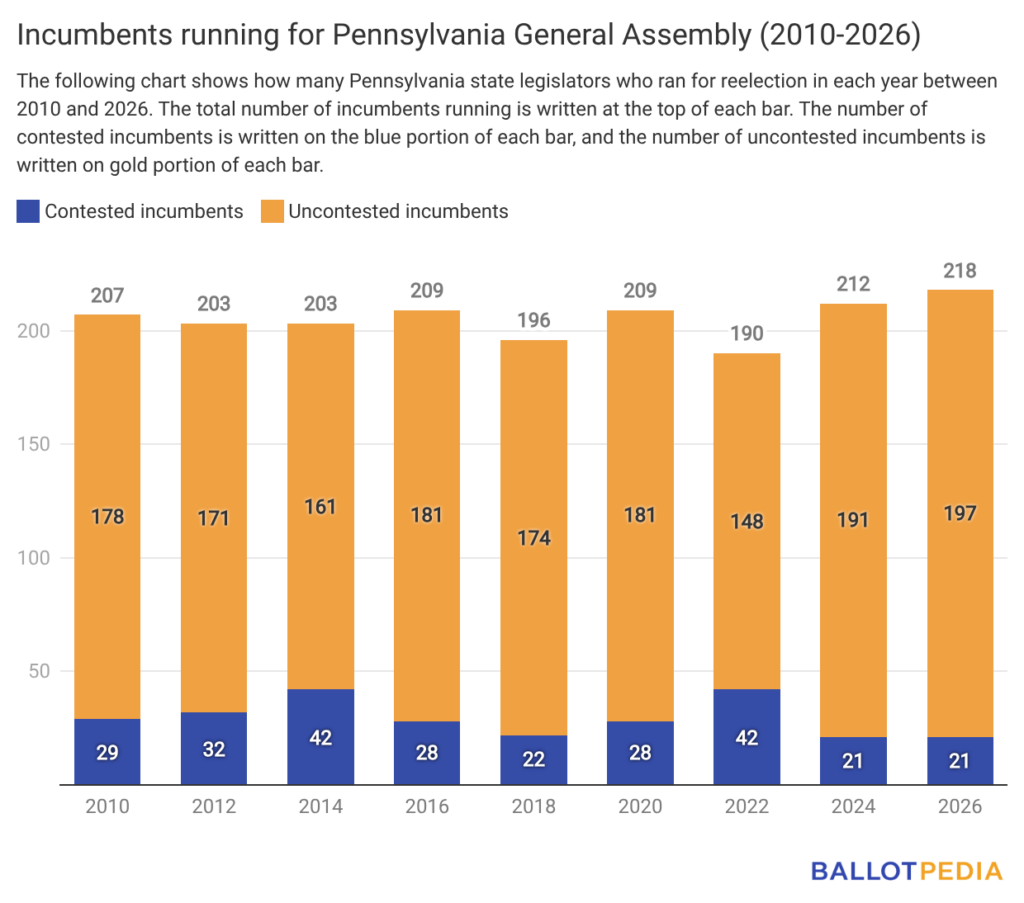
There are 416 candidates running in the primaries for the Pennsylvania General Assembly on May 19. Of those, there are 218 incumbents, the most since 2010, running for re-election this year. Twenty-one incumbents (9.6%) are contested. This ties with 2024 for the fewest contested incumbents since 2010.
Pennsylvania is one of 11 states with a divided government and one of two states with a split state legislature. Governor Josh Shapiro is a Democrat. Heading into the elections, Republicans have a 27 to 23 majority in the Pennsylvania Senate, while Democrats have a 102 to 99 majority with two vacancies in the Pennsylvania House. Republicans have had a majority in the state Senate since 1994, and Democrats have had a majority in the House since 2023.
According to Spotlight PA’s Stephen Caruso, since Democrats won control of the House, lawmakers “have struggled to advance far-reaching legislation on energy, transportation, or health care. Even passing a statutorily required budget to fund schools, counties, and nonprofits proved to be a challenge.”
Caruso wrote that, “The high stakes have made these races increasingly expensive affairs, drawing in the commonwealth’s wealthiest special interests and deep-pocketed national donors.”
Caruso listed Lancaster County, the Lehigh Valley, the Philadelphia and Pittsburgh suburbs, and the Poconos as among the most competitive parts of the state for the Senate, and the Lehigh Valley, Northeast Pennsylvania, and western coal country or rust belt as the most competitive parts of the state for the House.
Here’s a look at some of the numbers behind this year’s state legislative elections in Pennsylvania.
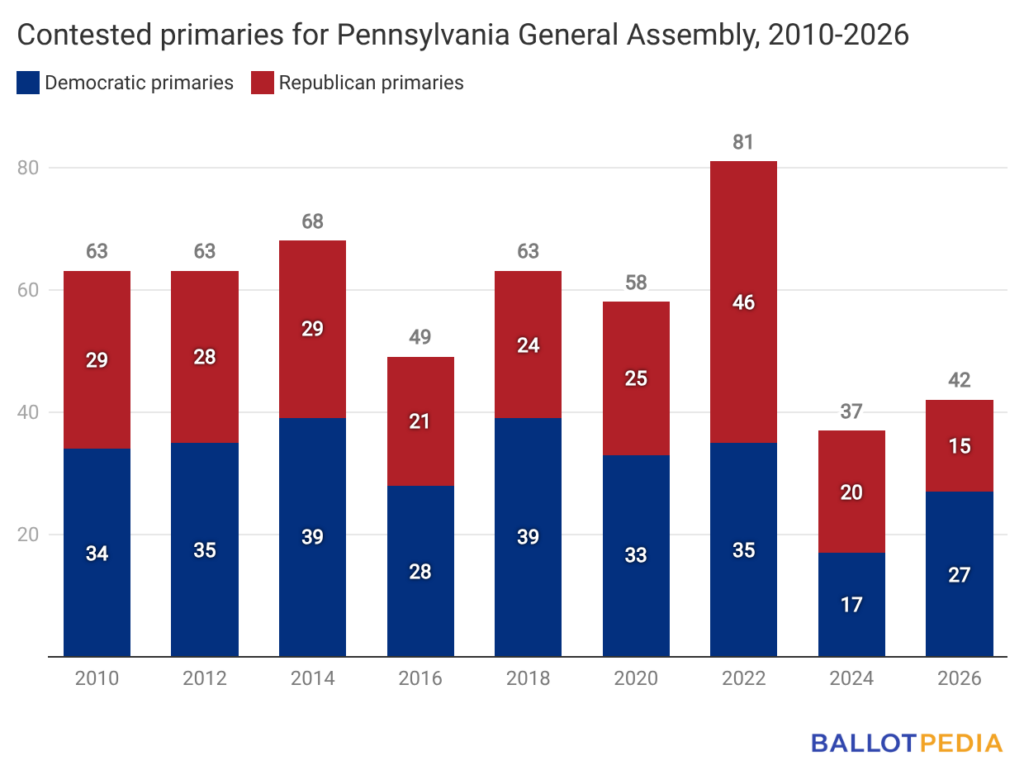
Forty-two primaries (9.2%) are contested. This is the second fewest primaries since 2010. The year with the fewest was 2024, with 37.
There are 27 contested Democratic primaries and 15 contested Republican primaries. This is the fewest Republican primaries since 2010 and the second-fewest Democratic primaries.
Eight seats are open, meaning no incumbent is running for re-election. All eight open seats are in the House, with four Democratic and four Republican state representatives retiring.
This is the first time that there have been no Senate retirements since 2010. Between 2010 and 2024, an average of 3.9 state senators retired each year. The eight retirements in the House are also the fewest in that chamber since 2010. Between 2010 and 2024, an average of 21.4 state representatives retired each year.
In addition to the 203 seats in the Pennsylvania House and 25 seats in the Pennsylvania Senate, the governor’s office is also up for election this year. Neither major party's gubernatorial primary is contested. Shapiro and Pennsylvania Treasurer Stacy Garrity (R) are running for governor this year. Democrats have held the governorship since 2015.
Click here to learn more about Pennsylvania’s state Senate elections, here to learn about Pennsylvania’s state House elections, and here for a full overview of elections in the Keystone state this year.