



Ohio voters will decide on a constitutional amendment related to voter identification requirements, including photo ID requirements for in-person voting, on Nov. 3, 2026.
The amendment, Senate Joint Resolution 10 (SJR 10), was introduced by Sen. Jane Timken (R-29) and Sen. Theresa Gavarone (R-2). It passed the Senate by 22-9 on June 3, 2026, with 22 Republicans voting for the measure, and eight Democrats and one Republican voting against it. It passed the House by 61-27 on June 10, 2026, with 61 Republicans voting for it and 27 Democrats voting against it.
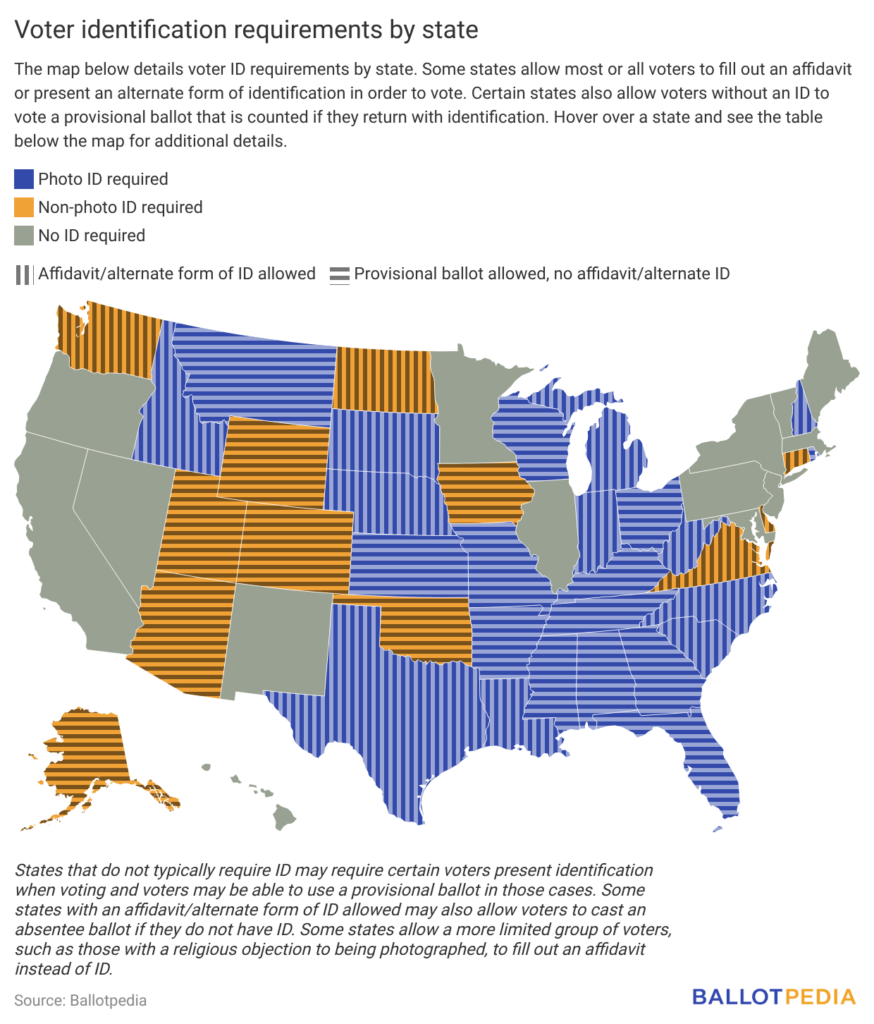
Ohio state law already requires voters to present photo ID while voting, with accepted forms of ID including a valid Ohio driver's license or ID card, U.S. passport, and U.S. military ID. The amendment would enshrine this requirement in the state constitution.
Under the amendment, absentee voters would be required to provide a photo ID, or a signature plus one other unique identifier authorized by law. Current Ohio state law requires absentee voters to provide a copy of their photo ID, an Ohio driver’s license/ID number, or the last four digits of their Social Security number. However, on June 10, Ohio lawmakers also passed a bill requiring absentee voters to provide a copy of their driver's license or state ID in order to vote.
The amendment would also allow the legislature to establish an alternative identity-verification process for voters with a sincere religious objection to being photographed. Under current Ohio law, voters with such an objection must complete an affidavit.
Currently, 36 states require voters to present identification in order to vote. Of these states, 24 require voters to present photo ID, while 12 states do not explicitly require photo ID.
Rep. Adam Bird (R-63), who supports the amendment, said, “It’s a simple proposal that will give (voters) the opportunity to protect the foundations of our constitutional republic, that means free and fair elections. It is a straightforward question on the ballot to the voters — should Ohio’s elections be secured by government-issued photo ID requirements? These requirements ensure that we know that the person at the poll is who they say they are.”
Ohio House Minority Leader Dani Isaacsohn (D-24), who opposes the amendment, said, “We are spending all of our energy and time on putting something that is already the law as it relates to voter ID into the Constitution. It’s not going to change a single person’s life. … We already have safe and secure and stable elections.”
This will be the fifth voter ID ballot measure decided by voters in 2026, the most to appear on statewide ballots in a single year. Other voter ID measures are set to appear on the ballot in California, Nevada, North Carolina, and Oklahoma.
This is currently the only measure Ohio voters will decide in Nov. 2026. However, there are seven potential amendments—one proposed by the legislature and six citizen initiatives—that could also make the Nov. 2026 ballot.
Additional reading: