



Seventy members of Congress — 11 Senators and 59 Representatives— are not running for re-election this year, the most since at least 2000 and 32% more than the 53 who did not run in 2024.
These figures are likely final — 49 of 50 state filing deadlines have passed, and all members of Louisiana's Congressional delegation (the lone outstanding filing deadline) have declared their intentions.
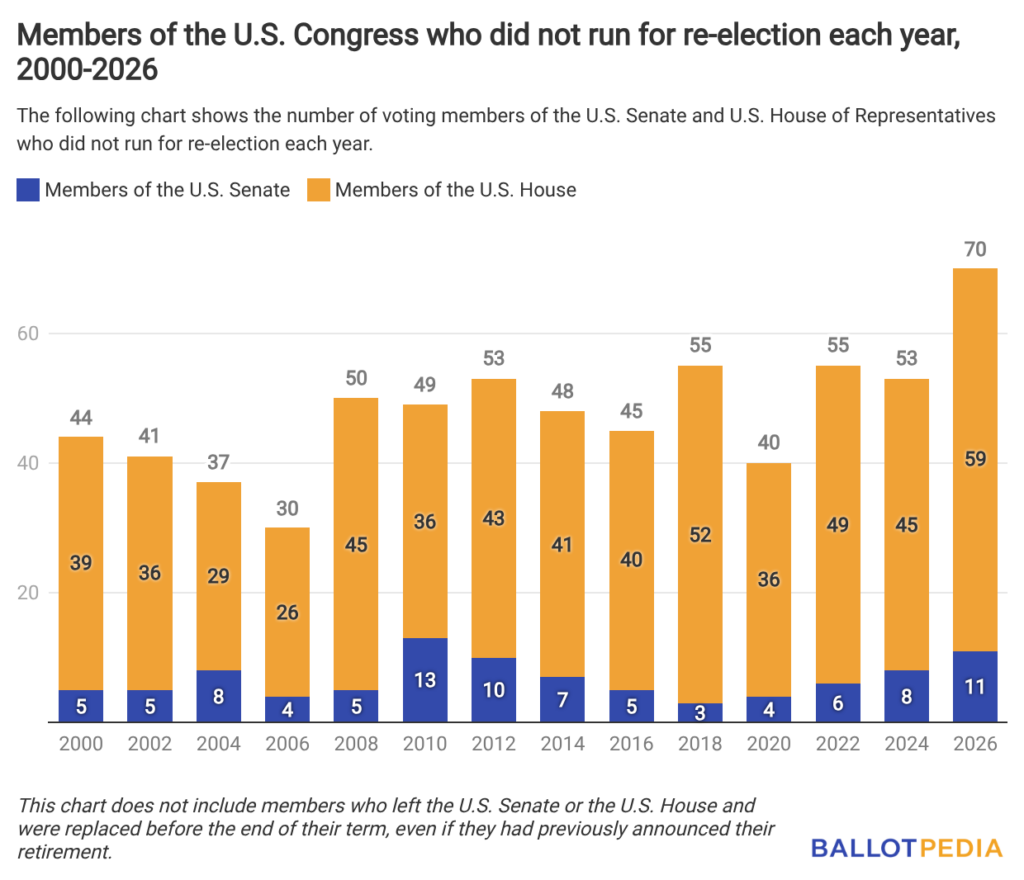
By chamber, this is the most U.S. Representatives not running for re-election and the second-most Senators not running for re-election, dating back to 2000.
U.S. Senate
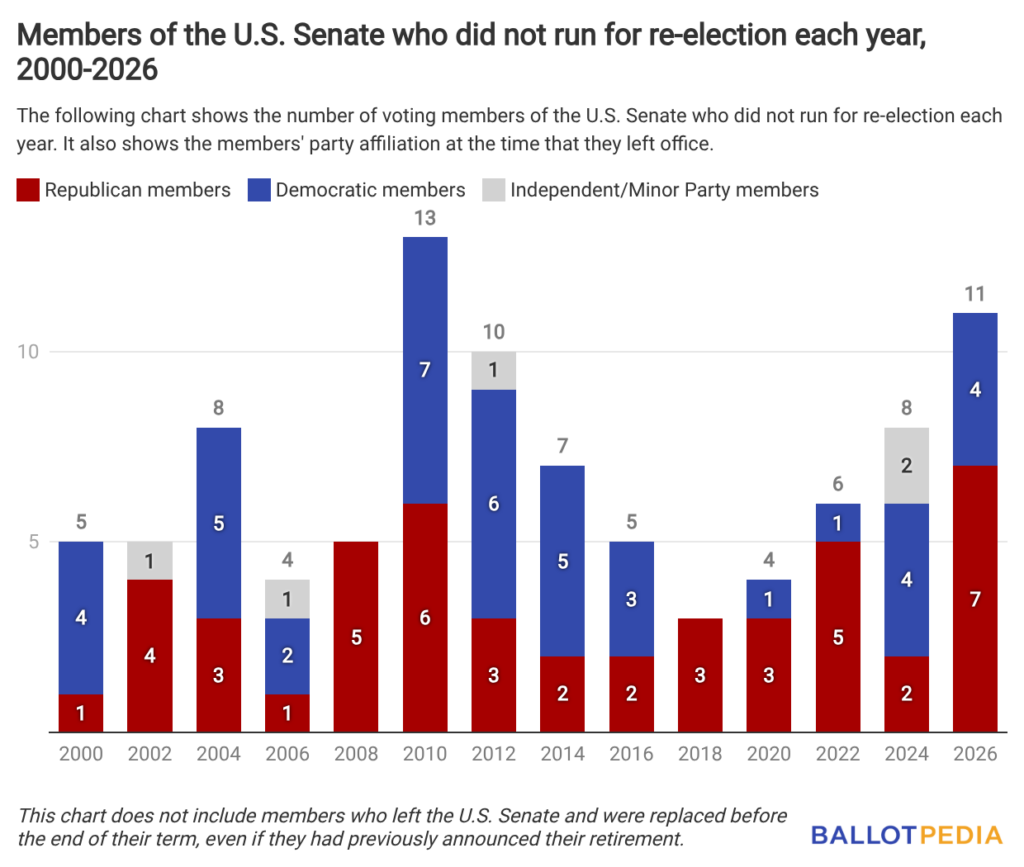
Seven Republicans and four Democrats are not running for re-election to the U.S. Senate, marking the most Republican retirements dating back to 2000. In that period, Republican retirements have outnumbered Democrat retirements in six of 14 cycles. Democratic retirements outnumbered Republican ones in eight of 14 cycles.
According to race ratings, Republicans and Democrats are both leaving three seats open that are not considered either solid/safe Republican or solid/safe Democratic.
- Joni Ernst (R) is retiring from her seat in Iowa, which is described as lean Republican.
- Gary Peters (D) is retiring from his seat in Michigan, which is described as a toss-up.
- Tina Smith (D) is retiring from her seat in Minnesota, which is described as likely Democratic.
- Steve Daines (R) is retiring from his seat in Montana, which is described as solid/likely Republican.
- Jeanne Shaheen (D) is retiring from her seat in New Hampshire, which is described as lean/tilt Democratic.
- Thom Tillis (R) is retiring from his seat in North Carolina, which is described as a toss up or lean Democratic.
In other words, 75% of Democratic retirements are from states that race raters do not consider safe, compared to 43% of Republican ones.
U.S. House of Representatives
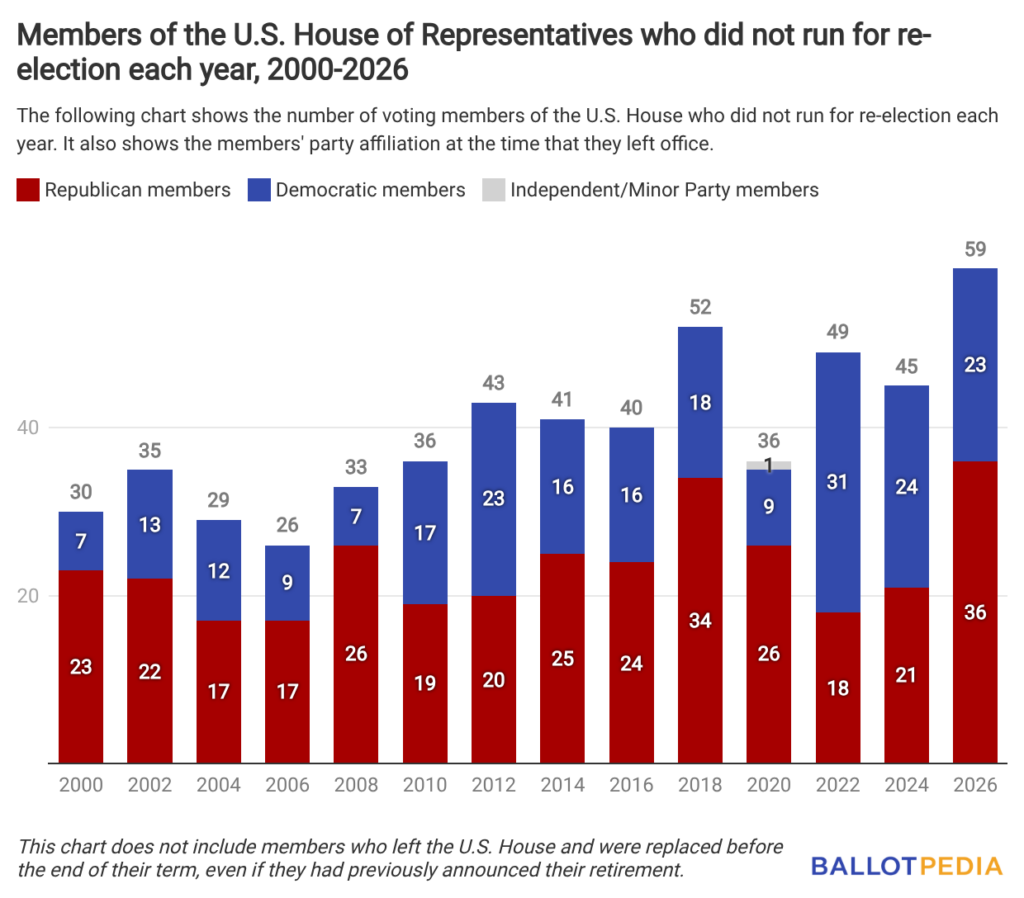
Thirty-six Republicans and 23 Democrats are not running for re-election. As in the Senate, this is the most Republican retirements since at least 2000. In that period, Republican retirements have outnumbered Democrat retirements in 11 of 14 cycles. Democratic retirements outnumbered Republican ones in three of 14 cycles.
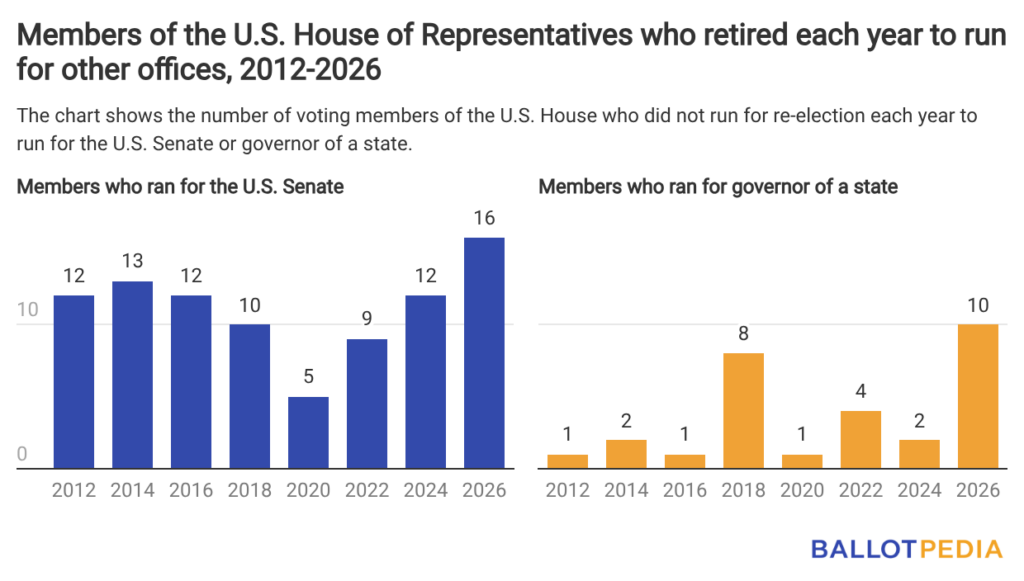
Twenty-seven U.S. Representatives are neither running for re-election nor running for another office, the most since at least 2012. There are also more Representatives running instead for U.S. Senate or governor than in any year since 2012.
According to race ratings, Republicans are leaving nine seats open in districts not considered solid/safe Republican, and Democrats are leaving four open in districts not considered solid/safe Democratic.
- The four Democratic-held districts each fall under one of the following categories: solid/safe Republican, likely/lean Republican, likely Democratic, or likely/lean Democratic.
- Five of those Republican-held districts each fall under one of the following categories: toss-up, likely/lean Republican, toss-up or lean/tilt Republican, likely Republican, or likely/solid/safe Republican.
- Two retirements are in Republican-held districts considered lean/tilt Democratic and two are in Republican-held districts considered solid/likely Republican.
- One retirement in a Democratic-held district considered solid/safe Republican and solid Democratic.
In other words, 22% of Democratic retirements are from districts not considered solid/safe Democratic compared to 25% of Republican retirements from districts not considered solid/safe Republican.