


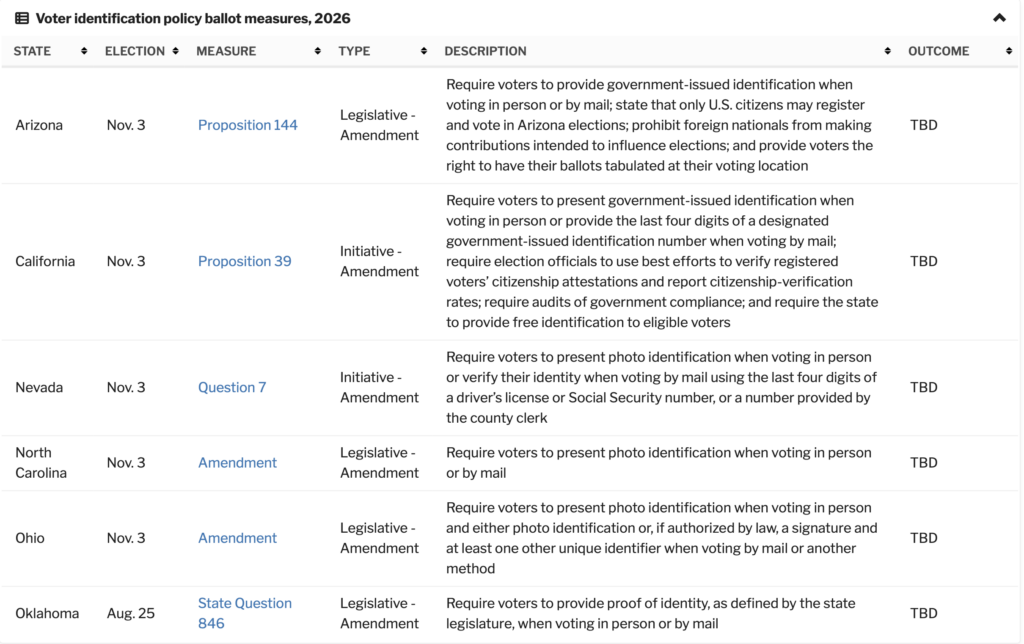
Voters will decide at least six ballot measures related to voter identification requirements in 2026. These six measures represent the largest number of statewide ballot measures related to voter identification in a single year.
Each ballot measure would establish or expand voter identification requirements in state constitutions, while none would reduce or eliminate existing requirements.
Legislatures referred four of the measures to the ballot, while the other two are citizen initiatives. One, in Oklahoma, is on the ballot for Aug.25, and the remaining five will be decided on Nov. 3 in Arizona, California, Nevada, North Carolina, and Ohio. Initiatives related to voter identification are also pending signature verification in Colorado and Michigan.
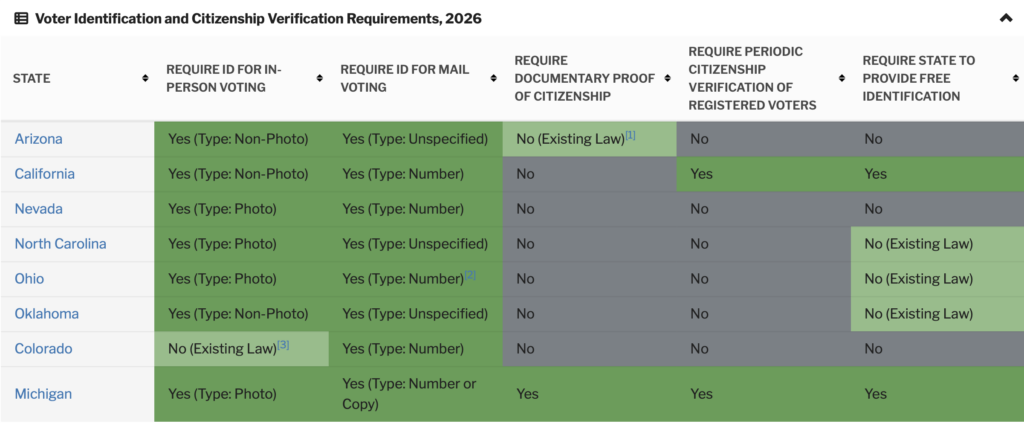
Each ballot measure would amend a state constitution to require or expand voter identification requirements. However, the measures differ in the types of identification required, whether they apply to in-person or mail voting, whether they address citizenship verification, and whether the state must provide free identification. For a more detailed look at the different provisions, see here:
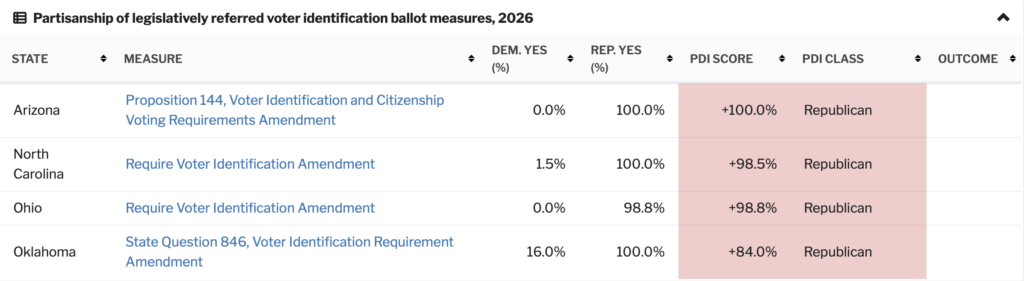
Each ballot measure referred to the ballot by a state legislature was classified as having Republican support, depending on the legislative vote breakdown by party. For more information about partisan direction index scores, see here.
The measure with the most contributions is California Proposition 39. For campaign contributions through March 30, $11.9 million was reported by the supporting campaign, while $66,489.83 was reported by the opposing campaigns. For more information on campaign finance, endorsements, and polling for these measures, click here.
Between 2004 and 2025, voters in 12 states decided on 13 ballot measures related to voter identification requirements. Voters approved ten of these measures and rejected three. The average vote was 60.3%, with the highest at 79.5% in Arkansas (2018) and the lowest at 35.8% in Maine (2025).
Additional reading: