



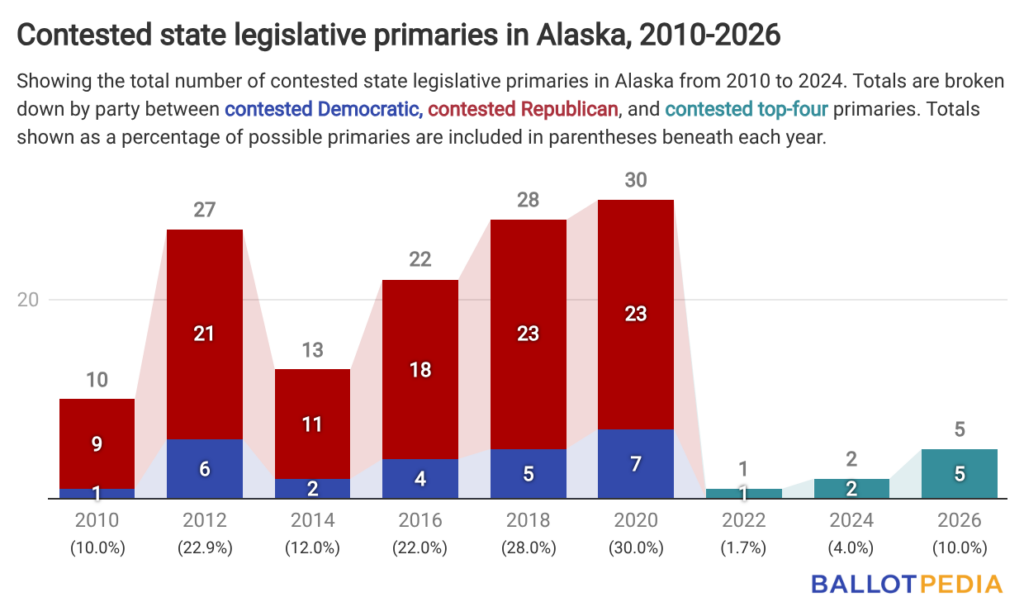
There are five contested primaries for the Alaska Legislature happening on August 18. This is the most since voters approved the state’s top-four primary system in 2020. Four of these primaries are for seats in the House, and one is for a seat in the state Senate.
There are 10 seats up for election in the Senate this year and 40 up in the House. There are nine open seats, meaning no incumbent is running for re-election. This is up from 2024, when there were seven open seats, but down from 2022, when there were 20.
Forty-one incumbents are running for re-election. In even years between 2010 and 2024, an average of about 44 incumbents ran for re-election.
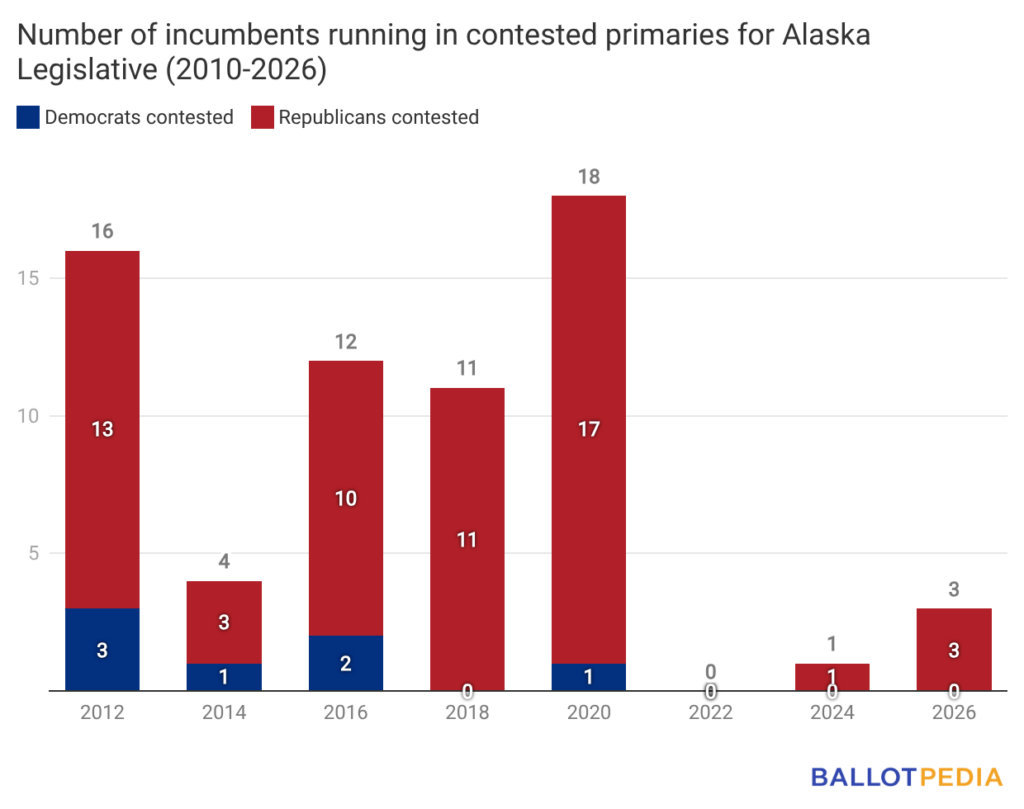
Of those running for re-election this year, three incumbents are contested. This is the most since Alaska implemented top-four primaries, but fewer than any year from 2010 to 2020 (the years in our data set in which the state used partisan primaries).
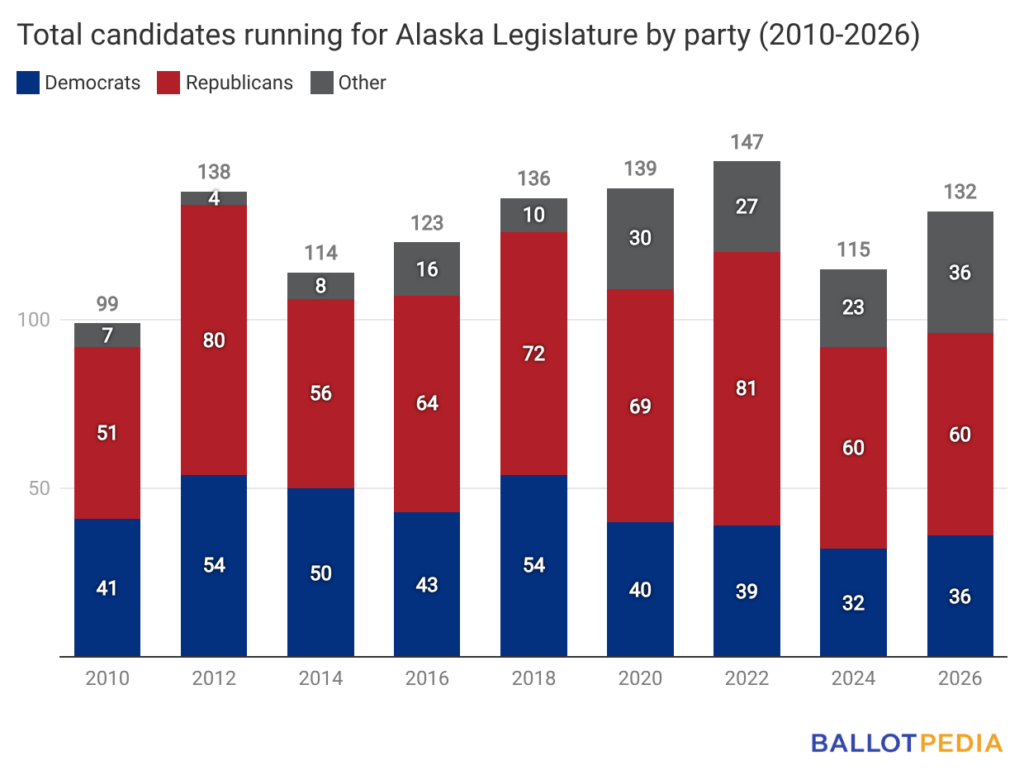
In total, there are 132 candidates running in Alaska’s state legislative elections this year. Of those, 36 candidates are Democrats, 60 Republicans, and 36 are either undeclared, nonpartisan, or affiliated with another party.
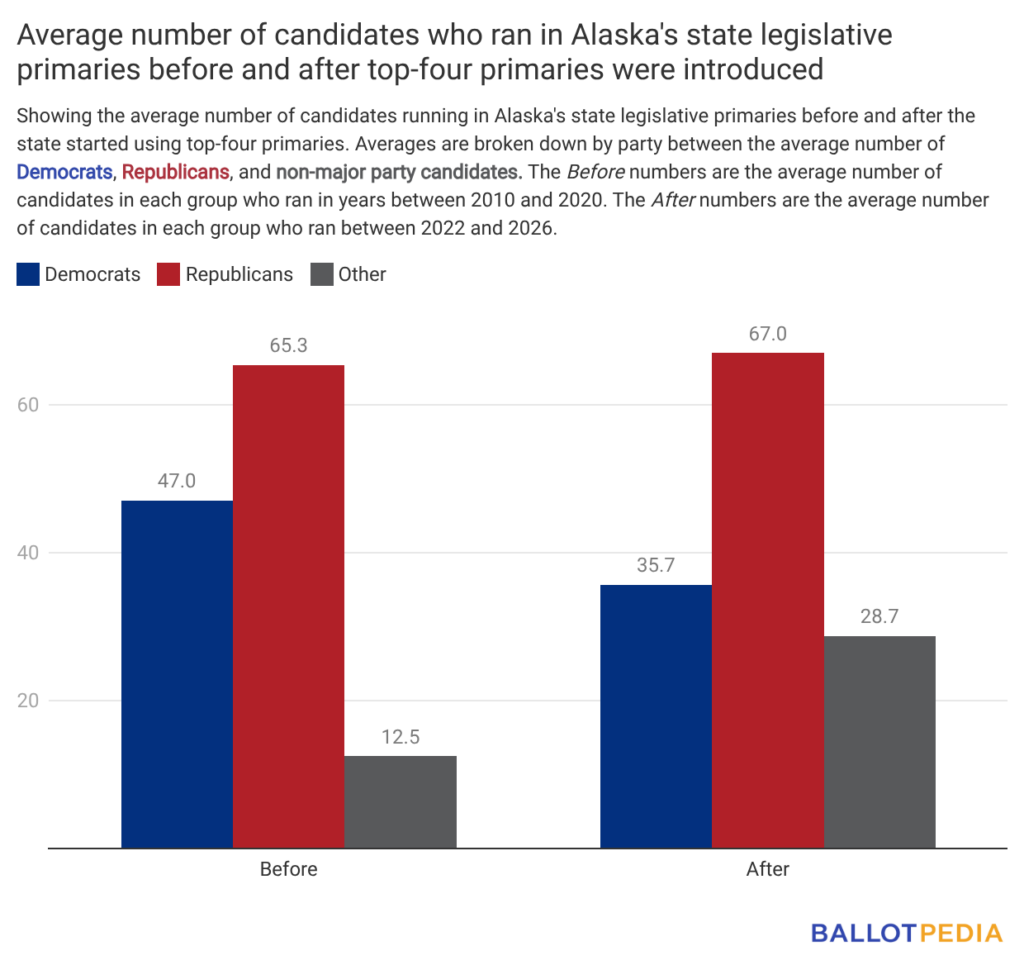
The chart below shows how the average number of candidates by party affiliation has changed since Alaska introduced its top-four primary system. The group with the biggest change was non-major party candidates, which rose from an average of between 12 and 13 candidates running in years between 2010 and 2020, and an average of about 29 candidates between 2022 and 2026.
Heading into the 2026 elections, Alaska has a divided government. Multipartisan governing coalitions control both chambers of the state legislature. Governor Mike Dunleavy is a Republican.