


In 2026, voters will decide on at least eight ballot measures related to the initiative and referendum process. Seven measures would add requirements or restrictions to the process, including two that voters decided earlier in the year in North Dakota and Missouri. One measure would expand constitutional provisions related to the initiative and referendum process. Two additional measures that would expand or further establish the process in state constitutions are pending signature verification for the 2026 ballot.
The eight ballot measures are grouped into two categories: those that add requirements or restrictions to the process, and those that expand or further establish the process in state constitutions.
Measures in the first category include those that increase vote thresholds for approving initiatives, restrict the subject matter initiatives can address, or require initiatives to address a single subject.
Measures in the second category include those that establish the initiative and referendum as a fundamental right in the state constitution, apply higher standards of judicial review to laws affecting the initiative power, require voter approval or higher legislative vote thresholds for changes to the process, or add requirements for the legislative alteration of voter-approved initiatives.
Measures to add requirements or restrictions to the process
Two ballot measures proposing additional requirements or restrictions were decided earlier in 2026: one in North Dakota in June and one in Missouri in August. Voters approved the North Dakota measure, which created a single-subject requirement for initiated constitutional amendments and a separate-vote requirement for legislatively referred constitutional amendments, by a margin of 66% to 34%. The Missouri measure was defeated with 80% opposed. It would have, among other changes, required voter approval of citizen-initiated constitutional amendments in each congressional district, rather than statewide.
Voters in California will decide on a legislatively referred constitutional amendment to require a two-thirds vote by the electorate to enact, extend, or increase local special tax initiatives, rather than a simple majority.
The Idaho State Legislature referred an amendment to the ballot governing the subjects initiatives can address. The amendment would prohibit citizens from using the initiative process to alter state law related to marijuana and other psychoactive substances and provide the state legislature with the sole authority to legalize marijuana, narcotics, or other psychoactive substances.
North Dakota voters will decide on a second measure related to the initiative and referendum process that would require a 60% supermajority vote to approve citizen-initiated or legislatively referred constitutional amendments.
South Dakota voters will decide on a similar legislatively referred constitutional amendment requiring a 60% supermajority vote to approve citizen-initiated or legislatively referred constitutional amendments.
The Utah State Legislature referred an amendment also related to supermajority requirements for ballot measures, requiring a 60% supermajority vote to approve citizen initiatives that create new taxes, increase existing tax rates, or impose a property tax.
Measures to expand or further establish the process in state constitutions
As of Aug. 23, one ballot measure has been certified in Montana to expand or further establish the initiative and referendum process in state constitutions. Known as CI-133, the ballot initiative would amend the Montana State Constitution to add the initiative and referendum power to the state's Declaration of Rights; require government abridgment of the right to meet the judicial standard of strict scrutiny; and provide that the initiative process is "impartial, predictable, transparent, and expeditious."
Two additional measures in Missouri and Nebraska that would expand or preserve the initiative and referendum process are pending signature verification for the 2026 ballot.
Legislative votes
State legislatures placed the seven ballot measures to add requirements or restrictions on the ballot, with six out of seven carried by Republican support and one with bipartisan support. The single measure that has qualified for the ballot to expand or preserve the initiative process is an initiated constitutional amendment.
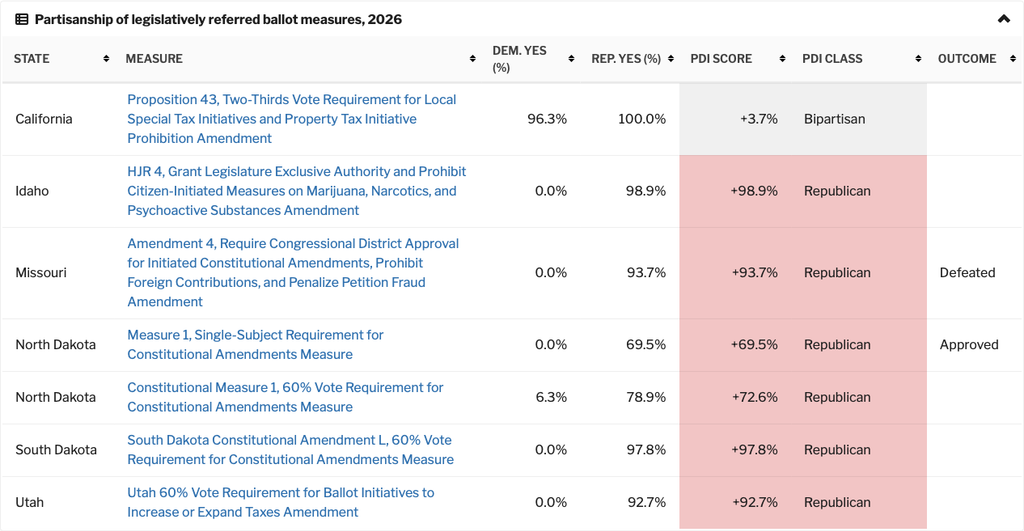
Campaign finance
The measure with the most contributions so far is Missouri Amendment 4, which was defeated on Aug. 4. The support campaigns reported $848,674.49 in contributions, and the opposition campaigns reported over $10.6 million. For more information on campaign finance, endorsements, and polling for these measures, click here.
Historical measures
Between 2000 and August 2026, voters in 18 of the 26 states that provide for the initiative and referendum power decided on 59 ballot measures that:
- added requirements or restrictions to the initiative and referendum process;
- expanded or further established the use of the initiative and referendum process;
- both added requirements or restrictions and expanded it; or
- addressed other topics.
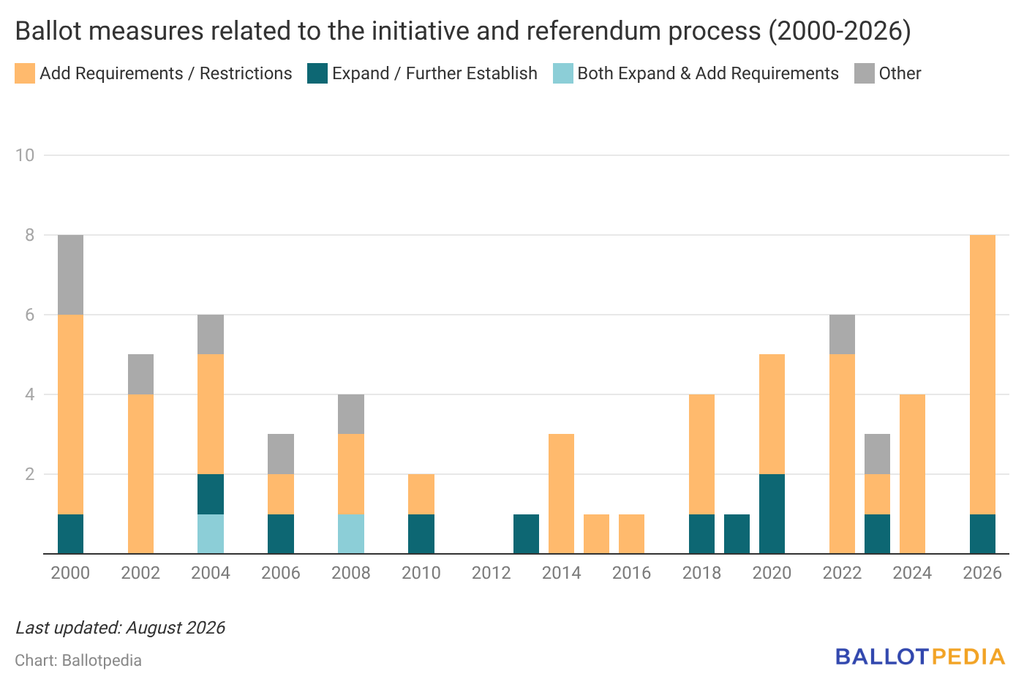
In 2026, eight measures will appear on statewide ballots, tying 2000 for the highest total during this period. Seven of the eight measures would add requirements or restrictions to the process, the most in any year since 2000 and surpassing the previous high of five in both 2000 and 2022.
Measures that added requirements or restrictions appeared most often on statewide ballots, with 39 measures total: 17 were approved (43.6%), and 22 were defeated (56.4%). Ten measures sought to expand or further establish the initiative and referendum process, with five approved (50.0%) and five defeated (50.0%). Two measures both added requirements or restrictions and expanded or further established the process; both were defeated. Eight measures addressed other initiative- and referendum-related topics, with seven approved (87.5%) and one defeated (12.5%).
The chart below shows when the measures appeared on the ballot and their policy classification.
Additional reading: