


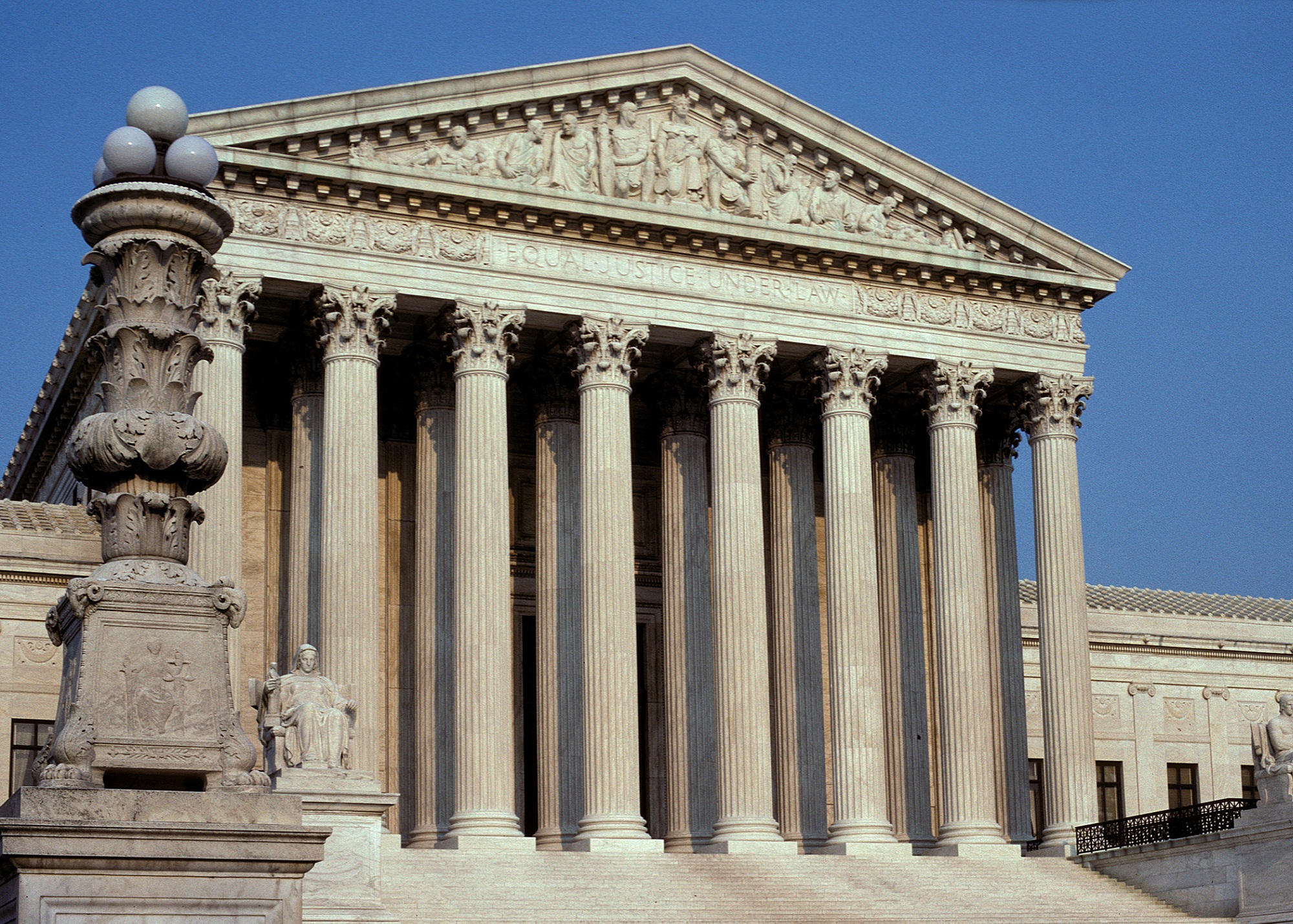
On Dec. 8, 2025 the U.S. Supreme Court heard oral argument in Trump v. Slaughter. The case examines whether Congress may limit the president’s authority to remove Federal Trade Commission (FTC) commissioners and whether courts may order reinstatement when a removal violates a statutory protection. During arguments, the justices focused primarily on how removal limits affect the balance of power between Congress and the president, and how a ruling could reshape the structure of independent agencies across the federal government.
Several justices also asked how the dispute interacts with Humphrey’s Executor v. United States (1935), the Court’s unanimous decision holding that an FTC commissioner may be removed only for “inefficiency, neglect of duty, or malfeasance in office.” That ruling established the modern framework for independent commissions. The central question in Trump v. Slaughter is whether that framework still governs or whether the Constitution requires broader presidential removal authority.
In March 2025, two FTC commissioners challenged their terminations in the U.S. District Court for the District of Columbia. On July 18, Judge Loren AliKhan held that one commissioner lacked standing but ordered Rebecca Slaughter reinstated. The federal government appealed, and the D.C. Circuit declined to stay the order. The government then filed an emergency stay application with the Supreme Court on Sept. 4, 2025. On Sept. 22, the Court granted the stay in a 6–3 decision and set the case for full review during the October 2025–2026 term.
Arguments for the Trump administration
Solicitor General D. John Sauer argued that the president must retain full removal authority over officers who exercise executive power. He stated that the FTC’s for-cause removal clause is inconsistent with the Constitution and prevents the president from directing the executive branch. Sauer argued that Humphrey’s Executor should be overruled or treated as limited, and that more recent cases—such as Seila Law v. Consumer Financial Protection Bureau and Collins v. Yellen—have already narrowed its force.
Justices asked whether a ruling for the administration would reach other independent bodies, including the National Labor Relations Board, the Merit Systems Protection Board, or the Consumer Product Safety Commission. Sauer responded that the Court could issue a narrow opinion and sever the FTC’s removal protection without disrupting unrelated statutory structures.
Arguments for Rebecca Slaughter
Amit Agarwal, representing former Commissioner Rebecca Kelly Slaughter, argued that Congress acted within its authority when it established an independent commission designed to be nonpartisan and insulated from direct presidential control. He emphasized that the for-cause removal standard is statutory, not constitutional, and that the president must follow that standard unless Congress amends it.
Several justices asked whether Congress could expand removal protections to additional agencies, including Cabinet departments. Agarwal said Congress’s authority is not unlimited and noted that most Cabinet agencies exercise significant executive power that would constrain Congress’ ability to insulate department heads from removal. He added that upholding statute as it related to the FTC’s would not permit Congress to convert the entire executive branch into multi-member bodies independent of presidential oversight.
Discussion of precedent
During arguments, the Court turned directly to Humphrey’s Executor. Some justices described the case as narrowed by later decisions. Others emphasized its central role in defining independent agencies for nearly a century. The 1935 decision, which held that the president may remove an FTC commissioner only for the causes listed in statute, highlighted Congress’s intent to create a body “independent of executive authority” whose members serve fixed terms.
Justices who questioned maintaining Humphrey’s Executor raised concerns about broad delegation of authority to agencies not subject to full presidential control. Others warned that overturning a unanimous structural decision would mark a significant shift in the administrative state. Justice Elena Kagan noted that removing the for-cause protection could alter the longstanding balance Congress struck when it assigned quasi-legislative and quasi-judicial duties to independent commissions.
Implications and next steps
Although the case includes a second question about whether courts may order reinstatement when a statutory removal protection is violated, the justices spent little time on that issue during argument. The discussion largely returned to the core dispute over presidential removal authority and the future application of Humphrey’s Executor.
The Court’s decision is expected to clarify or reshape how removal limits apply to independent agencies and to define the scope of presidential authority over the FTC and similar commissions. A ruling is expected by late June or early July.
Additional reading: