


Welcome to the Wednesday, Jan. 21, Brew.
By: Briana Ryan
Here’s what’s in store for you as you start your day:
- U.S. Supreme Court rules candidates may challenge election laws before Election Day
- Twenty-six state supreme court vacancies happened in 2025 — the most since 2018
- On Jan. 21, 1911, New Mexico ratified its state constitution
U.S. Supreme Court rules candidates may challenge election laws before Election Day
On Jan. 14, the U.S. Supreme Court ruled 7-2 that candidates have standing to sue over election laws they believe to be unconstitutional before voting takes place. Republican presidents nominated six of the seven justices in the majority opinion, and President Barack Obama (D) nominated the other justice. Democratic presidents appointed both dissenting justices.
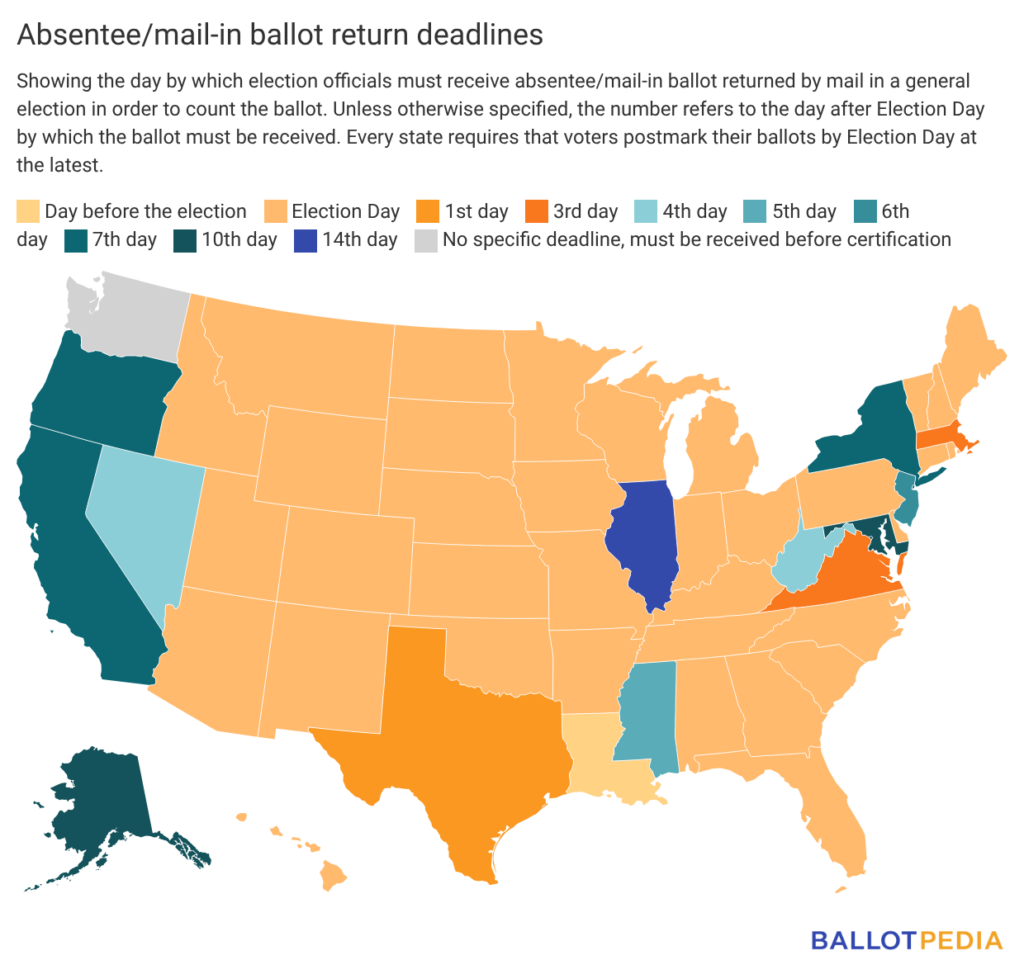
Bost v. Illinois State Board of Elections allows U.S. Rep. Michael Bost (R-Ill.) and two 2024 presidential electors to move forward with a lawsuit challenging an Illinois law allowing mail-in ballots postmarked by Election Day to be counted up to 14 days after Election Day. Illinois is one of 15 states that allow absentee/mail-in ballots postmarked by Election Day to be counted if they arrive within a set period of time after the election.
Bost originally brought the suit in 2022 in the U.S. District Court for the Northern District of Illinois. He argued that he has legal standing to sue, stating that the law effectively extends the election by two weeks and forces him to spend resources monitoring late-arriving ballots. He also argued that candidates are entitled to have their election results certified in accordance with federal law.
The U.S. Supreme Court has held that Article III of the U.S. Constitution requires a person suing to prove they have a real stake in the case and will suffer a concrete wrong as a direct result of the unlawful action they are suing over.
The U.S. District Court for the Northern District of Illinois dismissed the case in 2023, saying Bost's arguments didn't meet that standard. The U.S. Court of Appeals for the Seventh Circuit affirmed the dismissal in 2024. Bost then appealed to the U.S. Supreme Court, which agreed to take the case in June 2025 and heard oral arguments in October.
Writing for the majority, Chief Justice John Roberts said that only allowing a candidate to sue after they could demonstrate harm would force election-related lawsuits to be brought in the days immediately before or after voting takes place. Roberts also said that requiring candidates to prove that a particular law damaged their odds of winning would put judges in the position of predicting election results. Roberts also said that candidates had a particular interest in ensuring results were lawfully tabulated and that the public trusted the outcome.
Justices Samuel Alito, Neil Gorsuch, Brett Kavanaugh, and Clarence Thomas joined Roberts.
Justices Amy Coney Barrett and Elena Kagan agreed that Bost should be allowed to sue, but only because he suffered a possible financial injury from the law. Barrett wrote in a concurring opinion that the court should not grant candidates broad standing to sue over election laws: "Congressman Bost has standing because he has suffered a traditional pocketbook injury, not because of his status as a candidate."
In a dissenting opinion, Justices Ketanji Brown Jackson and Sonia Sotomayor said they would have upheld the lower court order dismissing Bost's lawsuit due to a lack of standing. Jackson said the decision could affect the volume of election-related lawsuits in the future: "Alarmingly, today's ruling also has far-reaching implications beyond Bost's election, since dispensing with our usual standing requirements opens the floodgates to exactly the type of troubling election-related litigation the Court purportedly wants to avoid."
The ruling did not address whether Illinois' mail-in ballot counting law is constitutional. The justices are slated to hear Watson v. Republican National Committee, a case challenging the legality of a similar Mississippi law that allows absentee ballots to be counted if they are received within four days of the election.
Click here to read more about Bost v. Illinois State Board of Elections.
Twenty-six state supreme court vacancies happened in 2025 — the most since 2018
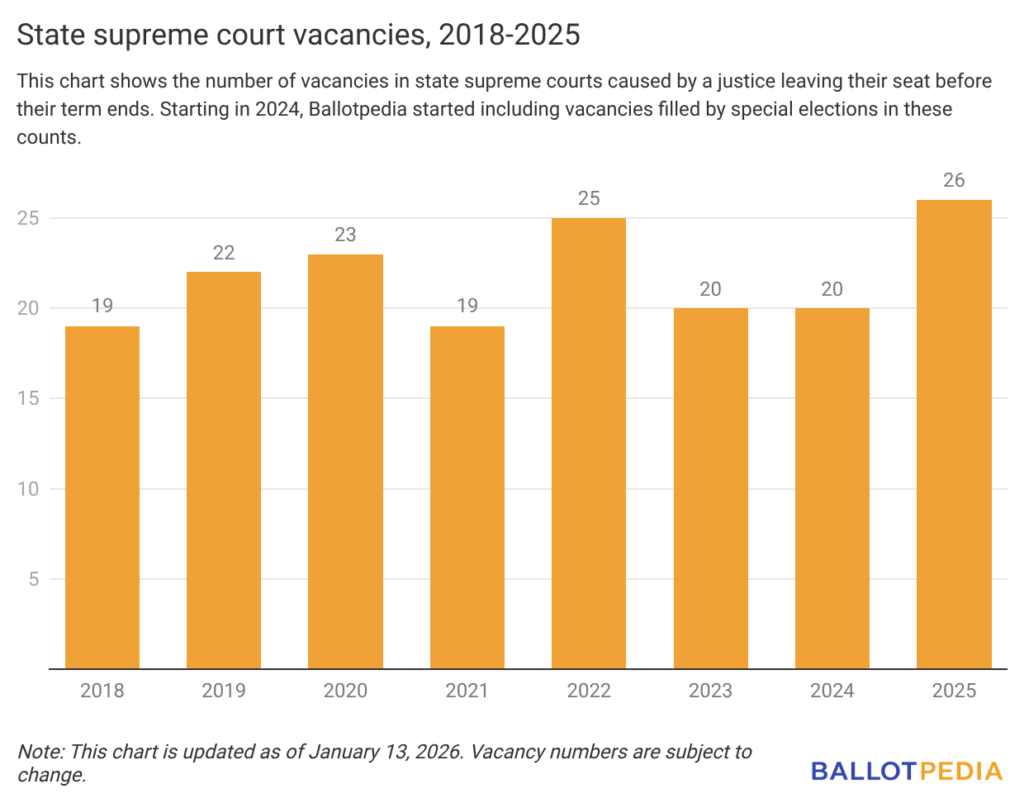
In 2025, 26 vacancies occurred in 20 state supreme courts nationwide. That's the most vacancies in a single year since we started following this data in 2018.
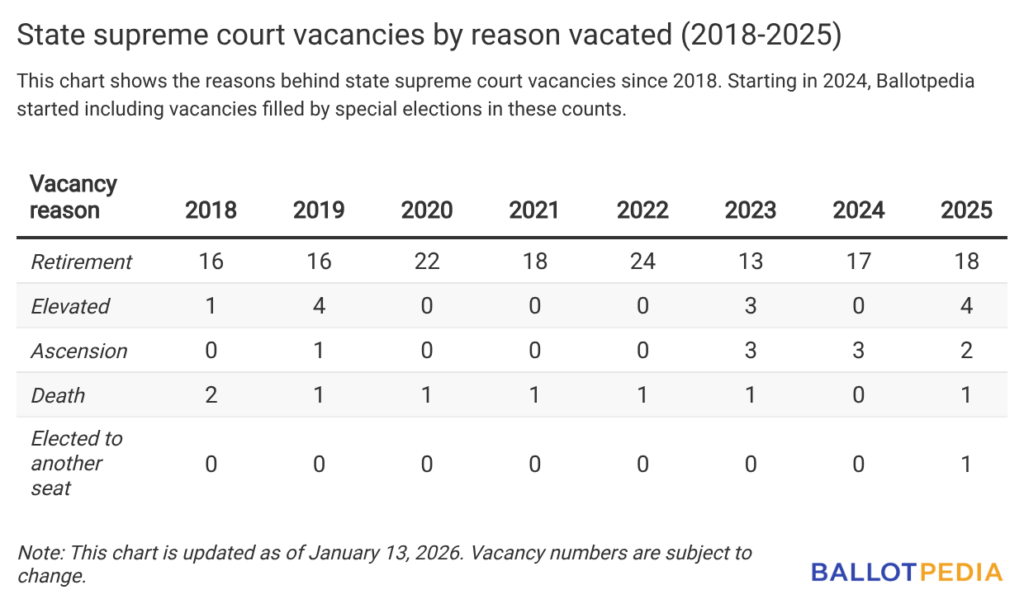
Eighteen of the 26 vacancies happened because a justice retired from their seat. Four vacancies happened because President Donald Trump (R) nominated the justices to be elevated to federal judicial positions. Two associate justices became chief justices, leaving their associate justice seats vacant. One justice died while serving, and one justice was elected to a different seat on the same court.
On Sept. 2, Trump nominated three sitting state supreme court justices to federal district court positions in Alabama and Mississippi.
These nominations marked the first federal judicial elevations of state supreme court justices since 2022, when President Joe Biden (D) nominated then-Justice Maria Araujo Kahn of Connecticut to the U.S. Court of Appeals for the Second Circuit.
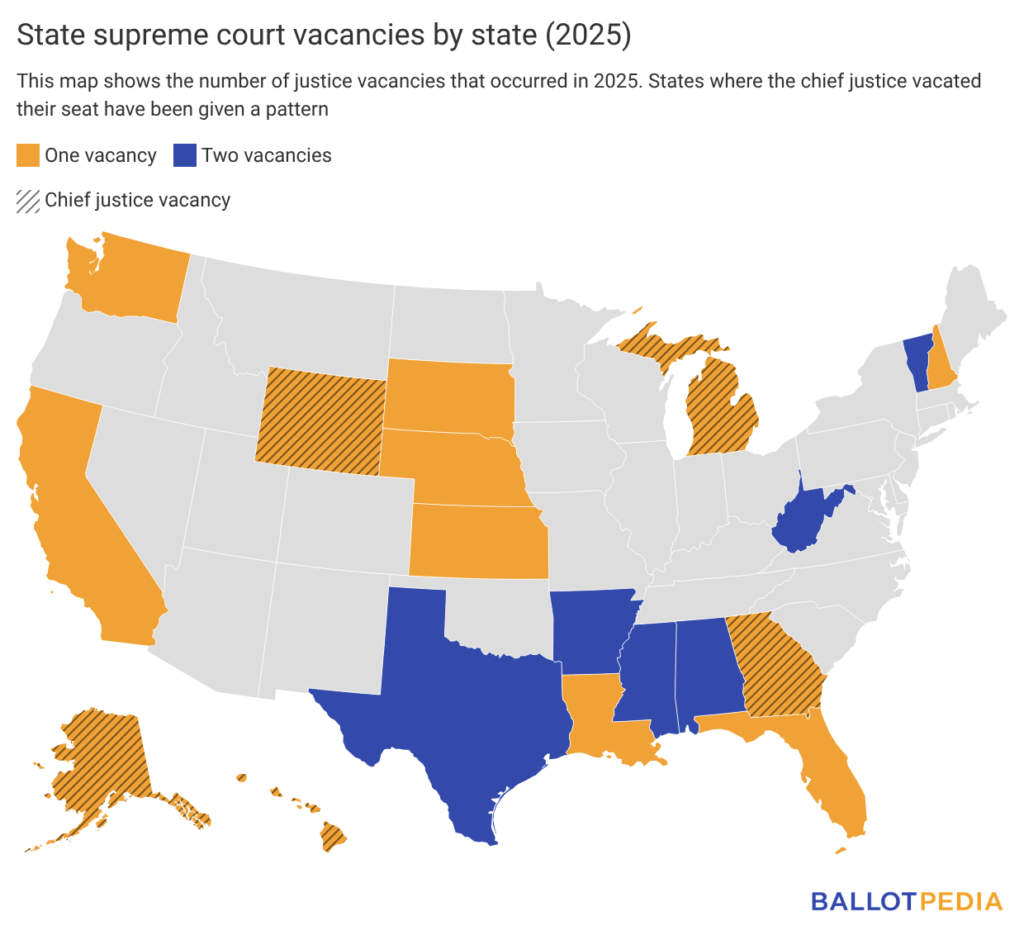
The 26 vacancies occurred across 20 states, with six states each experiencing two vacancies. In Arkansas and Texas, an associate justice ascended to the chief justice position, leaving their associate justice seats vacant.
This year saw a large number of justices retire from states that border the Gulf: Alabama, Florida, Louisiana, Mississippi, and Texas. Collectively, eight justices in these states retired in 2025, accounting for approximately one-third of all vacancies that year.
Five chief justices resigned from their seats in Alaska, Georgia, Hawaii, Michigan, and Wyoming. In three of these states, the vacancy allowed the governor to appoint a replacement chief justice. In Alaska and Georgia, however, the state supreme court selects the chief justice by chamber vote. In these two cases, the chamber appointed an associate justice to succeed the outgoing chief justice. By comparison, four chief justices vacated their seats in 2024.
Six vacancies are scheduled to occur in 2026. All six vacancies resulted from retirements and occurred across six states.
Click here for a full breakdown of 2025 state supreme court vacancies.
On Jan. 21, 1911, New Mexico ratified its state constitution
On this day, Jan. 21, 1911, New Mexico voters ratified the state constitution. One year later, on Jan. 6, 1912, New Mexico was admitted to the Union as the 47th state.
This was the longest wait between territorial organization and statehood for any U.S. state. Congress established New Mexico as a U.S. territory in 1850, and it was admitted as a state more than 61 years later, in 1912.
Other U.S. territories with some of the longest waits for statehood included Arizona (49 years, becoming the 48th state in 1912), Alaska (47 years, becoming the 49th state in 1959), and Hawaii (59 years, becoming the 50th state in 1959).
After becoming a U.S. territory in 1850, New Mexico drafted four constitutions. Voters approved the first constitution in 1850, but Congress did not admit New Mexico as a state. Voters later rejected constitutions drafted during conventions held in 1872 and 1889.
On June 20, 1910, Congress authorized qualified electors in the New Mexico Territory to vote for and choose delegates for the constitutional convention in order to draft another constitution. Delegates gathered in Santa Fe on October 3, 1910, to write the constitution. On November 21, 1910, the convention voted 79-18 to adopt the proposed constitution.
Voters needed to ratify the new constitution. On Jan. 21, 1911, voters approved the new constitution 70.3% to 29.7%. The new constitution included the veto referendum process in the state, which allows voters to uphold or repeal an enacted law. New Mexico became the 47th state on Jan. 6, 1912.
The Constitution of 1910 is still in effect today. The constitution was amended 182 times. The process to amend the constitution requires voter approval of a legislatively referred amendment, or voters ratifying amendments proposed by a constitutional convention. The last time the constitution was amended was in 2024, when voters approved four constitutional amendments.
Click here for more information about the measure to ratify the New Mexico Constitution.