


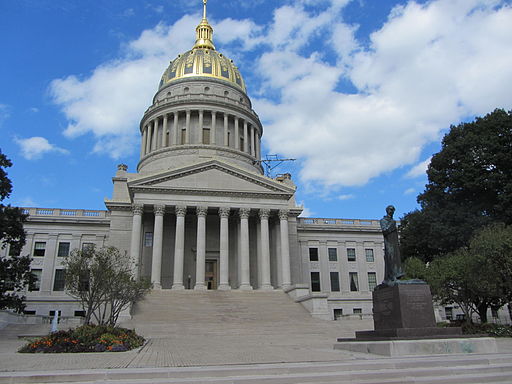
This November, West Virginia voters will decide on a constitutional amendment that would provide that only U.S. citizens may vote in elections.
The amendment, Senate Joint Resolution 9 (SJR 9), was referred to the ballot by the West Virginia State Legislature, with the House voting 97-0 on March 13, and the Senate voting 34-0 on March 14.
The amendment would change the wording in the West Virginia Constitution from saying “Citizens of the state shall be entitled to vote” to “only citizens of the state who are citizens of the United States are entitled to vote.”
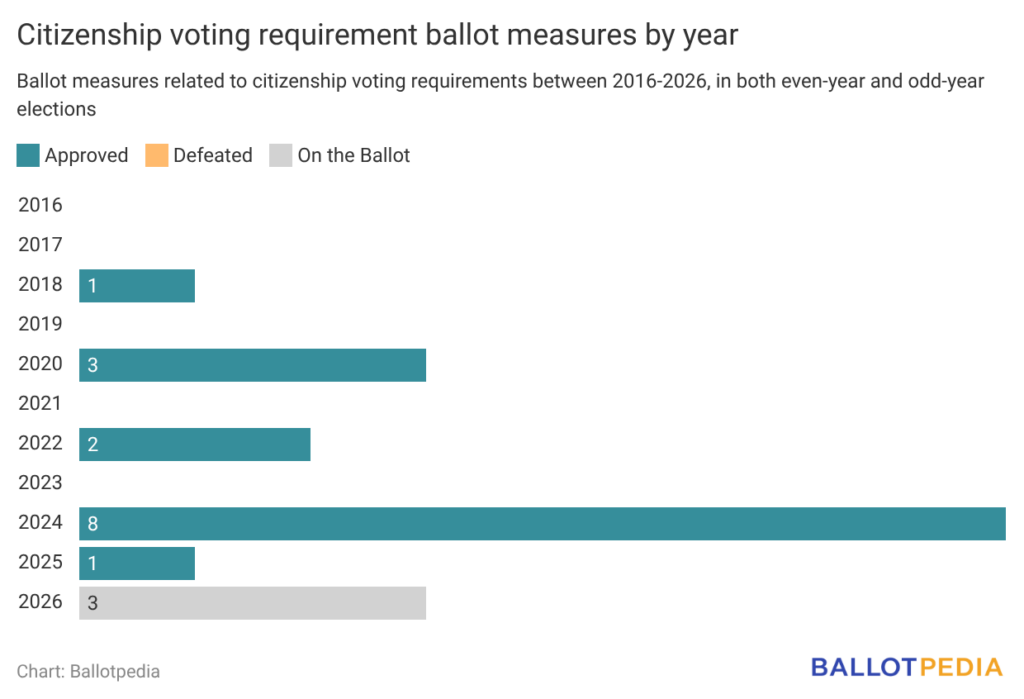
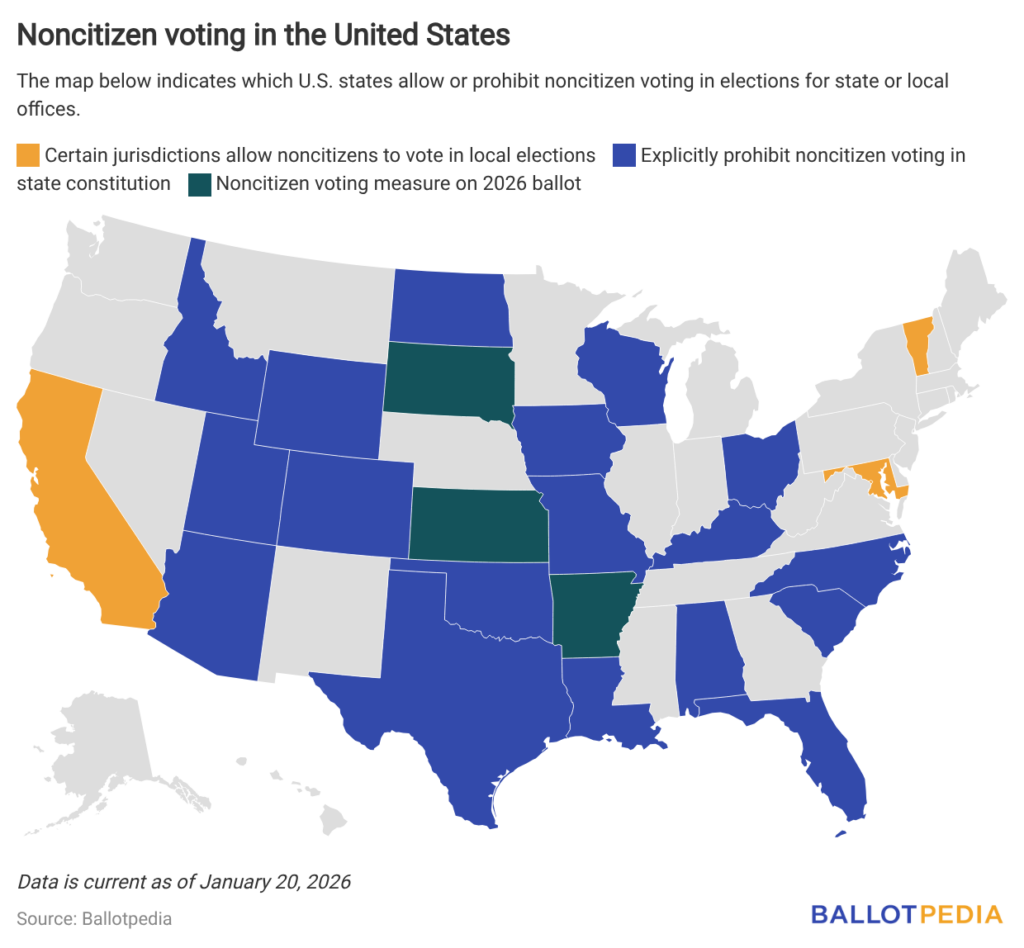
West Virginia is the fourth state to place a citizenship voting requirement amendment on the ballot in 2026. This year, voters in at least three other states—Arkansas, Kansas, and South Dakota—will decide on constitutional amendments to prohibit noncitizen voting. Initiative campaigns in both Alaska and Michigan have also submitted signatures to place measures on the ballot.
Ballot measures to prohibit noncitizen voting have become more common in recent years. From 2018 to 2025, voters approved 15 ballot measures adding language about citizenship requirements for voting. In 2024, eight statewide measures to prohibit noncitizen voting were approved by voters—the greatest number of noncitizen-voting-related measures to appear on statewide ballots in any election year.
In 1996, the U.S. Congress passed a law prohibiting noncitizens from voting in federal elections, including those for the U.S. House, the U.S. Senate, and the presidency. This law does not apply to elections for state and local offices. Every state requires voters to attest that they are U.S. citizens when registering to vote.
While no state constitution explicitly allowed noncitizens to vote in state or local elections, some states have jurisdictions that allow noncitizens to vote in some or all local elections. The District of Columbia and certain municipalities in California, Maryland, and Vermont allow noncitizens to vote in some or all local elections. Meanwhile, 18 states include language explicitly prohibiting noncitizen voting in their state constitutions.
West Virginia State Sen. Mark Maynard (R-6), who co-sponsored the resolution, said, “Requiring voters to be U.S. citizens ensures that the people making decisions about our government are those who are permanent members of our nation and communities. Individuals who are in the country temporarily—such as those on work visas or green cards—or those who are not legally present may not remain here long-term to experience the benefits or consequences of the policies enacted. Voting is a fundamental part of self-government, and it is appropriate that those decisions be made by citizens who have a lasting stake in the future of the country.”
While the resolution received a unanimous vote in both the House and Senate, Del. Mike Pushkin (D) questioned the amendment, saying, “Think about some of the things we could be discussing … Instead, we’re discussing a resolution that doesn't actually change anything, or, you know, provide funding for public education. We haven’t been able to update our school aid funding formula in a manner that gives it the attention it deserves. Instead, we’re going to discuss a joint resolution to have a constitutional amendment that changes absolutely nothing.”
The citizenship requirement for voting amendment, alongside a homestead tax exemption amendment, will be decided on Nov. 3, 2026.