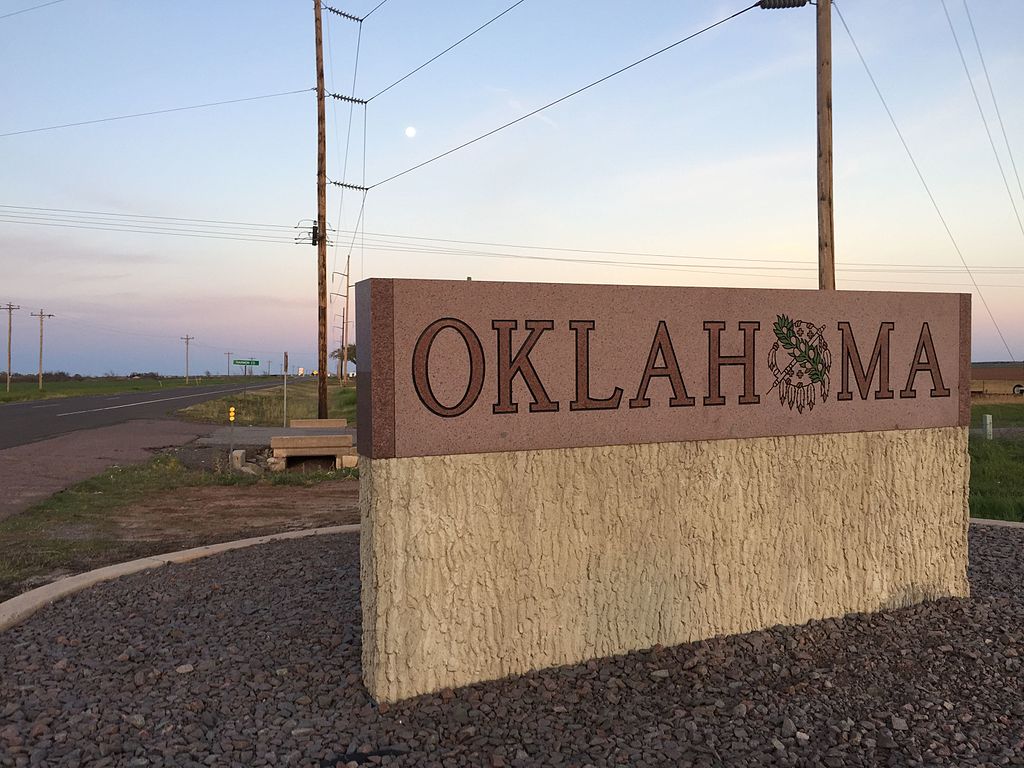
Sen. Alan Armstrong (R-Okla.) signed an affidavit on March 24, 2026, stating that he will not run to represent Oklahoma in the U.S. Senate in 2026.
On March 24, 2026, Oklahoma Gov. Kevin Stitt (R) appointed Armstrong to represent the state in the U.S. Senate. Markwayne Mullin (R) previously held the seat before he resigned on March 23, 2026, to serve as the U.S. secretary of homeland security in President Donald Trump’s (R) second term. After Armstrong's appointment, Oklahoma law required him to sign an affidavit stating that he would not run for a full term in the U.S. Senate in 2026.
On his appointment, Armstrong said, “My short time in the Senate will be tightly focused on meaningful permitting reform to get Americans access to whatever affordable energy solutions they choose. Infrastructure is foundational to growing our economy, ensuring American energy independence, and driving innovative solutions that Oklahomans have always delivered.”
As of March 17, 2026, independent race forecasters The Cook Political Report and Inside Elections have rated the 2026 general election for the seat as Solid Republican. Sabato’s Crystal Ball rated it Safe Republican.
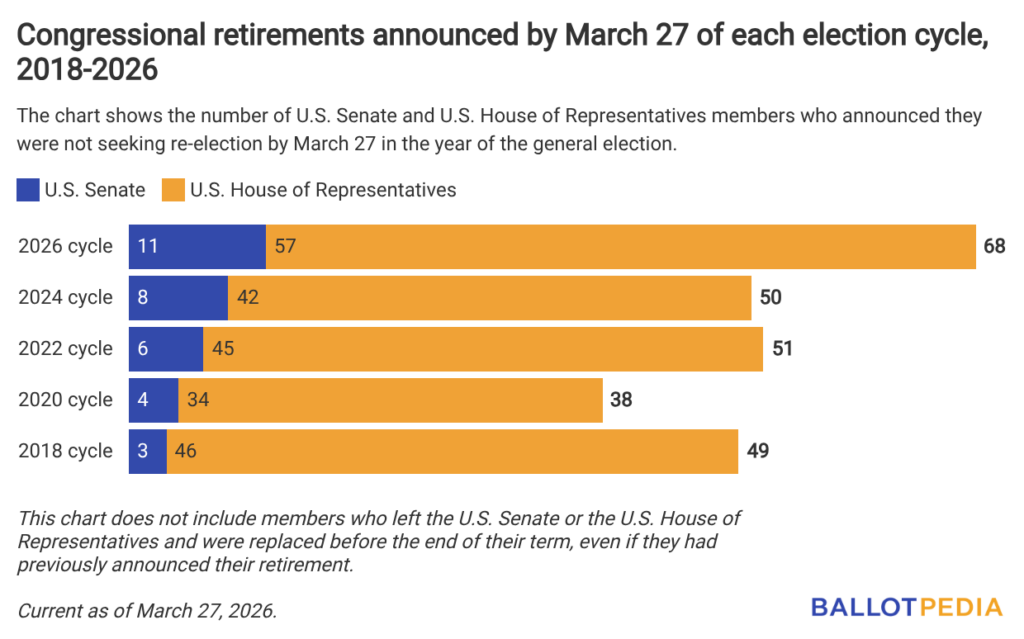
As of March 27, 2026, Armstrong is one of 68 members of Congress — 11 U.S. senators and 57 U.S. House members — who have announced they will not seek re-election to their current seats in 2026.
Of the senators not running for re-election, 10 — Armstrong, Steve Daines (R-Mont.), Cynthia Lummis (R-Wyo.), Joni Ernst (R-Iowa.), Thom Tillis (R-N.C.), Dick Durbin (D-Ill.), Jeanne Shaheen (D-N.H.), Mitch McConnell (R-Ky.), Tina Smith (D-Minn.), and Gary Peters (D-Mich.) — announced their retirements from public office, while the other, Sen. Tommy Tuberville (R-Ala.), is running for governor of Alabama.
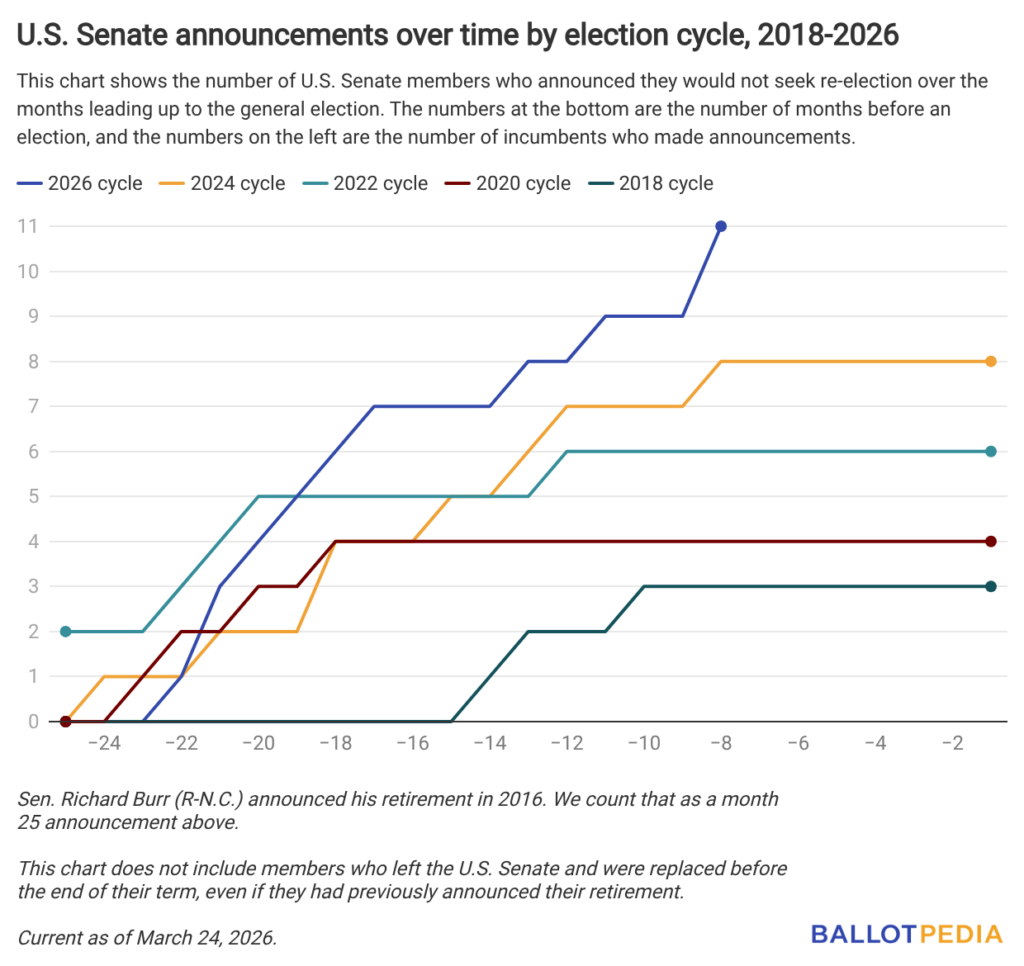
Compared to the last four election cycles, there were eight Senate retirement announcements at this point in 2024, six in 2022, four in 2020, and three in 2018.
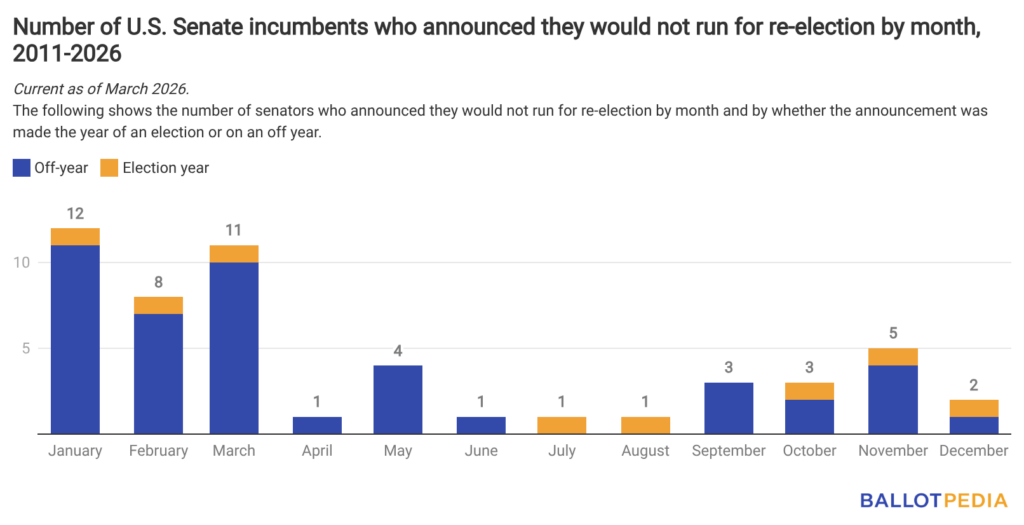
Between January 2011 and March 2026, 52 U.S. Senate incumbents announced they would not seek re-election. During that period, an average of three incumbents announced their retirement plans each year. January had the highest number of members announcing they would not run for re-election at 12. The fewest announcements took place in April, June, July, August, and December at one each.