


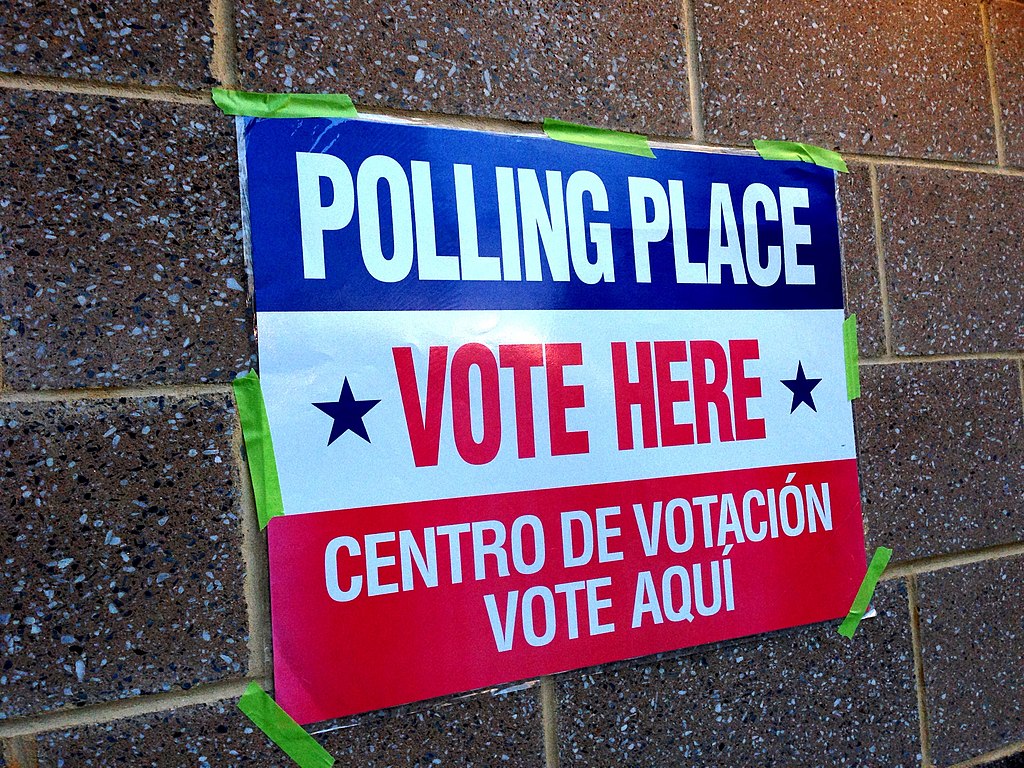
Legislatures in 12 states—Alaska, Arizona, Arkansas, Colorado, Connecticut, Hawaii, Illinois, Minnesota, Missouri, Oklahoma, South Carolina, and Vermont—are set to adjourn in May 2026. In the coming weeks, lawmakers in these states will decide whether to advance measures to the statewide ballot. Across these states, at least 60 potential ballot measures have already completed at least half of the process required to qualify for the ballot.
Alaska
The Alaska State Legislature will adjourn on May 20, 2026, and is currently considering two referrals — both of which are constitutional amendments:
- Senate Joint Resolution 2: The amendment would require a two-thirds (66.67%) vote to overturn a governor's veto of a bill that raises revenue or appropriates funds. As of 2026, a three-fourths (75%) vote was required to overturn the veto of any bill.
- Senate Joint Resolution 29: The amendment would create a separate fund in the state treasury dedicated to public education.
Arizona
The Arizona State Legislature will adjourn on May 22, 2026, and is currently considering 30 referrals — 19 of which are constitutional amendments, and 11 of which are state statutes:
- Senate Concurrent Resolution 1032: The statute would require school districts with more than 7,500 students to spend at least 60% of their budget on direct instructional expenses, as defined by the auditor general.
- Senate Concurrent Resolution 1049: The amendment would allow individuals sentenced to the death penalty to choose as their method of execution either a firing squad, lethal injection, or lethal gas.
- Senate Concurrent Resolution 1010: The amendment would add, "failing to follow and enforce a state law or court rule" to the list of offenses for which a governor, state officer, or judicial officer could be impeached.
- House Concurrent Resolution 2051: The statute would make changes to the approved process for gathering signatures for an initiative petition. The measure would require paid circulators to state their state of residency and their status as a paid circulator when they approach an individual to request that they sign the petition. Additionally, paid circulators would be required to wear a clearly visible badge that states the same.
- Senate Concurrent Resolution 1031: The amendment would require that the mapping process for the state's legislative districts create districts of equal citizen population in a grid-like pattern.
- House Concurrent Resolution 2016: The statute would require that each voting precinct have no more than 2,500 voters. The measure would also remove the ability of the election board of supervisors to authorize the use of voting centers instead of polling places.
- Senate Concurrent Resolution 1012: The statute would increase the number of academic years a student enrolled in community college and in the Arizona teachers academy would be eligible to receive state scholarships to four.
- Senate Concurrent Resolution 1002: The statute would increase the limit for financial contributions to campaign committees that do not need to be itemized on campaign finance reports. As of 2026, the limit is $100 per individual contribution. The measure would also increase the limit to $200 per individual transaction.
- Senate Concurrent Resolution 1040: The amendment would increase the mandatory retirement age for justices and judges from 70 to 75.
- Senate Concurrent Resolution 1023: The amendment would change the name of the Fair and Independent Redistricting Commission, require that the pool of candidates for the commission consist of 30 nominees instead of 25, move the deadline of organizing the commission to March 15, and increase the size of the commission from five to nine members.
- Senate Concurrent Resolution 1022: The amendment would increase the size of the state House of Representatives from 60 to 90 members. It would also require that each state Senate district be comprised of three complete state house districts.
- Senate Concurrent Resolution 1029: The amendment would prohibit the state mine inspector from serving more than two consecutive terms in office. The same candidate would again be able to serve as the mine inspector after one full term out of office.
- Senate Concurrent Resolution 1027: The amendment would require that the general election for city, town, and school district officers be held on the first Tuesday after the second Monday in November.
- Senate Concurrent Resolution 1025: The amendment would require the regular sessions of the state legislature to begin on the fourth Monday in January instead of the second Monday.
- Senate Concurrent Resolution 1013: The statute would prohibit a government entity from using donations of any kind from a foreign national to administer an election. Additionally, the measure would prohibit campaigns supporting or opposing ballot measures from accepting funding from foreign nationals or from organizations that have received more than $100,000 in funding from a foreign national in the past four years.
- Senate Concurrent Resolution 1005: The statute would prohibit foreign nationals from contributing money, goods, or services to influence the outcome of an election on an initiative, referendum, or ballot measure.
- House Concurrent Resolution 2044: The amendment would prohibit government agencies, including public education systems, from requiring an applicant, student, or employee to endorse promoting preferential treatment toward or discrimination against an individual or group on the basis of race or ethnicity.
- House Concurrent Resolution 2040: The amendment would prohibit school districts and their employees from using public resources and money to support a labor organization and its operations, deduct payment from an employee's paycheck to be used for membership dues for a labor organization, provide access to the school's communication systems to distribute labor organization materials, distribute communications on behalf of a labor organization if it consumes public resources, and use public resources and money to perform labor organization activities during working hours.
- Senate Concurrent Resolution 1006: The statute would require schools to provide an accommodation for students that are unwilling to use the bathroom, locker room, or other private space dedicated for their sex.
- House Concurrent Resolution 2004: The statute would prohibit the state, or other government entity, from using photo enforcement systems to identify people who violate certain traffic ordinances, including traffic signs, markings, signals, and speed restrictions.
- Senate Concurrent Resolution 1003: The amendment would exempt virtual currency from state property tax, defined as "a digital representation of value that functions as a medium of exchange, a unit of account and a store of value other than representation of the United States Dollar or a foreign currency."
- House Concurrent Resolution 2058: The statute would require the joint legislative budget committee director to order an audit of the Arizona health care cost containment system.
- House Concurrent Resolution 2005: The amendment would require that the regular legislative session end on or before April 30 of each year.
- House Concurrent Resolution 2003: The statute would prohibit schools and athletic associations from authorizing a student, athlete, employee, or other individual from using a restroom, locker room, shower room, or other private space that is not designated for their sex. The measure would define sex as the "biological status as male or female as recorded at birth on the individual's original birth certificate."
- Senate Concurrent Resolution 1028: The amendment would require that a bill be approved by the state legislature by a two-thirds vote if that bill would authorize a fee or assessment.
- Senate Concurrent Resolution 1024: The amendment would require that members of the state legislature be residents of their district for at least one year before they are elected.
- House Concurrent Resolution 2056: The amendment would add a right to refuse medical mandates to the state constitution.
- Senate Concurrent Resolution 1020: The amendment would adjust state legislative salaries that were most recently approved by voters by inflation or deflation on January 1 of each year.
- Senate Concurrent Resolution 1001: The amendment would change the state's election laws by specifying that only citizens may vote in any election in the state and requiring voters to provide government-issued identification to cast a ballot.
- House Concurrent Resolution 2048: The amendment would withhold the salaries of the Governor, Lt. Governor, and state legislators if the budget for the next fiscal year has not been signed by April 30 of each year. Any salaries that are withheld after April 30 would not be paid retroactively after the budget bill is signed.
Arkansas
The Arkansas General Assembly will adjourn on May 7, 2026, but no referrals have been passed in either chamber this session. However, there are four referrals (three constitutional amendments, one state statute) that have already made the statewide ballot for 2026.
Colorado
The Colorado General Assembly will adjourn on May 13, 2026, but no referrals have been passed in either chamber this session.
Connecticut
The Connecticut General Assembly will adjourn on May 6, 2026, but no referrals have been passed in either chamber this session.
Hawaii
The Hawaii State Legislature will adjourn on May 8, 2026, and is currently considering seven referrals — all of which are constitutional amendments:
- Senate Bill 350: The amendment would provide in the state constitution that "no law shall be enacted, nor any state action taken, that denies or interferes with a person's right to obtain contraceptives or voluntarily engage in contraception."
- Senate Bill 311: The amendment would provide in the state constitution that election expenditures are not a form of constitutionally protected free speech.
- Senate Bill 2152: The amendment would increase the mandatory retirement age for justices and judges from 70 to 75.
- Senate Bill 3219: The amendment would authorize the state legislature to empower the counties and municipalities of the state to issue housing infrastructure growth bonds for specified public works, public improvements, and community development.
- House Bill 2147: The amendment would repeal the counties' exclusive power to tax real property, and authorize the state legislature to establish a surcharge on real property taxes levied by the counties on certain residential investment properties for the purpose of funding public education.
- Senate Bill 2315: The amendment would remove the requirement that constitutional amendments in Hawaii must be approved by a majority of voters casting a vote in an election.
- Senate Bill 124: The amendment would change the state legislative reapportionment process to determine district populations using the decennial U.S. Census, rather than the permanent resident population.
Illinois
The Illinois General Assembly will adjourn on May 31, 2026, and is currently considering one referral, which is a constitutional amendment:
- House Joint Resolution Constitutional Amendment 28: The amendment would establish a ranked criteria for legislative redistricting, including the creation of racial coalition districts.
Minnesota
The Minnesota State Legislature will adjourn on May 18, 2026, but no referrals have been passed in either chamber this session.
Missouri
The Missouri General Assembly will adjourn on May 15, 2026, and is currently considering six referrals — all of which are constitutional amendments:
- House Joint Resolution 115: The amendment would provide for a homestead property tax exemption or 100% disabled veterans and surviving spouses.
- House Joint Resolution 154: The amendment would establish work requirements for adults ages 19-64 to qualify for Medicaid coverage.
- Senate Joint Resolution 87: The amendment would require the election of county sheriffs and establish that the county sheriff is the chief law enforcement officer in most counties.
- House Joint Resolution 169: The amendment would establish limits on state and local government revenue and spending, and require voter approval for new tax increases.
- Senate Joint Resolution 95: The amendment would create an investment fund managed by the state to generate revenue, and use the earnings to eliminate state-imposed taxes when sufficient to replace them.
- House Joint Resolution 159: The amendment would allow the state treasurer to invest in municipal securities possessing high credit ratings, as well as other financial instruments and securities.
Oklahoma
The Oklahoma State Legislature will adjourn on May 29, 2026, and is currently considering 13 referrals — 12 of which are constitutional amendments, and one is a constitutional convention question.
The following four referrals are being considered for the Aug. 25, 2026, ballot:
- House Joint Resolution 1067: The amendment would allow the state legislature to decide not to cover the additional costs to the state if the federal funding participation for Medicaid is less than 90%.
- Senate Joint Resolution 39: The amendment would reduce the annual growth limit of the calculated fair cash value of property from 5% to 4%.
- House Bill 4440: The amendment would remove the prohibition on the state legislature from creating restrictions on Medicaid eligibility.
- House Joint Resolution 1077: The amendment would allow real property assets, stocks, and other equity investments to be appropriated to the state's Tobacco Settlement Endowment Trust fund.
The following nine referrals are being considered for the Nov. 3, 2026, ballot:
- House Joint Resolution 1089: The constitutional convention question would call a state constitutional convention, beginning in January 2027, to amend or rewrite the state constitution and propose changes to voters for approval or rejection.
- House Joint Resolution 1055: The amendment would make the superintendent of public instruction an appointed office.
- House Joint Resolution 1084: The amendment would prohibit state courts and the government from recognizing or enforcing any law, practice, or religious code that "does not recognize and protect the same or equivalent individual rights and liberties guaranteed under the Constitution of the State of Oklahoma or the Constitution of the United States of America."
- House Joint Resolution 1046: The amendment would create a property tax exemption for the full value of a primary residence if the property is damaged by severe weather events and is uninhabitable for at least six months.
- House Joint Resolution 1069: The amendment would remove the constitutional requirement for voter approval for county formation and instead provide for the legal description for all 77 counties using modern land surveys and GIS data.
- House Joint Resolution 1081: The amendment would remove the income requirement for seniors to qualify for a property tax freeze.
- House Joint Resolution 1070: The amendment would require that a candidate for attorney general be a licensed attorney and have practiced law in the state for at least five years.
- Senate Bill 1114: The amendment would provide for a property tax credit for individual heads of household at least 65 years old who qualify for the fair cash value freeze.
- House Bill 1101: The amendment would authorize tribal casinos that have a compact with the state to conduct sports betting and enact a 10% fee on a casino's monthly sports betting transaction totals.
South Carolina
The South Carolina State Legislature will adjourn on May 7, 2026, but no referrals have been passed in either chamber this session.
Vermont
The Vermont State Legislature will adjourn on May 8, 2026, and is currently considering one referral, which is a constitutional amendment:
- Proposal 4: The amendment would prohibit the denial of rights to an individual based on their race, ethnicity, sex, religion, disability, sexual orientation, gender identity, gender expression, or national origin.
Additional reading: