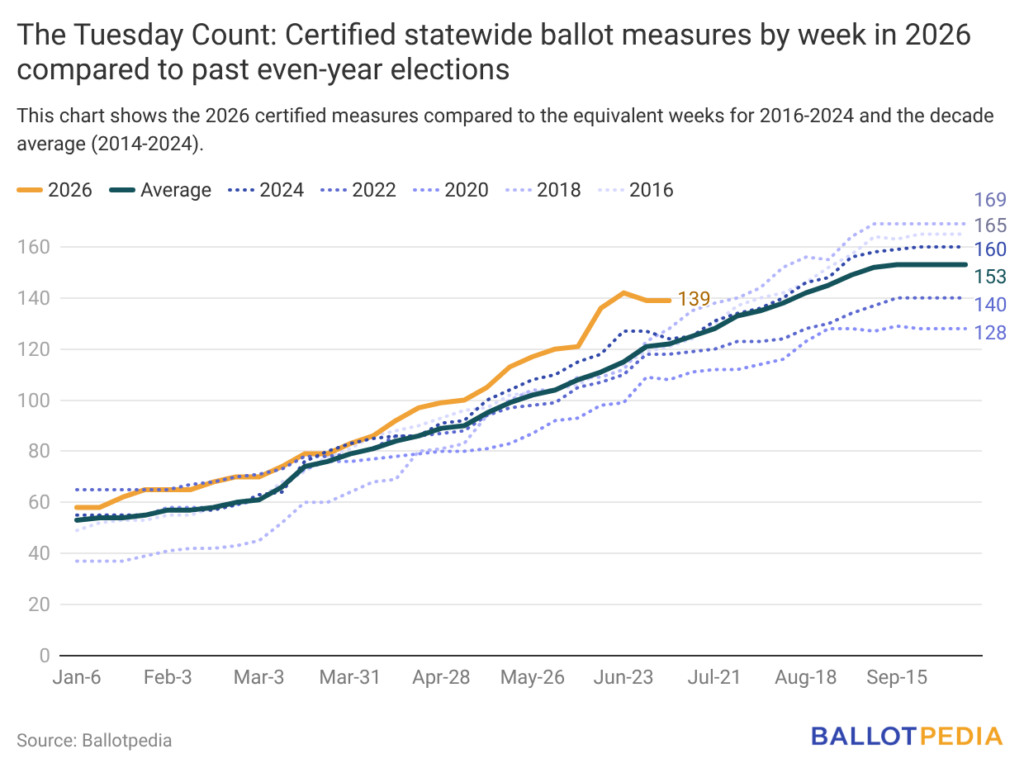
As of July 7, 139 statewide measures have been certified for the ballot in 39 states, 17 more measures than the average number certified at this point in other even-numbered years over the past decade (2014 to 2024).
Here’s an update on the latest ballot measure activity during the past two weeks:
- Four new measures were certified for the ballot in California.
- California Budget Stabilization Account Cap Increase and Gann Limit Changes Amendment: The ballot measure would increase the Budget Stabilization Account (BSA) cap from 10% of general fund revenue to 20% and exclude BSA deposits from the state's spending limit.
- California Prohibit New Taxes on Retirement Holdings, Personal Assets, and Savings and Limit Retroactive Taxes Initiative: The ballot initiative would prohibit new taxes enacted after Jan. 1, 2026, on retirement holdings, individually owned assets, or other personal savings. It would also prohibit retroactive taxes that impose liability based on conduct, activities, or a status that occurred before the tax took effect.
- California Two-Thirds Vote Requirement for Local Special Tax Initiatives and Property Tax Initiative Prohibition Amendment: The ballot measure would require a two-thirds vote by the electorate to enact, extend, or increase local special tax initiatives and prohibit the enactment of property taxes through the initiative process.
- California Veteran and Income-Qualified Housing Bond Measure: The ballot measure would authorize the state to issue $11.25 billion in bonds to fund income-qualified housing programs, such as the Multifamily Housing Program, the CalHome Program, and the Joe Serna, Jr. Farmworker Housing Grant Program.
- Seven measures were removed from the ballot in two states.
- In California, six ballot measures were withdrawn after campaigns and legislators reached compromises.
- The Howard Jarvis Taxpayer Association (HJTA) and state legislators struck a deal: the HJTA would withdraw the Two-Thirds Vote Requirement for Special Taxes Initiative in exchange for the Legislature withdrawing the Vote Requirements for Initiatives Requiring Supermajority Votes Amendment. The legislature also referred a compromise constitutional amendment to the ballot, which would require a two-thirds vote of the electorate to enact, extend, or increase local special taxes proposed through the initiative process and would prohibit initiatives from enacting property taxes.
- The SEIU-UHW West and the California Association of Hospitals reached an agreement under which each organization withdrew its sponsored ballot initiative. The union-backed ballot initiative would have established a compensation limit for executives and managers of private hospitals. The association-backed ballot initiative would have required healthcare unions to disclose their political spending to members and obtain approval from a two-thirds membership quorum before spending on state or local ballot measures.
- Uber and the Consumer Attorneys of California each withdrew their sponsored ballot initiatives after reaching a compromise. The Uber-sponsored initiative would have limited attorney and medical costs in car accident cases and required that victims receive at least 75% of the damages recovered. The Consumer Attorneys of California-sponsored initiative would have classified rideshare companies as common carriers, required annual fingerprint background checks for drivers, and mandated monthly reporting of sexual assault and misconduct incidents.
- North Dakota Constitutional Measure 1, Changes to State Legislative Term Limits Amendment: On June 25, 2026, the North Dakota Supreme Court ruled that the ballot measure was unconstitutional because the legislature is prohibited from proposing changes to term limits under Measure 1 of 2022.
- Signatures have been submitted and are pending verification for 18 citizen-initiated measures in 10 states:
- Arizona Restrict Empowerment Scholarship Account Funds and Require State Board of Education Oversight Initiative
- Arkansas Fundamental Right to Initiative and Referendum and Citizen-Initiated Measures Process Amendment
- Colorado Right to Purchase and Sell Natural Gas for Cooking or Heating in Homes and Businesses Amendment
- Idaho Medical Marijuana Legalization Initiative
- Idaho Reproductive Freedom and Privacy Act Initiative
- Michigan Citizenship Verification and Voter Identification Initiative
- Michigan Utility and Government Contractor Campaign Finance Regulations Initiative
- Missouri Congressional Map Referendum
- Missouri Initiative and Referendum Powers and Legislative Change Requirements Amendment
- Montana CI-132, Require Nonpartisan Judicial Elections Initiative
- Montana CI-133, Add Right to Initiative and Referendum Power to Declaration of Rights Amendment
- Montana Initiative 194, Exclude Political Spending from Artificial Persons’ Charter Powers Initiative
- Nebraska Online Sports Betting Amendment
- Nebraska Regulate Online Sports Betting Initiative
- Nebraska Require a Four-Fifths Vote for Legislative Ballot Initiative Changes Amendment
- Nebraska Sex Requirement for School and College Sports Amendment
- Oregon Criminalize Hunting, Fishing, and Intentional Injury to Animals Initiative
- Washington Repeal Income Tax for Households Earning Over $1 Million Legislation Initiative
The most recent signature deadline for ballot initiatives was July 6, 2026, in Michigan and North Dakota. No additional campaigns submitted signatures by the deadline. However, signatures had been submitted earlier in the year for two Michigan initiatives, which are pending verification, and one North Dakota initiative, which has already been certified for the ballot. The next deadline is August 3 in Colorado.
By this point in even-numbered years from 2014 through 2024, an average of 122 statewide measures had been certified for the ballot. During this period, the average total number of statewide ballot measures certified in an even-numbered year was 153.