


All 151 seats of the Connecticut General Assembly are up for election in 2026.
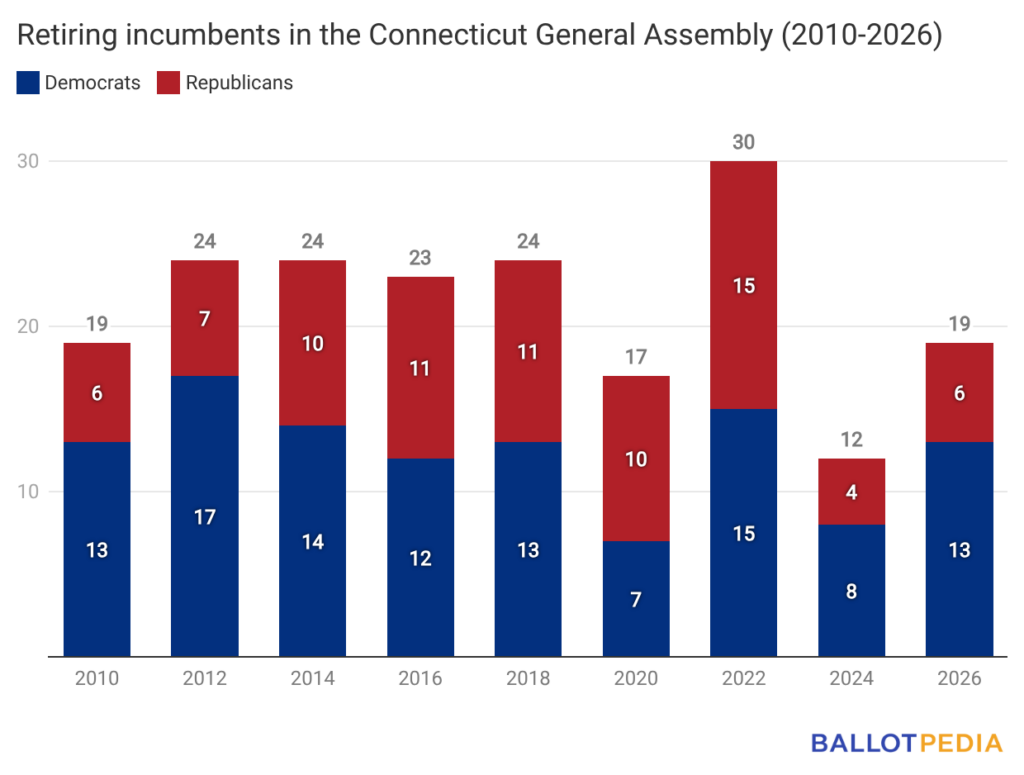
There are five retiring incumbents in the Senate and fourteen retiring incumbents in the House, for a total of 19 open seats. Thirteen retiring incumbents are Democrats, and six are Republicans. An average of about 22 seats were open in even years from 2010 to 2024.
Thirty-one incumbent Senators and 137 incumbent representatives are running for re-election, a total of 168 incumbents. An average of 166 incumbents ran for re-election in even years from 2010 to 2024.
One incumbent is facing primary challengers in the Senate. There are four incumbents – three Democrats and one Republican – facing challengers in the House.
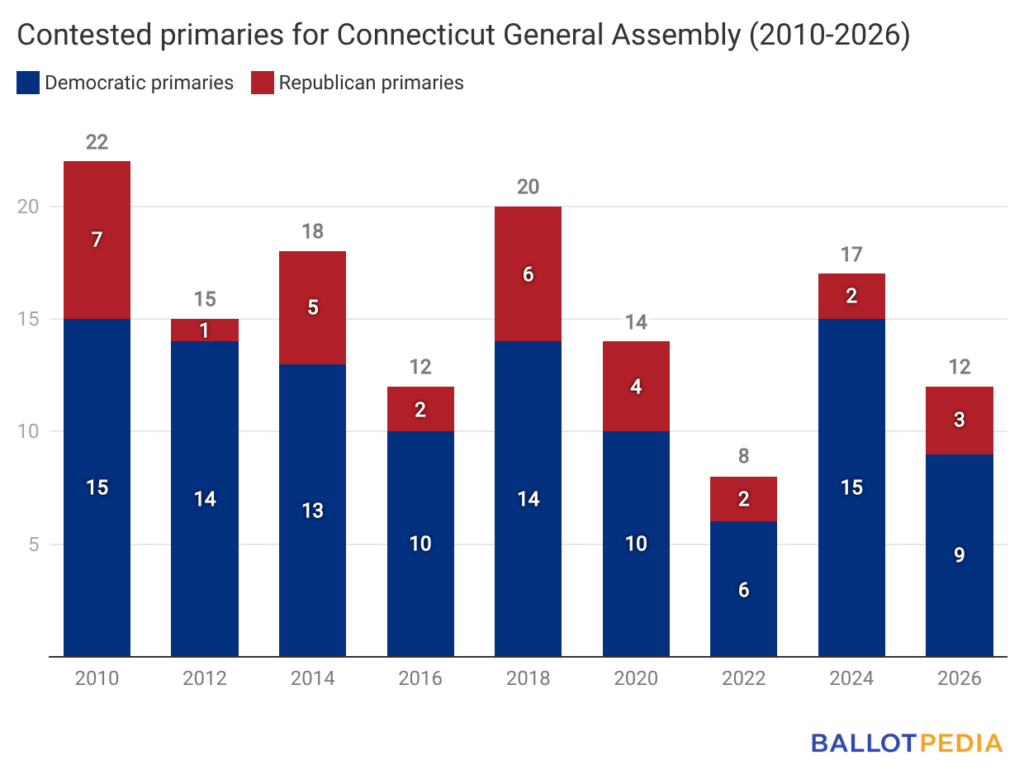
There are 12 contested primaries across both chambers. Two Democratic primaries and one Republican primary in the Senate and seven Democratic primaries and two Republican primaries in the House. An average of about 16 primaries were contested in each even year from 2010 to 2024.
A total of 346 candidates are running in the primaries. Of those, 194 are Democrats, and 152 are Republicans.
Connecticut is one of eight states in which fewer than 5% of seats would need to change party control to break an existing supermajority. Ballotpedia calls those state supermajorities highly exposed to breaking. Of these states, five have Republican supermajorities, and three have Democratic supermajorities. Click here to learn more about our supermajority analysis.
Heading into the 2026 elections, Democrats had a 25-11 supermajority in the state Senate and a 102-49 supermajority in the state House. In Connecticut, a two-thirds vote is required in both chambers to override the governor’s vetoes. In both chambers, a two-seat loss would result in the party falling below the two-thirds threshold. Democrats have had a trifecta in Connecticut since 2011.