


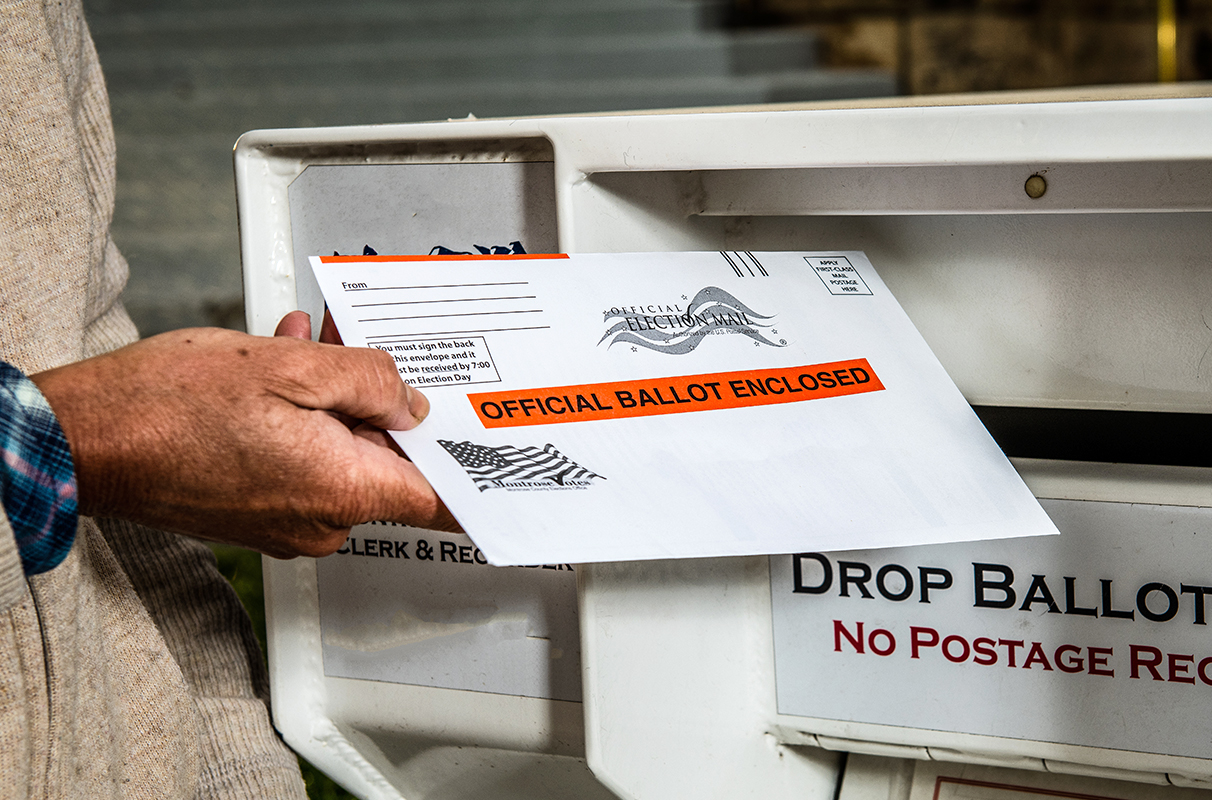
Seven ballot measures related to campaign finance will be featured on ballots in six states in 2026 — five measures this November and two measures decided earlier this year.
On Nov. 3, voters in Alaska will decide on a ballot initiative to eliminate campaign finance provisions that require persons and entities that contribute more than $2,000 and that were themselves derived from donations, contributions, dues, or gifts to disclose the true sources (as defined in law) of the political contributions. It would also repeal the top-four primaries and ranked-choice voting general elections adopted in 2020. President Donald Trump (R), U.S. Rep. Nick Begich (R), Gov. Mike Dunleavy (R), and Elon Musk have endorsed the measure. Opponents include Alaska Senate President Gary Stevens (R), Speaker of the House Bryce Edgmon (I), and the Alaska AFL-CIO.
In Arizona, voters will decide on a legislatively referred constitutional amendment that would prohibit a foreign national from making contributions to influence an Arizona election and prohibit others from knowingly accepting such contributions. It would also provide that "only citizens may register and vote in Arizona elections" and require voters to provide government-issued identification to cast a ballot. It was referred to the ballot with unanimous Republican support, and all voting Democratic legislators opposed.
In California, voters will decide on a measure to repeal the ban on public financing of campaigns, enacted in 1988, and allow state and local governments to create programs that provide candidates with public funds under spending limits and eligibility rules. The state legislature placed it on the ballot with unanimous Democratic support and no support from voting Republicans. As of 2026, 14 states provide some form of public campaign financing for state offices.
Michigan voters will decide on a ballot initiative to prohibit regulated electric and gas utilities, government contractors with over $250,000 in annual government contracts, and organizations or individuals with substantial connections to those utilities or contractors from making direct or indirect campaign contributions to candidates for governor, attorney general, secretary of state, the state legislature, and certain local offices, as well as to ballot measure committees. It has been endorsed by State Rep. Donavan McKinney (D), Michigan Secretary of State Jocelyn Benson (D), and Lt. Gov. Garlin Gilchrist II (D). The Michigan Chamber of Commerce and Blue Cross Blue Shield of Michigan oppose it.
Montana voters will be deciding on a ballot initiative to prohibit artificial persons, including nonprofits, trusts, partnerships, corporations, trade associations, or unincorporated associations, and all entities doing business in Montana, from contributing to campaigns, ballot measure elections, or political parties. Former Gov. Steve Bullock (D), former Gov. Marc Racicot, former U.S. Sen. Jon Tester (D), End Citizens United, and League of Women Voters Montana endorsed the initiative. The Montana Chamber of Commerce opposes this initiative.
Earlier this year, in August, voters in Alaska approved an initiative to establish campaign contribution limits for individuals. Voters approved it by 72%. Also in August, Missouri voters defeated a legislatively referred amendment that would have added language prohibiting foreign nationals and foreign adversaries, as defined in law, from spending to support or oppose ballot measures, with penalties for violations, along with changes to the initiative process. It was defeated with 80% opposed.
In 2026, 164 ballot measures were certified for the ballot in 40 states. From 2010 to 2024, the average number of statewide ballot measures in an even-numbered year was 161.