


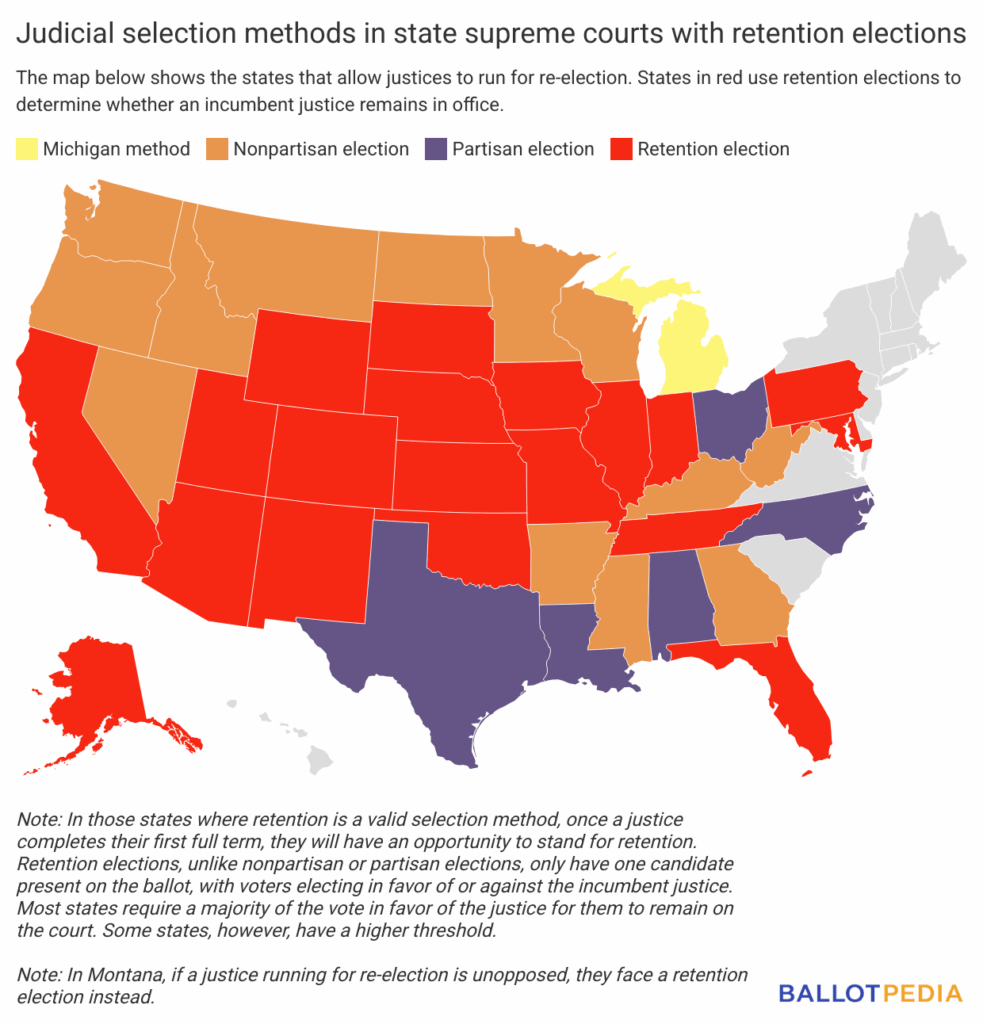
In 38 states, a state supreme court justice has to run for re-election to their seat. Of those states, 20 use retention elections, where voters vote for or against a specific justice, as opposed to voting for multiple candidates.
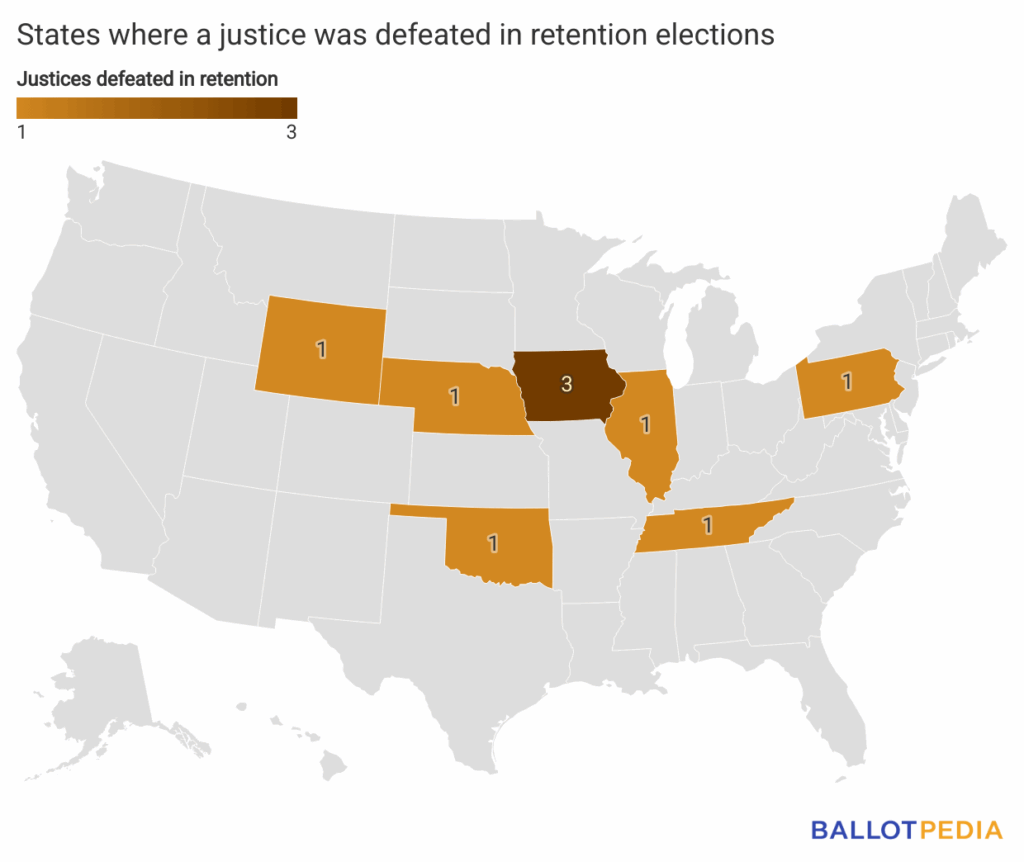
Ballotpedia has analyzed the results of retention elections going back to 1990. Historically, justices have won retention elections most of the time. Since 1990, only nine justices have lost retention elections across seven states. The most recent justice to lose retention was Oklahoma Supreme Court justice Yvonne Kauger in 2024. The year with the most losses was 2010, when voters chose not to retain three Iowa justices.
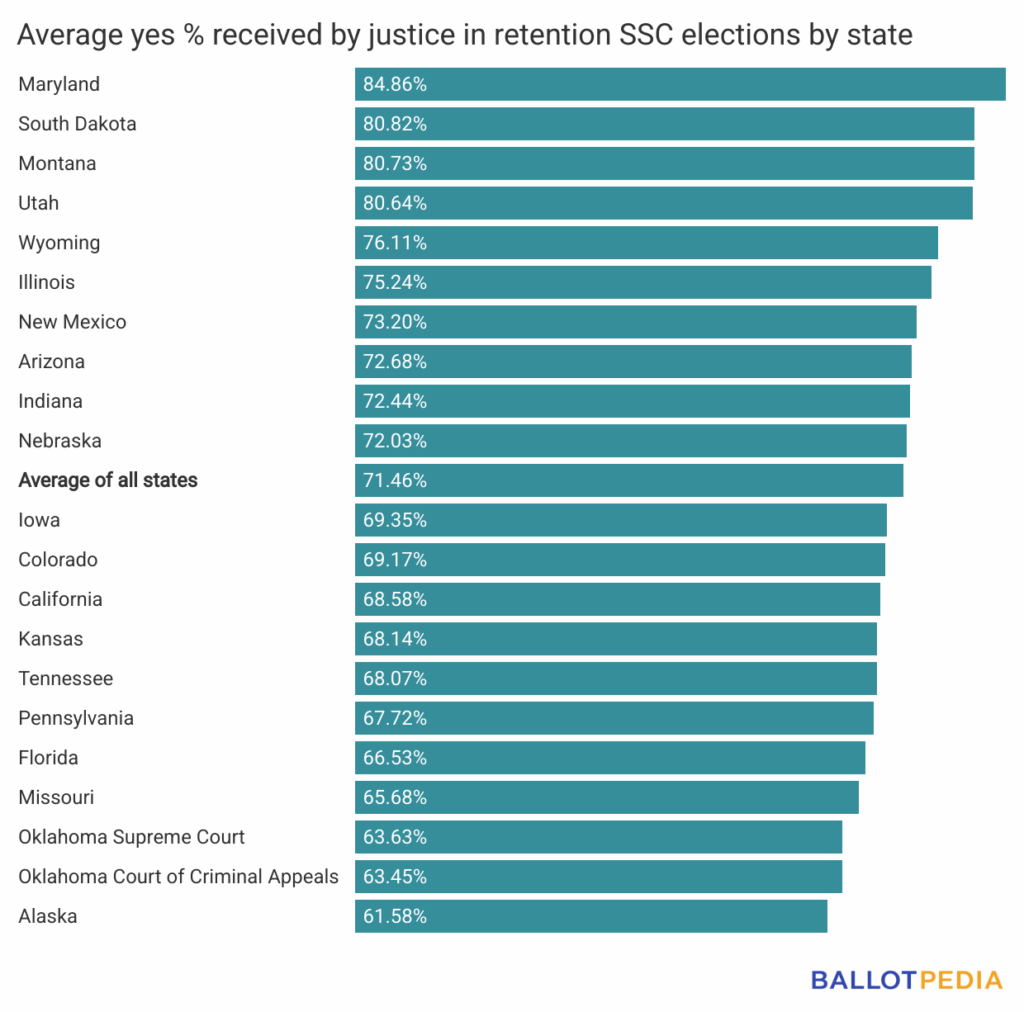
The average justice is retained with 71.46% of the vote. The state with the highest average percentage voting for retention is Maryland (84.86%), and the state with the lowest average is Alaska (61.58%).
Since 1990, the years with the highest average percentage in favor of retention were 2001 and 2013, with the average justice receiving 71.35%. However, both years were odd-year elections, with only one justice up for election in each. The even year with the highest percentage in favor of retention was 2004, when the average justice received 75.3% of the vote. Ten states held 24 retention elections in that year. The lowest odd-year election was 2005 (51.53%), and the lowest even year was 1994 (66.26%)
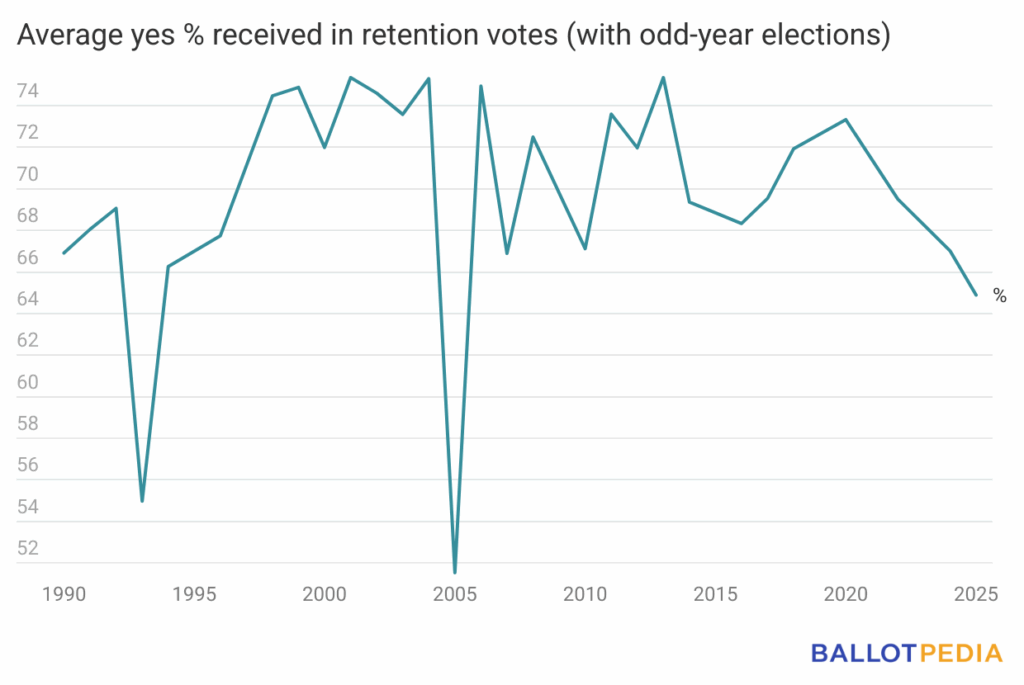
The most recent state to hold retention elections was Pennsylvania in November. These were the first retention elections held in the state since 2017, and determined majority control of the court. The three justices up for election, Christine Donohue (D), Kevin M. Dougherty (D), and David N. Wecht (D), were all retained, receiving 65%, 64%, and 66% of the retention vote, respectively. Pennsylvania, on average, retains justices with nearly 68% of the vote, the sixth lowest total of any state court. Only one justice has lost a retention election in the state, Russell Nigro (D) in 2005.