


Welcome to Hall Pass, a newsletter written to keep you plugged into the conversations driving school board governance, the politics surrounding it, and education policy.
In today’s edition, you’ll find:
- On the issues: The debate over mandated testing in private school choice programs
- School board filing deadlines, election results, and recall certifications
- South Dakota joins federal school choice program as Treasury seeks public input on rules
- Extracurricular: education news from around the web
- Candidate Connection survey
Reply to this email to share reactions or story ideas!
On the issues: The debate over mandated testing in private school choice programs
In this section, we curate reporting, analysis, and commentary on the issues school board members deliberate when they set out to offer the best education possible in their district. Missed an issue? Click here to see the previous education debates we’ve covered.
Private school choice programs provide government funding for educational expenses outside the K-12 public school system, which can include tutoring services, private school tuition, and homeschool curriculum. The programs have become more common in recent years, especially in Republican-led states. Eighteen states have or are set to have programs open to all, regardless of family income.
Critics say private school choice programs divert funding from public schools and effectively subsidize affluent families, many of whom already send their kids to private schools. Proponents say that the programs help families across the income spectrum find the best educational options for their kids. A debate is underway among private school choice supporters over whether lawmakers should require students participating in the programs to take the same state-mandated standardized tests as public school students.
Scott Yenor, a Boise State political science professor and director of the Heritage Foundation’s B. Kenneth Simon Center for American Studies, says that parents are the ones holding private schools accountable, making testing requirements unnecessary. Yenor says previous experiments with school choice regulations, such as those in Louisiana, show they can discourage high-quality private schools from participating in school choice programs, leaving families with subpar options and undermining public support for the policies. Yenor says school choice programs operate at their best when the government takes a hands-off approach that allows private schools to innovate and compete with one another for students.
Ashley Berner, director of the Johns Hopkins Institute for Education Policy, says accountability measures like testing requirements can benefit families and taxpayers in general. Berner says that non-wealthy families typically lack the resources to properly evaluate school quality and navigate school choice systems. She says testing requirements place a floor on school quality, giving parents and taxpayers peace of mind that schools receiving government funding are meeting certain educational standards.
Unregulated School Choice Works Best for Children and for Private Schools | Scott Yenor, Idaho Freedom Foundation
“State testing requirements for private institutions would be incompatible with an effective school choice program. Testing requirements bring a measure of accountability to government schools, but private schools have accountability baked into their constitution — unhappy parents can simply leave, taking their dollars to a different school. In Florida and Indiana, vouchers and ESAs can be used for private school tuition without being subject to state-selected standardized tests.
“State-mandated tests, in general, are a one-size-fits-all approach and won’t work for private schools. Private schools often have unique or specialized missions, so holding them to public standards would force them into a mold, negating all the benefits school choice has to offer. States should eliminate testing requirements from school choice plans so schools do not compromise their missions.”
A Sustainable Path to School Choice | Ashley Berner, American Compass
“[W]hile a wide variety of public and private schools should be eligible for public funding and free to operate as they see fit, all should be held accountable for covering a basic corpus of knowledge. Mastery of this content should be assessed in all schools through rigorous exams, the results of which provide clear signals to parents and teachers about each student’s strengths and weaknesses, and to the public about each school’s. …
“A hands-off approach leaves too many parents behind. Many well-resourced families can navigate the choices and identify high-powered options. But almost 40% of parents in urban contexts are functionally illiterate, with limited social networks. Surveys of parents in high-choice systems, and research on individual voucher programs like Washington, D.C.’s, show that parents newly empowered to exert agency on behalf of their children’s education face a steep learning curve.”
School board update: filing deadlines, election results, and recall certifications
In 2025, Ballotpedia will cover elections for more than 30,000 school board seats. We’re expanding our coverage each year with our eye on covering the country’s more than 80,000 school board seats.
Election results from the past week
On Dec. 2, voters in Atlanta, Georgia, decided three runoff elections for Atlanta Public Schools school board. Four seats on the nine-member board were on the ballot this year, and general elections were held Nov. 4.
In Districts 2, 6, and 8, the top-two vote-getters advanced to the Dec. 2 runoffs.
- District 2: Tony Mitchell defeated Marlissa Crawford 74-26%. Click here to read Mitchell’s responses to our Candidate Connection survey.
- District 6: Patreece Hutcherson defeated incumbent Tolton Pace 54-46%.
- District 8: Kaycee Brock defeated Royce Mann 53-48%. Click here to read Brock’s responses to our Candidate Connection survey.
In Georgia, candidates can win outright with more than 50% of the vote, a threshold that was met in only one of the three races in November. District 4 incumbent Jennifer McDonald defeated challenger Sanjay Mendonca 60-40%.
According to the Atlanta Journal-Constitution’s Martha Dalton, new board members will oversee a $2 billion budget and, potentially, the implementation of “APS Forward 2040,” a proposal for “closing a number of schools due to declining enrollment and rising costs.” The current board is set to discuss the plan on Dec. 3 in a public meeting.
Atlanta Public Schools is the seventh-largest district in Georgia, with roughly 50,000 students.
South Dakota joins federal school choice program as Treasury seeks public input on rules
The nation’s first federal school choice tax credit program doesn’t take effect until Jan. 1, 2027, but some states are already deciding whether to participate. Meanwhile, the U.S. Treasury has started the process it will use to develop regulations governing the program—a step that could influence whether other states join.
The federal tax credit program was included as a provision in the One Big Beautiful Bill Act (OBBBA) that President Donald Trump (R) signed into law on July 4. When the program goes into effect, it will allow individuals to claim a credit of up to $1,700 for donations to qualified Scholarship Granting Organizations (SGOs). Those SGOs will then distribute the funding to eligible students for K-12 educational expenses, including tutoring, public school extracurricular programs, and private school tuition.
In order to qualify for scholarships, students must live in households earning no more than 300% of the area's median gross income and be eligible to enroll in K-12 schools.
Here’s the latest on the program.
South Dakota commits to opting in
Seven states have taken action or stated their position on participation in the federal program, with South Dakota being the most recent to do so.
On Nov. 14, South Dakota Gov. Larry Rhoden (R) announced the state would participate in the program: “Individuals can soon donate to scholarship organizations instead of paying more taxes to the federal government – that is a huge win for taxpayers, schools, and students!”
South Dakota, which has a Republican trifecta, is one of 34 states with at least one private school choice program. South Dakota’s sole program, the Partners in Education Tax Credit, was enacted in 2016. During the 2024-25 school year, it provided 1,771 students with an average scholarship of $2,200. The scholarships are reserved for students from low-income families.
The Partners in Education Tax Credit program is more limited than the universal private school choice programs many Republican-led states have adopted in recent years. Currently, 15 of the 18 states with programs that admit all students regardless of income have Republican trifectas.
In South Dakota, bills to expand private school choice programs have historically struggled to make it very far in the South Dakota Legislature. Earlier this year, the House Education Committee rejected two rival bills that would have established education savings accounts (ESA) participating students could use on private school tuition and other expenses. Then-Gov. Kristi Noem (R) championed HB 1020, which would have established $3,000 ESAs for students from low-income families. The other bill, HB 1009, would have created $7,405 ESAs with no income caps.
Governors or lawmakers in six other states have indicated interest in or opposition to the federal tax credit program
- On Sept. 29, Nebraska Gov. Jim Pillen (R) signed an executive order to signal participation in the program.
- North Carolina lawmakers passed legislation saying the state would participate in the program, but Gov. Josh Stein (D) vetoed the bill on Aug. 6. Stein said the legislation was unnecessary because he would opt North Carolina into the program "[o]nce the federal government issues sound guidance."
- Tennessee Gov. Bill Lee (R) said the state would opt in.
- Governors New Mexico, Oregon, and Wisconsin said they would not participate.
U.S. Treasury seeks public input during rulemaking process
On Nov. 25, the Internal Revenue Service (IRS)and the U.S. Treasury issued a notice requesting comments on proposed implementation of the program. Treasury Secretary Scott Bessent said, “Beginning in 2027, taxpayers can claim a $1,700 federal tax credit for contributions to qualifying Scholarship Granting Organizations, marking the first time a federal tax credit directly supports private donations for K-12 education. Treasury is working with states now to ensure readiness for implementation.”
In a news release, the IRS said it was seeking public comment specifically on the state certification process and oversight of SGOs, handling of multi-state organizations seeking SGO status, and SGO compliance requirements.
Written comments are due Dec. 26.
What are the arguments?
Debates about the tax credit program center on whether states should opt in and how the federal regulations should be designed.
Jorge Elorza, Chief Executive Officer of Democrats for Education Reform, said that the U.S Treasury should not impose rigid programmatic requirements that limit the ability of SGOs to meet diverse educational needs by limiting SGOs' discretion over which qualified expenses to fund, how to distribute scholarships, and what amounts to offer.
Robert Enlow, CEO of EdChoice, said that governors should not be able to limit who can receive scholarships. He said that states should be prohibited from allowing the scholarship for public school students, but not charter or private school students.
Robert Luebke, Director of the Center for Effective Education in the John Locke Foundation, said that federal regulations must honor religious freedom and institutional autonomy, ensuring that religious schools can administer schools in ways consistent with their values and mission.
Learn more about the federal school choice tax credit scholarship program here.
Extracurricular: education news from around the web
This section contains links to recent education-related articles from around the internet. If you know of a story we should be reading, reply to this email to share it with us!
- Minnesota Districts Adopt Softer Shooter Drills Aimed at Reducing Trauma | Governing
- In school voucher rules, Texas lets families get more for pre-K but rejects additional reporting requirements | Texas Tribune
- A Republican homeschooling mom came to love her public schools. Now she’s fighting other conservatives she thinks will destroy them | Idaho Ed News
- School Integration Has Lost Steam. Will Mamdani Revive It in New York? | New York Times
- Standing Up for Parental Rights Has Never Been More Urgent | RealClearEducation
- All praise to the lunch ladies | The Bitter Southerner
- Have Politics Hijacked Education Policy? | Education Week
- Report calls for overhauling how California runs its schools | EdSource
Take our Candidate Connection survey to reach voters in your district
Over the next month, we’ll be highlighting noteworthy or thought-provoking responses to our Candidate Connection survey from this year’s school board election winners. The responses illuminate the range of experiences and viewpoints these elected officials bring to their districts.
If you're a school board candidate or incumbent planning to run in 2026, click here to take the survey. The survey contains more than 30 questions, and you can choose the ones you feel will best represent your views to voters. If you complete the survey, a box with your answers will appear in your Ballotpedia profile. Your responses will also appear in our sample ballot.
If there is an election next year in your community, share the link with your candidates and urge them to take the survey!
Cynthia Stone is a member-elect of the Charlotte-Mecklenburg Schools Board of Education in North Carolina, representing District 5. She will assume office on Dec. 9. She defeated incumbent Lisa Cline 57-43% on Nov. 4. Stone’s career experience includes working as an elementary school teacher, and in corporate tech implementation, end-user design flow, and internal help desk management. Stone has been affiliated with the American Montessori Society and the North Carolina Association of Educators.
Charlotte-Mecklenburg Schools enrolled roughly 144,000 students during the 2023-24 school year.
Here’s how Stone answered the question, “How might you support the mental health needs of students/faculty/staff?”
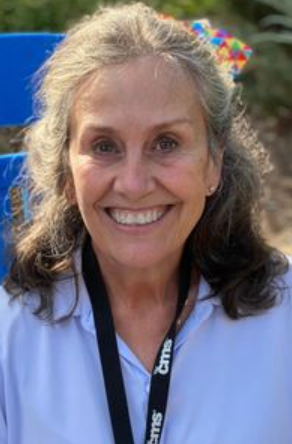
“Teens are dealing with significant mental health challenges and too frequently, elect drastic solutions to resolve their issues. I will advocate for early identification and interventions of mental health concerns for younger students to teach them coping mechanisms and strategies that will enable them to respond to issues in positive and healthy ways. This will involve lowering the student to counselor ratios, protecting counselor time allowing them to focus efforts on student and family needs. Allowing mental health days as excused sick days can provide teachers and staff opportunities to practice self care and access to the professional support systems provided by the district.”
Click here to read the rest of Stone’s responses.
Camille Peterson is at-large member of the South-Western City Schools Board of Education in Ohio. She won re-election in the Nov. 4 general election for three at-large seats on the board. Peterson received 19.4% of the vote. She first took office in 2023. Peterson has worked as a licensed social worker since 2002.
South-Western City Schools enrolled roughly 29,000 students during the 2023-24 school year.
Here’s how Peterson answered the question, “What areas of public policy are you personally passionate about?”
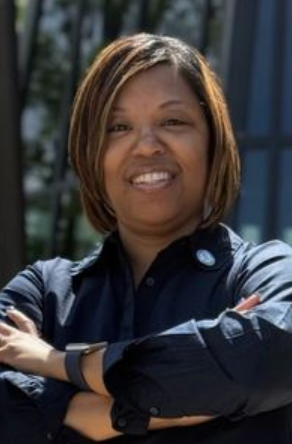
“Public Education Funding and Vouchers-I respect every parent’s right to choose the educational setting that best fits their child, whether public, private, charter, or homeschool. However, I do not support using public tax dollars to fund private or charter school tuition through voucher programs. Public education dollars are meant to serve our community’s students in neighborhood schools. Diverting these funds to private institutions reduces resources for critical programs, staff, and services in our public schools—schools that serve all students, regardless of income, ability, or background. As funding is redirected, districts are forced to depend more on local property taxes, increasing the burden on homeowners, this is unfair.”
Click here to read the rest of Peterson’s responses.
Learn more about our Candidate Connection survey here.