



Seventeen incumbents—all Republicans—lost in the 2025 state legislative elections in New Jersey and Virginia. That’s the most general election incumbent defeats in an odd year since 21 were defeated in 2011.
Twelve Republican incumbents lost re-election in Virginia, where Democrats expanded their majority by 13 seats, going from 51 to 64 seats in the 100-member chamber. That tied 2017 for the most incumbents defeated in the chamber’s elections since 2011. This was the first time Democrats retained an existing House majority after the general elections since 1997.
Five incumbents lost in New Jersey, down from seven in 2021 and six in 2023 but the most of any year that featured only General Assembly elections since 2011. At least one incumbent lost in every general election for the General Assembly since 2011, except in 2017. In 2019, the last year to feature only General Assembly elections, two incumbents lost in the general elections. As a result of the 2025 elections, Democrats expanded their majority from 52 to 57 in the 80-member chamber.
The 17 incumbent defeats represent a 31% increase from 13 in 2023. It also means 10.1% of the 168 incumbents who ran in the general election between the two states lost, or 11.4% of the 149 who were contested. An average of 4.3% of incumbents who ran in odd-year general elections between 2011 and 2023 lost re-election.

This year’s elections also marked the first time any odd-year state legislative general election since 2011 produced only Republican incumbent losses and no Democratic incumbent losses. The reverse did happen in 2021, when 14 Democratic incumbents and no Republican incumbents lost in the general elections.
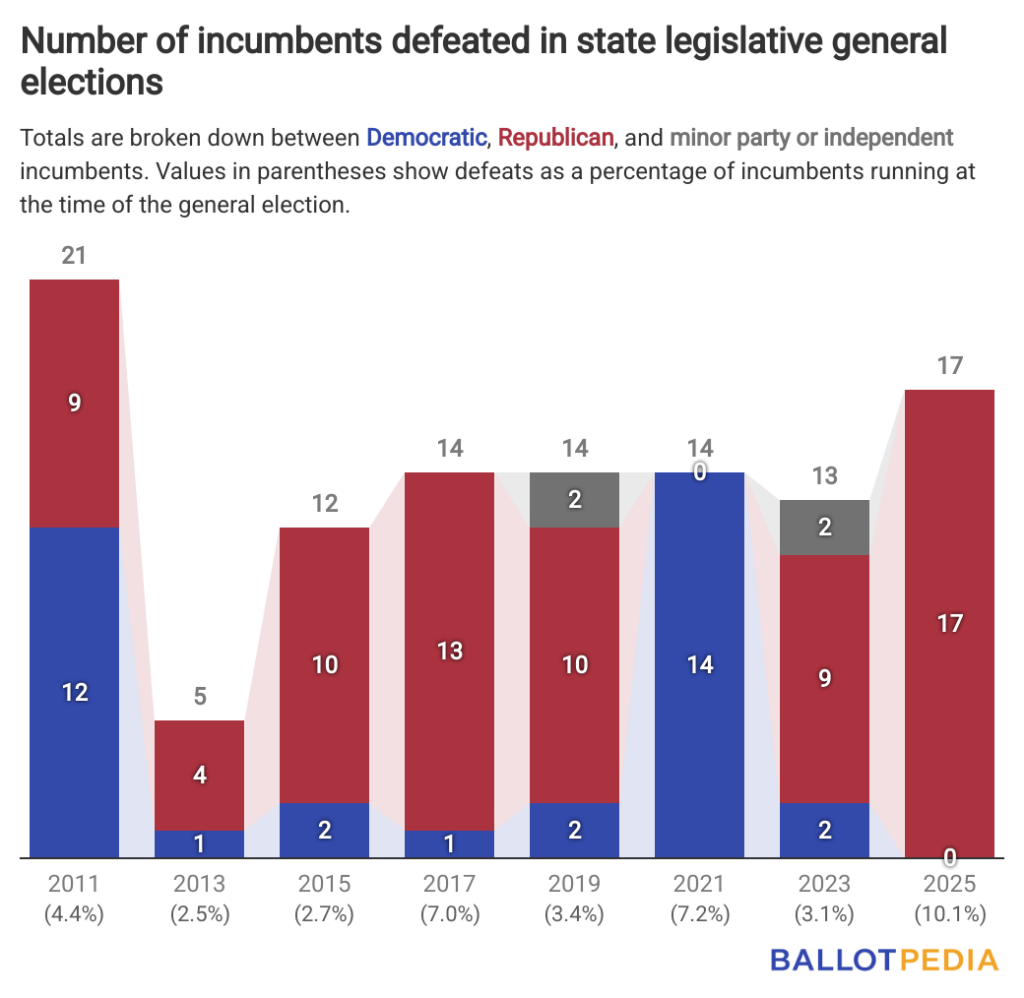
Together with the three incumbents who lost in the New Jersey primaries earlier this year, a total of 20 incumbents were defeated in 2025. That’s below the average of 22 total in odd years since 2011. Only two years produced fewer incumbent losses: 2017 (14 total losses) and 2013 (seven total losses).