


Welcome to Hall Pass, a newsletter written to keep you plugged into the conversations driving school board governance, the politics surrounding it, and education policy.
In today’s edition, you’ll find:
- On the issues: the debate over moving some U.S. Education Department functions to the U.S. Department of Labor
- A state-mandated task force has proposed plans that would reshape Indianapolis Public Schools. Opponents are pushing back.
- Extracurricular: education news from around the web
- Candidate Connection survey
Reply to this email to share reactions or story ideas!
On the issues: The debate over moving some U.S. Education Department functions to the U.S. Department of Labor
In this section, we curate reporting, analysis, and commentary on the issues school board members deliberate when they set out to offer the best education possible in their district. Missed an issue? Click here to see the previous education debates we’ve covered.
On Nov. 18, Education Secretary Linda McMahon announced that four federal agencies—Labor, Interior, Health and Human Services, and State—would administer some U.S. Department of Education programs and grants. McMahon said the plan would help “break up the federal education bureaucracy and return education to the states.”
As an example, management of the Office of Elementary and Secondary Education, which administers 27 grant programs, will move to the U.S. Department of Labor. One of these programs is Title I, which sends $18 billion a year to schools with a high percentage of low-income students. The U.S. Department of the Interior will oversee several education programs that serve Native American children and adults.
Today, we’re looking at two Republican perspectives on the announcement from writers who worked in the U.S. Department of Education.
Former Education Department appointee and Republican congressional staff director Vic Klatt says transferring control of Education Department functions to Labor is unlikely to reduce the power of teachers unions or cut red tape in federal education policy. Klatt writes unions have more of a hold over the Labor Department than most other federal agencies, and that the Department has a track record of bureaucratic inefficiency. Klatt says the U.S. Commerce Department would have been a better home for some of the Education Department’s work.
Adam Kissel, a visiting fellow at the Heritage Foundation and a former deputy assistant secretary for higher education programs at the Education Department, says moving some federal education programs to the Labor Department makes sense for aligning the federal government’s education and workforce priorities. Kissel writes the Education Department staff who remain with the agency following McMahon’s reduction in force actions, including those assigned to assist the Labor Department and other agencies with the transition, are likely to be dedicated public servants eager to make the new arrangements work. Kissel encourages McMahon to continue outsourcing the Education Department’s functions to other agencies, so that future administrations cannot so easily put the pieces back together.
Moving K–12 programs to the Department of Labor is neither smart nor conservative | Vic Klatt, Fordham Institute
“One feature of the administration’s decision is the notion that they’re going to ‘reduce union power’ over Education Department programs by shifting them to the Department of Labor. This is absurd on its face. Anyone who truly understands Washington knows that there may not be a cabinet agency more captured by a set of interest groups than the Labor Department is by labor unions. …
“The Labor Department runs a few small to middling grant programs—quite poorly, I should note, by virtually all accounts across the partisan spectrum in my experience. But what it mostly does is regulate and enforce regulations. ... This means that eventually—even if it takes a year or two—agency regulators will get their hooks into education programs, especially if the Democrats win the next presidential election. And when these regulators get going, they will be doing the bidding of the NEA and AFT, who will be whispering in their ears at every turn.”
The Middle of the Beginning of Ending the Department of Education | Adam Kissel, Education Next
“Substantively, the point of the moves ED announced this week is to integrate the nation’s education and workforce agendas. Will that lead to even more centralization of power? Time may tell. Even if it does, a fresh start with a new remit to consider America’s workforce will be salutary for these programs.
“…I expect we’ll see a core staff retained at ED plus a small group detailed to each new agency for the handover. Too many of the longtime ED staff in these programs—as the career senior executive staff themselves could attest—are there just for the paycheck or to help their university friends get the most taxpayer money with the least accountability. But the staff who remain at ED or are detailed to Labor are likely to be the public servants who are the most serious, most efficient, and best able to demonstrate that the programs can thrive in the new structure.”
A state-mandated task force has proposed plans that would reshape Indianapolis Public Schools. Opponents are pushing back.
Earlier this year, Indiana Gov. Mike Braun (R) signed HB 1515, a bill establishing a local task force in Indianapolis charged with reimagining the relationship between Indianapolis Public Schools (IPS) and the charter schools that reside within the district.
On Dec. 3, the task force — the nine-member Indianapolis Local Education Alliance (ILEA) — advanced proposals that would maintain IPS’ locally elected school board but reduce its authority and place transportation and facilities management in the hands of appointed entities.
HB 1515 requires the ILEA to submit its plan to the Legislature by the end of the year, though lawmakers could ultimately ignore it.
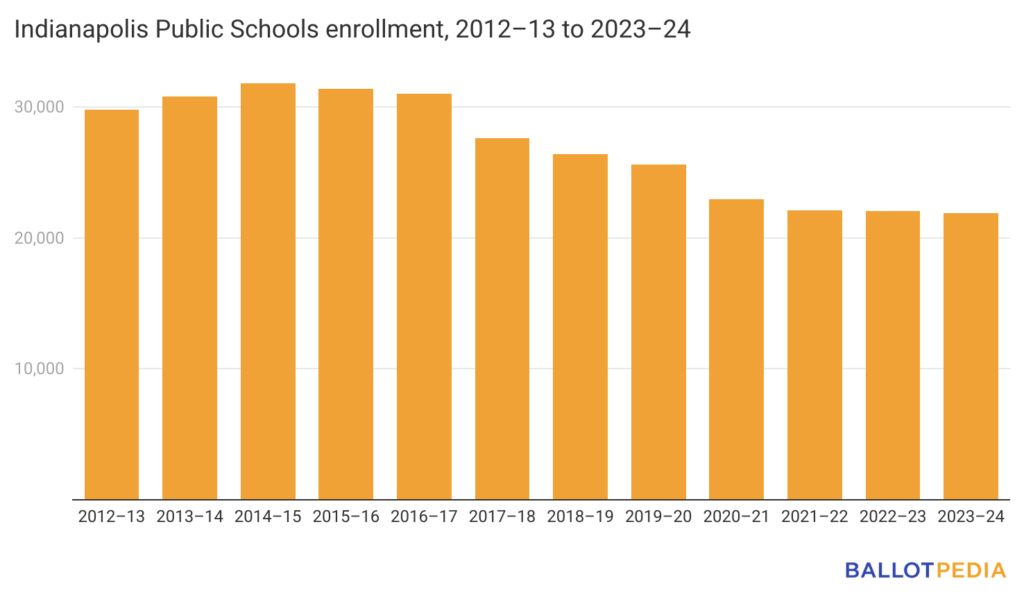
IPS is the second largest district in the state, with roughly 22,000 students, but enrollment has declined 31% since 2015. More than 60% of Indianapolis students now attend charter or private schools, or are homeschooled. Unlike traditional public schools, charter schools in Indiana cannot issue bonds to pay for building construction or expansion. And most charter schools in Indianapolis don’t provide busing. Those that do can spend upwards of $1 million a year on transportation.
Here’s what to know about how the ILEA’s proposals could affect IPS.
What is the purpose of the ILEA, and who serves on it?
Through HB 1515, lawmakers directed the ILEA to develop a facilities and transportation plan for “a collaborative system of schools that can serve all students within the geographic boundaries of the school city fairly.” The law also allowed recommendations for governance structure.
HB 1515 passed the Senate 32-16 and the House 57-28 (with 11 absences), mostly along party lines. Indiana has a Republican trifecta. Republicans hold a 40-10 majority in the Senate and a 70-30 majority in the House.
House Education Chair Rep. Robert Behning (R) sponsored HB 1515. Behning said, “The legislation was fairly clear. This is your opportunity to come together as a community and come to (the legislature) with recommendations. If you don't, we will.”
The ILEA includes Indianapolis Mayor Joe Hogsett (D), who serves as chairman, IPS Superintendent Dr. Aleesia Johnson, and seven appointees. The law gave Hogsett control over four of those appointments. Johnson filled two spots and was required to select a parent of an IPS student and the parent of a charter school student. Finally, IPS Board President Angelia Moore appointed the final member.
In October, the IPS school board released a set of recommendations for the ILEA calling for condensing the number of charter school authorizers in the city to one entity, maintaining democratic accountability of the school board, and creating a centralized transportation system between all schools.
Final competing proposals would weaken IPS authority
The ILEA voted 7-2 to choose between two competing governance proposals for the group’s final meeting on Dec. 17. The ILEA previously released 10 separate approaches, including one that entirely eliminated the IPS school board.
Superintendent Johnson and Tina Ahlgren, a parent and IPS teacher, voted against advancing the proposals.
Click here to see slideshow diagrams of the models. The titles below correspond to the slides.
- Governance Model Option 2: This plan would create the Collaborative Compact Advisory Board consisting of appointees from the mayor’s office, charter school authorizers, and IPS. The IPS and charter school boards would report to the advisory board. The Collaborative Compact Advisory Board would authorize charter schools, alongside the city’s Office of Education Innovation (OEI), which currently approves most new charters.
- Governance Model Option 3: This plan would create the Indianapolis Secretary of Education and Indianapolis Education Authority to oversee district and charter schools. The mayor would appoint the education secretary and a nine-member board, though the plan requires that four of those members come from the IPS school board. Under the model, OEI would continue to authorize charter schools. The Indiana Charter School Board, which currently exists, would either become an additional authorizer or would hear appeals from schools that OEI denied.
The ILEA also unanimously advanced separate transportation and facilities models.
- Under Facilities Model Option 1, the Collaborative Compact Advisory Board would oversee facilities for all schools, but charters would be required to contribute financially to participate. This model would give oversight to the Collaborative Compact Advisory Board, which would set standards to determine facility allocation.
- Facilities Model Option 2 proposes an independent building authority that would receive property tax dollars. The plan does not specify who would oversee that independent office.
- Transportation Model Option 1 envisions that the Collaborative Compact Advisory Board would oversee transportation for district and charter schools within the district. Charter schools would be required to pay into the system.
- Transportation Model Option 2 proposes an independent transportation authority that would hire transportation contractors.
Support for ILEA's proposals
Sashah Fletcher, the parent of a charter student affiliated with EmpowerED Families, a pro-charter school organization, said the plans keep “pace with how families choose schools. Today, Indianapolis families choose across district lines. A modern, unified transportation system should reflect the reality of how students move through our city.”
Mind Trust, a nonprofit that helps launch charter schools in Indiana and Connecticut, was mostly supportive of the ILEA’s proposals: “We are particularly pleased to see an acknowledgement of the need for multiple quality charter school authorizers and an openness to an independent facilities and transportation authority. As the ILEA continues its deliberations, we encourage members to guard against creating a new overarching governance structure that could unintentionally infringe upon school autonomy.”
The ILEA will hear feedback on the proposals on Dec. 10 and Dec. 15.
Opposition to the ILEA’s proposals
IPS school board member Gayle Cosby said the ILEA was continuing a longstanding trend of privatizing public education: “If we allow appointed authorities to manage our property tax dollars, our buildings and our transportation resources, the question quickly becomes, why would we even need an elected board at all.”
IPS parent Josiah Harris-Adam said, “If charters have concerns about answering to the IPS board, they can campaign to elect members that are favorable to their kids.”
A coalition advocating for IPS, including the local teachers union, the Indianapolis Public Schools Parent Council, and the Central Indiana Democratic Socialists of America, released a plan on Dec. 4 called “The People’s Proposal for a Voice and a Choice.” That plan would preserve the authority of the IPS board and make IPS the only charter school authorizer in the city.
IPS faces declining enrollment and a growing charter school sector
The debate over governance reflects deeper questions about how to respond to IPS’ enrollment challenges.
IPS has been a microcosm of broader trends affecting public schools across the country, including declining student enrollment, funding challenges, and conflicts over sharing resources with charter schools. Since 2015, IPS has lost an estimated 10,000 students, while enrollment in the nearly 60 charter schools within the district has increased. In May, Indiana became one of 18 states with private school choice programs open to all students, regardless of income.
IPS has closed or merged more than 18 schools since 2021. The charter sector has also faced instability during that period, with more than 30% having closed.
In addition to establishing the ILEA, HB 1515 also prohibits municipalities from using zoning regulations to block the creation of charter schools. In Indiana, public school districts are required to offer unused facilities to charter schools first for $1. Read our earlier deep dive on the legal issues around charter school facilities.
This year, Braun also signed SB 1, which lowers taxes for property owners while mandating that districts and charter schools share tax revenue beginning in 2028. IPS teachers rallied at the Indiana Statehouse to oppose the bill.
A different bill proposed earlier this year would have dissolved IPS and four other districts in the state and converted all schools within them to charters. That measure did not make it out of committee.
Extracurricular: education news from around the web
This section contains links to recent education-related articles from around the internet. If you know of a story we should be reading, reply to this email to share it with us!
- California students with disabilities face ‘terrifying’ special ed cuts after Trump changes | Cal Matters
- AI Has Come for K–12 Education | American Enterprise Institute
- California laws put LGBTQ students at higher risk of exploitation | Washington Times
- Trump’s attack on DEI may hurt college men, particularly White men | The Washington Post
- Some School Districts Saw More Learning Loss During the Pandemic. Researchers Want to Know Why | Harvard Graduate School of Education
- We Gave Students Laptops and Took Away Their Brains | The Free Press
- 4-Day School Weeks On the Rise Despite Lack of Data on the Effects | Governing
- Will federal tax-credit scholarships help public school students? | Chalkbeat
- New report renews concerns about a massive K-12 virtual school | Idaho Ed News
- Conservatives will pay to defend schools fighting Maine on transgender policies | The Maine Monitor
Take our Candidate Connection survey to reach voters in your district
We’re highlighting noteworthy or thought-provoking responses to our Candidate Connection survey from this year’s school board election winners. The responses illuminate the range of experiences and viewpoints these elected officials bring to their districts.
If you're a school board candidate or incumbent planning to run in 2026, click here to take the survey. The survey contains more than 30 questions, and you can choose the ones you feel will best represent your views to voters. If you complete the survey, a box with your answers will appear in your Ballotpedia profile. Your responses will also appear in our sample ballot.
If there is an election next year in your community, share the link with your candidates and urge them to take the survey!
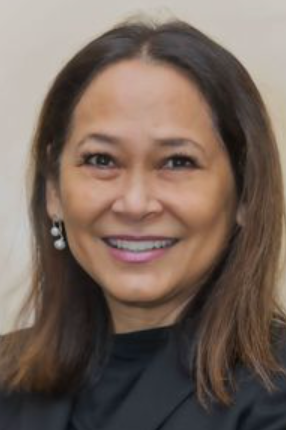
Van Truong is a member of the Beaverton School District school board in Oregon. She defeated Karin Stark and Andrew De Mars, winning 52% of the vote. Her career experience includes working as an education administrator and consultant.
The Beaverton School District is the third largest in Oregon, with approximately 38,000 students.
Here’s how Truong answered the question, “Is there a book, essay, film, or something else you would recommend to someone who wants to understand your political philosophy?”
“Leadership on the Line: Staying Alive Through the Dangers of Leading by Ronald Heifetz and Marty Linsky has kept me focused and balanced. Leadership is hard and rewarding. It shows that some problems have clear fixes, but authentic leadership is about tackling the tough stuff that forces people to change how they think or act.”
“That’s where things get dangerous — people don’t like having their world shaken up, and they’ll push back. Good leaders know when to step in and take action and when to step back to see the bigger picture. When the heat rises, you must stay calm and not get thrown off. You also can’t do it all yourself — people must own the work. Leading change means turning up the pressure to move people without blowing everything up. You need places or people who help you recharge to survive the ups and downs. You must also stay true to your purpose so the hits don’t knock you off course. Expect some losses along the way, and remember: when people get upset, it’s usually about the change, not about you.”
Click here to read the rest of Truong’s responses.
William Dolphin is an at-large member of the Widefield School District 3 school board in Colorado. He assumed office on Dec. 4. Dolphin has worked as a teacher.
Widefield is the 21st largest district in Colorado, with roughly 9,300 students.
Here’s how Dolphin answered the question, “Who do you look up to? Whose example would you like to follow, and why?”

“I look up to my grandfather, Robert W. Dolphin Jr., whose life was a testament to public service and education. He dedicated much of his career to Fort Lewis College, serving as dean, vice president, and ultimately president. He played a pivotal role in securing funding for campus development, including making the campus compliant with the Americans with Disabilities Act—a cause close to his heart after losing the use of his arms to polio in the late 1940s.”
“Beyond his professional achievements, he was deeply involved in the Durango community, embodying the values of civic-mindedness and integrity. His commitment to education and public service has been a guiding light for me. As I embark on my own journey in public service, I strive to honor his legacy by serving our community with the same dedication and passion he did.”
Click here to read the rest of Dolphin’s responses.