


Welcome to the Monday, Dec. 22, Brew.
By: Briana Ryan
Here’s what’s in store for you as you start your day:
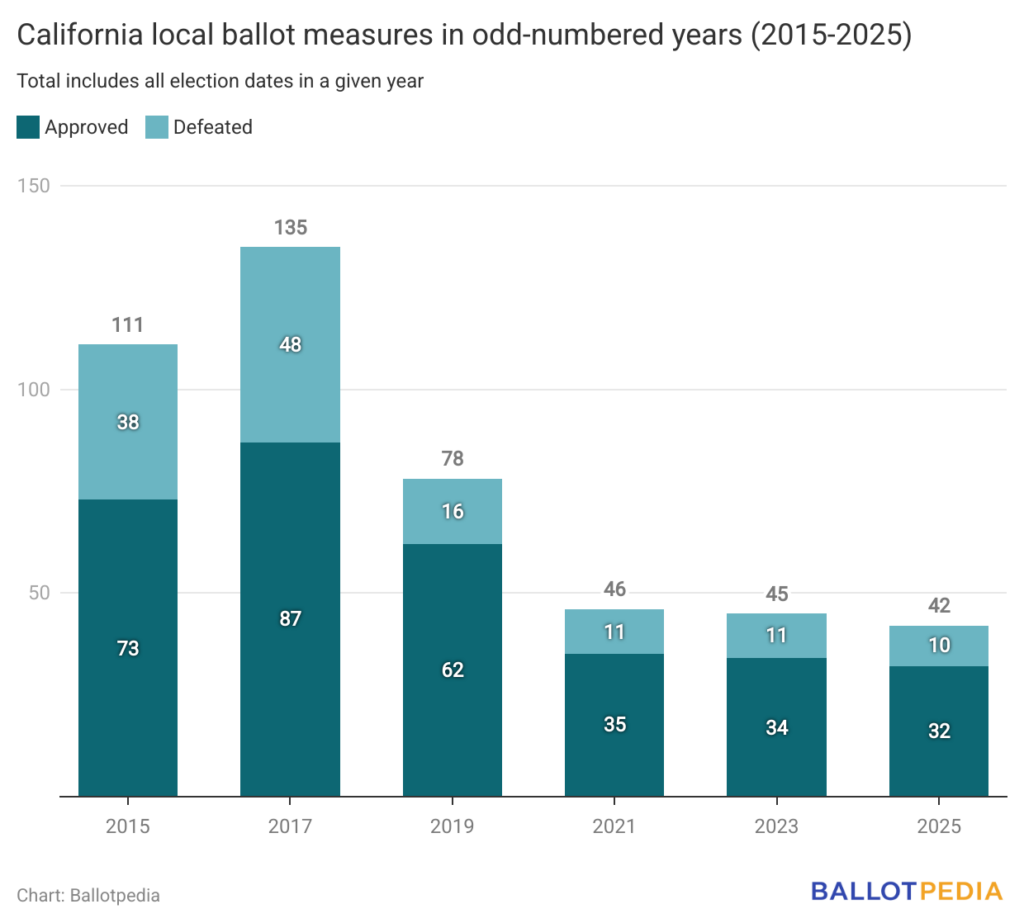
- California voters decided on 42 local ballot measures this year — the lowest total for an odd-numbered year in at least a decade
- Chocolate Chip wins Ballotpedia's 2025 Cookie Election
- Washington D.C.’s Muriel Bowser is the first mayor of a major city to announce retirement in 2026
California voters decided on 42 local ballot measures this year — the lowest total for an odd-numbered year in at least a decade
California voters decided 42 local ballot measures this year — the fewest in at least a decade — across eight election dates and 17 counties.
This record-low total reflects the effects of the California Voter Participation Rights Act (CVPRA), which requires many local jurisdictions to move regular elections in odd-numbered years to even-numbered statewide elections unless voter turnout thresholds are met. Jurisdictions subject to the law were required to implement their transition plans by 2022, reducing the number of local measures appearing on ballots in odd-numbered years.
This year, the elections with the most local measures took place on March 4 and Nov. 4, both featuring 12. The election with the second most measures was on May 6, with five.
Voters approved 32 (76.2%) of the 42 local measures and defeated 10 (24%). In 2023, the previous odd-numbered year, voters approved 34 (76%) and defeated 11 (23.8%).
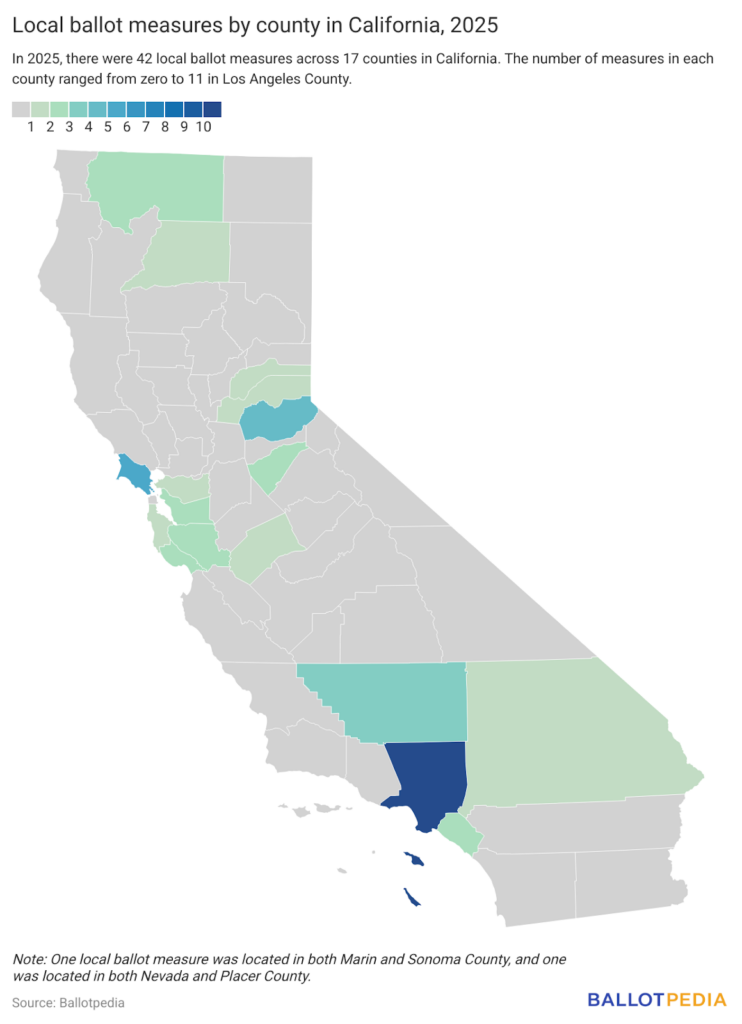
Voters in 17 of 58 counties decided on local measures in 2025. Los Angeles County voters decided the most, with 11. Marin County was second with five.
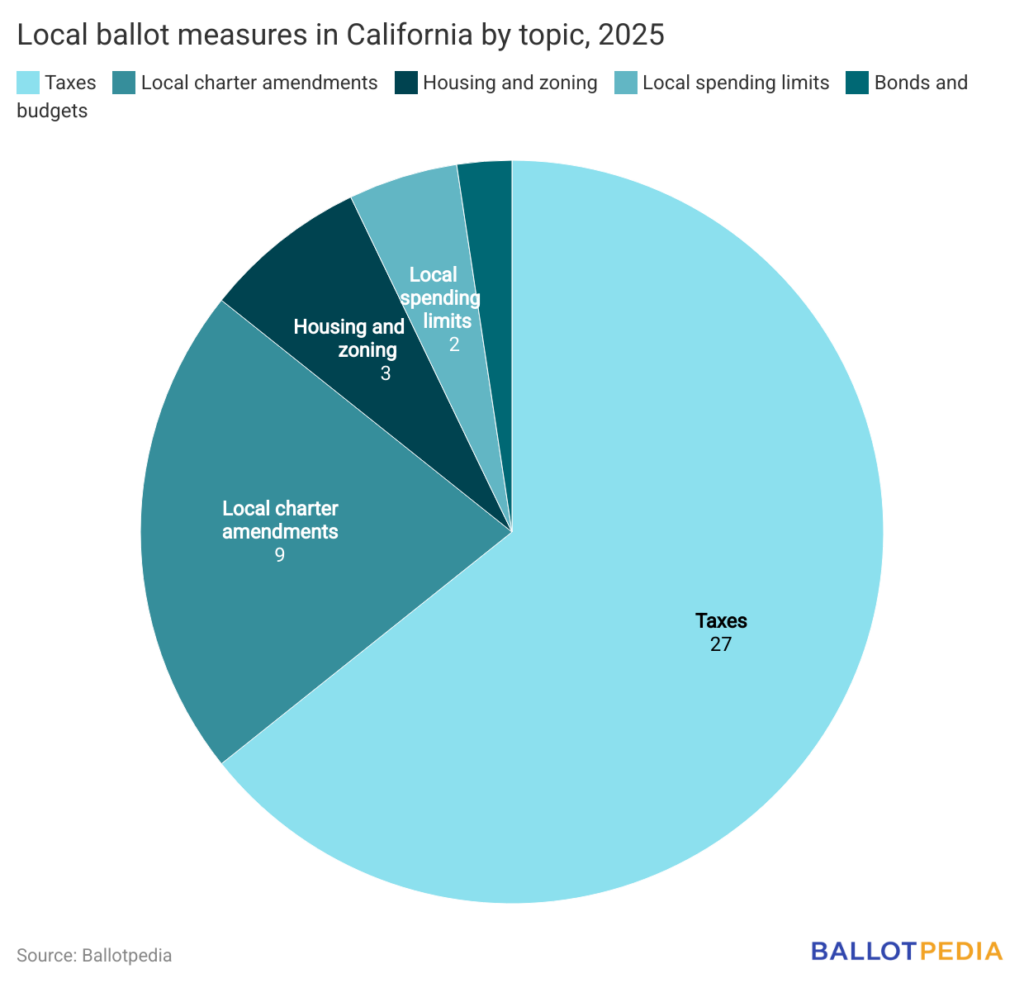
Twenty-seven of the 42 local measures were tax-related, accounting for approximately 64% of all local measures in California this year. Nine (21%) local measures were charter amendments, three (7%) were related to housing, two (5%) were related to local spending limits, and one (2%) was related to bonds.
The most common type of tax measure was a parcel tax, with 17 appearing on local ballots, followed by sales taxes (9). Voters approved eight parcel tax measures and rejected nine. For sales tax measures, voters approved eight and rejected one.
Click here to check out our analysis of local ballot measures in California this year.
Chocolate Chip wins Ballotpedia's 2025 Cookie Election
Season’s greetings! As we continue our 12 Days of Ballotpedia celebration, we want to thank you for supporting us.
Each day, we’re spotlighting the many ways Ballotpedia delivers trustworthy information on politics and policy to voters nationwide. From our local election coverage to groundbreaking resources like our Sample Ballot Lookup Tool, our goal is to make reliable political information available to everyone.
Your support has made it all possible. Please donate today to help us keep our momentum going strong into 2026. Every contribution, big or small, helps us build an informed and engaged electorate. Thank you for being part of the Ballotpedia family!
Now it’s time for what we’ve all been waiting for: Ballotpedia’s Seventh Annual Holiday Cookie Election results!
After a season of spirited voting, Chocolate Chip Cookie emerged on top and reclaimed the title of favorite holiday cookie! Known for its balance of rich chocolate and buttery dough, chocolate chip secured the win with 48.3% of the vote!
Here are the final results as of poll closing time on Friday, Dec. 19 at 5 p.m. EST:
- Sugar Cookie: 18.3%
- Snickerdoodle Cookie: 33.3%
- Chocolate Chip Cookie: 48.3%
The winners in previous years:
- 2024: Sugar Cookie
- 2023: Chocolate Chip Cookie
- 2022: Gingerbread Cookie
- 2021: Chocolate Chip Cookie (Elected after voters recalled Sugar Cookie)
- 2020: Sugar Cookie
- 2019: Cookie Chip Cookie
Ballotpedia thanks everyone who participated in the 2025 Holiday Cookie Election and helped make this year’s contest another memorable one. Full results and past winners are available at Ballotpedia.org.
Washington D.C.’s Muriel Bowser is the first mayor of a major city to announce retirement in 2026
On Nov. 25, Washington, D.C. Mayor Muriel Bowser (D) announced that she would not run for re-election in 2026—making her the first mayor of a major U.S. city to do so.
Bowser was first elected D.C. mayor in 2014. She was re-elected in 2018 and 2022. D.C. does not have mayoral term limits.
Other than D.C., 22 of the 100 most populous U.S. cities are holding mayoral elections in 2026. In these cities, 10 mayors have announced that they are running for re-election, four mayors are term-limited, and eight mayors have not yet announced whether or not they will run for re-election.
Twenty-seven of the 100 most populous cities held mayoral elections in 2025. Eighteen mayors ran for re-election, and nine didn’t. Four mayors could not run for re-election due to term limits.
Thirty-four of the 100 most populous cities held mayoral elections in 2024. Twenty-one mayors ran for re-election, 13 didn’t. Six mayors could not run for re-election due to term-limits.
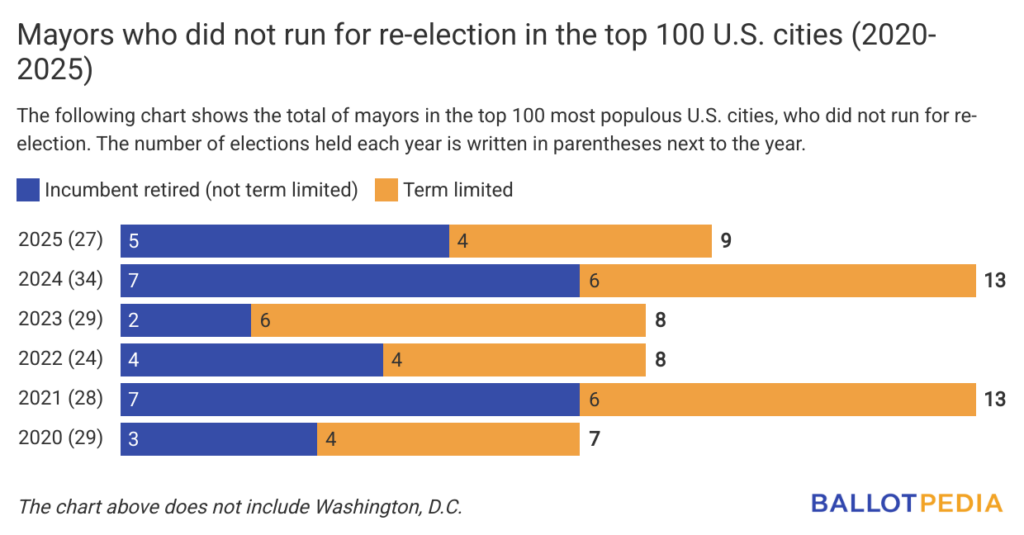
Of the mayors who did not run for re-election in 2025, seven were Democrats, and two were Republicans.
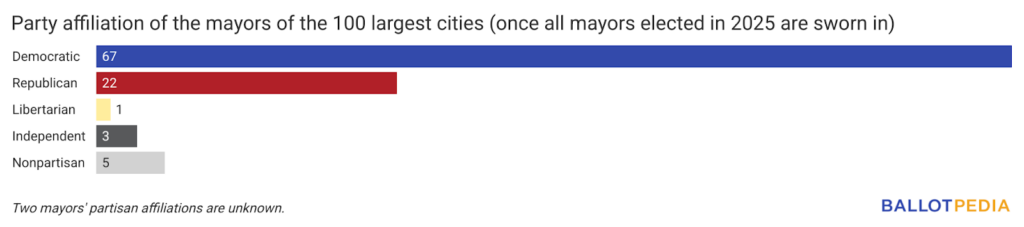
The following chart shows what the partisan breakdown of mayors in the top 100 most populous U.S. cities will be once all mayors elected in 2025 are sworn in.
Click here to learn more about mayoral elections in 2026.