


Welcome to the Tuesday, Feb. 10, Brew.
By: Briana Ryan
Here’s what’s in store for you as you start your day:
- Most U.S. representatives in the 119th Congress are part of Generation X, while most U.S. senators are Baby Boomers
- Fifty-one U.S. House members are not running for re-election this year — the most at this point in any election cycle since 2018
- Incumbent Sid Miller and Nate Sheets are running in the Republican primary for Texas Commissioner of Agriculture on March 3
Most U.S. representatives in the 119th Congress are part of Generation X, while most U.S. senators are Baby Boomers
For the first time since the 113th Congress, which spanned from 2013 to 2015, a plurality of members of the U.S. House of Representatives is part of Generation X. Meanwhile, a plurality of members of the U.S. Senate are Baby Boomers.
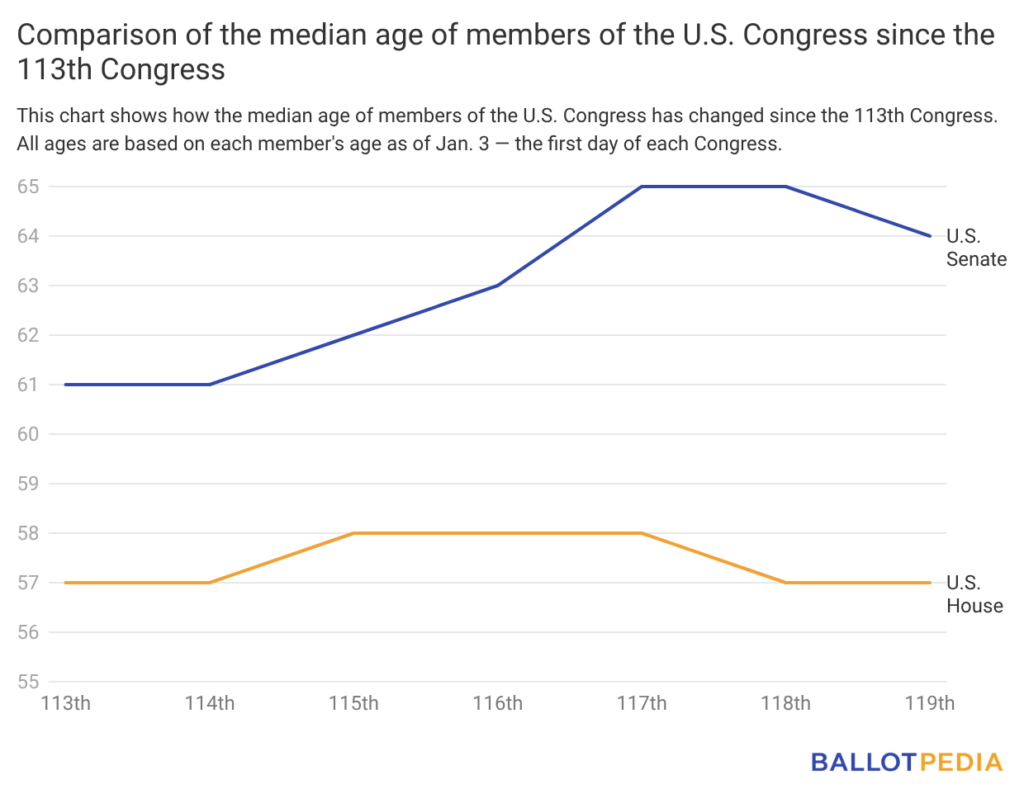
At the start of the 119th Congress, the median age of U.S. senators was 64, and the median age of U.S. representatives was 57. Here's a closer look at how the ages of members of the U.S. Congress on the first day of each Congress — Jan. 3 the year after the congressional general elections — have changed since the 113th Congress.
U.S. House of Representatives
For the second Congress in a row, the median age of U.S. representatives is 57. From the 115th Congress through the 117th Congress, the median age of U.S. representatives was 58. Before that, the media age of U.S. representatives was 57 from the 113th Congress through the 114th Congress.
In the 119th Congress, the oldest U.S. representative is Hal Rogers (R-Ky.), and the youngest is Maxwell Alejandro Frost (D-Fla.). At the start of the 119th Congress, Rogers was 87, and Frost was 27.
In the 119th Congress, the largest share of the U.S. House — 150 U.S. representatives or 26.5% of the 434 U.S. representatives who were members of the chambers on Jan. 3, 2025 — were in their fifties. U.S. representatives in their fifties also made up the largest share of the chamber in the 113th Congress and 114th Congress. From the 115th Congress to the 118th Congress, U.S. representatives in their sixties made up the largest share of the chamber.
In the 119th Congress, the largest share of the U.S. House — 181 U.S. representatives or 41.7% — were part of Generation X or those born between 1965 and 1980. Baby Boomers made up the largest share of the chamber in the previous six Congresses.
U.S. Senate
From the 113th Congress through the 118th Congress, the median age of U.S. senators increased from 61 to 65. However, in the 119th Congress, the median age of U.S. senators decreased from 65 to 64.
In the 119th Congress, the oldest U.S. senator is Chuck Grassley (R-Iowa), and the youngest is Jon Ossoff (D-Ga.). At the start of the 119th Congress, Grassley was 91, and Ossoff was 37.
In all Congresses since the 113th, the largest share of U.S. senators were in their sixties. In the 119th, this was 33 U.S. senators, or one-third of the 99 U.S. senators who were members of the chamber on Jan. 3, 2025.
In the 119th Congress, the largest share of the U.S. Senate — 60 U.S. senators, or 60.6% — were Baby Boomers born between 1946 and 1964. U.S. senators who were Baby Boomers also made up the largest share of the chamber in the previous six Congresses.
Age requirements to serve in the U.S. Congress
The U.S. Constitution sets the minimum age requirements to serve in the U.S. Senate at 30 years of age and in the U.S. House at 25 years of age. However, it does not set a maximum age limit to serve in either chamber.
Click here to read our full analysis of the ages of members in the 119th Congress.
Fifty-one U.S. House members are not running for re-election this year — the most at this point in any election cycle since 2018
Fifty-one members of the U.S. House of Representatives are not running for re-election this year. Compared to the last four election cycles, there were 43 retirement announcements at this point in 2024, 42 in 2022, 34 in 2020, and 45 in 2018.
Since our last update on congressional retirements, Reps. Barry Loudermilk (R-Ga.) and Mark Amodei (R-Nev.) announced that they would retire from public office.
In the 2024 general elections for the respective districts, Loudermilk won by 33.7 percentage points, and Amodei ran without major party opposition. Three independent race forecasters have rated this year's general elections for Loudermilk's and Amodei's respective districts as either Solid or Safe Republican.
Of the 51 U.S. House incumbents who are not seeking re-election:
- Twenty-four — 13 Democrats and 11 Republicans — are retiring from public office.
- Fifteen — seven Democrats and eight Republicans — are running for the U.S. Senate.
- Eleven — one Democrat and 10 Republicans — are running for governor.
- One Republican is running for state attorney general.
In total, 60 members of the U.S. Congress — nine U.S. Senate members and 51 U.S. House members — have announced they will not seek re-election to their current seats this year. That's the most at this point in an election cycle since 2018.
Between January 2011 and February 2026, 352 U.S. House members announced that they would not seek re-election. January had the highest number of members announcing they would not run for re-election at 61. The fewest announcements, 15, took place in June.
Click here to learn more about the members of the U.S. Congress who are not running for re-election this year.
Incumbent Sid Miller and Nate Sheets are running in the Republican primary for Texas Commissioner of Agriculture on March 3
Incumbent Sid Miller (R) and Nate Sheets (R) are running in the Republican primary for Texas Commissioner of Agriculture on March 3.
Governor Greg Abbott (R) endorsed Sheets. The Texas Tribune's Kate McGee wrote that the endorsement was "an exceptionally rare rebuke of a fellow Republican official and Trump ally by Abbott, who has mostly stayed out of statewide elected races."
Austin American-Statesman's John Moritz wrote that Miller was "among conservatives who sued Abbott for extending early voting periods during the COVID crisis in 2020, and he briefly considered challenging the governor in the 2022 GOP primary."
Since 1950, three commissioners have lost re-election campaigns. In the 1950 Democratic primary, incumbent James E. McDonald (D) lost to John C. White (D). In the 1982 Democratic primary, Reagan V. Brown (D) lost to Jim Hightower (D). In the 1990 general election, Hightower lost to Rick Perry (R).
Miller was first elected agriculture commissioner in 2014 and previously served 12 years in the Texas House of Representatives. He is also a rancher who breeds quarter horses. Miller is running on his record, saying he has "turned deficits into surpluses, crises into comebacks, and opened doors worldwide. But there's more to do, like fighting federal overreach on endangered species, promoting vocational ag education, and ensuring our water and land stay in Texas hands." Texas Right to Life and 10 members of the U.S. House of Representatives endorsed Miller.
Sheets is a businessman and the founder of Nature Nate's Honey. Sheets said he is "a producer, a businessman, and a father who believes Texas needs new leadership rooted in real-world experience and eternal values." Sheets said he is running because he "knows firsthand the challenges that Texas ranchers face — from water access and soil health to labor shortages and government overreach." Gun Owners of America and former U.S. Sen. Rick Santorum (R-Penn.) endorsed Sheets.
An agriculture commissioner is the head of a state's agriculture department, division, or agency. It is a state-level position within each state's executive branch. Governors appoint agriculture commissioners in 38 states, while elections happen for the position in the remaining 12. Seven states — Alabama, Florida, Georgia, Iowa, North Dakota, South Carolina, Texas— are holding elections for agriculture commissioner in 2026.
Click here for more information about this Republican primary. Also, if you're a Texas voter, check out our Sample Ballot Lookup here to prepare for Election Day.