



As the West Virginia State Legislature adjourned on March 14, 2026, one amendment—a measure that would state that only citizens may vote in elections—made the ballot. However, several amendments, including a homestead exemption increase, did not make the 2026 ballot.
The amendment would have increased the minimum homestead exemption for certain homeowners from $20,000 to $50,000. A homestead exemption is a tax benefit that reduces the taxable value of a homeowner’s primary residence, therefore lowering the amount of property tax they owe.
The measure, House Joint Resolution 42, was referred to the ballot by the West Virginia State Legislature. In West Virginia, constitutional amendments require at least a two-thirds vote in each chamber to be referred to the ballot, and don’t require a governor’s signature. On March 4, the West Virginia House of Representatives voted 95-0 to approve the amendment. The West Virginia State Senate adopted two Finance Committee amendments by a voice vote, and then approved the amendment by 31-0. Because the House did not concur with the Senate’s amendments, the amendment did not make the ballot.
The exemption would have applied to state residents who are 65 years old or over, or are totally disabled, as defined by the state legislature. The amendment would have also provided for the state legislature to enact a law granting an exemption to homeowners who are not at least 65 years old or are totally disabled. The homestead exemptions would have applied to both primary residences and mobile homes.
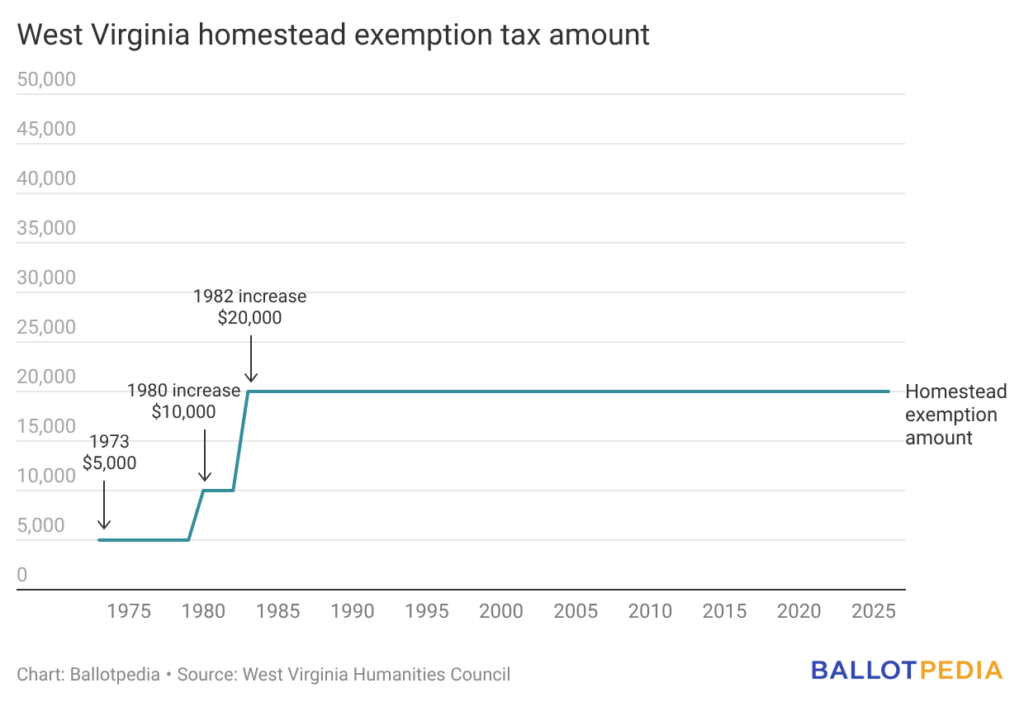
The West Virginia homestead exemption, which applies to residents 65 years old or over and totally disabled, is in Article X of the West Virginia Constitution and was first approved by voters in 1973. The original exemption was $5,000 of taxable assessed value. In 1980, this was increased to $10,000 when voters approved an amendment, and in 1982, the exemption was increased to $20,000. The amount has not increased since 1982.
The measure will join another amendment on the Nov. 3, 2026, ballot, also referred by the state legislature—an amendment that would state that only citizens may vote in elections.
Editor's note: The original version of this story stated that the amendment was certified. While both chambers approved the amendment, they passed different versions, and the legislature adjourned without reaching concurrence.