


Endorsements are one of the ways voters learn who candidates are and what they stand for — especially in down-ballot races where little other information is available. Ballotpedia tracks endorsements from organizations we call Recognized Endorsement Contributors (RECs): groups ranging from labor unions and advocacy organizations to newspaper editorial boards that publicly support candidates and communicate those choices to voters. In Texas' March 3 primaries, we tracked 716 total endorsements, including 416 from six groups.
Here's a look at the six endorsers, including labor groups, advocacy organizations, and newspaper editorial boards, and the types of races they focused on.
- Texas AFL-CIO - A labor union with 235,000 members, which says it works to elect political candidates who will fight for working people.
- Texas Progressive Caucus - An official caucus of the Texas Democratic Party that says its goal is to return New Deal politics to all levels of the Democratic Party.
- Texas Right to Life - A state advocacy group that describes itself as pro-life.
- Young Conservatives of Texas - An organization that says it advocates for conservative fiscal and social policies.
- The Austin American-Statesman editorial board - a daily newspaper in Texas' capital.
- The Houston Chronicle editorial board - the largest daily newspaper in Texas' most populous city.
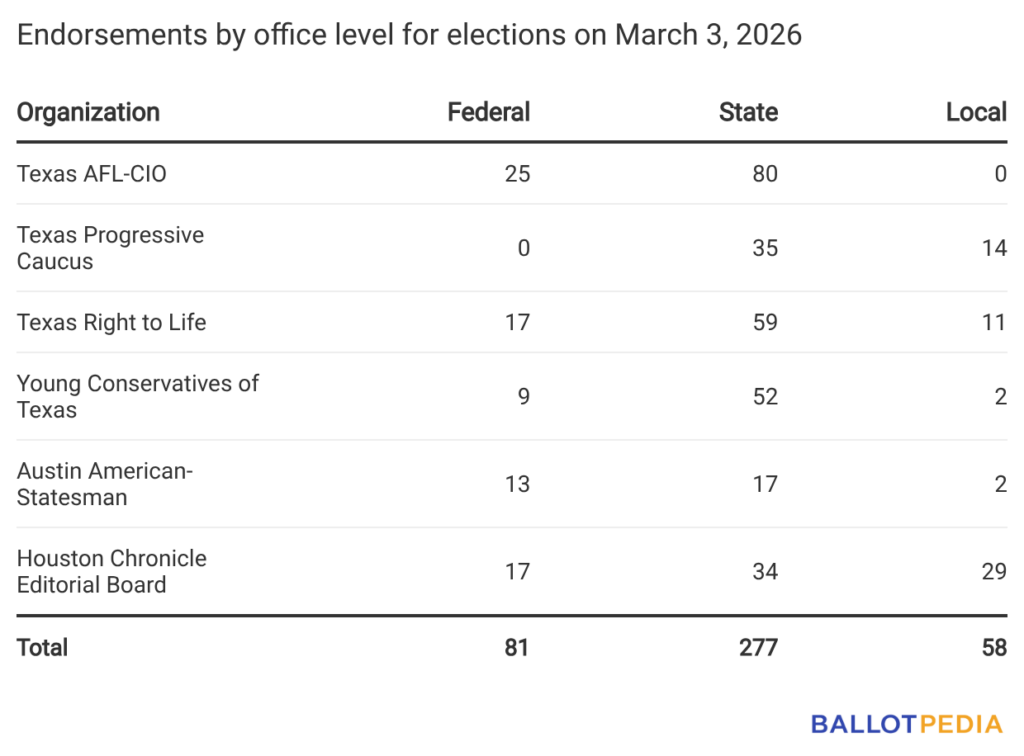
Texas AFL-CIO was the only issue-based endorser to back candidates from both major parties — backing 102 Democrats and 3 Republicans. The Texas Progressive Caucus endorsed only Democratic candidates, while Texas Right to Life and Young Conservatives of Texas endorsed only Republican candidates, mostly in partisan primaries. The two newspaper editorial boards also backed candidates from both major parties.
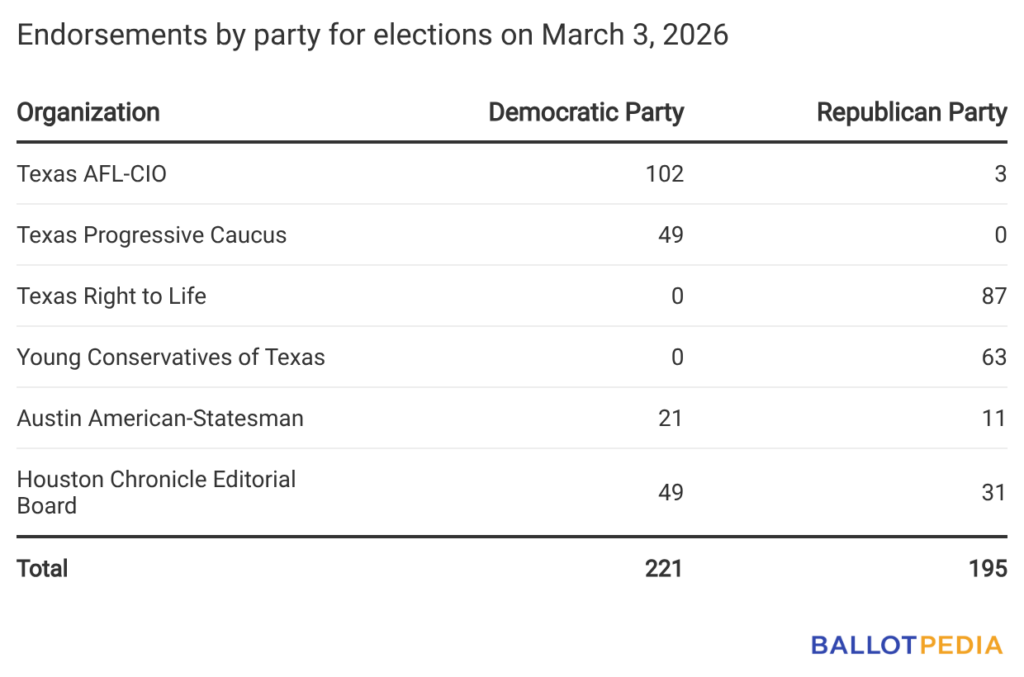
These groups issued the most endorsements (66.6%) in state-level elections, followed by federal (19.5%) and then local (13.9%).
- Texas AFL-CIO: 23.8% federal, 76.2% state, 0% local
- Texas Progressive Caucus: 0% federal, 71.4% state, 28.6% local
- Texas Right to Life: 19.5% federal, 67.8% state, 12.6% local
- Young Conservatives of Texas: 14.3% federal, 82.5% state, 3.2% local
- The Austin American-Statesman editorial board: 40.6% federal, 53.1% state, 6.3% local
- The Houston Chronicle editorial board: 21.3% federal, 42.5% state, 36.3% local
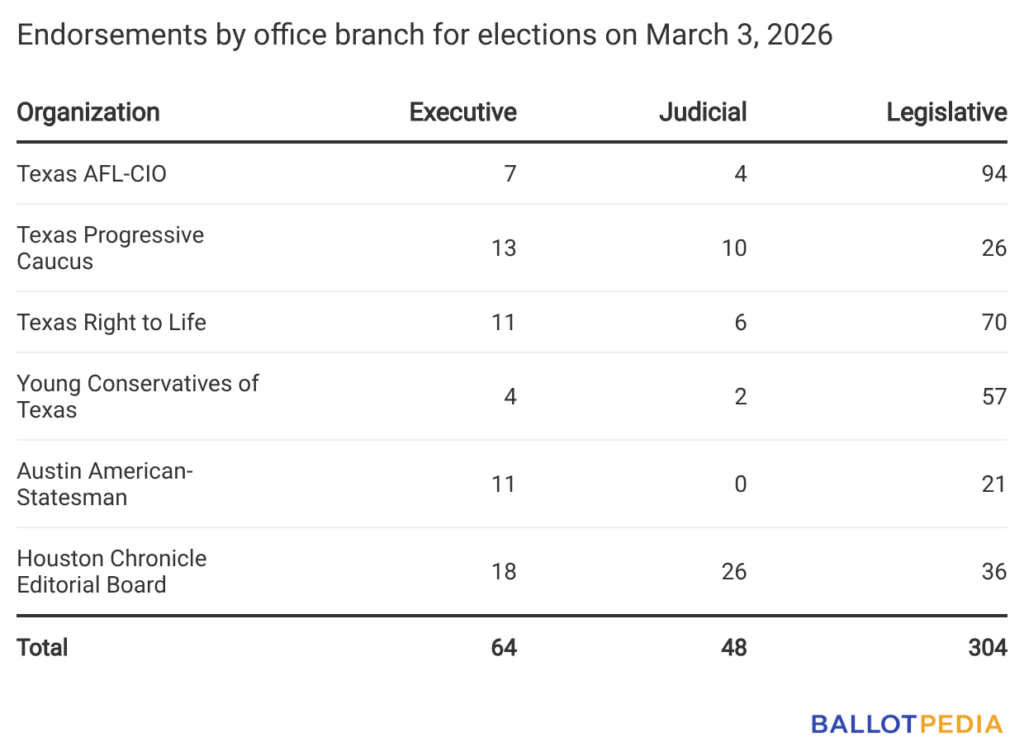
These groups made the most endorsements (73.1%) in legislative elections, followed by executive (15.4%) and then judicial (11.5%).
- Texas AFL-CIO: 6.7% executive, 3.8% judicial, 89.5% legislative
- Texas Progressive Caucus: 26.5% executive, 20.4% judicial, 53.1% legislative
- Texas Right to Life: 12.6% executive, 6.9% judicial, 80.5% legislative
- Young Conservatives of Texas: 6.3% executive, 3.2% judicial, 90.5% legislative
- The Austin American-Statesman editorial board: 34.4% executive, 0% judicial, 65.6% legislative
- The Houston Chronicle editorial board: 22.5% executive, 32.5% judicial, 45.0% legislative
Endorsements are statements or actions that an individual or group provides in support of a candidate, but they are also much more than that. Endorsements reveal alliances, ideological leanings, and potential policy priorities in ways that campaign platforms and quotes from a candidate sometimes can’t. Endorsements also play a practical role in campaigns. Many endorsers — especially for statewide and national candidates — can provide candidates with volunteer support, access to possible campaign donors, and give candidates a degree of credibility and notoriety.
Ballotpedia is tracking endorsements made by organizations in races at all levels of government, with a particular focus on groups that endorse candidates at the local level. Endorsements are one component of Ballotpedia's goal to provide robust information — data that helps voters understand who a candidate is and what their political philosophy is — for every office on the ballot.