


Each year, Ballotpedia analyzes how competitive the year's primary elections are using metrics including the number of incumbents who did not seek re-election, the total number of contested primaries, and the number of incumbents with primary challengers.
In 2026, this competitiveness information will include state legislative elections in 46 states.
So far, Ballotpedia has processed post-filing deadline information for 13 states’ legislative elections: Alabama, Arkansas, California, Idaho, Illinois, Kentucky, Montana, Nevada, North Carolina, Ohio, Oregon, Texas, and West Virginia. The remaining states will be incorporated into the analysis as filing deadlines pass throughout the remainder of the primary season.
Looking back since 2010, these first 13 states have shown a downward trend in open seats and an upward trend in contested incumbents.
Open seats
Between 2010 and 2024, the 13 states had an average of 285 total open seats. In 2026, there are 232 open seats between them, the second-fewest, next to 227 in 2020.
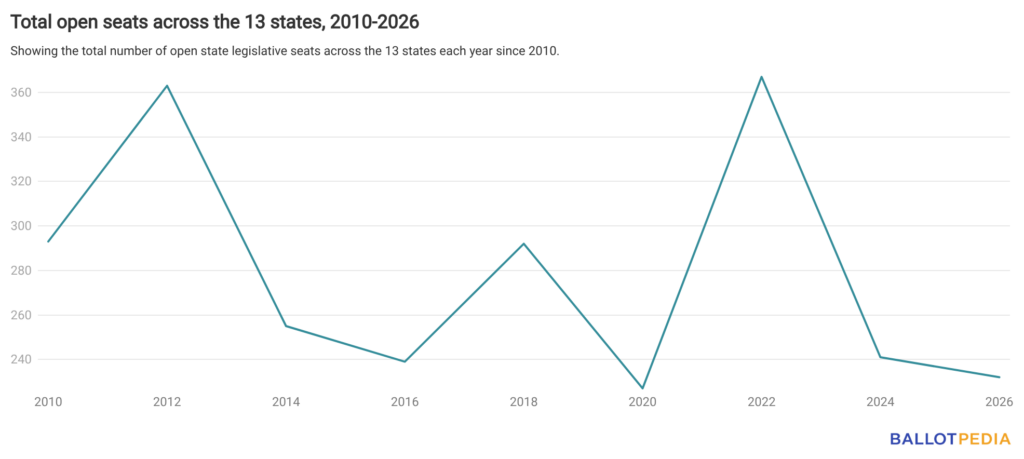
The number of open seats reflects how many seats are guaranteed to be won by newcomers. Three of the 13 states have a record-low number of open seats in 2026—Alabama with 10, Nevada with nine, and North Carolina with 10. Three other states will see their second-lowest number of open state legislative seats since 2010 this year—California (21), Kentucky (10), and Montana (39).
Incumbents contested
Between 2010 and 2024, the 13 states saw an average of 299 incumbent primaries. In 2026, there are 339 incumbents in contested primaries, the second-highest since 2010.
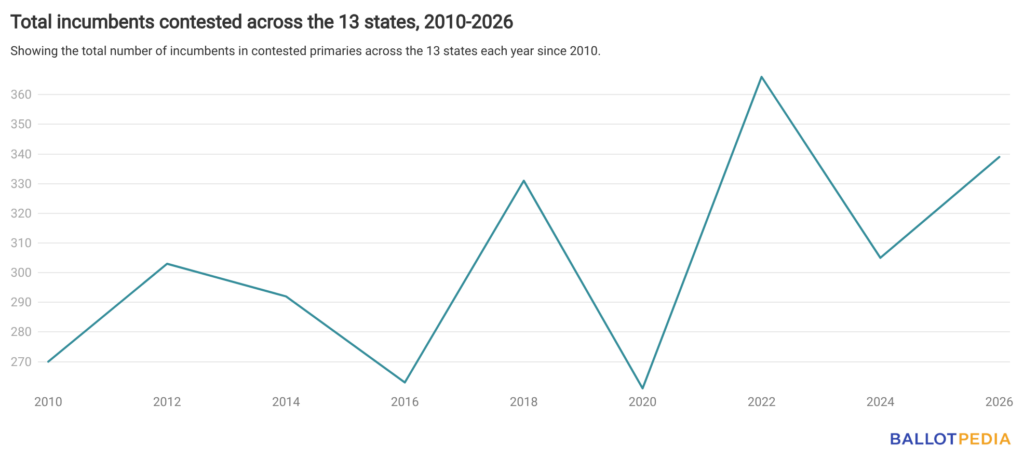
The number of contested incumbents reflects additional choice on the ballot for voters, who can choose to nominate a new candidate for the general election rather than their current representative. Two of the 13 states have a record-high number of contested incumbents in the 2026 primaries—North Carolina (39) and Oregon (15). Three other states will see their second-highest number of incumbents in contested primaries—Montana with 23, Nevada with 15, and West Virginia with 48.
Ballotpedia will publish updates to these and other competitiveness trends throughout the primary season as new state filing deadlines pass.