


Welcome to the Friday, April 3, Brew.
By: Briana Ryan
Here’s what’s in store for you as you start your day:
- 15 deepfake bills enacted so far this year, number of states with deepfake laws remains the same
- Alaska becomes fifth state with 2026 ballot measure on citizenship requirement for voting
- Four new measures have been certified for this year’s statewide ballots
15 deepfake bills enacted so far this year, number of states with deepfake laws remains the same
So far this year, state lawmakers have enacted 15 bills addressing deepfakes. Since 2019, 47 states have adopted laws that deal with deepfakes, with no change in that total since 2025. The three states without such laws are Alaska, Missouri, and Ohio.
Deepfakes are videos, images, or audio files that have been generated or manipulated by artificial intelligence in order to realistically portray something that did not actually occur.
We started our AI Deepfake Legislation Tracker in 2024 to help readers stay up to date on deepfake legislation in all 50 states.
Our mid-year report, which will analyze legislative activity in the first half of the year, will be released in July. Until then, here’s a quick update on the status of deepfake legislation across the U.S.
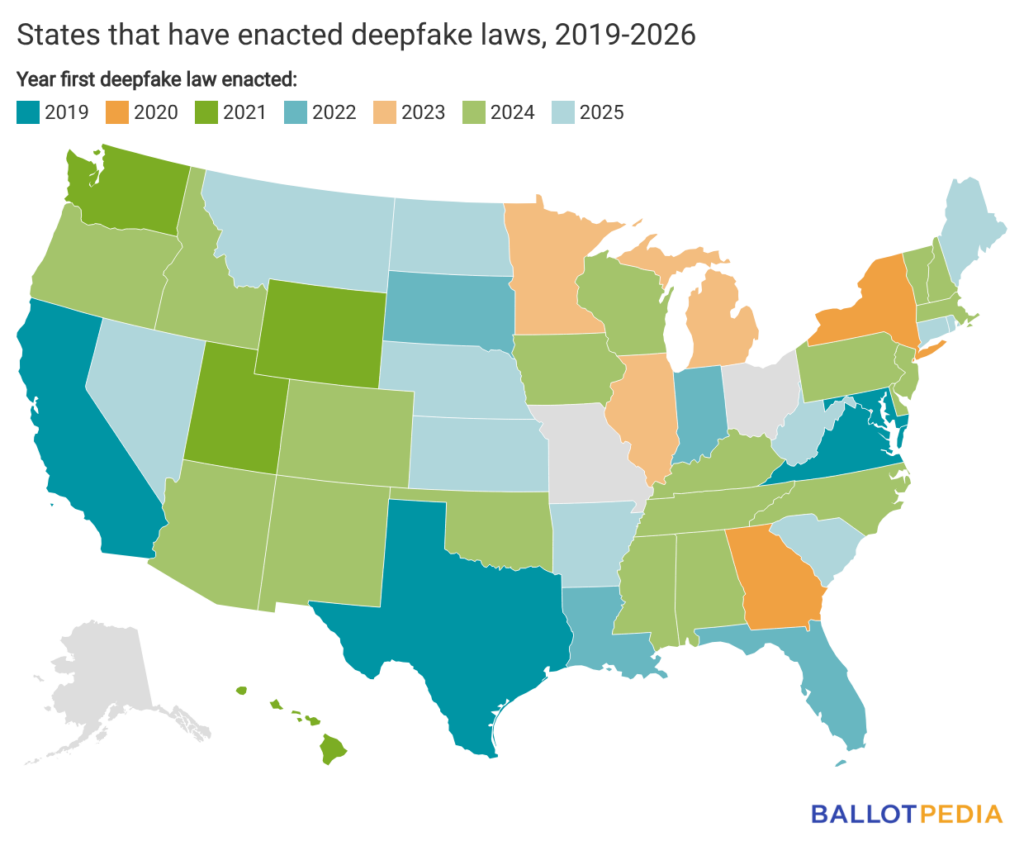
Most states have enacted multiple laws addressing deepfakes. California has enacted the most deepfake laws since 2019, with 21 bills.
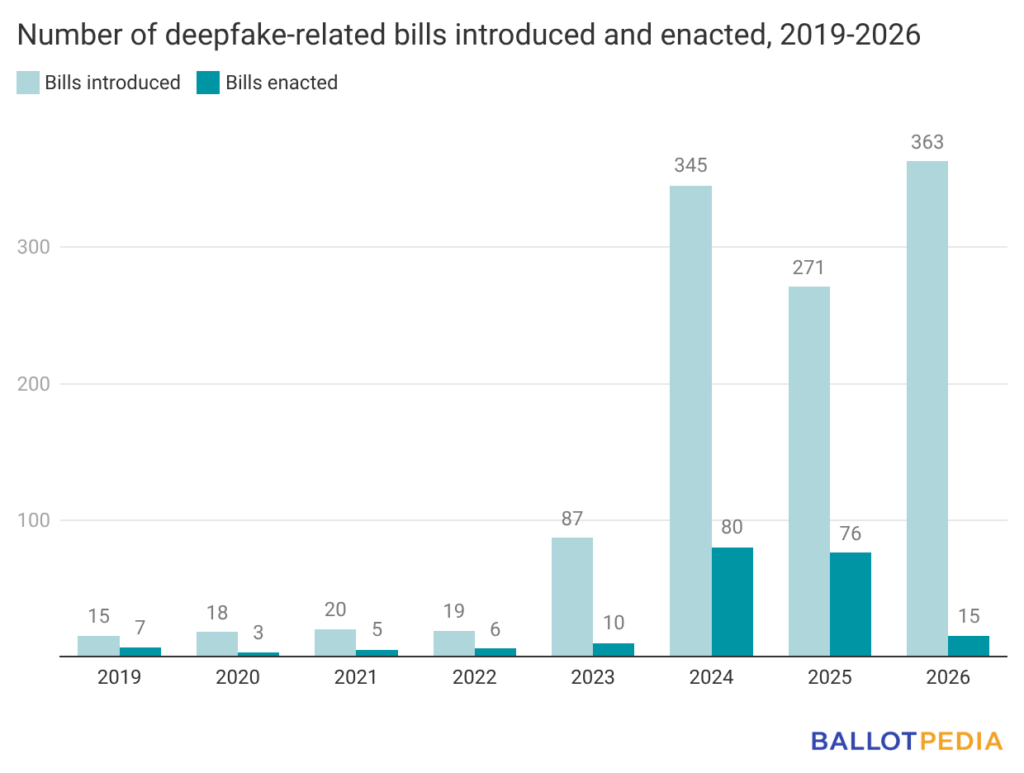
Deepfake legislation addresses multiple topics. So far this year, the three most common types of introduced bills address sexually explicit deepfakes (169 bills), political communications (74), and regulations on tech entities related to deepfakes (53).
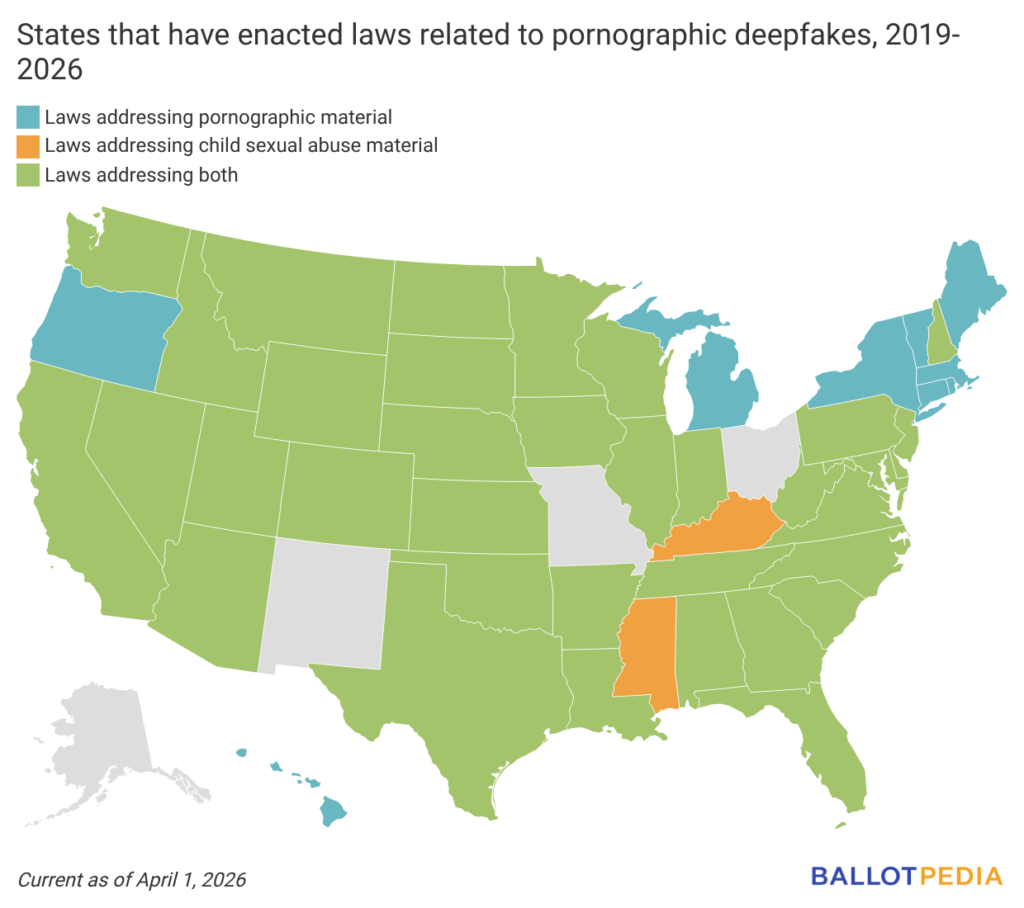
Forty-six states have enacted laws addressing sexually explicit deepfakes since 2019. That number has not increased since last year, although some of those states have passed new laws.
The number of states with laws regulating political deepfakes has increased from 28 to 31 this year, with Maine, Tennessee, and Vermont enacting new laws.
Click here to read more about deepfake policy in the U.S., and click here to use our AI Deepfake Legislation tracker.
Alaska becomes fifth state with 2026 ballot measure on citizenship requirement for voting
Alaska voters will decide on a ballot initiative this year that would provide, in statute, that “Only a person who is a citizen of the United States … may vote at any election,” unless the Legislature approves substantially similar legislation during its upcoming session.
Lieutenant Governor Nancy Dahlstrom (R) announced that officials verified 34,944 signatures across 40 state House districts on March 17. This exceeds the required minimum of 34,098 qualified signatures across 30 state House districts.
In Alaska, an initiative appears on the ballot at the first statewide election held at least 120 days after the Legislature adjourns its session. The Legislature could approve legislation that is "substantially the same as the proposed law," rendering the initiative void. The legislative session began Jan. 20 and is expected to adjourn May 20. If the Legislature instead adjourned on April 20, the initiative would be eligible to appear on the Aug. 18 primary ballot. Otherwise, it would appear on the Nov. 3 general election ballot.
Currently, Alaska law says: "A person may vote at any election who is a citizen of the United States." The initiative would change that law to say, "Only a person who is a citizen of the United States … may vote at any election."
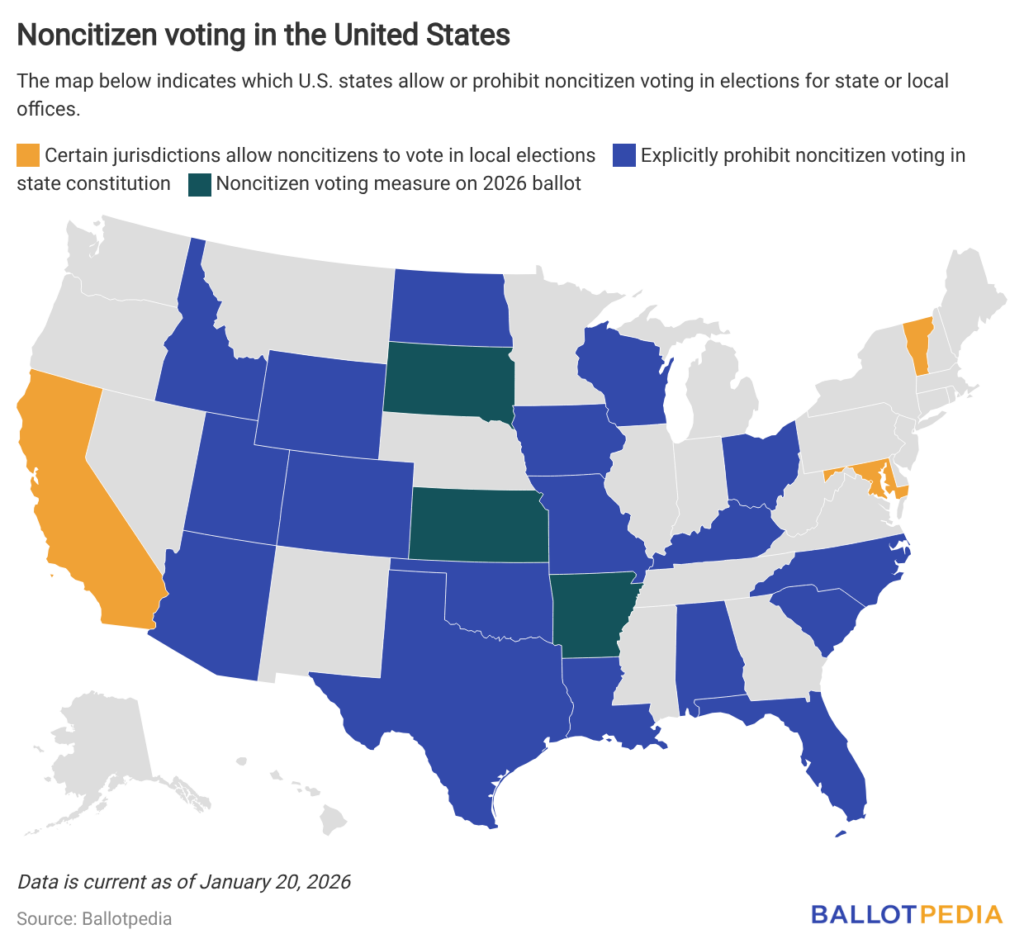
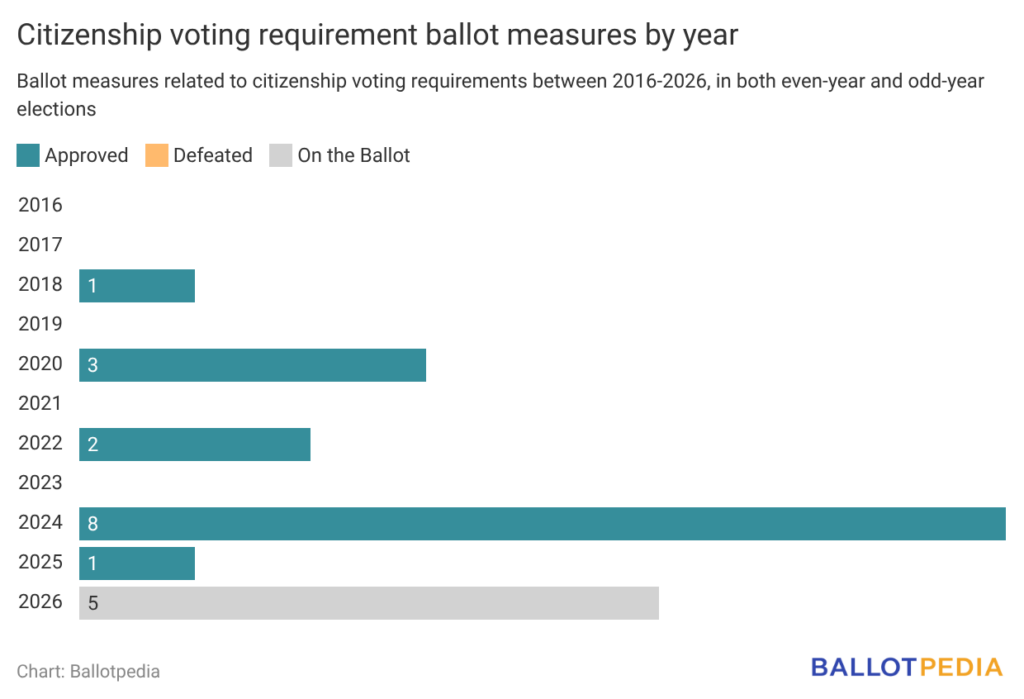
In 2026, Arkansas, Kansas, South Dakota, and West Virginia will decide on ballot measures to provide that noncitizens cannot vote in state law. Measures could make the ballot in Arizona and Michigan. Of these, the Alaska initiative is the only initiated state statute, which amends state law. The other measures are constitutional amendments.
From 2018 to 2025, voters approved 15 ballot measures about citizenship requirements for voting. In 2024, voters in eight states approved measures prohibiting noncitizen voting — the greatest number of such measures to appear on statewide ballots in any election year.
In 1996, the U.S. Congress passed a law prohibiting noncitizens from voting in federal elections. This law does not apply to elections for state and local offices. Every state requires voters to attest that they are U.S. citizens when registering to vote.
While no state constitution explicitly allowed noncitizens to vote in the state or local elections, some states have jurisdictions that allow noncitizens to vote in some or all local elections. Washington D.C. and certain municipalities in California, Maryland, and Vermont allow noncitizens to vote in some or all local elections. Eighteen states include language explicitly prohibiting noncitizen voting in their state constitutions.
This is the third citizen initiative to qualify for the ballot in Alaska. An initiative that would establish new contribution limits for campaigns for state and local office has already been certified for the ballot. Another initiative that would repeal the top-four ranked-choice voting (RCV) system in the state has qualified for the ballot, and will be certified unless the Legislature approves a comparable bill.
Click here to read more about the Alaska Citizenship Requirement for Voting Initiative.
Four new measures have been certified for this year’s statewide ballots
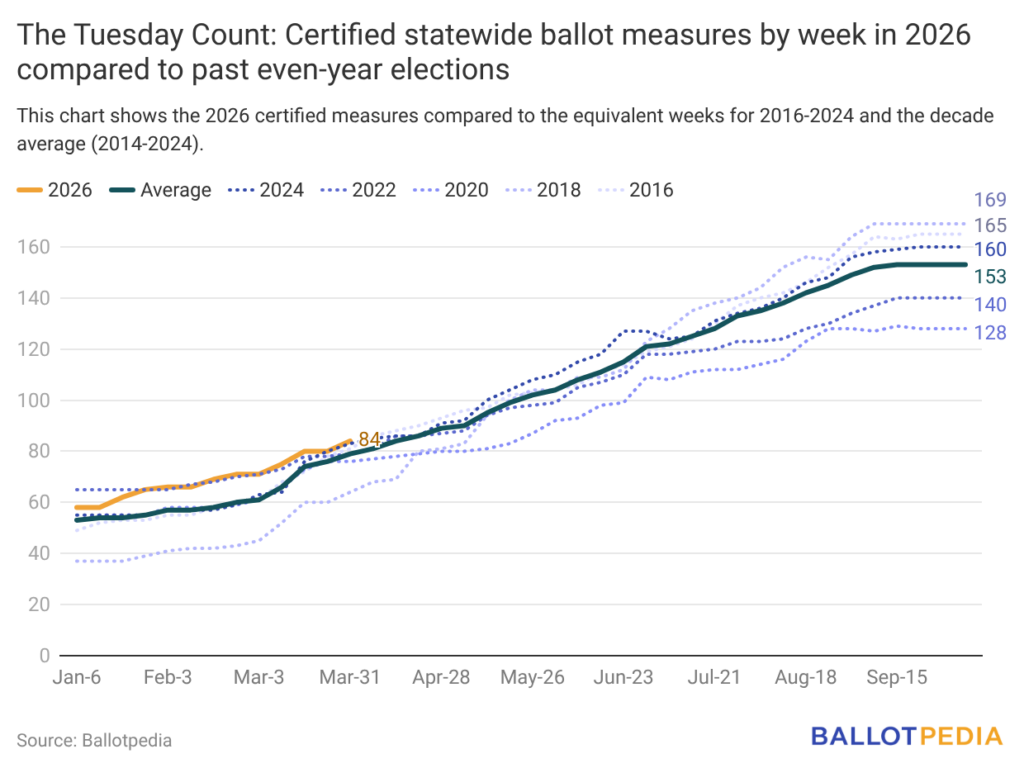
As of March 31, the 84 statewide measures certified for statewide ballots this year are above the historical average for this point in the cycle across even-numbered years from 2014 through 2024.
By this time during even-numbered years from 2014 through 2024, an average of 79 statewide measures had been certified for the ballot. From 2014 to 2024, an average of 153 statewide measures were certified.
Over the past two weeks, four new measures were certified for the ballot in their respective states:
- Alaska Citizenship Voting Requirement Initiative
- Georgia Authorize Creation of Next Generation 9-1-1 Fund Amendment
- Georgia Require Nonpartisan Elections for Probate Judges Amendment
- New Hampshire Eliminate Office of Register of Probate Amendment
Signatures have been submitted and are pending verification for five initiatives:
- California Homeownership Loan Program and Single-Family Home Construction Initiative
- California Two-Thirds Vote Requirement for Special Taxes and Charter City Real Estate Transfer Tax Prohibition Initiative
- California Voter Identification and Voter List Maintenance Requirements Initiative
- Michigan Citizenship Requirement for Voting Initiative
- Missouri Congressional Map Referendum
Enough signatures were verified for 12 indirect initiatives to certify them to their respective state legislatures:
- Maine Birth Certificate Sex Requirement for Public School Sports Initiative
- Massachusetts Change State Tax Revenue Limit Initiative
- Massachusetts Decrease State Income Tax Rate to 4% Initiative
- Massachusetts Eliminate Recreational Marijuana Sales and Allow Limited Possession Initiative
- Massachusetts Establish the Nature for All Fund Initiative
- Massachusetts Legislative Stipend Calculation and Payment Rules Initiative
- Massachusetts Limit on Required Lot Size for Single-Family Homes Initiative
- Massachusetts Permit Collective Bargaining for Committee for Public Counsel Services Employees Initiative
- Massachusetts Permit Same-Day Voter Registration Initiative
- Massachusetts Public Records Requirements for Legislature and Governor’s Office Initiative
- Massachusetts Rent Control Initiative
- Massachusetts Top-Two Primary Elections Initiative
The next signature deadline is May 1 in Idaho, where initiatives related to the sales tax, abortion, medical marijuana, and recreational marijuana have been approved for signature gathering.
Click here for more information about the ballot measures that could be on the ballot this year.