


In today’s edition, you’ll find:
- On the issues: The debate over the Classic Learning Test
- School board filing deadlines, election results, and recall certifications
- Indianapolis’ new mayor-appointed board will oversee K-12 public and charter schools in the city. Here’s what that means.
- Extracurricular: education news from around the web
- Candidate Connection survey
Reply to this email to share reactions or story ideas!
On the issues: The debate over the Classic Learning Test
In this section, we curate reporting, analysis, and commentary on the issues school board members deliberate when they set out to offer the best education possible in their district. Missed an issue? Click here to see the previous education debates we’ve covered.
So far in 2026, Georgia, Indiana, and North Carolina have joined a handful of other states that allow prospective undergraduates to submit their scores on the Classical Learning Test (CLT) for admission to some state universities or for merit-based scholarships. According to the CLT website, more than 300 private colleges and universities accept the CLT.
The CLT is an alternative to standardized college admissions tests like the SAT and the ACT. The company Classic Learning Initiatives, which launched the exam in 2015, describes it as being “aligned with a classic approach to education.” According to a press release, “The CLT’s reading passages are sourced from classic texts of philosophy, science, and literature — from Plato to Fredrick Douglass, from Isaac Newton to Albert Einstein. And the CLT Quantitative Reasoning section has a rigorous focus on complex arithmetic, geometry, and trigonometry, with no calculators allowed.”
Whether the CLT is an adequate substitute for the ACT and SAT is contested. The Classical Learning Initiative released a 2023 study that found that the SAT and CLT measured very similar constructs, establishing a concordance relationship to show what a score on one roughly equals on the other. However, the College Board, which runs the SAT, said the study did not meet the industry standards.
Debates about CLT center around whether it accurately predicts college readiness. Though the results were not compared to those of students who took the ACT or SAT, a 2025 study from Grove City College found a positive correlation between performance on all sections of the CLT and first-year grade point average.
To help readers understand the debate over the CLT, we're re-running perspectives we previously shared in September 2025.
Education researcher Daniel Buck argues that tests shape curricula, and that the ACT and the SAT promote an uninspiring vision of education that focuses too narrowly on practical skills. He says the CLT, in drawing on the Western tradition, engages students’ minds more deeply and puts pressure on the ACT and SAT to update their tests.
In 2024, the Iowa Board of Regents’ Academic Affairs Committee studied the CLT. It recommended against including it in the state’s Regent Admission Index — which is used to evaluate applications to the state’s public universities — until more data becomes available. The committee said the test’s recent introduction means there is little data on whether colleges can use CLT scores to predict student success. The committee said administrators would struggle to use the scores to determine student placement in math and English courses, as ACT and SAT scores are used.
A test to challenge the SAT | Daniel Buck, The Hill
“Created in 2015, the CLT hopes to revive what we consider an education of old — logic, grammar, Shakespeare, Tolstoy. In format, it resembles its competitors, featuring passages with multiple choice questions. Yet students instead read the likes of Plato on tyrannical man or St. Teresa of Avila on the virtues of a humble life.
“It’s a simple albeit powerful innovation on a well-established format. While the SAT and ACT compete, they resemble each other too closely to foster innovation. Like two fast food behemoths shoveling buckets of fries, they may not feel pressure from a new steakhouse to change their menus, but it will at least provide a much-needed alternative.
“If the SAT and ACT alone maintain their prominence, schools have no choice but to malform themselves to comply with their dictates. Tests are the measure of achievement, and so in place of logic, literature, rhetoric, and discipline, schools advance utilitarian, factory-model education.”
Classic Learning Test Review | Iowa Board of Regents, Academic Affairs Committee
“To date, the team has identified no peer-reviewed journal articles addressing the relationship to student outcomes, and the CLT technical guide does not include any study of the relationship between the CLT or its subscales and student outcomes. The relative youth of the CLT does not allow for a robust study of student learning outcomes or retention to graduation. Additionally, any studies released in the immediate future will be limited to students at private, primarily religiously affiliated institutions of higher education. Even with the recent acceptance of CLT as an admissions test at the University of New Mexico, all public institutions in Florida, and select other public institutions, any study related to student outcomes at public colleges and universities will not happen for years.
“The team identified no evidence that a criterion score from the CLT could be used for placement purposes for students in mathematics or English courses as is current practice with the SAT and ACT. The inability to use CLT for course placement is problematic.”
School board update: filing deadlines, election results, and recall certifications
In 2026, Ballotpedia will cover elections for more than 30,000 school board seats. We’re expanding our coverage each year with our eye on covering the country’s more than 80,000 school board seats.
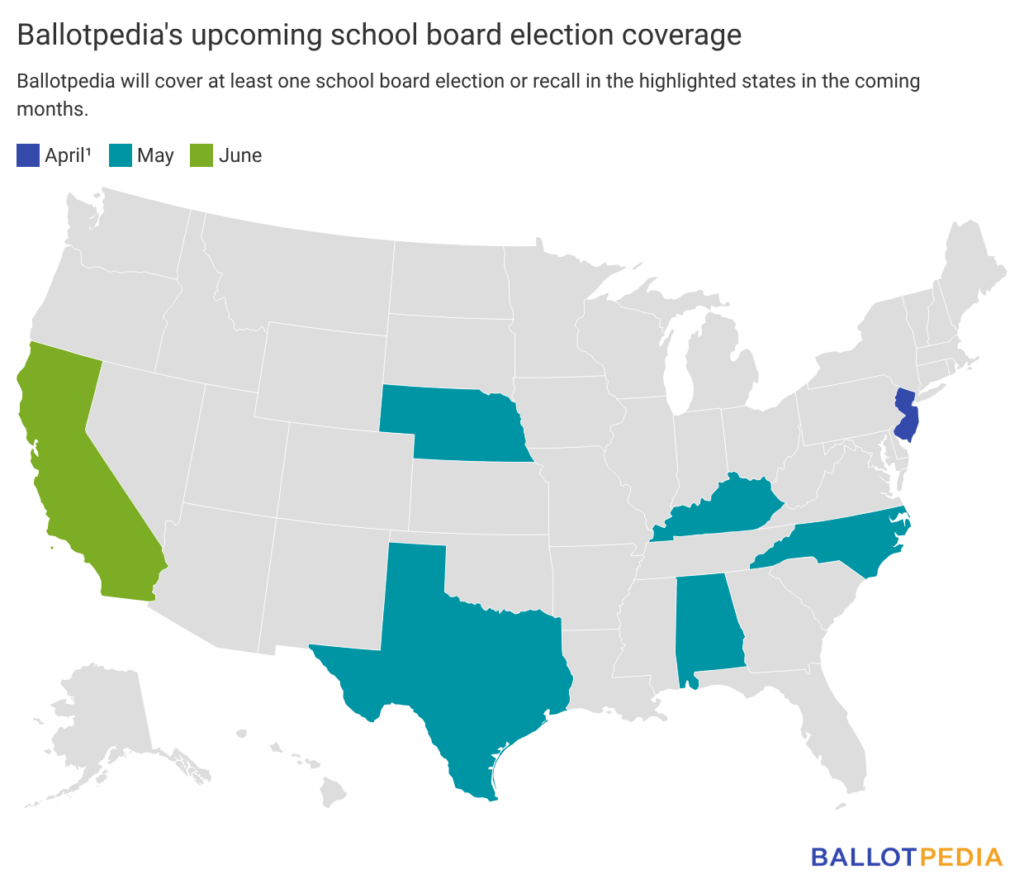
Ballotpedia’s upcoming school board election coverage includes some of the following:
Alabama
Ballotpedia will cover elections on May 19 for seats on the Jefferson County Schools and Mobile County Public Schools school boards. Primary runoffs are scheduled for June 16.
California
Ballotpedia will cover school board primaries for seats on the Long Beach Unified School District, Los Angeles Unified School District, and San Diego Unified School District school boards. General elections are scheduled for Nov. 3.
New Jersey
Ballotpedia will cover elections on April 21 for the Newark Public Schools Board of Education.
North Carolina
Ballotpedia will cover primary runoffs on May 12 in Cabarrus County Schools, Guilford County Schools, Johnston County Schools, and Winston-Salem/Forsyth County Schools. Primaries were held March 3.
Texas
On May 2, Ballotpedia will cover school board elections in more than forty districts in the Lone Star State.
Click here to read more about Ballopedia's 2026 school board election coverage.
Indianapolis’ new mayor-appointed board will oversee K-12 public and charter schools in the city. Here’s what that means.
On March 31, 2026, Indianapolis Mayor Joe Hogsett (D) announced his appointment of nine members to the newly established Indiana Public Education Corporation (IPEC). House Bill 1423, which Gov. Mike Braun (R) signed on March 4, established IPEC to assume certain administrative and financial duties of the Indianapolis Public Schools (IPS) district. These include overseeing buildings and transportation for district and charter schools, assuming the authority to collect and distribute property taxes to district and charter schools, and creating a school performance evaluation system.
HB 1423 requires the mayor to appoint all nine members of the board to four-year terms. It requires that three members be charter school leaders, three members be on the IPS board of commissioners, and three members have expertise in management, capital planning, facilities, transportation, logistics, or experience working with vulnerable student populations and communities. Hogsett appointed the following people to IPEC:
- Patricia Castañeda, vice president of Key Bank.
- John Hammond, partner at the Taft Stettinius & Hollister law firm.
- David Harris, president and CEO of Christel House International.
- Janet McNeal, president of Herron Classical Schools charter network.
- Hope Star, IPS board president.
- Dexter Taylor, director of Paramount Brookside charter school.
- Ashley Thomas, IPS board member.
- Deandra Thompson, IPS board member.
The IPS Board will retain some duties, including making day-to-day decisions for district schools and hiring and firing the superintendent or school leaders for charter schools.
Charter boards will remain largely independent, though HB 1423 charges IPEC with controlling buildings and transportation for district and charter schools. The bill allows charter boards to maintain control over their buildings, but in doing so, they'd forfeit any IPEC funding from property taxes.
Indiana intervenes in IPS
IPS is Indiana's second-largest district, with roughly 22,000 students, but enrollment has declined 31% since 2015. More than 60% of Indianapolis students now attend charter or private schools, or are homeschooled. Unlike traditional public schools, charter schools in Indiana cannot issue bonds to pay for building construction or expansion, though public school districts are required to offer unused facilities to charter schools first for $1. House Bill 1423 exempted IPS from this requirement — click here to read our earlier deep dive on the legal issues around charter school facilities.
Transportation is a key issue for the city's expanded charter student population. Most charter schools in Indianapolis don’t provide busing. Those that do can spend upwards of $1 million a year on transportation. Though charter school budgets vary by federal funds and private donations received, one Indianapolis charter school that provided transportation had a budget of around $2 million for the 2023 fiscal year (the Indiana Charter School Board revoked the school's charter in 2024 for budget-related issues).
In 2025, Braun signed House Bill 1515 to establish the Indianapolis Local Education Alliance (ILEA), a task force to reimagine the relationship between Indianapolis Public Schools (IPS) and charter schools in the district. As covered in previous editions of Hall Pass, the task force issued recommendations to the Indiana General Assembly regarding transportation, facilities, and governance models for IPS.
The Indiana General Assembly considered the recommendations during the 2026 legislative session, and the House passed HB1423 68-30 along party lines, with Republicans supporting the measure, Democrats opposing it, and two not voting. The Indiana Senate passed the bill 27-21 with only Republicans supporting the bill, and 12 Republicans joining nine Democrats to oppose it. Two senators were absent. Indiana has a Republican trifecta.
Supporters say the IPEC model of governance helps equalize funding for district and charter schools. Scott Bess, President and CEO of Indiana Charter Innovation Center, said, "What it will do is really put charter schools within the Indianapolis Public Schools district on equal financial footing with the district, because charter schools will, for the first time, have full access to local property taxes for facilities and transportation."
Opponents of IPEC governance say that it favors charter schools over district schools and weakens democratic control of public education through the elected board. Cathy Fuentes-Rohwer, President of the Indiana Coalition for Public Education, said, "This bill creates an entirely new large and expensive layer of completely appointed bureaucracy with control over school buildings and transportation– while offering no clear benefit to students… The new governing body would have no direct accountability to voters."
Declining enrollment and charter school growth in IPS
IPS has been a microcosm of broader trends affecting public schools across the country, including declining student enrollment, funding challenges, and conflicts over sharing resources with charter schools. Since 2015, IPS has lost an estimated 10,000 students, though enrollment in the nearly 60 charter schools within the district has increased. In 2025, Indiana became one of 18 states with private school choice programs open to all students, regardless of income.
IPS has closed or merged more than 18 schools since 2021. The Indianapolis charter sector has also faced instability during that period, with more than 30% having closed.
In 2025, Braun also signed SB 1, which mandated that districts share tax revenues with charter schools beginning in 2028 and lowered taxes for property owners. IPS teachers rallied at the Indiana Statehouse to oppose the bill.
A different bill proposed earlier this year would have dissolved IPS and four other districts in the state and converted all schools within them to charters. That measure did not make it out of committee.
Extracurricular: education news from around the web
This section contains links to recent education-related articles from around the internet. If you know of a story we should be reading, reply to this email to share it with us!
- Everything’s Bigger in Texas, Including School Debt | RealClearInvestigations
- Delaying kindergarten may have limited benefit | Hechinger Report
- Little-known NYC charter school with 22% homeless rate wins state chess championship: ‘Amazing’ | New York Post
- Out-of-state groups pumping money into Wisconsin school board elections | WJFW
- Colorado bill seeks more transparency in how K-12 schools help at-risk students | KUNC
- Why the Classic Learning Test, which embraces Aristotle but spurns calculators, has caught Indiana’s eye | Chalkbeat Indiana
- Trump Again Proposes Major Education Cuts in New Budget Proposal | Education Week
Take our Candidate Connection survey to reach voters in your district
Today, we’re looking at survey responses from candidates running in the May 2 general election for two at-large seats on the Carrollton-Farmers Branch Independent School District school board in Texas. Cinthya Noda and Dave Jimenez completed the survey. Incumbent Carolyn Benavides and Luis Palomo are also running.
Carrollton-Farmers Branch Independent School District enrolled roughly 24,386 students during the 2023-24 school year, making it the 51st largest in Texas. It is located southwest of Dallas.
Noda's career experience includes working as an education administrator. Here’s how Noda answered the question, “What are the main points you want voters to remember about your goals for your time in office?”
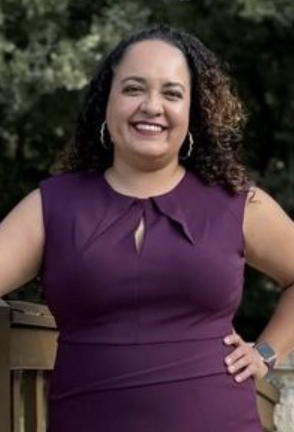
- “Every decision I make will center on what is best for students, but to truly support students, we must also support and listen to teachers. Teachers have the greatest direct impact on student success, and their voices must be heard before decisions are made. Strong schools require collaboration, respect, and a shared commitment to those closest to our children.
- As the daughter of Spanish speaking immigrant parents, I know what it feels like when families struggle to stay connected and heard. I am committed to building trust by listening to all community members, regardless of language, background, or circumstance, and ensuring every family feels seen, valued, and included in our schools.
- With 14 years in public education, I bring real classroom and leadership experience to the board. I understand how decisions affect students and educators, and I will use that insight to guide responsible fiscal choices, ask the right questions, and ensure our community clearly understands how decisions impact student success.”
Click here to read the rest of Noda’s responses.
Jiminez’s career experience includes leading technology consulting organizations.
Here’s how Jiminez answered the question, “What are the main points you want voters to remember about your goals for your time in office?”

- “Fiscal Accountability and Transparency. CFBISD adopted consecutive deficit budgets before closing four schools, and we must have a credible multi-year financial plan the community can see and understand. I will push for transparent financial reporting, benchmark our spending against peer districts, and ensure the $716 million bond is managed with the discipline our taxpayers deserve. Transparency isn't a just a policy, it's a discipline. Every dollar, every decision, and every trade-off should be visible to the families and taxpayers who fund this district.
- Student Outcomes First. Every decision the board makes should start with one question: does this improve outcomes for students? That's the filter. I will insist on clear, measurable goals tied to student achievement, superintendent evaluations grounded in data rather than politics, and honest conversations about what's working and what isn't. Our students deserve a district that prepares them for the next step in life, whether that's college, a career, or service in the military. That means protecting classroom instruction, expanding career and technical education, and making CFBISD a district families actively choose.
- Fighting for Public Education. The biggest threat to CFBISD isn't inside our district. It's in Austin. The state froze per-pupil funding for six years, then increased it by just $55 while simultaneously passing a billion-dollar voucher program that funnels public tax dollars to private schools with virtually no accountability. Recapture takes nearly $5 billion from local districts, and charter school growth means most of that money no longer helps underfunded traditional public schools. I will advocate loudly alongside every district in the state for the legislature to fully fund public.”
Click here to read the rest of Jimenez’s responses.
As a reminder, if you're a school board candidate or incumbent planning to run this year, click here to take the survey. If you complete the survey, your answers will appear in your Ballotpedia profile. Your responses will also appear in our sample ballot. If there is an election in your community, share the link with your candidates and urge them to take the survey!