


Welcome to Hall Pass, a newsletter written to keep you plugged into the conversations driving school board governance, the politics surrounding it, and education policy.
In today’s edition, you’ll find:
- On the issues: The debate about merit-based teacher pay
- School board filing deadlines, election results, and recall certifications
- Forty-four governors have given a State of the State address so far in 2026. Here's what four governors who emphasized education said.
- Extracurricular: education news from around the web
- Candidate Connection survey
Reply to this email to share reactions or story ideas!
On the issues: The debate about merit-based teacher pay
In this section, we curate reporting, analysis, and commentary on the issues school board members deliberate when they set out to offer the best education possible in their district. Missed an issue? Click here to see the previous education debates we’ve covered.
Merit-based teacher pay is a compensation system that awards teachers bonuses based on performance. While single-salary systems give teachers bonuses for tenure or extra credentials, a merit-based pay system uses teacher evaluations measuring effectiveness and awards bonuses accordingly. Performance evaluation can be based on standardized testing, classroom management, teachers' extracurricular responsibilities, instruction, or a combination of factors.
EducationWeek reported in 2025 that 10 states required — and 13 authorized — districts to include measures of teacher performance to determine teacher pay or bonuses. Of the states that required it, six had Republican trifectas, three had divided governments, and one had a Democratic trifecta.
Today, we'll look at two perspectives on merit-based teacher pay.
David Cutler, a high school history and journalism teacher, says that merit-based teacher pay can encourage teacher effectiveness when it considers planning, classroom management, instruction, and professional responsibilities. Cutler says that a single-salary system rewards a teacher's extra credentials or longevity in the profession, but that longevity doesn't always correlate with teacher effectiveness. Cutler says the best teachers continually aim to learn new and effective pedagogical approaches. Cutler says that merit-based teacher pay can both incentivize teachers to improve their teaching and increase teacher retention.
Peter Greene, educator and Forbes senior contributor, says that since schools generally don't have much extra money for teacher bonuses, merit-based incentives can create a zero-sum contest that fosters unhealthy competition between teachers. Greene says this can reduce teacher collaboration and mentorship, which he says is essential for schools. Greene also says that evaluating teachers adequately is difficult because it's hard to define what makes a good teacher. He says that evaluations based on standardized test results are poor indicators of teacher effectiveness because they only test specific skills — like reading and math — that not all teachers teach.
Rewarding Teachers with Merit-Based Pay | David Cutler, Medium
"[E]ffectiveness doesn’t necessarily correlate with classroom longevity. A teacher who has 20-plus years of experience does not automatically merit higher pay than a more effective newcomer. The best teachers will always strive to learn new and effective pedagogical approaches, regardless of pay. All the same, I’m dubious that the same holds true for all teachers, especially those with tenure, who may lack sufficient incentive to do anything differently.
…
"I love the idea of [effective teachers] earning a bonus each year, not only as a well-deserved perk, but also to urge others to hone their craft."
Why Merit Pay Will Not Work For Teachers. Ever. | Peter Greene, Forbes
"Policy makers settled on using a Big Standardized Test as a measure of teacher quality; that has turned out to be a terrible idea for a myriad of reasons, not the least of which is that the test only looks at reading and math, leaving a host of teachers without even this poor source of evaluation.
…
"[S]chools never take in extra money, and it seems unlikely that we’ll ever see a school board announcing, 'Because so many teachers have done such excellent work this year, we’ll be raising taxes to fund an extra-large batch of merit bonuses.'
"What seems more likely is a pre-set pile of money budgeted for merit bonuses, creating a zero-sum contest among the teaching staff."
School board update: filing deadlines, election results, and recall certifications
In 2026, Ballotpedia will cover elections for more than 30,000 school board seats. We’re expanding our coverage each year with our eye on covering the country’s more than 80,000 school board seats.
Election results from the past week
May 12
Nebraska: Ballotpedia covered primaries in six districts and a general election in one district: Elkhorn Public Schools, Millard Public Schools, Norris School District 160, Omaha Public Schools, Ralston Public Schools, Waverly School District 145, and Westside Community Schools. School board elections in Nebraska are nonpartisan. Click this link to view the results.
North Carolina: Ballotpedia covered primary run-offs in four districts: Cabarrus County Schools, Guilford County Schools, Johnston County Schools, and Winston-Salem/Forsyth County Schools. School board elections in North Carolina can be nonpartisan or conducted with party labels. Click this link to view the results.
Upcoming school board elections
Ballotpedia’s staff is covering school board elections for 51 seats in 13 districts in the next 30 days.
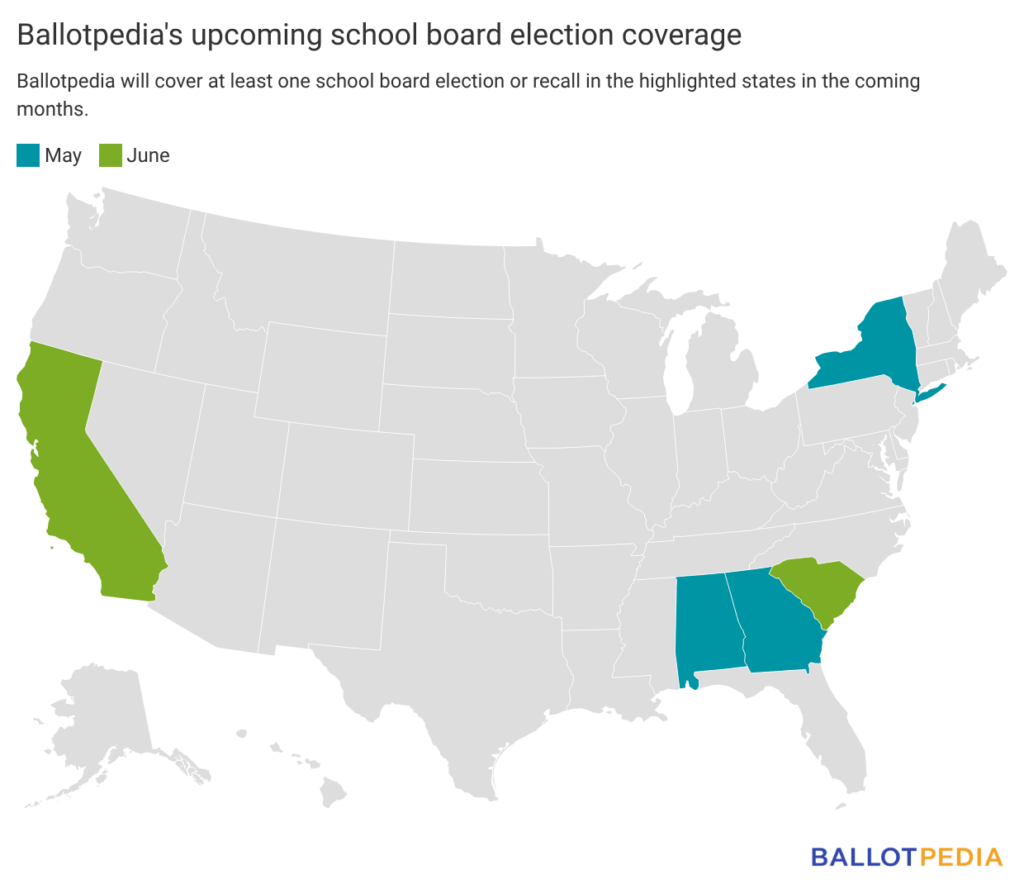
Watch future editions of Hall Pass for the following May primary and general election results:
- Alabama - Primaries in two districts on May 19.
- Georgia - Primaries in four districts and general elections in six districts on May 19.
- New York - A general election in one district on May 19.
Forty-four governors have given a state of the state address so far in 2026. Here's what four governors who emphasized education said.
Forty-four governors have given a state of the state address this year. All 50 state constitutions require governors to annually (or, if not annually, regularly) report to the state legislature on the condition of the state.
Each of the 44 governors mentioned education. Today's edition of Hall Pass highlights the education priorities of four governors — Vermont Gov. Phil Scott (R), California Gov. Gavin Newsom (D), South Carolina Gov. Henry McMaster (R), and Connecticut Gov. Ned Lamont (D) — who emphasized education in their addresses.
Vermont (Divided government)
Governor Scott gave his 2026 state of the state address on Jan. 7. He said that education reform was the state's most critical challenge and cited low enrollment, low early literacy rankings, and unequally resourced school districts.
Scott said that Act 73, enacted in 2025, addressed these issues by:
- Expanding preschool access
- Consolidating school districts
- Expanding the range of K-12 courses offered across the state
- Increasing career technical education offerings
- Increasing teacher salaries in less affluent districts
- Broadening teacher resources
Scott acknowledged that school district consolidation was controversial. Many disagreed that it was an adequate solution to the funding issues districts were facing, including former Vermont Legislator John Freidin.
Scott said, "In 1892, Governor Levi Fuller signed the 'Vicious Act,' consolidating over 2,000 local school districts into about 250, one per town.
"Ironically, the goals all those years ago were the same as they are today: equal education, increased support for teachers, and better resources for every school."
California (Democratic trifecta)
Governor Newsom gave his 2026 address on Jan. 8. He said that the state's greatest obligation was to the education of its students. He said the state should prioritize the following education policies and initiatives:
- Funding school meals, including eliminating ultra-processed foods
- Funding before- and after-school programs
- Increasing per-pupil funding to $27,418
- Investing in community schools
- Bolstering career education
- Allowing the State Superintendent of Public Instruction to create the state's education policies from early childhood through college
Newsom said, "These multi-year investments in education, they are paying off. Just this year, we’ve seen improved academic achievement in every subject area, in every grade level, in every student group. With greater gains in test scores for Black and Latino kids.”
South Carolina (Republican trifecta)
Governor McMaster gave his 2026 address on Jan. 28. He said that the state's future depended on providing an excellent education to its students. He highlighted the following state efforts to improve education:
- Increasing teacher salaries
- Decreasing the number of vacant teaching positions
- Expanding the state's full-day four-year-old kindergarten program
- Offering scholarships to eligible low-income families for private educational expenses
- Providing funds for schools to have student resource officers (SROs) to bolster school safety
McMaster said, "As once all roads led to Rome, today all quests for prosperity lead to education. All of our children must receive an excellent education. …[B]y thinking big and being bold, we have made some of the most important decisions and investments we have ever made in early childhood, primary, secondary and higher education."
Connecticut (Democratic trifecta)
Governor Lamont gave his 2026 address on Feb. 4. Regarding education, he said the following:
- The legislature must enact a "bell-to-bell" cellphone ban. (Note: The Connecticut legislative session ended May 6 without the passage of a cellphone ban.)
- The state would establish a Blue Ribbon Commission on K-12 Education to study and recommend changes to the K-12 education funding strategy.
- The state would use its budget surplus to invest in expanding early childhood education.
- The state would provide free school breakfast for all students for the second year in a row.
Lamont said, "Connecticut was a leader in getting these phones out of the classroom. Let’s go one step further – no phones bell to bell in any of our schools, and let’s work with our neighboring states in requiring that no child under the age of 18 has access to these dangerous apps without parental permission.
"We tried last year, let’s try it again this year – our [proposed] budget provides for free school breakfasts for all of our students. Everybody starts the day right. No shame, no stigma, no empty stomachs.
"Connecticut has one of the best school systems in the country, but that is not true of all of our schools. In the coming days, I will sign an executive order to create the Blue Ribbon Commission on K-12 Education."
What other education policies did governors address?
A National Governors Association (NGA) analysis found that the following education themes were highlighted across the 44 given addresses so far this year:
Student achievement: At least 35 governors mentioned student achievement, including literacy efforts, graduation rates, standardized test scores, and student math achievement. This included Delaware Gov. Matt Meyer (D), who highlighted the state’s use of literacy screeners in all elementary schools.
Funding for K-12 schools: At least 32 governors discussed K-12 public school funding. Some, including Oklahoma Governor Kevin Stitt (R) and Wisconsin Governor Tony Evers (D), highlighted investments they've made in K-12 education. Washington Governor Bob Ferguson (D) promoted the state's new Millionaires’ Tax and said that a portion of the revenue should be used to fund K-12 education.
Childcare and early childhood learning: At least 26 governors discussed the need to invest in early childhood education and childcare. Several governors, including Mississippi Governor Tate Reeves (R) and North Dakota Governor Kelly Armstrong (R), have supported state subsidization of childcare costs. Others, including Kentucky Governor Andy Beshear (D), have implemented or supported programs to expand access to free or reduced-price preschool.
Workforce development and career technical education: At least 31 governors highlighted programs to prepare students for the workforce or post-secondary education. These programs include apprenticeships, dual enrollment programs, and career and technical education investments. Idaho Gov. Brad Little (R) highlighted Idaho LAUNCH, a grant program for high school seniors to support either postsecondary education or workforce training costs.
Teacher workforce: At least 25 governors discussed aspects of the teacher workforce, including training, compensation, and retention. Florida Gov. Ron DeSantis (R) said that the state’s average minimum teacher salary is the highest in the region and that his administration has invested in improving educator compensation. Maryland Gov. Wes Moore (D) said the state has cut the number of vacant teacher positions in half since 2023. He said the state will deploy instructional coaches to schools to help teachers provide instruction, aiming to increase student learning and teacher retention.
Additionally, at least 19 governors mentioned student health, at least 13 mentioned school choice, and at least 10 mentioned student nutrition.
According to a FutureEd analysis, the governors of Missouri, Nebraska, and South Dakota expressed support for the federal education tax credit scholarship program. All three states had already announced their intent to participate in the program.
The governors of Mississippi, Montana, Nevada, North Carolina, Oregon, and Texas have not given their state of the state address as of May. Governor Reeves (R) indefinitely postponed his address in light of a January 2026 winter storm in Mississippi. Texas Gov. Greg Abbott (R) issued a Report to the People on May 6.
Extracurricular: education news from around the web
This section contains links to recent education-related articles from around the internet. If you know of a story we should be reading, reply to this email to share it with us!
- Connecticut Senate passes homeschool bill, sends to Gov. Lamont for signature | NBC Connecticut
- Is Technology to Blame for Achievement Declines? | Alderman on Education
- The red-blue flip on local control and what it tells us about education today | Thomas B. Fordham Institute
- Bill targeting school employee misconduct becomes Maine law | Sun Journal
- How Community-Based Advocates Can Bring Students Back to School (Opinion) | The74
- New York Gov. Kathy Hochul intends to opt into federal tax-credit scholarship | Chalkbeat New York
Take our Candidate Connection survey to reach voters in your district
Today, we're looking at two candidates, Dana Eaton and Jag Lathan, running in the June 2 primary for Contra Costa County Superintendent of Schools in California. It is a nonpartisan seat. Contra Costa County encompasses 19 school districts.
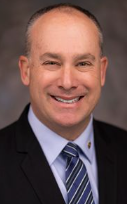
Dana Eaton's professional experience includes being an educator. Here's how he answered the question, “What are the main points you want voters to remember about your goals for your time in office?”
- "Every student deserves a strong start, and that begins with early literacy. I am committed to ensuring every child reads proficiently by third grade, one of the strongest predictors of long-term academic success. By supporting districts with evidence-based instruction, professional development, and shared best practices, we can build a strong foundation that improves outcomes across the entire education system. When we get literacy right, we change the trajectory of students’ lives.
- "Strong schools require strong financial stewardship. I will provide proactive fiscal oversight and early support to school districts so challenges are identified and addressed before they become crises. My experience working with districts across California on fiscal stability has shown that early intervention protects students, staff, and programs while maintaining public trust. Responsible management of public funds ensures that resources stay focused where they belong, on students and classrooms.
- "Every student should leave our schools with a clear path to success. I will focus on preparing students for college, careers, and the workforce by expanding career technical education, strengthening partnerships with labor and apprenticeship programs, and supporting a strong educator workforce. Schools succeed when students are engaged, teachers are supported, and learning connects to real-world opportunities. My goal is to ensure every student graduates ready for what comes next."
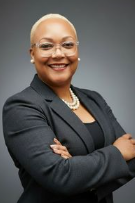
Jag Lathan's professional experience includes being an administrator. Here's how she answered the question, “What are the main points you want voters to remember about your goals for your time in office?”
- "At the County Office of Education, I will make literacy a top priority. I will support districts in strengthening early literacy through the science of reading and culturally and linguistically responsive instruction. I will ensure educators have the training, tools, and ongoing support needed to teach reading effectively, and that students receive help early—not years later. I will also promote clear goals, data use, and shared accountability across districts. When we get reading right, we open the door to opportunity and success for every student.
- "At the County Office of Education, I will lead with students at the center of every budgeting decision. I will support districts in aligning resources to what works—prioritizing literacy, academic success, mental health, and safe learning environments. I will promote transparency by helping districts clearly communicate how funds are used and the impact on students. I will also work with district leaders to identify key budget drivers, plan proactively, and make informed, student-centered decisions—especially in times of financial challenge. By providing guidance, tools, and a clear framework, the COE can help ensure that every dollar is used to improve outcomes for students.
- "At the County Office of Education, I will prioritize educator growth by building strong systems that support teachers and leaders at every stage. I will establish accredited programs to expand local pathways into teaching and leadership, and provide relevant, ongoing professional learning aligned to today’s student needs, including literacy, culturally and linguistically responsive instruction, and student well-being. I will also lead clear countywide focus areas and offer districts a practical blueprint for implementation. Investing in educators strengthens instruction and improves outcomes for all students."
As a reminder, if you're a school board candidate or incumbent planning to run this year, click here to take the survey. If you complete the survey, your answers will appear in your Ballotpedia profile. Your responses will also appear in our sample ballot. If there is an election in your community, share the link with your candidates and urge them to take the survey!