


Welcome to the Friday, May 22, 2026, Brew.
By: Lara Bonatesta
Here’s what’s in store for you as you start your day:
- Twenty-one states set at least one requirement on ballot initiative petition circulators
- In five states, 2026 gubernatorial or state legislative races will determine who becomes the next top election official
- 16 statewide candidate filing deadlines in the next two weeks
Twenty-one states set at least one requirement on ballot initiative petition circulators
In states across the country, groups are gathering signatures to place initiatives or referendums on the 2026 ballot. Today, we’re taking a closer look at state policies governing petition circulators.
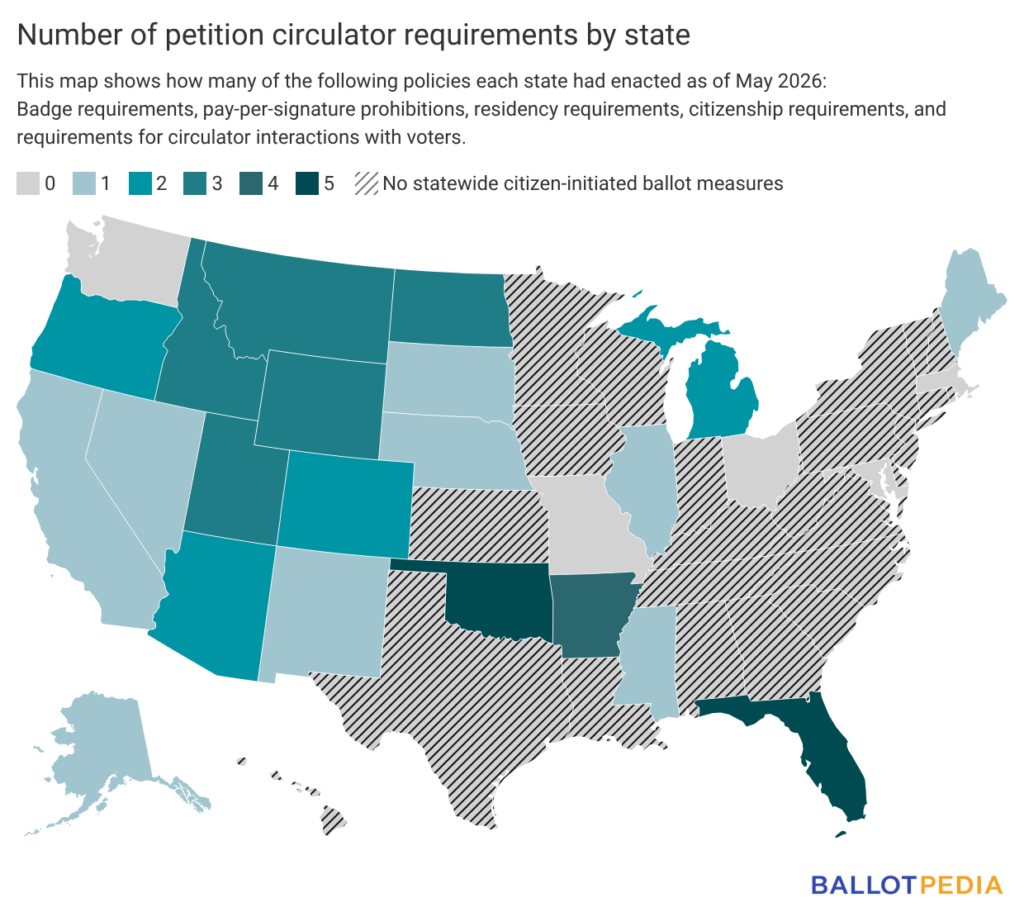
Of the 26 states that allow citizen initiatives, 21 have at least one law setting requirements for the people collecting signatures for citizen-initiated ballot measures.
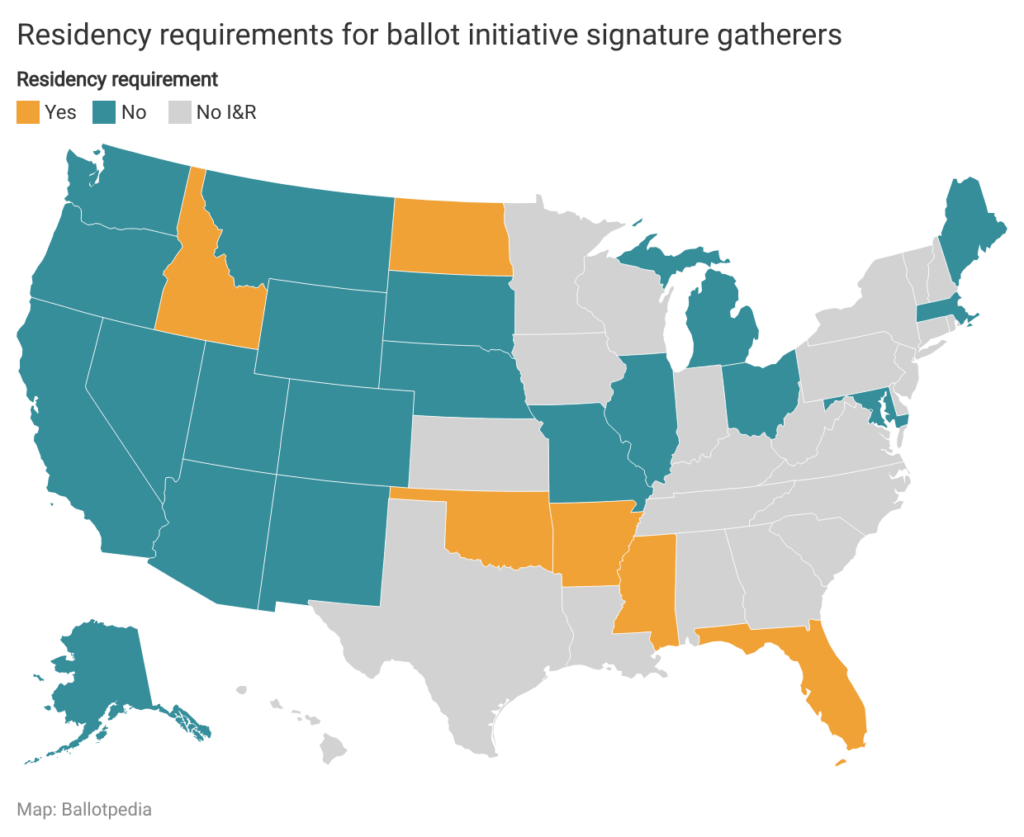
Six states have laws requiring signature gatherers to be state residents. Nine states have laws directly or indirectly requiring signature gatherers to be U.S. citizens.
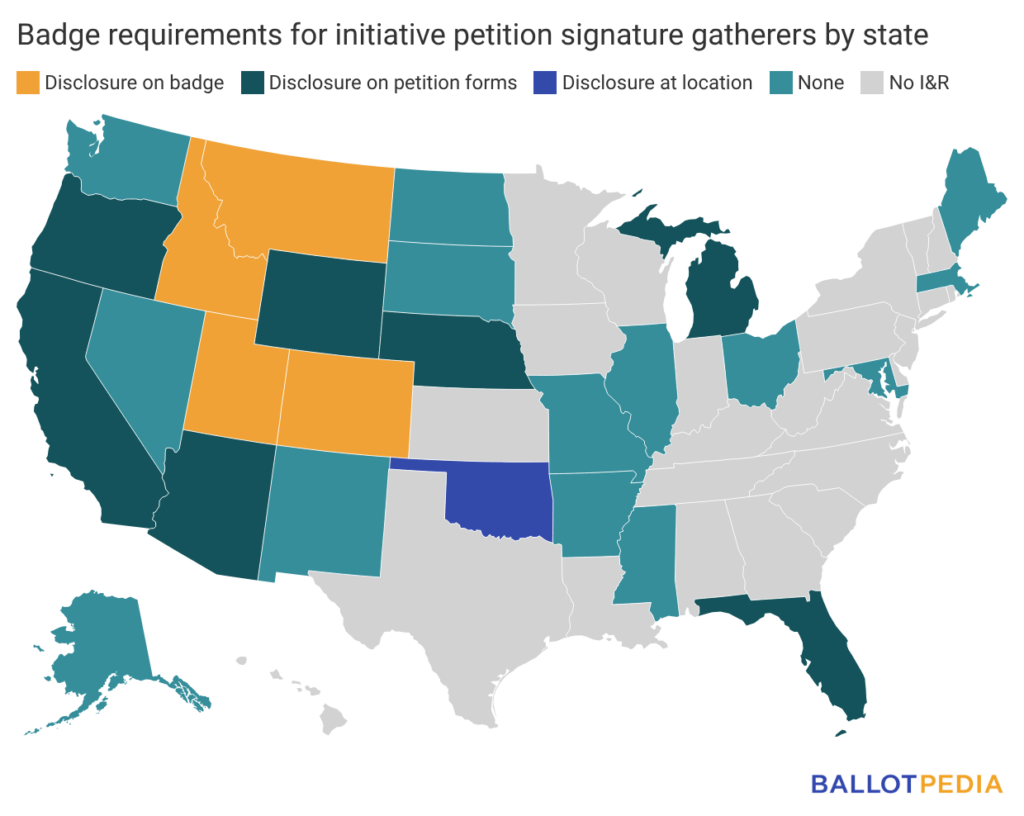
Twelve states require signature gatherers to communicate whether they are paid or volunteer. Four states require circulators to wear physical badges, while in seven others, circulators must include identifying information on petitions. Oklahoma requires a conspicuous notice to be displayed at any location where a person is collecting signatures.
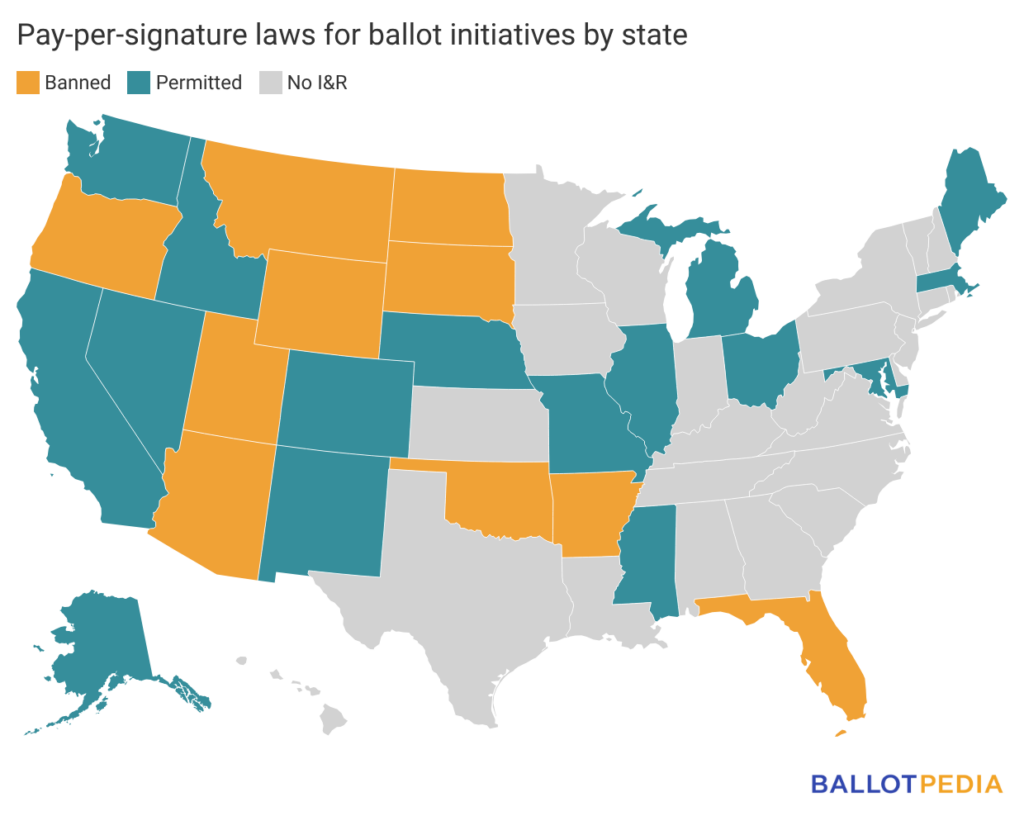
Ten states prohibit pay-per-signature, a method of compensating circulators based on the number of signatures they collect.
Nine states have additional laws governing how circulators must interact with voters when gathering signatures.
These policies can include requirements that circulators read information about the measure or give voters the opportunity to do so. Other states require circulators to obtain information or identification from signers beyond their name, address, and signature.
Florida and Oklahoma have all five of the policies listed above, while Massachusetts, Maryland, Missouri, Ohio, and Washington have none of them.
No state has passed one of these requirements in 2026. Arkansas, Florida, Oklahoma, and Montana approved new policies for petition circulators in 2025.
For more information on petition circulator requirements, click here.
In five states, 2026 gubernatorial or state legislative races will determine who becomes the next top election official
Twenty-six states are holding secretary of state elections in November. While these states hold direct elections for the office, nine out of the 12 states in which the governor or legislature appoints the secretary of state will hold respective gubernatorial or state legislative elections in 2026. In five of those states, the secretary of state is the state’s top election official.
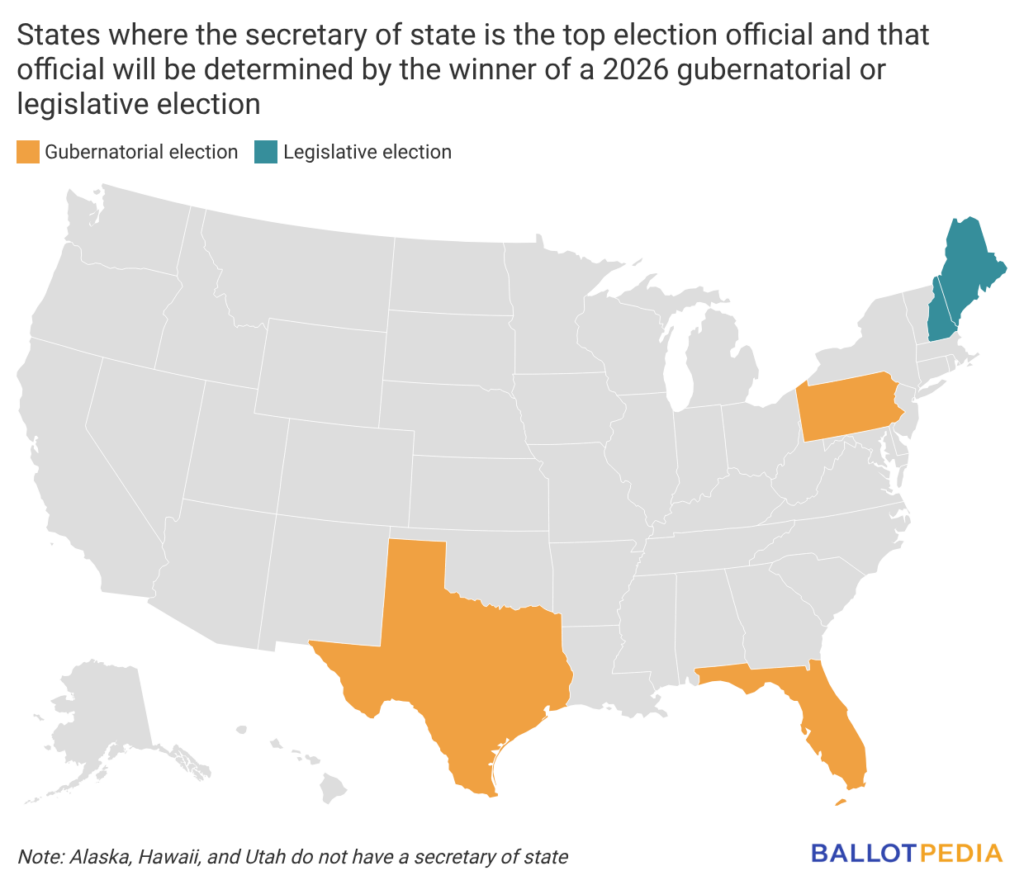
In Florida, Pennsylvania, and Texas, the governor will pick the next secretary of state. Currently, Florida and Texas have Republican governors, and Pennsylvania has a Democratic governor:
- Florida: Incumbent Gov. Ron DeSantis (R) is term-limited. He appointed incumbent Cord Byrd (R) in 2022, and the Florida Senate confirmed him in 2023. In the Republican primary, 16 candidates, including Lt. Gov. Jay Collins (R), U.S. Rep. Byron Donalds (R), and investor James Fishback (R), are running, while on the Democratic side, 14 candidates, including Orange County Mayor Jerry Demings (D) and former U.S. Rep. David Jolly (D), are running.
- Pennsylvania: Incumbent Gov. Josh Shapiro (D) and State Treasurer Stacy Garrity (R) are running for governor of Pennsylvania. Shapiro appointed, and the Pennsylvania Senate confirmed, incumbent Al Schmidt (R) in 2023. Schmidt is the only secretary of state whose partisan affiliation differs from that of the appointing body. Shapiro is a Democrat, and at the time of Schmidt’s appointment, the Senate had a 28-22 Republican majority.
- Texas: Incumbent Gov. Greg Abbott (R), state Rep. Gina Hinojosa (D), and two others are running for governor of Texas. Abbott appointed incumbent Jane Nelson (R) in 2023.
In Maine and New Hampshire, the state legislature will pick the next secretary of state. Democrats hold majorities in both chambers of the Maine Legislature while Republicans hold majorities in both chambers of the New Hampshire General Court.
- Maine: Democrats hold a 75-72-3 majority with one vacancy in the House and a 20-14-1 majority in the Senate. The current secretary of state is Shenna Bellows (D), who was first appointed in 2021.
- New Hampshire: Republicans hold a 216-176-1 and seven vacancies in the House and a 16-8 majority in the Senate. The current secretary of state is David Scanlan (R), who was first appointed in 2022.
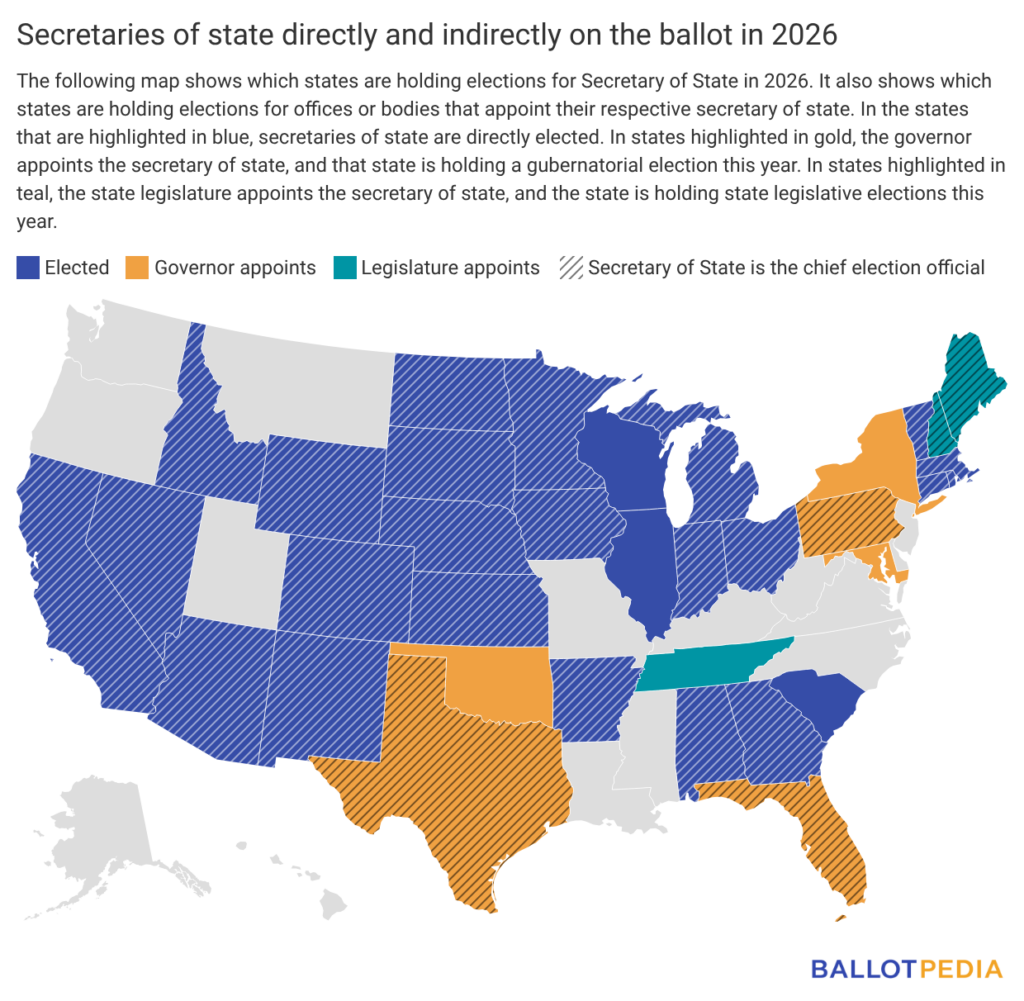
The secretary of state is an administrative position with duties that vary by state. Some secretaries of state are their state’s top election official, while others are record keepers and record official gubernatorial acts. The secretary of state is directly elected in 35 states and appointed in 12. Three states do not have a secretary of state office. To read more about directly elected secretary of state elections in 2026, click here.
16 statewide candidate filing deadlines in the next two weeks
With the summer fast approaching, the electoral heat is also rising as more and more states will soon hold their primary elections.
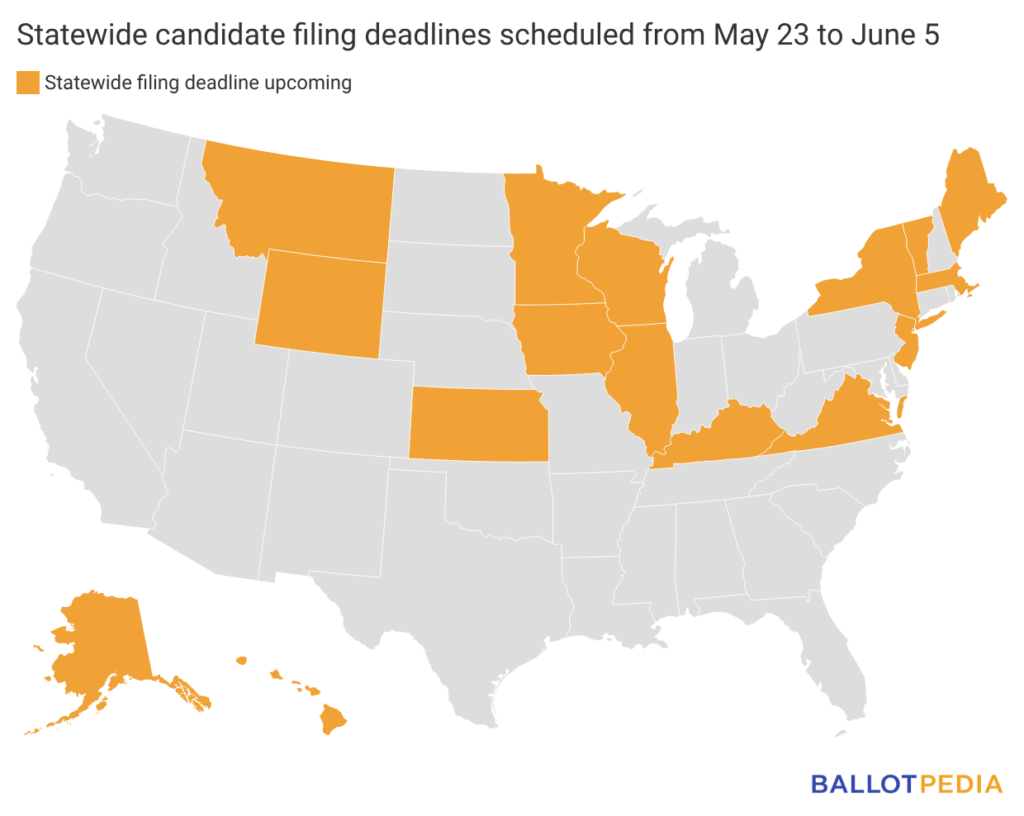
Sixteen states have statewide candidate filing deadlines in the next two weeks. The map above and bulleted list below show which states have candidate filing deadlines scheduled between May 23 and June 5.
- Alaska: June 1 (statewide candidate filing deadline)
- Hawaii: June 2 (statewide candidate filing deadline)
- Illinois: May 26 (statewide unaffiliated candidate filing deadline)
- Iowa: June 2 (statewide unaffiliated and minor party candidate filing deadline)
- Kansas: June 1 (statewide primary candidate filing deadline)
- Kentucky: June 2 (statewide unaffiliated candidate filing deadline)
- Maine: June 1 (statewide unaffiliated and minor party candidate filing deadline)
- Massachusetts: May 26 (statewide candidate filing deadline for Governor's Council, state Senate, and state House races) and June 2 (statewide primary candidate filing deadline for U.S. Senate, U.S. House, governor, lieutenant governor, attorney general, secretary of state, treasurer, and auditor's races)
- Minnesota: June 2 (statewide candidate filing deadline)
- Montana: June 1 (statewide unaffiliated and minor party candidate filing deadline)
- New Jersey: June 2 (statewide unaffiliated candidate filing deadline)
- New York: May 26 (unaffiliated candidate filing deadline)
- Vermont: May 28 (statewide primary candidate filing deadline)
- Virginia: May 26 (statewide primary candidate filing deadline for U.S. House races)
- Wisconsin: June 1 (statewide candidate filing deadline)
- Wyoming: May 29 (statewide primary candidate filing deadline)
Looking back
Four states and the Virgin Islands had candidate filing deadlines in the past two weeks:
- Alabama: May 19 (statewide minor party/independent candidate filing deadline)
- Arizona: May 22 (statewide primary write-in candidate filing deadline)
- California: May 19 (statewide write-in candidate filing deadline)
- North Dakota: May 19 (primary write-in candidate filing deadline)
- Virgin Islands: May 19 (territory-wide candidate and minor party/independent candidates filing deadline)
Candidates must meet various state-specific filing requirements and deadlines to appear on primary and general election ballots. These regulations, known as ballot access laws, determine whether and how candidates can make it onto the ballot. These laws are set at the state level and apply to candidates running for state and federal offices.
Voting in upcoming elections
There are seven statewide elections taking place in the next two weeks:
- California: June 2 statewide primary election
- Iowa: June 2 statewide primary election
- Montana: June 2 statewide primary election
- New Jersey: June 2 statewide primary election
- New Mexico: June 2 statewide primary election
- South Dakota: June 2 statewide primary election
- Texas: May 26 statewide primary runoff election
Voter participation deadlines
Three states have early voting periods that start in the next two weeks:
- Nevada: Early voting begins May 23 for the June 9 primary.
- New Jersey: Early voting begins May 26 for the June 2 primary.
- South Carolina: Early voting begins May 26 for the June 9 primary.
Seven states and D.C. have voter registration deadlines in the next two weeks:
- Alabama: June 1 is the last day to register to vote by mail or online in the June 16 primary. In-person voter registration is available through May 29.
- California: June 2 is the last day to register to vote in person in the June 2 primary.
- District of Columbia: May 26 is the last day to register to vote by mail or online in the June 16 primary. In-person voter registration is available through June 16.
- Iowa: June 2 is the last day to register to vote in person in the June 2 primary.
- Louisiana: May 27 is the last day to register to vote by mail or in person in the June 27 primary. Online voter registration is available through June 6.
- Maryland: June 2 is the last day to register to vote by mail or online in the June 23 primary. In-person voter registration is available through June 23.
- Montana: June 2 is the last day to register to vote in person in the June 2 primary.
- New Mexico: June 2 is the last day to register to vote in person in the June 2 primary.
Seven states and D.C. have absentee/mail-in ballot request deadlines in the next two weeks:
- District of Columbia: June 1 is the last day to request an absentee/mail-in ballot for the June 16 primary.
- Georgia: June 5 is the last day to request an absentee/mail-in ballot for the June 16 primary.
- Maine: June 4 is the last day to request an absentee/mail-in ballot for the June 9 primary.
- Montana: June 1 is the last day to request an absentee/mail-in ballot in person or by mail for the June 2 primary.
- New Jersey: May 26 is the last day to request an absentee/mail-in ballot by mail or online and June 1 is the last day to request a ballot in person for the June 2 primary.
- Oklahoma: June 1 is the last day to request an absentee/mail-in ballot for the June 16 primary.
- South Carolina: May 29 is the last day to request an absentee/mail-in ballot in person or by mail for the June 9 primary and the June 23 primary runoff.
- South Dakota: June 1 is the last day to request an absentee/mail-in ballot in person or by mail for the June 2 primary.
Click here to see our list of upcoming election dates and filing deadlines.