


Welcome to the Friday, May 29, 2026, Brew.
By: Briana Ryan
Here’s what’s in store for you as you start your day:
- Campaign behind initiative to criminalize hunting, fishing, and any intentional injury to animals in Oregon submits signatures for verification
- 118 statewide ballot measures have been certified this year — more than the average at this point in past even-numbered years
- 19 years ago tomorrow, we published our first page
Campaign behind initiative to criminalize hunting, fishing, and any intentional injury to animals in Oregon submits signatures for verification
On May 20, the campaign behind a ballot initiative to criminalize hunting, fishing, and any intentional injury to animals in Oregon submitted more than 120,000 signatures to the Oregon Secretary of State for verification.
While previous animal treatment measures in the country have addressed certain hunting methods, wildlife trafficking, farm animal confinement, animal fighting, racing, and animal experimentation, none have sought to criminalize all hunting, fishing, the slaughter of animals for food, and livestock husbandry.
To qualify the initiative for the ballot, the campaign must submit 117,173 valid signatures, which is equal to 6% of the votes cast in the last gubernatorial election. This is the first initiative in Oregon to submit more than the required number of signatures for the November ballot.
The initiative, which sponsors call the People for the Elimination of Animal Cruelty Exemptions (PEACE) Act, would amend Chapter 167 of the Oregon Revised Statutes to remove certain exemptions to animal cruelty laws. The measure would criminalize:
- Hunting, fishing, and trapping of animals
- Slaughter of any animal for food
- Actions currently protected as good animal husbandry in existing state law (e.g., dehorning cattle, docking livestock, and castration or neutering of livestock)
- Commercial poultry operations
- Any farming practice that causes physical injury, stress, or fails minimum care standards established in the initiative
- Certain wildlife management practices (e.g., culling programs, invasive species control, predator management)
- Setting mousetraps, pest extermination, or rodent control if it causes physical injury or death to a protected animal
The only exceptions allowed under the initiative for harming or killing a protected animal are self-defense against an immediate threat to yourself, other humans, or other animals, and good veterinary practices defined in state law. Under the initiative, protected animals would include any nonhuman mammal, bird, reptile, amphibian, or fish.
The initiative would also establish a Humane Transition Fund to fund food assistance, income replacement, job retraining, animal care costs, and conservation and rewilding efforts for individuals affected by the initiative’s changes. The initiative requires the Legislature to allocate money to the fund.
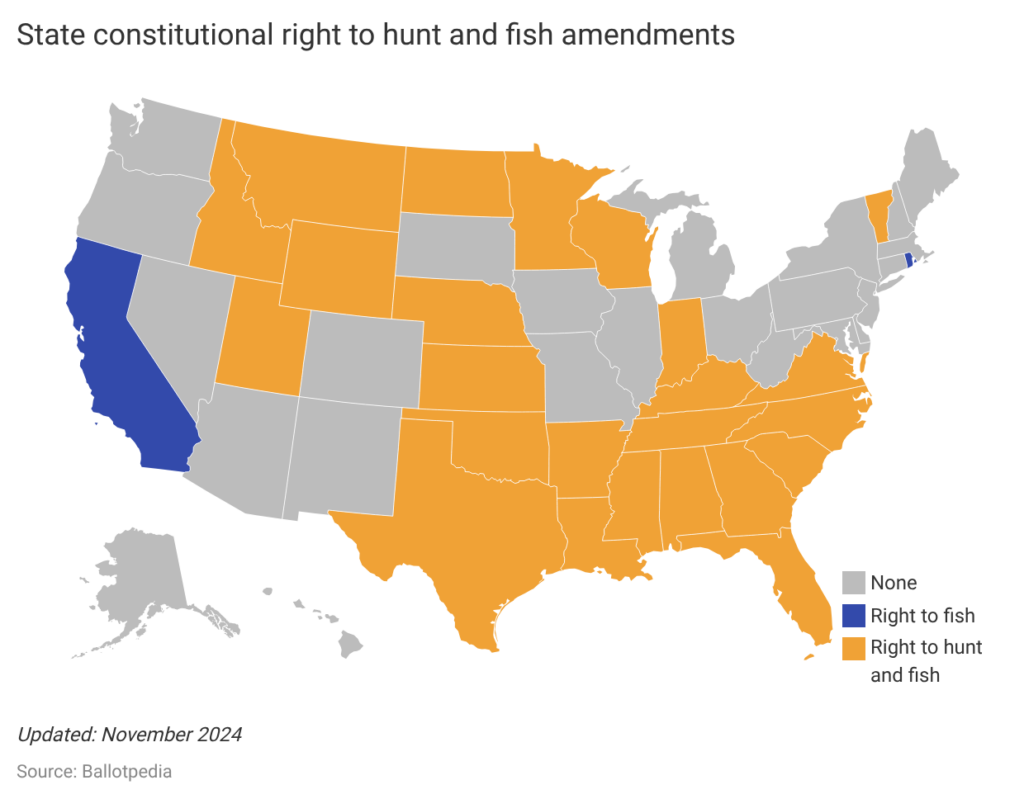
While this measure is the first in the country to propose criminalizing hunting, fishing, and intentional injury to animals, 24 states have a right to hunt and fish amendment in their state constitutions. Vermont was the first state to constitutionalize such a right in 1777, and Florida was the most recent state to adopt one in 2024.
The committee supporting the measure, Yes on IP 28, reported raising $304,818.28 through May 26. The top donors were Craigslist Charitable Fund ($30,000), David Michelson ($28,110), Owen Gunden ($25,000), and Postnov Leonid ($25,000).
In 2024, the Oregon Department of Fish and Wildlife received more than $55 million in hunting and fishing licensing revenue.
As of May 1, 90 ballot initiatives have been filed with the secretary of state in Oregon, and 10 were cleared for signature gathering. The signature deadline in Oregon is July 2.
Click here to read more about the Oregon Criminalize Hunting, Fishing, and Intentional Injury to Animals Initiative.
118 statewide ballot measures have been certified this year — more than the average at this point in past even-numbered years
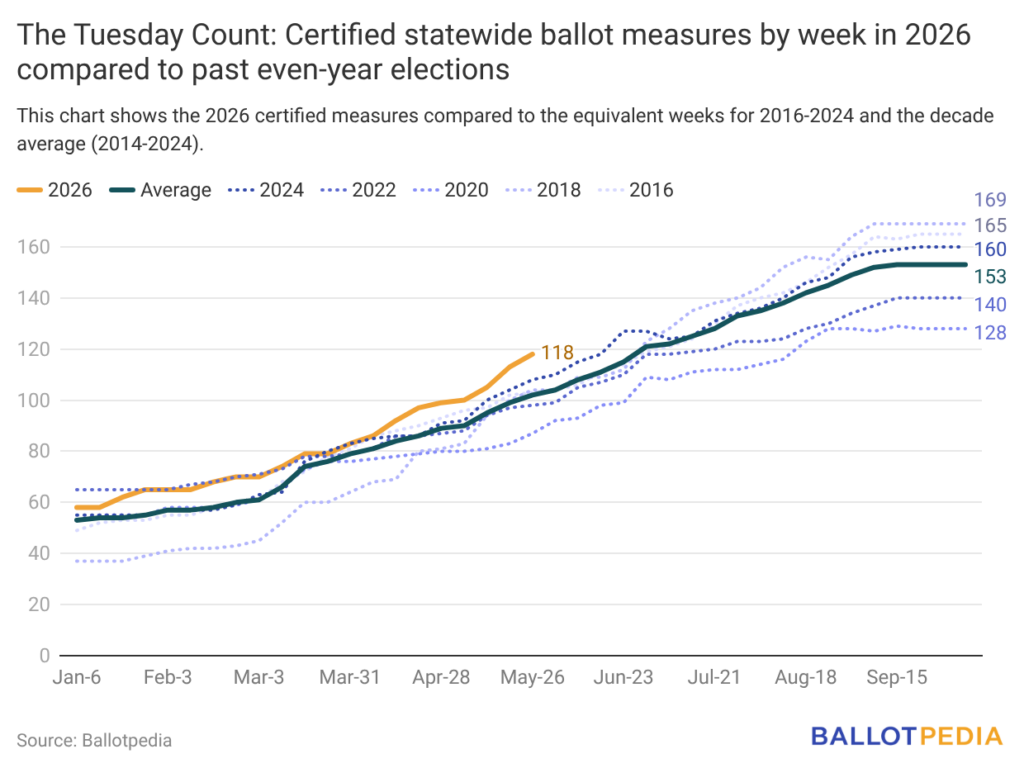
As of May 26, 118 measures have been certified for statewide ballots this year — more than the average of 102 at this point in even-numbered years from 2014 through 2024. From 2014 through 2024, an average of 153 statewide measures were certified in even-numbered years.
Over the past two weeks, 13 new measures were certified:
- California Spending Requirements for Federally Qualified Health Centers Initiative
- Louisiana Gubernatorial Two-Term Lifetime Limit Amendment (2026)
- Louisiana Prohibit Post-Conviction Bail for Individuals Convicted of Assault Against Minors Amendment
- Louisiana Prohibit Property Expropriation by Foreign Adversaries Amendment
- Louisiana Property Tax Exemption for Seniors Amendment
- Louisiana Tax Exemption for Rehabilitated Property Amendment
- Minnesota Management and Investment Policies for Permanent School Fund Amendment
- Missouri Creation of Show-Me Prosperity Investment Fund for State Tax Reduction and Elimination Amendment
- Missouri Require Election of County Sheriffs Amendment
- North Carolina Property Tax Levy Limit Amendment
- North Carolina Reduce Income Tax Rate Cap from 7% to 3.5% Amendment
- North Dakota Require Schools to Provide Free Meals to Students Initiative
- Vermont Proposal 4, Equal Protection of Law Amendment
Signatures are pending verification for 18 citizen initiatives:
- California Establish Immunology and Immunotherapy Research Institute Initiative
- California Establish Personal Injury Lawyer Regulations Initiative
- California Expedited Environmental Review Process for Certain Projects Initiative
- California One-Time Wealth Tax for State-Funded Healthcare, Education, and Food Assistance Programs Initiative
- California Prohibit Taxes on Retirement Holdings and Personal Savings Amendment
- California Renew State Income Tax Increase for Education Funding Initiative
- California Require Background Checks and Sexual Assault Reporting by Rideshare Companies Initiative
- California Require Healthcare Union Member Approval for Ballot Measure Campaign Spending Initiative
- California Revenue Use Requirements for New Special Taxes Amendment
- California State University Staff First-Time Homebuyer Down Payment Loan Program Initiative
- Colorado Increase Transportation Funds for Road Transportation and Decrease Funds for Other Forms of Transportation Amendment
- Idaho Medical Marijuana Legalization Initiative
- Idaho Reproductive Freedom and Privacy Act Initiative
- Michigan Citizenship Verification and Voter Identification Initiative
- Michigan Utility and Government Contractor Campaign Finance Regulations Initiative
- Missouri Congressional Map Referendum
- Missouri Initiative and Referendum Powers and Legislative Change Requirements Amendment
- Oregon Criminalize Hunting, Fishing, and Intentional Injury to Animals Initiative
The next signature deadline is June 21 in Montana for initiated state statutes and constitutional amendments.
Click here for more information about the measures on statewide ballots this year.
19 years ago tomorrow, Ballotpedia published its first page
If you were to visit Ballotpedia.org on May 30, 2007, you would have been greeted by our first page. It wasn't an article. It was a to-do list.
A mission statement needed writing. A tagline needed deciding. The information architecture for the website needed to be figured out — and soon! At the bottom of the page, almost as an afterthought, was a single line: "MediaWiki has been successfully installed."
Nineteen years later, 1 in 2 voters trust Ballotpedia as a resource for understanding the American political system. We've published nearly 700,000 articles. More than 1.4 billion people have read our work, and we have more than two million newsletter subscribers. In a year when America is celebrating its 250th anniversary — when people everywhere are asking how self-governance actually works — Ballotpedia is where they go for answers.
We don't take that lightly. When a voter sits down before an election and turns to Ballotpedia to figure out who's on their ballot — be it for a school board race, a water district seat, a state legislative contest that no one else covered — they're placing their trust in us at the moment it matters most. That voter is the reason we exist. Earning their trust and keeping it is the most important thing we do. It is a responsibility we feel every single day.
The gap between a to-do list on an empty wiki and what Ballotpedia has become is, in some ways, the story of what's possible when citizens decide that reliable information about their government is worth building.
As a Daily Brew reader, you understand this. You see what we do every day to help keep people informed about the latest political news, policy developments, and more.
And today, we’d like to invite you to become a Ballotpedia supporter, too. To get started, just click here.
Our goal hasn't changed since that first page: any voter in America should be able to find trustworthy, comprehensive information about every candidate on their ballot, down to the local school board race no one else covers. We're getting closer to that universal goal every year.
Thank you for reading!