


Welcome to Hall Pass, a newsletter written to keep you plugged into the conversations driving school board governance, the politics surrounding it, and education policy.
In today’s edition, you’ll find:
- On the issues: The debate over Ohio’s SB 113
- School board filing deadlines, election results, and recall certifications
- Survey: rural school board members say funding, geographic isolation are top challenges
- Extracurricular: education news from around the web
- Candidate Connection survey
Reply to this email to share reactions or story ideas!
On the issues: The debate over Ohio’s SB 113
In this section, we curate reporting, analysis, and commentary on the issues school board members deliberate when they set out to offer the best education possible in their district. Missed an issue? Click here to see the previous education debates we’ve covered.
On May 19, the Ohio Primary and Secondary Education Committee heard testimony on SB 113, a bill that would require school boards to prohibit diversity, equity, and inclusion (DEI) efforts. The bill states that schools cannot use “any orientation or training course regarding diversity, equity, and inclusion” and must discontinue any offices established to advance DEI.
State Rep. Andrew Brenner (R) introduced the bill in 2025, saying: “It is time to end racial preferences in K-12 education and return to a system that values hard work, personal responsibility, and academic achievement. We must eliminate DEI-based hiring practices that prioritize race over qualifications in selecting teachers and administrators.”
According to the Ohio Legislature’s website, nine individuals have submitted testimony supporting SB 113, while 82 have submitted testimony opposing it.
In 2025, Gov. Mike DeWine (R) SB 1, prohibiting DEI in colleges and universities in Ohio.
Ohio has a Republican trifecta.
Today, we’re featuring testimony on the bill from two educators with differing perspectives on SB 113.
Michael Carney, a high school science teacher in the Hilliard City School District, says SB 113 would restore fairness, equality, and meritocracy in schools. Carney says his own district created a DEI office in 2021, precipitating what he saw as a shift in schools from a focus on academic excellence to social justice activism. Carney says the bill will help ensure that teachers and staff are selected on merit, not identity, and that schools will select curricula that will challenge students and not indoctrinate them.
Laura Rushton, a retired third- through sixth-grade teacher in public and private schools in Richland County, says SB 113 does not define DEI or provide any evidence of its alleged harms. Rushton says this suggests the bill is primarily political. She says her time in the classroom taught her that students need to feel a sense of belonging and acceptance, and that the absence of such inclusion can lead them to become depressed, indifferent to learning, and even aggressive. She says the bill would ban programs that help teachers create welcoming classrooms for all students.
Testimony in support of SB 113 | Michael Carney, high school science teacher in the Hilliard City School District
“[T]his bill will help to ensure that hiring and professional development within our schools are based on qualifications, competence, and character, not on race, religion, sex, or gender identity. We want to encourage schools to hire the most qualified teachers, administrators, and staff based on their ability to teach, their expertise, and their commitment to our children’s success—not based on whether they belong to a certain demographic group.
Also, our schools have brought a disproportionate number of radical, feelings-driven, social workers and DEI programs and supplements instead of classical education teachers and academic support staff. Examples of mandatory staff PD include microaggression training (which we had to teach to our students), Implicit bias, restorative justice, and Kaleidoscope Youth Center’s “Gender Unicorn” and notions of adultism and how children as young as 12 years of age know better than their parents about serious matters of gender and sexuality. For our students to succeed, they need role models who can inspire them through their abilities and dedication, not through the lens of group identity.”
Testimony in opposition to SB 113 | Laura Rushton, retired public and private elementary school teacher
“My main reason for objecting to SB 113 is that it appears to ban something it never even defines. The bill’s summary calls for eliminating all forms of what it broadly refers to as D.E.I. but there is no explanation of the alleged harm it causes. The vagueness suggests that the reason for the ban is political, which is far more harmful than the curriculum it targets.
My own experience as a classroom teacher has shown me, repeatedly, how important it is for all students to feel accepted and included in the community of the school and classroom. When they come from different backgrounds, it is easy for misunderstandings and prejudices to divide and sometimes exclude certain children from participating. They can become isolated and depressed as a result, which can cause long term damage to their self-esteem. Sometimes they fail to thrive and stop learning. Sometimes they become aggressive and lash out at other students. Often, they withdraw from social interaction. Even if you aren’t present in that child’s life to see the damage it does, there are costs to the larger community which all of us will witness in some form.”
School board update: filing deadlines, election results, and recall certifications
In 2026, Ballotpedia will cover elections for more than 30,000 school board seats. We’re expanding our coverage each year with our eye on covering the country’s more than 80,000 school board seats.
Election results from the past week
June 2
California: Ballotpedia covered primaries in Long Beach Unified School District, Los Angeles Unified School District, and San Diego Unified School District and general elections in Compton Unified School District, San Francisco Unified School District (special), and Twin Rivers Unified School District.
South Dakota: Ballotpedia covered general elections in 24 districts. View all the districts we covered.
Upcoming school board elections
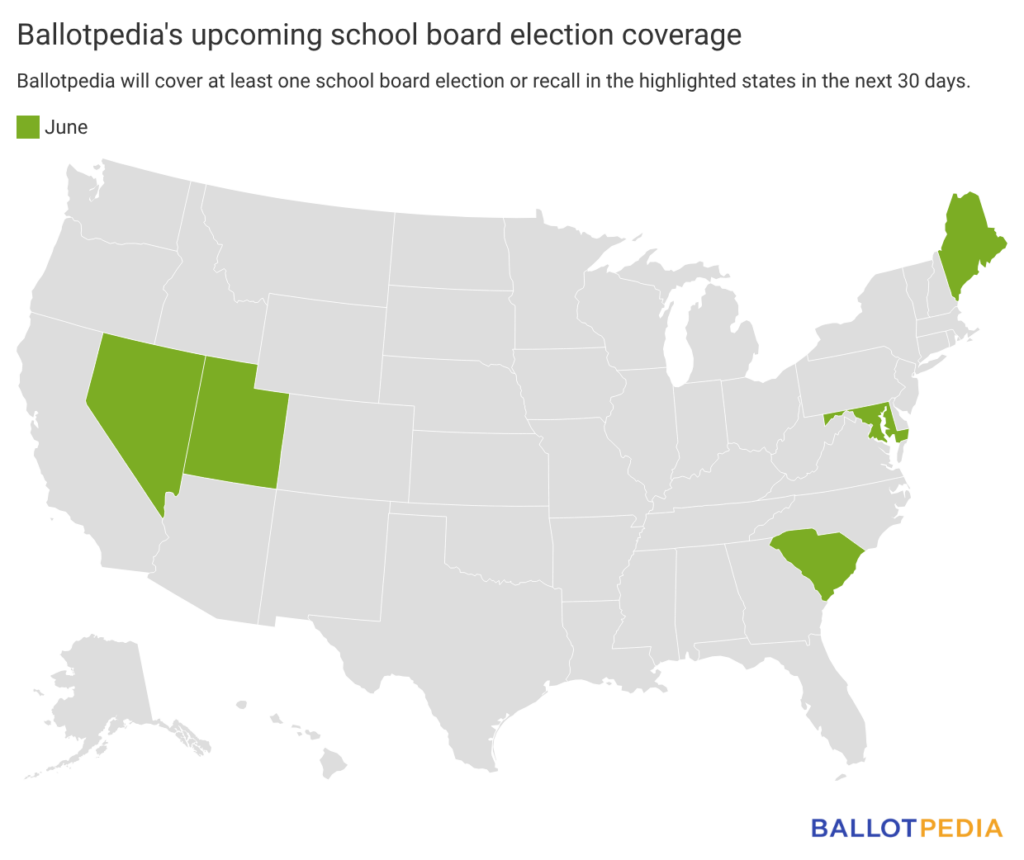
Watch future editions of Hall Pass for the following June primary and general election results:
- Maine: General elections in 22 districts on June 9
- Nevada: Primaries in 15 districts on June 9
- South Carolina: Primaries in one district and a general election in one district on June 9
- Maryland: Primaries in eight districts on June 23.
- Utah: Primaries in seven districts on June 23.
Survey: rural school board members say funding, geographic isolation are top challenges
A version of this story first appeared in the June 1 edition of the Daily Brew, Ballotpedia’s newsletter about politics and elections at all levels of government. Click here to subscribe.
In 2026, Ballotpedia surveyed school board members to document their experiences serving on school boards and explore differences between serving on school boards in urban, suburban, and rural districts.
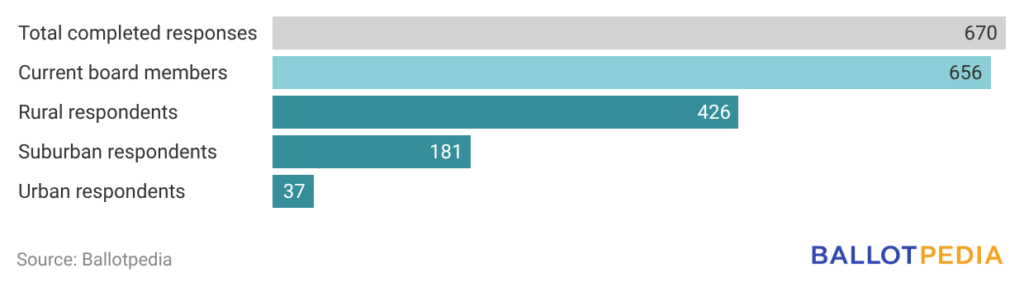
The survey included Hall Pass subscribers and members of the National School Board Association (NSBA) rural group, and totaled 670 respondents. Of these, 656 were serving on school boards at the time of the survey; 426 served in rural districts, 181 in suburban districts, and 37 in urban districts. Because the survey oversampled rural school board members, its key findings focus on their experiences.
The survey found that rural board members:
- Were more likely to report difficulties related to transportation and felt that they faced other challenges specific to their district type such as an "everyone knows everyone" dynamic.
- Had fewer weekly interactions with constituents than in urban or suburban districts, but media attendance at board meetings was similar across district types.
- Reported lower rates of threats than suburban and urban members, and funding and financial constraints as the most frequent challenge.
Overview of the survey
Ballotpedia surveyed 670 Hall Pass subscribers and National School Board Association (NSBA) rural group members from March 24–26, 2026. Six hundred and forty responses were from Hall Pass readers, and 30 were from NSBA rural group members.
Here's a breakdown of respondents by geographical area. Respondents were asked to classify the district they served as either rural, suburban, or urban.
Unique challenges for rural school districts
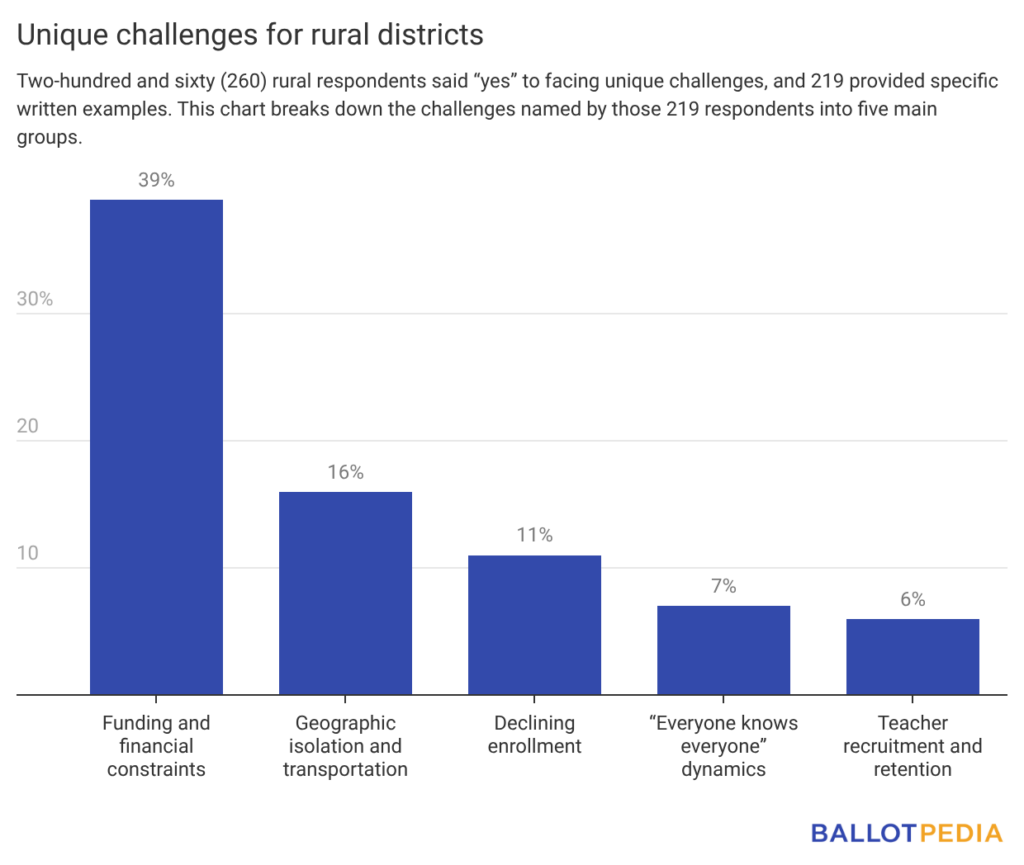
Sixty-one percent of rural respondents said they faced challenges that peers in other district types didn’t, compared to 41% of suburban and 35% of urban respondents.
Community engagement in rural districts
The survey asked respondents about different types of community engagement, including:
- Community member school board meeting attendance. Fifty-two percent of rural respondents, 32% of suburban respondents, and 22% of urban respondents said their most well-attended meeting drew fewer than 15 people.
- How often school board members heard from community members. Thirty-five percent of rural respondents heard from parents or community members a few times a month, compared to 43% of suburban respondents and 18% of urban respondents. Thirteen percent of rural respondents heard from them weekly, compared to 22% of suburban respondents and 34% of urban respondents.
- How school board members communicated with the community. Respondents said they communicated with the community through multiple channels. Rural school board members were less likely to use a direct website or social media, but were more likely to post information in a public location.
- Media coverage of school board meetings. Twenty-four percent of rural respondents said local media either didn’t exist or never attended their meetings. Combined with the 21% who said media rarely attended, 45% of rural boards operated with minimal media presence. Forty-six percent of suburban and 43% of urban respondents said they operated with minimal media presence.
Rural respondents' community conflict and climate
Nineteen percent of rural, 28% of suburban, and 29% of urban respondents reported being personally threatened. Princeton's Bridging Divides Initiative reported the national benchmark — 36% of school board members reported insults and 20% reported harassment — without rural, suburban, and urban segmentation. The nature of threats described by rural respondents tended to be interpersonal rather than organized. Ballotpedia's survey found that in each geographic designation (rural, suburban, and urban), the portion of respondents who were or felt threatened was lower than the 36% national benchmark.
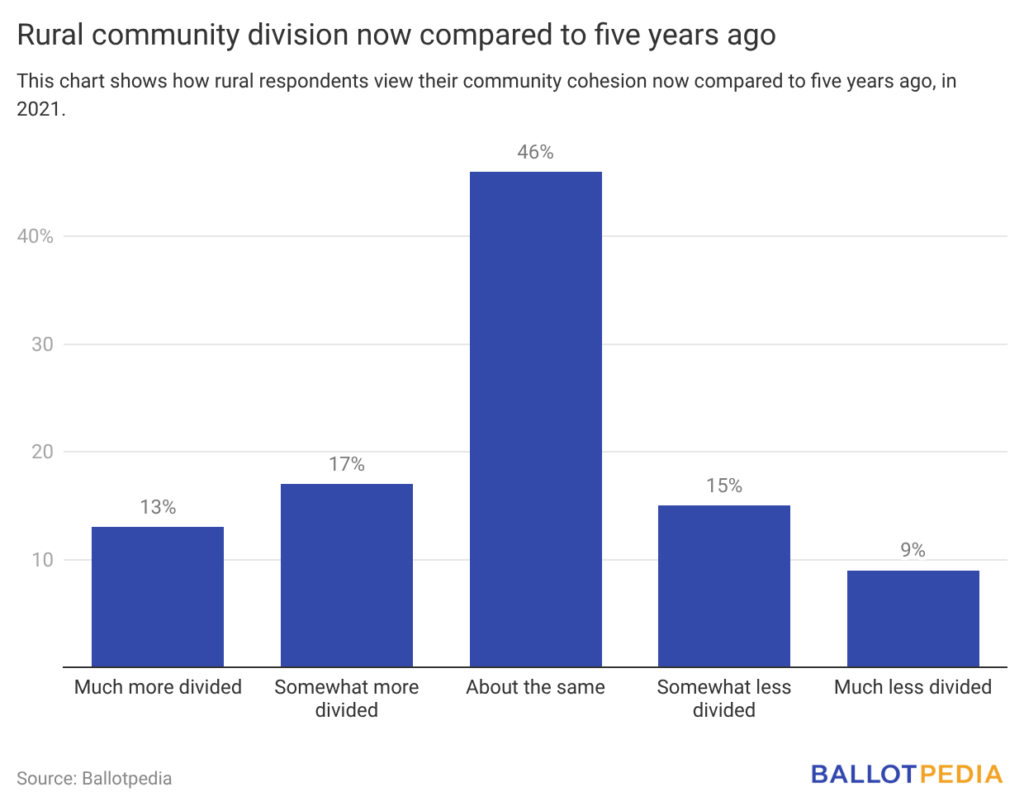
Thirty percent of rural respondents said their community was more divided than it was 5 years ago, 24% said it was less, and 46% said it was about the same. Thirty-six percent of suburban respondents said their community was more divided, 30% said it was less, and 38% said it was about the same as it was five years ago. Eighteen percent of urban respondents said their community was more divided, 34% said it was less, and 47% said it was about the same as it was five years ago.
Rural respondent retention as school board members
Eighty-eight percent of rural board respondents would choose to serve again, compared to 94% of suburban and 87% of urban respondents. Rural respondents tended to report reservations that related to board dynamics and political frustration, not the work itself.
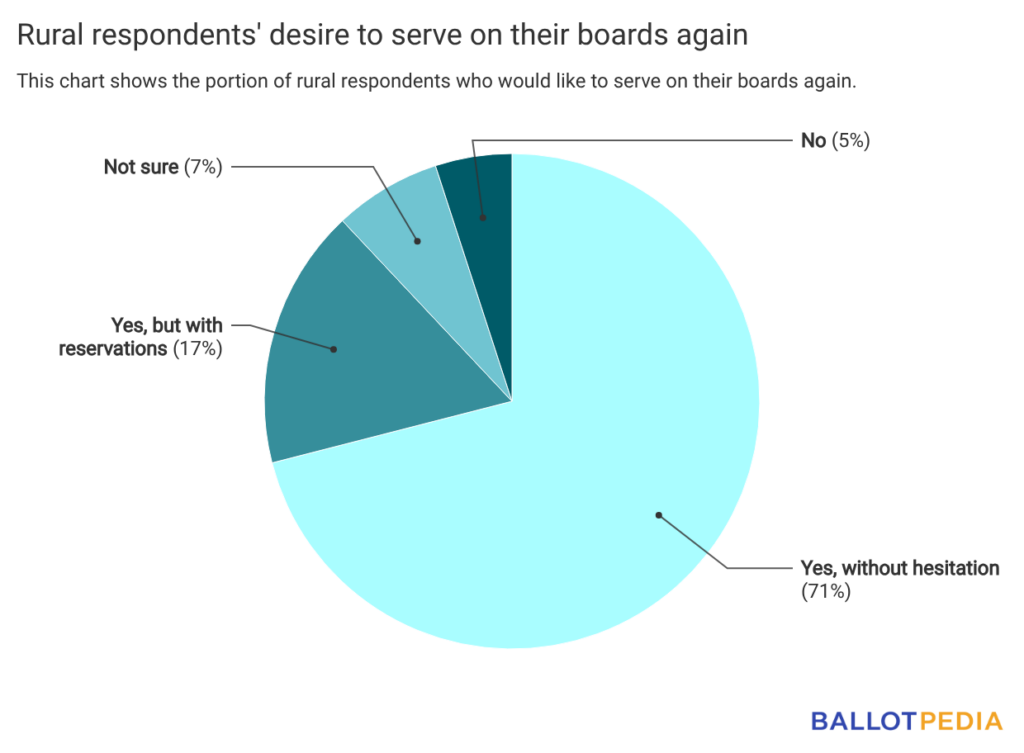
To view all the results and a detailed breakdown of the data, click here.
Extracurricular: education news from around the web
This section contains links to recent education-related articles from around the internet. If you know of a story we should be reading, reply to this email to share it with us!
- Randi Weingarten backs crackdown on classroom technology, AI restrictions, and a tax on Big Tech | Chalkbeat
- Black teachers improve outcomes for all students, but the profession remains largely white | The Conversation
- Pittsburgh Public Schools OKs plan to close 12 schools | K-12 Dive
- Families deserve school choice while reform catches up | USA Today
- The future of IPS is in the hands of a first-of-its-kind board. Parents are worried | IndyStar
- Former Idaho Supreme Court Justice Jim Jones and Luke Mayville from Reclaim Idaho on the Legal and Policy Fight Against Vouchers in that State | Education Law Center
- American Homeschooling Is as Old as the Nation Itself | The Dispatch
- Inside the Mississippi Marathon | Progressive Policy Institute
- Idaho schools reduce staff amid rising costs, enrollment declines | Idaho Ed News
Take our Candidate Connection survey to reach voters in your district
Today, we’re looking at survey responses from Juan Arango-Millan and Jamie McGonnigal, the two candidates running in the Nov. 3 general election for Prince George's County Public Schools Board of Education District 3, in Maryland. A primary, scheduled for June 23, was cancelled because only two candidates joined the race.
Prince Georgia’s County Public Schools is the second-largest district in Maryland, with roughly 131,000 students. Four of the nine seats on the board are up for election this year.
Arango-Millan’s career experience includes working as a nonprofit program director. Here’s how he answered the question, “What are the main points you want voters to remember about your goals for your time in office?”
- “Championing the Blueprint and Modernizing Facilities. I will be a fierce advocate in Annapolis for fully funding the Blueprint for Maryland's Future, ensuring resources go directly into classrooms to increase teacher pay and expand early education. Alongside this, I will demand urgent infrastructure funding to relieve severe overcrowding and modernize our facilities, securing safe and healthy environments where teachers can teach and students can thrive.
- “Building Real Career Pathways and Solving Absenteeism. Every graduate must leave with tangible skills and real options. I will work to expand CTE programs, skilled trade apprenticeships, and PGCC dual enrollment. To ensure students reach graduation, we must also tackle chronic absenteeism by championing proactive mentorship, early tutoring, and targeted interventions that remove barriers and keep vulnerable students engaged.
- “Empowering Every Family as True Partners. True partnership requires more than basic translation. As your Board of Education member, I will ensure that we have clear, culturally competent, and multilingual communication so parents are respected decision-makers in their child's education. I am ready to lead on day one to ensure our district fights for every family in District 3.”
Click here to read the rest of Arango-Millan’s responses.
McGonnigal’s career experience includes working in sales. Here’s how he answered the question, “What are the main points you want voters to remember about your goals for your time in office?”
- “1. Parent Leadership & Lived Experience I’m running as a parent first. As PTA president at Hyattsville Elementary, I’ve helped lead our community through a school demolition, a move to a swing space, and ongoing transportation and aftercare challenges. I’ve worked closely with families and teachers to solve real problems, improve communication, and make sure people feel heard. I know what it’s like to navigate this system because I’m living it, and I’ll bring that same hands-on, responsive leadership to the board.
- “2. Strong Schools Through Real Support Our schools work best when students, families, and educators feel supported. I’ve focused on meeting real needs, from ensuring teachers have the resources they need to creating programs that bring families together. I believe in a whole child approach that goes beyond test scores and recognizes that students thrive when they feel safe, included, and supported. I’ll advocate for smarter investments, stronger communication, and decisions grounded in what’s actually happening in our classrooms.
- “3. Building Community & Getting Results My career has been about bringing people together and turning ideas into action. As a fundraising and partnerships leader, I’ve raised millions of dollars and built collaborations with nonprofits, foundations, and grassroots organizations across the country. Locally, I’ve helped create programs like the Winter Market, Zombie Run, and a Pride Festival that reflect our community’s values. I know how to build coalitions, deliver results, and make sure our schools have the support they need to succeed.”
Click here to read the rest of McGonnigal’s responses.
As a reminder, if you're a school board candidate or incumbent planning to run this year, click here to take the survey. If you complete the survey, your answers will appear in your Ballotpedia profile. Your responses will also appear in our sample ballot. If there is an election in your community, share the link with your candidates and urge them to take the survey!