


Welcome to the Monday, June 8, 2026, Brew.
By: Briana Ryan
Here’s what’s in store for you as you start your day:
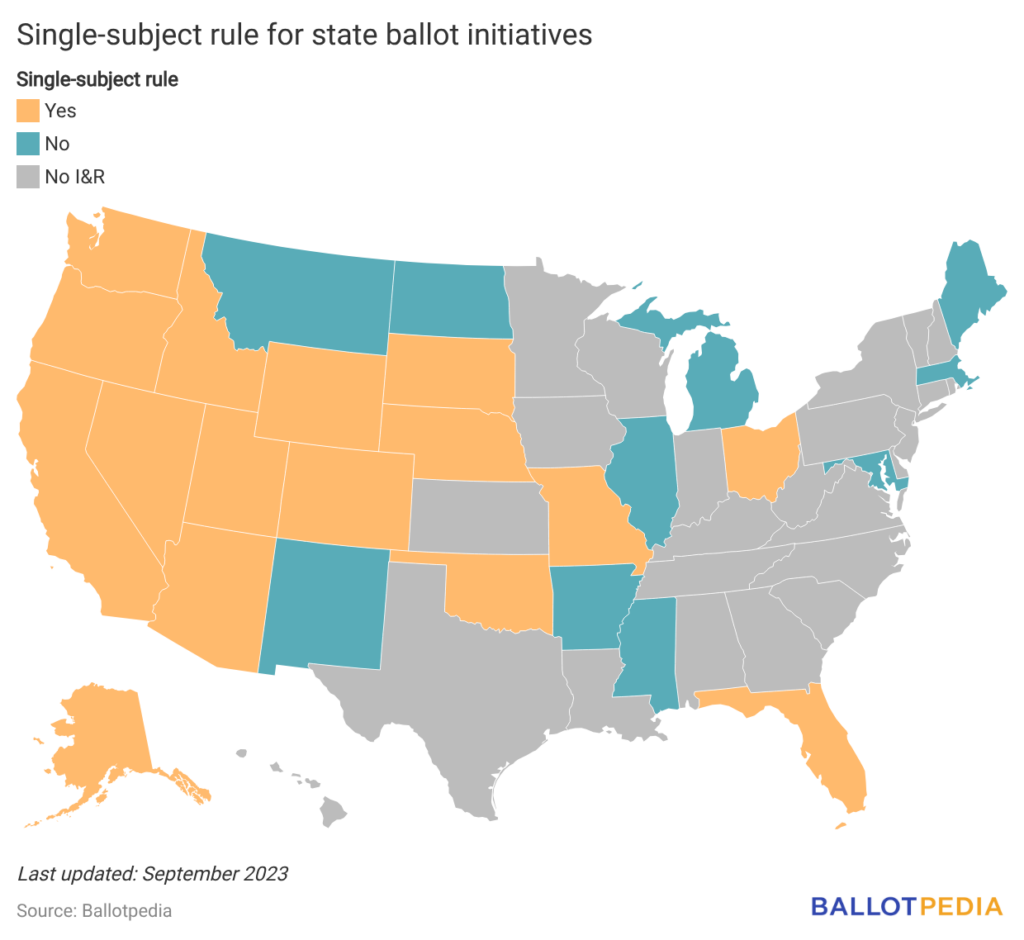
- North Dakota could become the 17th state to have a single-subject rule for ballot initiatives
- Florida voters to decide on expanded homestead tax exemption constitutional amendment
- Delegates to select a Republican Party nominee for Indiana Secretary of State on June 20
North Dakota could become the 17th state to have a single-subject rule for ballot initiatives
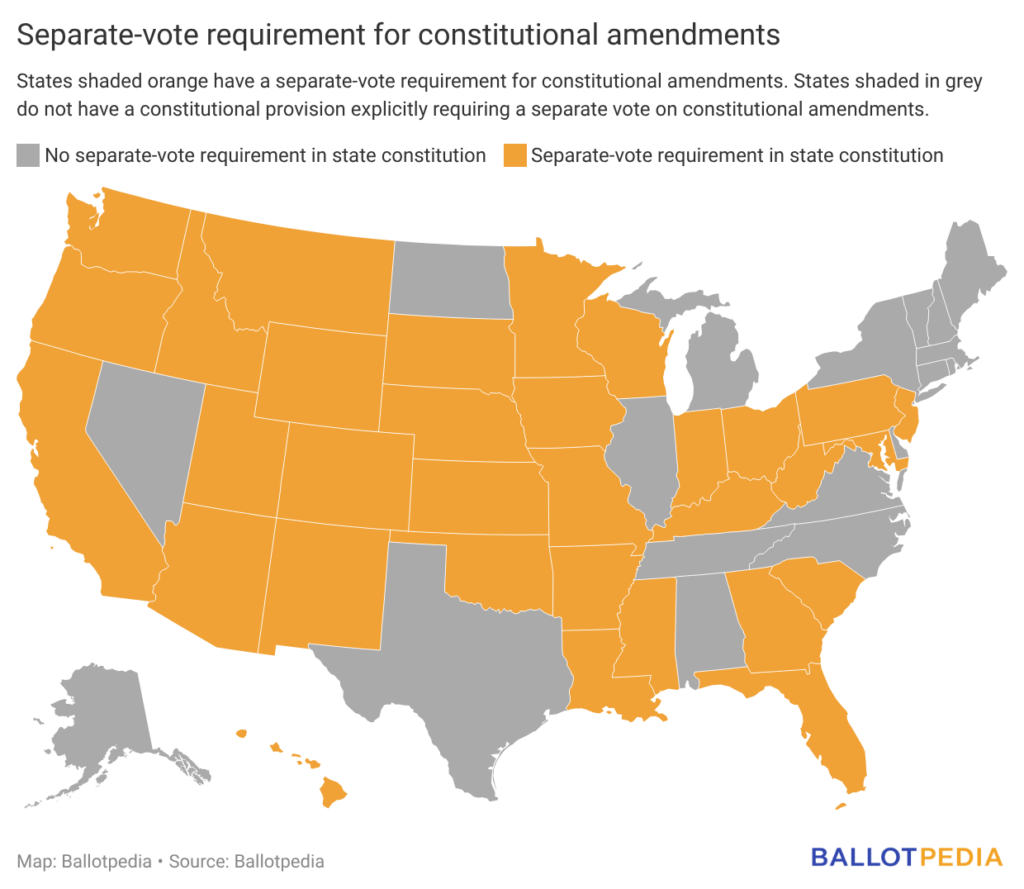
On June 9, North Dakota voters will decide on Constitutional Amendment 1, which would create a single-subject rule for future constitutional amendments. A single-subject rule requires ballot measures to address a single subject, topic, or issue. The amendment would also establish a separate-vote requirement for constitutional amendments, requiring that proposed constitutional amendments placed on statewide ballots must be decided by voters as separate ballot questions.
North Dakota voters rejected a single-subject rule amendment in 2024 that would have applied to both statutory and constitutional initiatives, and would have increased the signature requirements for initiated constitutional amendments and required voters to pass constitutional amendments twice in two consecutive general elections. Voters rejected that measure, Constitutional Measure 2, 56% to 44%.
This year's amendment is narrower — it only applies the single-subject rule to constitutional amendments, and does not address signature requirements or require voter approval of constitutional amendments in multiple elections.
Sixteen of the 26 states with the citizen initiative and referendum process have a single-subject rule, while 10 do not. Thirteen state constitutions require initiatives to abide by the single-subject rule, while the remaining three states — Alaska, Nevada, and Ohio — have it in their statute.
The most recent state to adopt a single-subject rule was Arizona, when voters approved Proposition 129 in 2022.
The amendment would also establish a separate-vote requirement for legislatively referred constitutional amendments. Currently, 32 state constitutions require voters to decide proposed constitutional amendments on statewide ballots as separate ballot questions. In some states, constitutional amendments have been overturned after courts found they violated the state constitution's separate-vote requirement.
Click here to read more about the amendment.
Florida voters to decide on expanded homestead tax exemption constitutional amendment
On June 2, the Florida Legislature voted to put a constitutional amendment on the Nov. 3 ballot that would expand the homestead exemption for non-school property taxes, reduce the cap on assessment increases for non-homestead properties, and limit how local governments can spend property tax revenue.
Currently, Florida homeowners who use a property as their primary residence receive two property tax exemptions: the first $25,000 of their home's assessed value is exempt from all property taxes, including school taxes, and an additional $25,000 is exempt from non-school taxes only.
A homestead exemption allows homeowners who use a property as their primary residence to exempt a portion of its assessed value from property taxes, reducing the amount they owe.
The amendment would expand the non-school tax exemption from $25,000 to $150,000 in 2027 and $250,000 in 2028, and index the exemption to inflation starting in 2029. The $25,000 exemption for all property taxes would apply only to school property taxes in the future. As a result, there would be two separate homestead exemptions: a larger exemption for non-school property taxes and the existing $25,000 exemption for school property taxes.
The measure would institute a new resident phase-in period. People who move to Florida after Dec. 31, 2026, would receive a smaller initial exemption and would have to live in the state for five years before qualifying for the full exemption.
The existing 10% cap on annual assessment increases for non-homestead properties, such as rental units, vacation homes, commercial properties, and apartment buildings, would decrease to 5% starting Jan. 1, 2027. Like the homestead exemption increase, the cap decrease does not apply to school district taxes.
Counties and municipalities would be limited to spending property tax revenue on public safety, education, infrastructure, natural resource projects, and flood control; local bonds and existing debt payments; employee retirement benefits; and the operations and administration of local government. Currently, Article VII of the Florida Constitution grants counties and municipalities broad discretion for spending such revenue.
The Legislature would be required to establish a uniform procedure allowing counties and municipalities to raise homestead exemptions beyond the constitutional minimum, up to the full remaining assessed value. Special districts could do the same through a local referendum.
Legislative staff estimated the amendment would reduce local government revenue across the state by $4.6 billion in fiscal year 2027-28 and $8.4 billion in fiscal year 2028-29.
Gov. Ron DeSantis (R) called a special legislative session for June 1 through June 3 to consider the constitutional amendment.
The version that passed differed from DeSantis's original proposal. The governor's proposal would have applied the expanded exemption to all property taxes, including those levied by schools. State Rep. Sam Garrison (R) sponsored an amendment, adopted by the House State Affairs Committee, that excluded school taxes from the exemption.
Both legislative chambers approved the amendment on June 2. The House voted 75-26, with 17 members not voting. The Senate voted 30-9, with one member not voting. Across both chambers, excluding members who were absent or did not vote, 98% of Republicans and 11% of Democrats voted in favor of the constitutional amendment.
State Sen. Bryan Avila (R), who voted for the amendment, said, "Our nation was forged by pioneer patriots who left everything behind and risked their lives for the dream of living in freedom on their own piece of property. We agree with Governor DeSantis that having to continually pay the government for the right to live on your own property flies in the face of that dream. This amendment takes a historic step, providing meaningful relief for Florida families, while protecting businesses from extreme tax increases and safeguarding local funding for education, law enforcement, infrastructure, and other essential government functions."
Sadaf Knight, CEO of the Florida Policy Institute, who opposes the amendment, said, "State lawmakers should be focused on real solutions to Florida's affordability issues, which include skyrocketing health care and energy costs. Unfortunately, this property tax reform measure does not represent cost savings, but rather a cost shift — one that will force local lawmakers to cut local services that families rely upon or increase other taxes and fees to make up for the missing revenue. In either case, everyday Floridians ultimately pay the price for the massive loss in property tax revenue."
The resolution included a 125-word ballot question. Florida law caps ballot questions at 75 words. The legislature passed a separate bill exempting the constitutional amendment from the word count cap.
For a rundown on how property taxes work in Florida, click here.
Click here for more information about the amendment, and here for more on the other two amendments that voters will decide on Nov. 3.
Delegates to select a Republican Party nominee for Indiana Secretary of State on June 20
Incumbent Secretary of State Diego Morales (R), Max Engling (R), Jamie Reitenour (R), and David Shelton (R) are seeking the Republican Party nomination for Indiana Secretary of State. Delegates to the June 20 Republican Party convention in Fort Wayne, Indiana, will choose the nominee. Some delegates were elected to the position during the May 5 closed primaries, and county parties appointed others.
WFYI's Brandon Smith wrote, "Morales has faced scrutiny for spot bonuses for employees; hiring his brother-in-law to a six-figure job; missing a legislative hearing for his agency while traveling overseas; purchasing a $90,000 vehicle for his office; and giving no-bid contracts to companies linked to campaign contributions." According to Smith, "Morales dismissed those concerns, saying they're part of him going above and beyond the call of duty in his job." Morales said, "I always enjoy these opportunities that allow me to showcase Indiana and let companies across the world know, we are open for business."
According to the Indiana Capital Chronicle's Whitney Downard, "Republican hopefuls see an opportunity to challenge the embattled politician and establish themselves in contrast to the divisive officeholder."
Morales won the Republican nomination at the 2022 convention over incumbent Holli Sullivan (R). He defeated Destiny Scott Wells (D) 54% to 40% in the general election. He served in the U.S. Army and Indiana National Guard and worked in business as an executive, consultant, and entrepreneur.
Morales' campaign website lists accomplishments and plans on four issues: protecting elections, increasing training and standards for Indiana car dealers, protecting Hoosier investments, and streamlining business services.
Engling’s career experience includes working as central Indiana regional director and adviser to U.S. Sen. Jim Banks (R-Ind.) Engling ran for Indiana’s 5th Congressional District in 2024, finishing third among nine candidates in the Republican primary with 10% of the vote.
Engling’s campaign website says he would “fight for Conservative election reforms, including ensuring that only citizens can vote in Indiana elections, closing primaries to prevent crossover voting, improving oversight and monitoring of business fraud, and creating greater transparency through a portal that allows citizens to report potential election issues directly.”
Reitenour's career experience includes working as a mortgage broker, compliance manager, ministry leader, and stay-at-home mom. Reitenour ran for governor in 2024, finishing fifth among six candidates in the Republican primary with 5% of the vote.
Reitenour's campaign website says, "Indiana does not need a world traveler serving as Secretary of State; it needs an administrative leader committed to the actual job description of the office." Reitenour supports using paper ballots instead of the voting machines the state currently uses for its elections: "No more expensive machines with third parties holding the source code in escrow. We want paper ballots with watermarks, precinct voting, and precinct-level hand counting."
Shelton was elected Knox County Clerk in 2018 and also serves as the Knox County Republican Party Chair at the time of the 2026 election. Shelton's career experience includes working as a private investigator and owning an upholstery shop. Shelton also ran for secretary of state in 2022.
Shelton's campaign website says he is running on professionalism in office, election security, preparing for the 2030 redistricting cycle, strengthening election administration, leadership, and improving the office's non-election functions. Shelton said, "I am officially in this race because Indiana deserves a Secretary of State who knows how to do the job and actually wants to do the job."
Click here to read more about the convention, and here for more on the 26 Secretary of State seats on the ballot this year.