


Welcome to Hall Pass, a newsletter written to keep you plugged into the conversations driving school board governance, the politics surrounding it, and education policy.
In today’s edition, you’ll find:
- On the issues: The debate over Rhode Island’s proposed charter school moratorium
- School board filing deadlines, election results, and recall certifications
- Here’s why the U.S. Department of Justice is investigating four California school districts
- Extracurricular: education news from around the web
- Candidate Connection survey
Reply to this email to share reactions or story ideas!
On the issues: The debate over Rhode Island’s proposed charter school moratorium
In this section, we curate reporting, analysis, and commentary on the issues school board members deliberate when they set out to offer the best education possible in their district. Missed an issue? Click here to see the previous education debates we’ve covered.
On April 10, Rhode Island’s General Assembly approved SB 2787/HB 7415, a bill that would prohibit the Rhode Island Council on Elementary and Secondary Education from approving applications to create or expand charter schools until the end of the 2028-29 school year. The bill would also lower the maximum number of charter schools allowed to operate within the state from 35 to 28.
The first charter schools opened in 1997, and there are 24 in operation today.
Rhode Island has a Democratic trifecta.
The House approved its version of the bill 60-12 on June 10. On June 11, the Senate did the same in a 31-6 vote, sending the bill to Gov. Daniel McKee’s (D) desk. McKee has said he might sign the bill, so long as the freeze on new charter schools is temporary. McKee said, “Look, our job right now is to really work on the attendance matters issues throughout all our schools.”
Lawmakers who voted for the bill said the pause is a necessary stopgap to help stabilize public school finances and allow lawmakers time to rework public school funding mechanisms.
Like most states, the number of students enrolling in traditional public schools in Rhode Island has declined in recent years. Enrollment in charter schools has increased in the Ocean State, however, both in absolute terms and as a share of the public school student population. In 2012-13, charter schools enrolled 3% of all public school students, and that figure had increased to 10% by 2025-26.
Demand for charter school enrollment in the state outpaces capacity. According to a recent Rhode Island Department of Education report on charter schools, there were 30,202 student applications submitted to charter schools for a total of 3,170 available seats during the 2025-26 school year. In Rhode Island, both state and local funding generally follows students who enroll in charter schools, though their assigned public school districts can retain some funding for fixed costs.
The Rhode Island Federation of Teachers and Health Professionals, the state’s largest union, supports the bill. Stop the Wait RI, a pro-charter school group, opposes it. The group recently spent roughly $72,000 opposing the bill through radio, digital, and billboard ads.
Below, we look at testimony submitted in support of and opposition to the bill.
Adam Genest, a middle school music educator testifying in support of the bill, says that public school districts are under increasing financial strain as costs rise and enrollment falls. Genest says charter schools pull money away from districts, leaving public schools with fewer resources to hire teachers, maintain facilities, pay transportation costs, and support special needs students. Genest says charter schools have increased segregation in some communities in Rhode Island.
Kelsey Bala, a senior policy associate with the nonprofit organization Rhode Island KIDS COUNT testifying against the bill, says that lawmakers shouldn’t deny families access to charter schools while they work to improve the public education system. Bala says this moratorium would fall hardest on low-income students and students of color, who do not always have access to high-quality district schools.
Testimony in support of S 2787 | Adam Genest, Joseph Jenks Middle School music educator
“We must also acknowledge the impact that charter school expansion has had on local public schools and communities. When funding follows students out of district schools, local districts are often left with fixed costs that do not disappear. Public schools still must maintain buildings, transportation systems, special education services, and staffing obligations even as funding declines. This creates deeper financial strain on traditional public schools serving the vast majority of Rhode Island students.
“Charter expansion has also contributed to increased segregation and inequity in some communities, while intensifying competition for limited educational resources. Public education should strengthen communities, not divide them or destabilize neighborhood schools that serve all students regardless of need.
“Rhode Island students deserve fully funded public schools with manageable class sizes, strong student supports, equitable special education services, and stable staffing. Educators want to continue serving our students and communities, but we need policymakers to invest in sustainable solutions rather than asking schools to absorb continual cuts and growing demands.”
Testimony in opposition to S 2787 | Kelsey Bala, Rhode Island KIDS COUNT Senior Policy Associate
“We know that many have concerns about how charter schools are funded, particularly how they receive funding from the state’s funding formula and how local aid is disbursed to charter schools. We agree that this is a critical issue that needs discussion and action; however, we do not agree that students and families that are seeking school options should be denied opportunities to a high-quality public charter school while we work to improve the funding formula and investment strategy. Of particular concern, families, communities, teachers, and staff are already planning for expanded and newly established charters based on approvals recently granted through the state’s established process. This bill would overturn those approvals.
“The opportunity to have educational options that meet the needs of students is a privilege that many higher-income families exercise regularly. The pursuit of a high-quality education should not be a privilege, and low-income students and students of color should not have to wait for public charter school options while systems strive to improve. The demand from families for public charter schools is greater than ever. Last year, families submitted 30,728 applications for just 2,765 available spots.”
School board update: filing deadlines, election results, and recall certifications
In 2026, Ballotpedia will cover elections for more than 30,000 school board seats. We’re expanding our coverage each year with our eye on covering the country’s more than 80,000 school board seats.
Election results from the past week
June 16
Georgia: Click here to see primary runoff results.
Upcoming school board elections
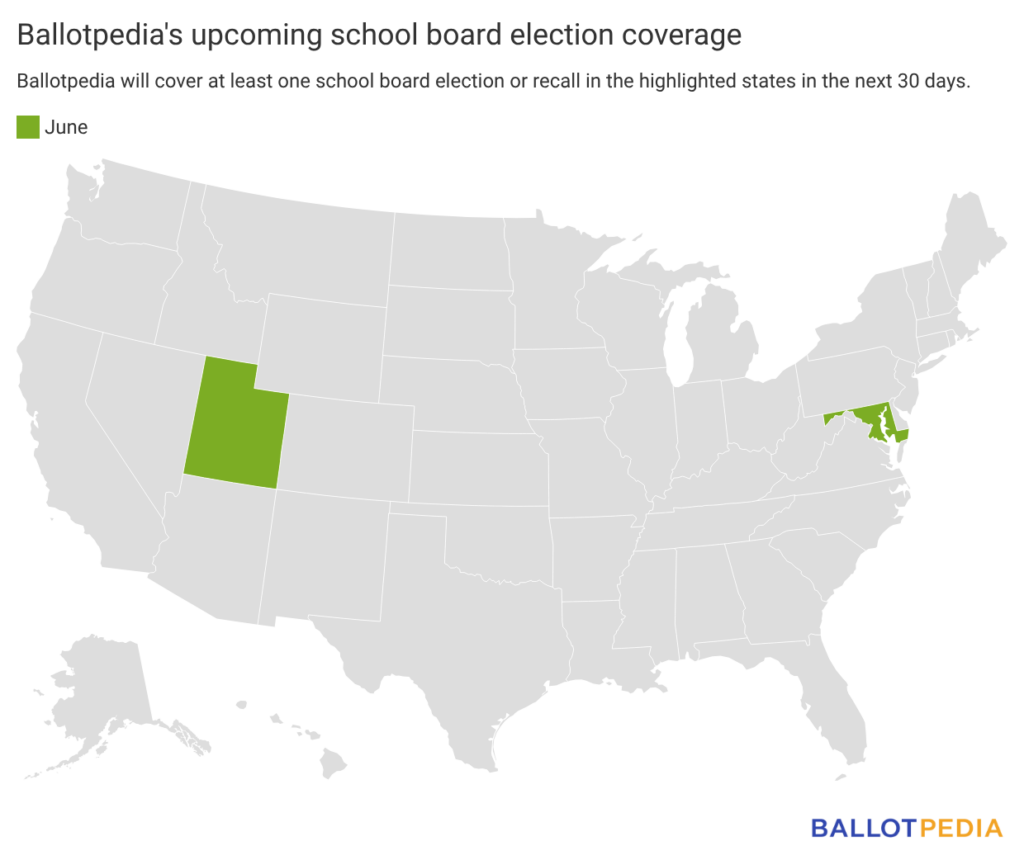
Watch future editions of Hall Pass for the following June primary and general election results:
Here’s why the U.S. Department of Justice is investigating four California school districts
On June 8, the U.S. Department of Justice’s (DOJ) Civil Rights Division announced it was investigating whether four California school districts failed to convey to parents that they could opt their children out of lessons touching on gender identity and sexual orientation, violating the U.S. Supreme Court’s (SCOTUS) 2025 Mahmoud v. Taylor ruling. The DOJ said the probe would also investigate whether the schools’ policies on girls’ locker rooms and sports teams violate Title IX of the Education Amendments of 1972, which prohibits sex-based discrimination in any program receiving federal support.
The DOJ said the districts were Graves Elementary School District, San Francisco Unified School District (SFUSD), Santa Rita Union School District, and Soledad Unified School District.
Assistant Attorney General Harmeet K. Dhillon said, “The Supreme Court’s recent decisions in Mahmoud and Mirabelli have put all school districts on notice: policies that keep parents in the dark about sexuality and gender ideology in the classroom must end now.”
The Court decided Mahmoud v. Taylor on June 27, 2025, ruling 6-3 along ideological lines. Writing for the majority, Justice Samuel Alito said that a Maryland school board’s decision to rescind a policy allowing parents to opt their children out of classes with LGBTQ+-related storybooks placed an unconstitutional burden on the parents’ rights to the free exercise of their religion. Mirabelli v. Bonta is an ongoing case involving California teachers and parents who objected to a state law preventing districts from requiring that staff inform parents if their children begin using different pronouns or identify as transgender. On March 2, 2026, SCOTUS issued a per curiam ruling blocking enforcement of the law for parents who were part of the class action lawsuit while litigation continues in lower courts. The Court ruled 6-3 that the parents in the lawsuit were likely to demonstrate that the law violated their First Amendment rights.
Click here to read Hall Pass’ deep dive into Mahmoud.
SFUSD is the state’s sixth largest, with roughly 55,000 students. The other districts named in the probe have considerably fewer students. Graves enrolled 36 students during the 2023-24 school year, while Santa Rita and Soledad enrolled 3,186 and 4,700, respectively.
Soledad Unified School District Superintendent said, “We are confident that our programs and practices are consistent with applicable law and welcome the opportunity to demonstrate that compliance.” Santa Rita released a statement saying, “Our decisions are made in good faith, with transparency, and with the best interests of our students, their parents, and our community in mind. We will comply with the Department's requests for information.”
The DOJ’s announcement came just days before SFUSD Superintendent Maria Su appeared before the U.S. House Committee on Education and the Workforce as part of a hearing entitled, “Breaking Trust: Attacks on Parental Rights, Inappropriate Content, and Legal Abuses in America’s Schools.” In her testimony, Su said, “We also take our legal obligations seriously, including where the law requires parent notice, review, or opt-out. Where the law protects student privacy, SFUSD complies with those obligations as well.” Su said district policy allows families to opt their children out of sexual health education classes.
The SFUSD Board of Education appointed Su as interim superintendent in October 2024, and she was hired permanently in November 2025.
In its announcement, the DOJ said, “While parental notice and opt-out provisions apply to ‘all or part of’ sex education, SFUSD, for example, has previously advised its teachers that neither parental permission nor notification are required to teach or discuss SOGI topics.” A 2022-23 SFUSD teaching resource stated, “A discussion about gay, lesbian, bisexual, transgender, and questioning people does not constitute a discussion about human sexuality or family life education and does not require parent notification or permission according to the California Education Code.”
Dhillon said schools found to be in violation of Title IX and SCOTUS decisions could lose federal funding.
Extracurricular: education news from around the web
This section contains links to recent education-related articles from around the internet. If you know of a story we should be reading, reply to this email to share it with us!
- New rules for 4-day school weeks draw pushback from some rural North Dakota schools | North Dakota Monitor
- Legislative panel advances rules to restrict school choice program spending on athletics, limit fund rollovers | Northwest Arkansas Democrat Gazette
- After Major Learning Growth, D.C. School Reforms Face Political Test | The 74
- Education Dept. plans to move special ed and civil rights out of the agency | Washington Post
- In Defense of Standardized Testing | Psychology of Progress
- America’s Teachers Can’t Afford to Teach | Time
- The private school choice boom leaves behind many kids in public school | Associated Press
- Microschools Are Booming. Will They Have the Funds to Grow? | Education Week
Take our Candidate Connection survey to reach voters in your district
Today, we’re looking at survey responses from two candidates running in the June 23 primaries for Prince George's County Public Schools Board of Education, in Maryland. Four of the nine seats on the board are up for election this year. Prince George’s County Public Schools is the second largest in Maryland, with roughly 132,000 students.
Terence Clegg is one of three candidates running to represent District 2. Clegg's career experience includes working as an operations director. Alvaro Ceron-Ruiz and Caroline Decaire-Goldin, the other candidates in the race, had not completed the survey as of this writing.
Here’s how Clegg answered the question, “What are the main points you want voters to remember about your goals for your time in office?”
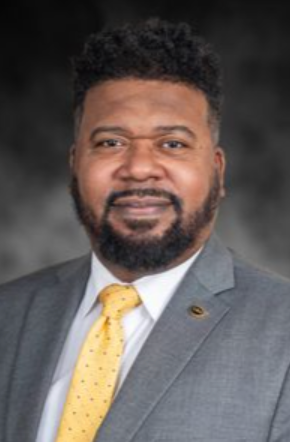
- “I'm running because I'm a parent who lives the experience of PGCPS every single day. Two of my three children engage with special education services, which means I know firsthand how hard families must work to ensure their student gets the most out of their educational experience. I want to make that fight less exhausting for all families. That means stronger compliance, more transparent communication, and a Board that treats every commitment as non-negotiable.
- Special education doesn’t work in isolation, however. It works best when parents are genuinely engaged, not just notified. Too often, schools communicate at families rather than with them. I want to help build a culture where parent voices shape decisions before those decisions are made, not after. Engaged parents are the most powerful force in any school system, and right now we're leaving that power on the table.
- The foundation of all of this is accountability. My standard is simple: if we're paying for it, we should see it. I will push for budget processes and performance metrics that can be understood by the average parent. When outcomes don't match investment, my job on the Board is to ask the hard questions. And when we’re doing the right thing, it’s my job to celebrate it loudly. When parents are engaged, students are better supported. When the system is accountable, trust is earned. That's the cycle I want to help build in District 2.”
Click here to read the rest of Clegg’s responses.
Erica Bennett is one of four candidates running to represent District 9. Bennett’s career experience includes working as an educator and administrator. Incumbent Chandrai Jackson-Saunders, Jennifer Hooker, and Candice Perkins, the other candidates in the race, had not completed the survey as of this writing.
Here’s how Bennett answered the question, “What areas of public policy are you personally passionate about?”
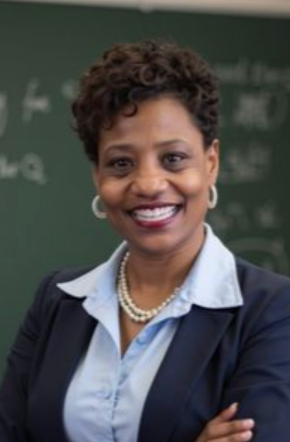
“I am personally passionate about education policy that is practical, equitable, and connected to what students and educators experience every day. This includes strong instruction, early literacy and math achievement, school safety, attendance, teacher support, family engagement, and responsible use of public resources. I care deeply about policies that remove barriers for children, strengthen classrooms, and make systems more responsive to families and schools. Good policy should not just sound right on paper; it should lead to better outcomes for students.”
Click here to read the rest of Bennett’s responses.
As a reminder, if you're a school board candidate or incumbent planning to run this year, click here to take the survey. If you complete the survey, your answers will appear in your Ballotpedia profile. Your responses will also appear in our sample ballot. If there is an election in your community, share the link with your candidates and urge them to take the survey!