


Welcome to the Friday, July 10, 2026, Brew.
By: Briana Ryan
Here’s what’s in store for you as you start your day:
- Signatures submitted for four ballot measures that would limit legislative changes to the initiative process
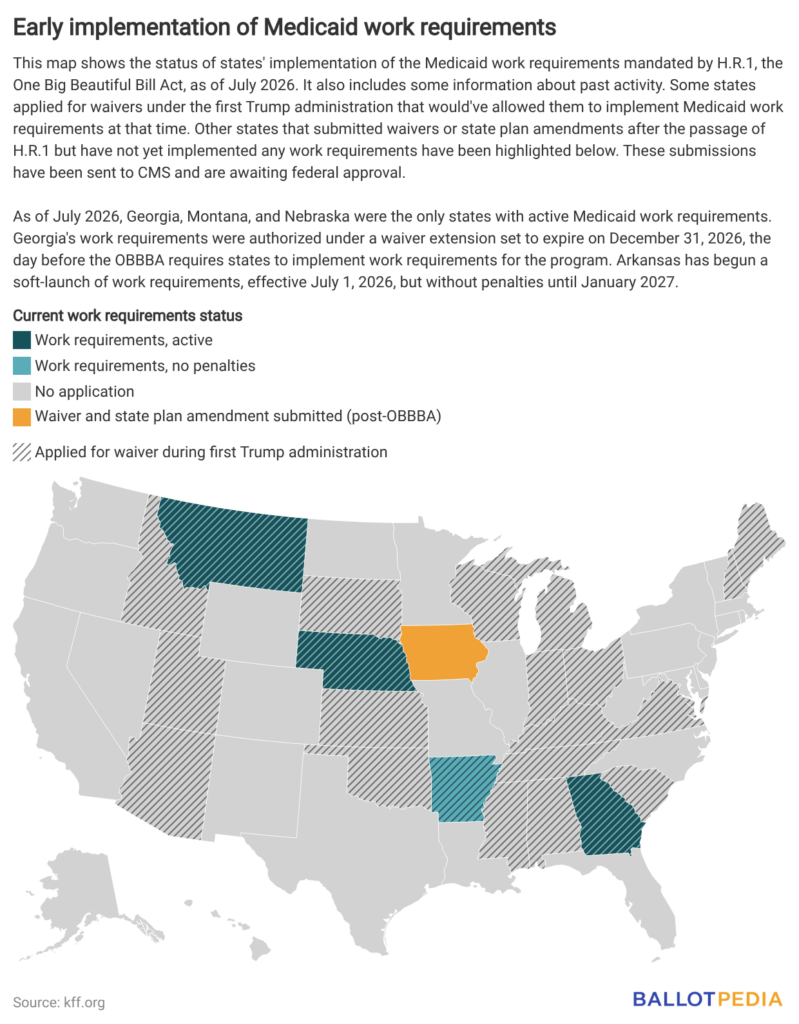
- Arkansas and Montana implement Medicaid work requirements before deadline
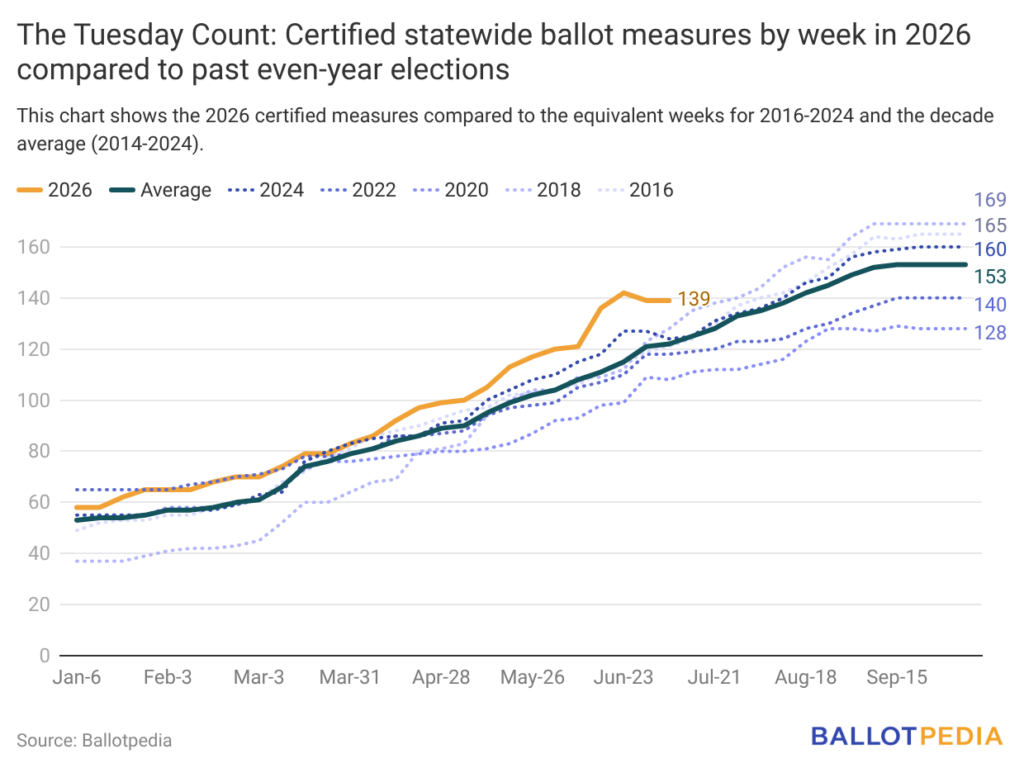
- 139 statewide ballot measures have been certified this year — above the average in even-numbered years
Signatures submitted for four ballot measures that would limit legislative changes to the initiative process
Campaigns in four states — Arkansas, Missouri, Montana, and Nebraska — submitted signatures for proposed ballot measures that would limit legislative changes to citizen initiatives and the initiative process.
Twenty-six states have a citizen-initiated ballot measure process. State constitutions and laws govern how measures qualify for the ballot, what vote is required for approval, and whether lawmakers may later amend or repeal voter-approved measures. They also regulate matters such as signature requirements, circulation periods, ballot-language review, and judicial review.
The four proposed measures that voters may decide in 2026 would limit the state legislature’s role in the citizen initiative process or its authority to change that process.
In Arkansas, the proposed constitutional amendment would establish limits on legislative changes to the initiative process and voter-approved measures. It would prohibit the legislature from amending voter-approved constitutional amendments, require a two-thirds legislative vote to amend initiated statutes, and restrict laws that interfere with the initiative and referendum process. On July 3, Protect AR Rights submitted 108,837 signatures. The campaign needs 90,704 valid signatures for the measure to qualify.
In Missouri, the proposed amendment would prohibit the legislature from “weakening citizens’ initiative or referendum powers.” The amendment describes several prohibited changes, including increasing signature requirements, shortening circulation periods, restricting permissible subjects, limiting judicial review, and requiring more than a simple majority for voter approval. It would also require an 80% vote in each legislative chamber before lawmakers could refer a proposed change to a voter-approved initiative back to the ballot. Respect MO Voters submitted 367,000 signatures on May 3. At least 170,215 valid signatures are required for the measure to qualify for the ballot.
Voters in Missouri are also deciding on Amendment 4 in August, a constitutional amendment that would require a majority of voters in each congressional district to approve citizen-initiated amendments, making Missouri the first state to have this requirement if approved. If approved, it would apply to citizen-initiated amendments on the November ballot.
In Montana, the proposed amendment would add the initiative and referendum power to the state’s Declaration of Rights. This would amend the constitution to read, “The government may not deny or burden [the right to initiative and referendum] unless justified by a compelling government interest achieved by the least restrictive means … This right guarantees impartial, predictable, transparent, and expeditious processes for proposing a ballot issue, qualifying a ballot issue for the ballot, and submitting a ballot issue to the qualified electors without interference from the government or the use of government resources to support or oppose the ballot issue.” On June 19, more than 100,000 signatures were filed to place this amendment on the ballot. For this amendment to make the ballot, the campaign needed to submit 60,241 valid signatures.
In Nebraska, voters may decide on an amendment that would require a four-fifths legislative vote to change, impair, or repeal an approved ballot initiative. It would also require changes to the initiative process to be approved by four-fifths of state legislators and "to advance a compelling state interest achieved by the least restrictive means." On July 2, more than 186,000 signatures were filed to place the measure on the ballot. For this amendment to make the ballot, the campaign needed to submit 125,821 valid signatures.
While the four citizen-initiated proposals would limit legislative changes to the initiative process, five measures referred by state legislatures for the November ballot would establish new requirements for initiated measures. This includes:
- Idaho HJR 4, which would prohibit citizens from initiating state statutes legalizing marijuana or narcotics.
- Missouri Amendment 4, which would require voter approval of citizen-initiated constitutional amendments in each congressional district, rather than statewide, among other changes.
- North Dakota Constitutional Measure 1, which would require constitutional amendments, including citizen-initiated ones, to receive a 60% supermajority vote to be adopted.
- South Dakota Constitutional Amendment L, which would require a 60% vote to approve constitutional amendments.
- An amendment on the ballot in Utah, which would require citizen initiatives to receive at least 60% voter approval to make certain tax-related changes.
The most recent measure addressing legislative changes to the initiative process was South Dakota Amendment W in 2018. The amendment would have established new requirements for the citizen initiative and referendum process, including voter approval of certain changes to the process. Voters rejected the amendment, with 45% voting in favor and 55% voting against.
If any of the proposed amendments make the 2026 ballot, it would be the first time since 2018 that voters will decide on a measure restricting the legislature from amending the initiative process.
Click here for more information about ballot measures regarding the initiative and referendum process.
Arkansas and Montana implement Medicaid work requirements before deadline
On July 1, Arkansas and Montana began implementing work requirements for Medicaid enrollees, becoming the second and third states to do so after President Donald Trump (R) signed the One Big Beautiful Bill Act (OBBBA) on July 4, 2025. The OBBBA established the first federal work requirements for Medicaid and requires states to adopt these requirements for able-bodied adults ages 19-64 without dependents in the Affordable Care Act’s Medicaid expansion group by January 1, 2027.
These requirements—also known as community engagement requirements—can be met by doing any of the following for 80 hours a month: working, doing community service, participating in a work program, or doing a combination of these activities.
An individual could also meet the requirements by enrolling at least part-time in an educational program or by making a monthly income of at least 80 times the federal hourly minimum wage, which is $580. Failure to comply with the community engagement requirement would result in denial of a Medicaid application or disenrollment from the program.
Some states have implemented these requirements ahead of the January 2027 deadline. Georgia has been enforcing work requirements for the program since July 1, 2023, and Nebraska implemented the OBBBA's requirements on May 1, 2026.
Montana implemented the policy, including penalties for noncompliance, just as Nebraska and Georgia have done. Arkansas, however, began what the state has called a soft launch of the Medicaid work requirements. This means that recipients in the Affordable Care Act expansion group are required to begin proving that they are working, volunteering, or taking classes for a combined total of 80 hours per month on July 1, but penalties for noncompliance do not begin until January 2027. On Jan. 1, 2027, recipients in Arkansas could begin losing benefits for noncompliance.
Click here to read more about Medicaid work requirements in the states.
139 statewide ballot measures have been certified this year — above the average in even-numbered years
As of July 7, 139 measures have been certified for statewide ballots this year — more than the historical average of 122 at this point in even-numbered years from 2014 through 2024. From 2014 through 2024, an average of 153 statewide measures were certified in even-numbered years.
Over the past two weeks, four new measures were certified:
- California Budget Stabilization Account Cap Increase and Gann Limit Changes Amendment
- California Prohibit New Taxes on Retirement Holdings, Personal Assets, and Savings and Limit Retroactive Taxes Initiative
- California Two-Thirds Vote Requirement for Local Special Tax Initiatives and Property Tax Initiative Prohibition Amendment
- California Veteran and Income-Qualified Housing Bond Measure
Seven measures were removed:
- California Two-Thirds Vote Requirement for Special Taxes and Charter City Real Estate Transfer Tax Prohibition Initiative
- California Vote Requirements for Initiatives Requiring Supermajority Votes Amendment
- California Limit Compensation of Healthcare Executives Initiative
- California Require Healthcare Union Member Approval for Ballot Measure Campaign Spending Initiative
- California Establish Personal Injury Lawyer Regulations Initiative
- California Require Background Checks and Sexual Assault Reporting by Rideshare Companies Initiative
- North Dakota Constitutional Measure 1, Changes to State Legislative Term Limits Amendment
Signatures are pending verification for 18 citizen initiatives:
- Arizona Restrict Empowerment Scholarship Account Funds and Require State Board of Education Oversight Initiative
- Arkansas Fundamental Right to Initiative and Referendum and Citizen-Initiated Measures Process Amendment
- Colorado Right to Purchase and Sell Natural Gas for Cooking or Heating in Homes and Businesses Amendment
- Idaho Medical Marijuana Legalization Initiative
- Idaho Reproductive Freedom and Privacy Act Initiative
- Michigan Citizenship Verification and Voter Identification Initiative
- Michigan Utility and Government Contractor Campaign Finance Regulations Initiative
- Missouri Congressional Map Referendum
- Missouri Initiative and Referendum Powers and Legislative Change Requirements Amendment
- Montana CI-132, Require Nonpartisan Judicial Elections Initiative
- Montana CI-133, Add Right to Initiative and Referendum Power to Declaration of Rights Amendment
- Montana Initiative 194, Exclude Political Spending from Artificial Persons’ Charter Powers Initiative
- Nebraska Online Sports Betting Amendment
- Nebraska Regulate Online Sports Betting Initiative
- Nebraska Require a Four-Fifths Vote for Legislative Ballot Initiative Changes Amendment
- Nebraska Sex Requirement for School and College Sports Amendment
- Oregon Criminalize Hunting, Fishing, and Intentional Injury to Animals Initiative
- Washington Repeal Income Tax for Households Earning Over $1 Million Legislation Initiative
The next signature deadline is Aug. 3 in Colorado.
Click here for more information about the measures on statewide ballots this year.