


Welcome to Hall Pass, a newsletter written to keep you plugged into the conversations driving school board governance, the politics surrounding it, and education policy.
In today’s edition, you’ll find:
- On the issues: The debate over restorative justice initiatives in K-12 schools
- School board filing deadlines, election results, and recall certifications
- Laws in 12 states provide school boards with differing authority and powers depending on the type of district they represent
- Democratic Party-aligned candidates win control of Sarasota County Public Schools school board
- Extracurricular: education news from around the web
- Candidate Connection survey
On the issues: The debate over restorative justice initiatives in K-12 schools
In this section, we curate reporting, analysis, and commentary on the issues school board members deliberate when they set out to offer the best education possible in their district. Missed an issue? Click here to see the previous education debates we’ve covered.
On Aug. 18, the Office for Civil Rights (OCR) at the U.S. Department of Education issued guidance rescinding 2014 Obama-era guidance that found that racial discrimination was responsible for higher rates of discipline for Black and Hispanic students. It found that exclusionary discipline – such as suspension and expulsion – decreased academic achievement and the likelihood of graduating high school, among other negative outcomes. The guidance encouraged schools to collect data on disparate effects of school discipline policies. The first Trump administration rescinded the 2014 guidance, but the Biden administration reinstated it in 2023.
In the wake of the 2014 guidance, schools implemented restorative justice practices (some states had already adopted related policies). According to Sarah Klevan, Senior Researcher at the Learning Policy Institute, restorative justice "achieve[s] accountability through the development of caring, supportive relationships and through strategies that allow students to reflect on their behavior and make amends when needed to preserve the health of the community." These practices include mediation, generally through conversations between students and school staff about the harm of offending behavior. Defending Education, an education nonprofit, reported that 1,493 districts across the 50 states used restorative justice practices as of Aug. 18.
Since 2020, worsening student behavior and disagreements about the efficacy of social-emotional learning have spurred debate about best practices for student discipline, with restorative justice practices at the crossroads.
Jeanne Croteau, an educator and psychologist, said that restorative justice practices in schools aim to rebuild relationships and trust between students and teachers, rather than punishing misbehavior. She said it encourages students to consider the impact of their actions and take responsibility, reduces misbehavior and recidivism, and improves academic outcomes. Croteau said that although it can take time and effort, it is an effective alternative to punitive disciplinary practices in schools.
Carolyn Gorman and Jennifer Weber, fellows at the Manhattan Institute for Policy Research, said that the 2014 guidance letter incorrectly diagnosed the disparities in racial outcomes regarding student discipline as issues with the punishments themselves. They partially agreed with the guidance's criticism of exclusionary discipline, but said that both exclusionary discipline and restorative justice reinforce negative behavior when they allow students to escape classrooms or schoolwork they don't want to engage with.
What Is Restorative Justice in Schools? Everything Educators Need To Know | Jeanne Croteau, We Are Teachers
"The goal of restorative justice is to 'build community and repair relationships while supporting reflection, communication, and problem-solving skills for staff and students,' which can lead to more effective learning and teaching. It emphasizes dialogue and mutual agreement, involving all parties affected by a conflict—including victims, offenders, and the wider school community—to address issues collaboratively.
"By shifting from a punitive model to one that seeks to understand and resolve the root causes of behavior, schools implementing restorative justice report significant reductions in suspensions, improved student behavior, and better overall school climate. This approach not only helps in managing individual incidents of misconduct but also fosters a culture of care, respect, and community, essential for educational success and social development."
Students Need Consequences, Not “Restorative Justice” | Carolyn Gorman and Jennifer Weber, City Journal
"Much classroom misbehavior is motivated by the desire to escape. The student is trying to get out of something he finds unpleasant, whether it’s work he can’t do, a subject he’s failing, or an audience he’d rather not face. For that student, a suspension acts as a reward—it gets him exactly what he wants, reinforcing the behavior. The harm is what the days outside of the classroom bring––disengagement and the growing sense that school is not where he belongs. Other misbehavior is motivated by desire for attention; in those cases, pulling the student aside for a one-on-one discussion is unlikely to be an effective deterrent.
"The restorative-justice practices that have replaced suspension, such as mediation circles or discussion with a teacher, distribute the same kinds of unintentional rewards. A child escaping a math worksheet doesn’t care whether he gets a suspension slip or is placed in a restorative circle; either way, the worksheet is gone. Likewise, a child who seeks adult attention doesn’t care whether it’s punitive or therapeutic; either way, he got it. … Students who need adult attention should get it, but not as the payoff for acting out."
School board update: filing deadlines, election results, and recall certifications
In 2026, Ballotpedia will cover elections for more than 30,000 school board seats. We’re expanding our coverage each year with our eye on covering the country’s more than 80,000 school board seats.
Upcoming school board elections
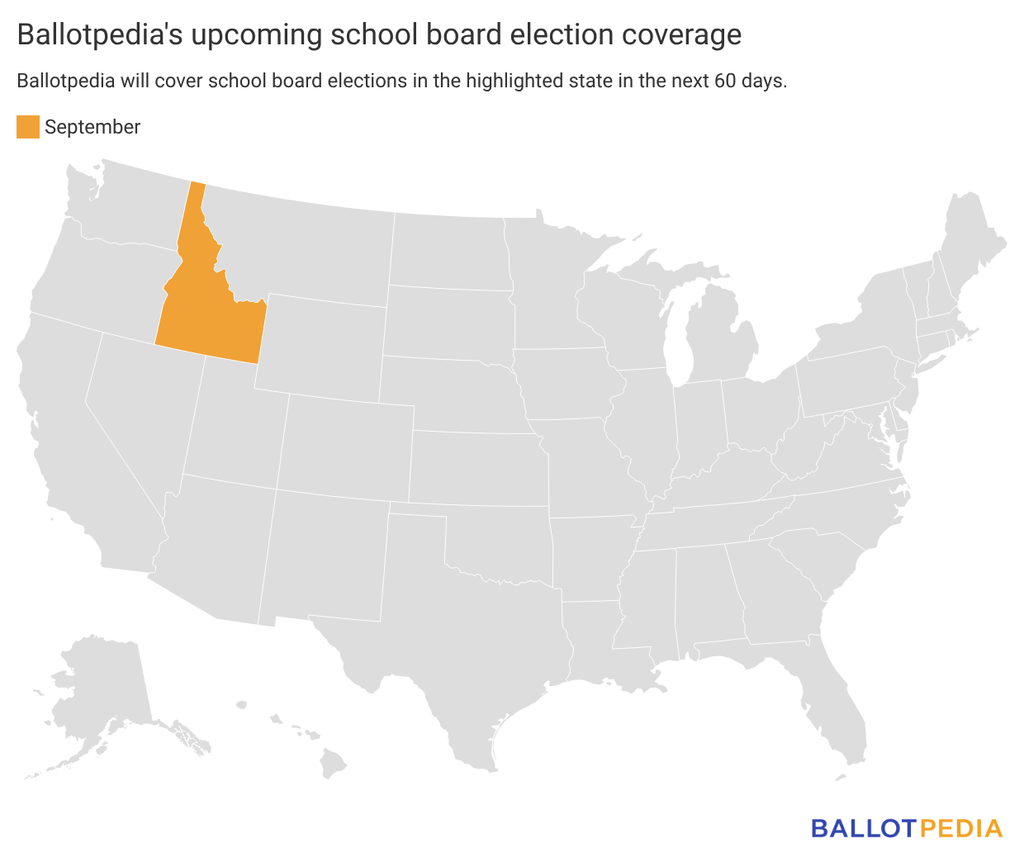
- The Boise School District, in Idaho, will hold a special general election for an at-large seat on the Board of Trustees on Sept. 1.
Laws in 12 states provide school boards with differing authority and powers depending on the type of district they represent
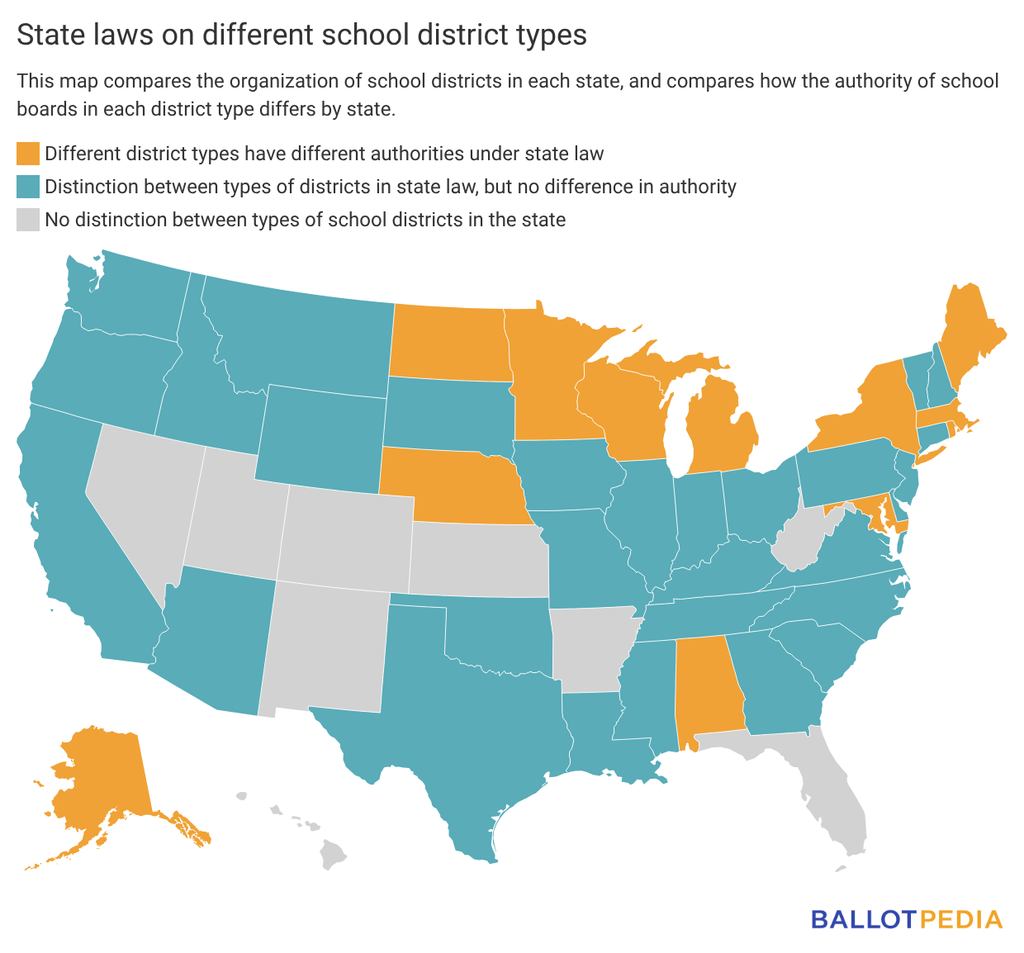
Most states either have only one type of school district or do not distinguish between powers and duties for the boards of each different district type. However, 12 states have different types of school districts with distinct powers and duties under state law. Boards with different authorities may have unique control over district taxing or financing, and they can have different numbers of elected members.
States differentiate school districts based on government structure (city or county), grades served (e.g., elementary, secondary, or K-12), or the student population size. Typically, variations in powers and duties between the boards of each different district type in a given state correspond to factors like student population size or district location. For example:
- Alabama: Recognizes two district types (city and county), but enumerates different powers and duties of county and city boards of education. For example, Alabama law requires county boards of education to fix a uniform start date for schools in the county each year, with specific requirements for any schools that must start later. State law does not require this of city school boards.
- Maine: Recognizes four school district types (regional school units, school administrative districts, community school districts, and municipal school units). Maine state law applies a set of powers and duties for all districts, but also maintains four separate sections with additional powers and duties specific to the boards of each of the four district types.
- Maryland and North Dakota: Specifically establish school districts and boards in their most populous cities — Baltimore and Fargo, respectively — with separate powers and duties from all other school districts in the two states. Maryland state law also includes some powers, duties, and limitations for the Prince George's County Board of Education.
Here's a breakdown of the landscape of district types in the 50 states:
- 29 distinguish between types of school districts in state law, but do not distinguish between the powers and duties of boards in each district type.
- 12 have different types of districts, and give the boards of those districts distinct authorities.
- Nine do not distinguish between types of school districts.
Of the 12 that grant different powers and duties to the school boards governing each district type:
- Nine — Alaska, Maine, Massachusetts, Michigan, Nebraska, New York, Rhode Island, North Dakota, and Wisconsin — have one statute enumerating the powers and duties of all school boards in the state, then have separate statutes granting additional authorities for one or more district types.
- Three — Alabama, Minnesota, and Maryland — enumerate the powers and duties of each type of school district separately.
School board authority
Ballotpedia conducted this research as part of its school board authority project. The project seeks to lay out the authority for school boards in each state, as well as constraints on that authority through state or federal law, collective bargaining, or case law.
The project includes restraints on school boards' authority in each state regarding the following topics:
- Curriculum requirements
- Curriculum restrictions
- Book bans, removals, and restrictions
- Parental notification
- Discipline
- School board election timing
- Public school choice and open enrollment
- Charter schools
- Cellphone bans and classroom screentime limits
- Collective bargaining agreements
- Parents' bill of rights
Visit the project here.
Democratic Party-backed candidates win control of Sarasota County Public Schools school board
On Aug. 18, voters in Florida’s Sarasota County, located roughly 60 miles south of Tampa, voted in nonpartisan races for three of the five seats on the Sarasota County Schools school board. As a result, members endorsed by the Democratic Party will have a majority on the board for the first time since 2022, when the district came into national prominence when a slate of three GOP-backed candidates won election.
Democratic Party-backed candidates won two of the races outright, while the other will be decided in a Nov. 3 general election because no candidate received more than 50% of the vote. The two winners will join Liz Barker and Tom Edwards, the two current board members that local media described as progressive. Whether the board will have a 5-0 or 4-1 Democratic-backed majority will be decided in the Nov. 3 election.
The three races were among the 122 contested school board elections Ballotpedia covered in Florida on Aug. 18. A total of 377 candidates ran in those contested elections.
Here’s what happened on Aug. 18: Three of the five seats on the board were up for election, and all three were open after incumbents Bridget Ziegler, Robyn Marinelli, and Karen Rose chose not to run for re-election. The Republican Party endorsed all three board members in previous elections.
Aug. 18 results are shown below:
- District 1: In the race to succeed Ziegler, Jimmy Glover won 44% of the vote to Heidi Brandt’s 32% and Teresa DeWitt’s 25%. Glover and Brandt advanced to the Nov. 3 general election. The Sarasota County Democratic Party endorsed Glover, while the Sarasota County Republican Party endorsed Brandt. DeWitt had served as the vice chair of the local Moms for Liberty chapter, and received an endorsement from U.S. Rep. Greg Steube (R- Fla.).
- District 4: Megan Tennimon, a former teacher whom the Sarasota County Democratic Party endorsed, defeated Frank Dicicco 55-45%. Tennimon completed Ballotpedia’s Candidate Connection survey, and wrote: “Our schools should be places of learning, growth, and opportunity—not political battlegrounds. In recent years, the school board has become increasingly divided and distracted by ideological debates that take attention away from student achievement. This shift has created tension, eroded trust, and made it harder for educators to do their jobs.”
- District 5: Beth Mayberry, a former teacher, defeated Michelle Pozzie 57-43% to succeed Rose. The Sarasota County Democratic Party endorsed Mayberry. Mayberry completed Ballotpedia’s Candidate Connection survey, and wrote: “I am strongly concerned that our public schools are under attack from people who want to privatize every public good, from our prisons to our hospitals. Evaluating how students learn, funding programs that accelerate instead of hindering learning, and staying on top of literacy, fluency for math and reading, and critical thinking skills are important to me.”
Background: Ziegler and Marinelli were part of the slate of GOP-backed candidates who won in 2022, when the school board came to national prominence as part of a wave of districts where Republican-backed candidates won control of school boards. That year, Gov. Ron DeSantis (R) held a rally in the district on behalf of the conservative slate. DeSantis endorsed candidates running in other districts.
In 2021, Ziegler co-founded Moms for Liberty, a nonprofit that describes its mission as “fighting for the survival of America by unifying, educating and empowering parents to defend their parental rights at all levels of government.” Moms for Liberty endorses school board candidates around the country. DeSantis endorsed Rose in her unsuccessful 2024 re-election bid, then appointed her back to the school board in 2025 to fill a vacancy.
- According to a Ballotpedia analysis, Sarasota County Schools was one of 1,393 districts in 2022 where school board candidates took stances on race in education, responses to the coronavirus pandemic, or sex and gender in schools.
Zooming out: Supporters of the Democratic Party-backed Sarasota candidates said the results showed that voters were souring on conservative school board governance, but Moms for Liberty and other conservative groups said their candidates saw success, too.
- David Dean, chair of the Sarasota County Democratic Party, said, “School board meetings should be boring. They shouldn’t make the national news. There’s certainly a shift in attitudes toward the MAGA agenda, even here.”
- Moms for Liberty CEO and co-founder Tina Descovich said, “Eleven of our fifteen endorsed candidates won or advanced last night. Three of three in Brevard. All three in Clay County. These are moms and dads and neighbors who knocked doors and made calls and won, and no consultant or professor quoted in a newspaper gets to tell them they don't exist. School boards are ground zero in the fight for parental rights, and last night Florida parents made that clear."
- The 1776 Project, which says its mission is to “reignite the spark and spirit of that revolution by reforming school boards across America,” saw 10 of the 14 candidates it endorsed in races across the state either win their elections outright or advance to a general election.
Click here to learn more about Florida’s 2026 school board elections.
Extracurricular: education news from around the web
This section contains links to recent education-related articles from around the internet.
- 3 ways states can support innovative high school principals | K-12 Dive
- Idaho private school offers bachelor’s degrees before students graduate high school | Idaho Ed News
- The K–12 Techlash Moment | Law & Liberty
- Making Sense of Varying Policies for Reclassifying English Learners | Public Policy Institute of California
- School Choice Is Expanding. Will Public Support Follow? | The 74
- Plans to improve Michigan’s K‑12 schools depend on how the state funds public education | Michigan Advance
Take our Candidate Connection survey to reach voters in your district
Today, we’re looking at survey responses from Catherine Barrett and Kea Carota, two of the three candidates running in the Nov. 3 general election for two at-large seats on the Paradise Valley Unified School District school board, in Arizona.
A third candidate, Richard Ross, had not completed the survey as of this writing.
As a reminder, if you're a school board candidate or incumbent running this year, click here to take the survey. If you complete the survey, your answers will appear in your Ballotpedia profile. Your responses will also appear in our sample ballot. If there is an election in your community, share the link with your candidates and urge them to take the survey!
Carota’s career experience includes teaching in public schools. Here’s how Barrett answered the question, “What are the main points you want voters to remember about your goals for your time in office?”
- “Students First
-Focus on the needs of students and provide the highest quality education for all students -Prioritize student safety including well-maintained facilities and cyber safety -Strengthen the variety of academic and extra-curricular programs to lead to opportunities for students
-Provide high-quality curriculum and technology.
- Promote Parental involvement
-Parents play an important role in the success of their student. Students are more successful in school when their parents are involved in their education. -Encourage open communication between parents and educators -There are so many different ways for parents to get involved at their school and there is something for everyone
- Fiscal Accountability -Use resources wisely to maximize the benefits to students -Transparency regarding how funds are used and the funding sources -Prioritize increasing salaries for teachers and staff”
Click here to read the rest of Carota’s responses.
Barrett's career experience includes working in education administration. Here’s how Barrett answered the question, “What are the main points you want voters to remember about your goals for your time in office?
- “Grow District Enrollment
- Support & retain outstanding educators
- Fiscal responsibility”
Click here to read the rest of Barrett’s responses.