



Endorsements are one of the ways voters learn who candidates are and what they stand for. They can be particularly useful for voters in two types of elections: in partisan primaries, when voters may find it difficult to discern differences between candidates with the same party affiliation, and in nonpartisan local elections, when party labels don't appear on the ballot and little other information is available about each candidate. A number of both types of elections took place on Aug. 18.
Ballotpedia tracks endorsements from organizations we call Recognized Endorsement Contributors (RECs): groups including political action committees, local associations, unions, media editorial boards, and more that publicly support candidates and communicate those choices to voters. In the Aug. 18 statewide elections, we tracked 2,345 endorsements from 471 RECs across three states: Alaska, Florida, and Wyoming. These included 887 endorsements of candidates in local races.
Local primaries
Endorsements can be particularly helpful in local primaries, which are often officially nonpartisan. In these instances, voters can’t rely on the party label, which typically gives them a quick sense of what a candidate stands for. Endorsements can help voters understand where a candidate may fall along more traditional party lines, as well as reveal ideological leanings, policy preferences, or relationships with other individuals and groups. Here are some case studies that illustrate this point.
Mayor of St. Petersburg, Fla.
Three RECs endorsed competing candidates in the nonpartisan primary for mayor of St. Petersburg, Fla.
- Charlie Crist finished first with 35.2% of the vote and advanced to the general election. Endorsements Ballotpedia tracked for Crist included a co-endorsement from the Tampa Bay Times editorial board.
- Incumbent Kenneth Welch finished second with 20.7% of the vote and advanced to the general election. Endorsements Ballotpedia tracked for Welch included Equality Florida Action, Forward Florida, and the state chapter of the Service Employees International Union.
- Brandi Gabbard finished fourth in the primary with 17.6% of the vote. Endorsements Ballotpedia tracked for Gabbard included a co-endorsement from the Tampa Bay Times editorial board, Suncoast Sierra Club, and Suncoast Tampa Association of Realtors.
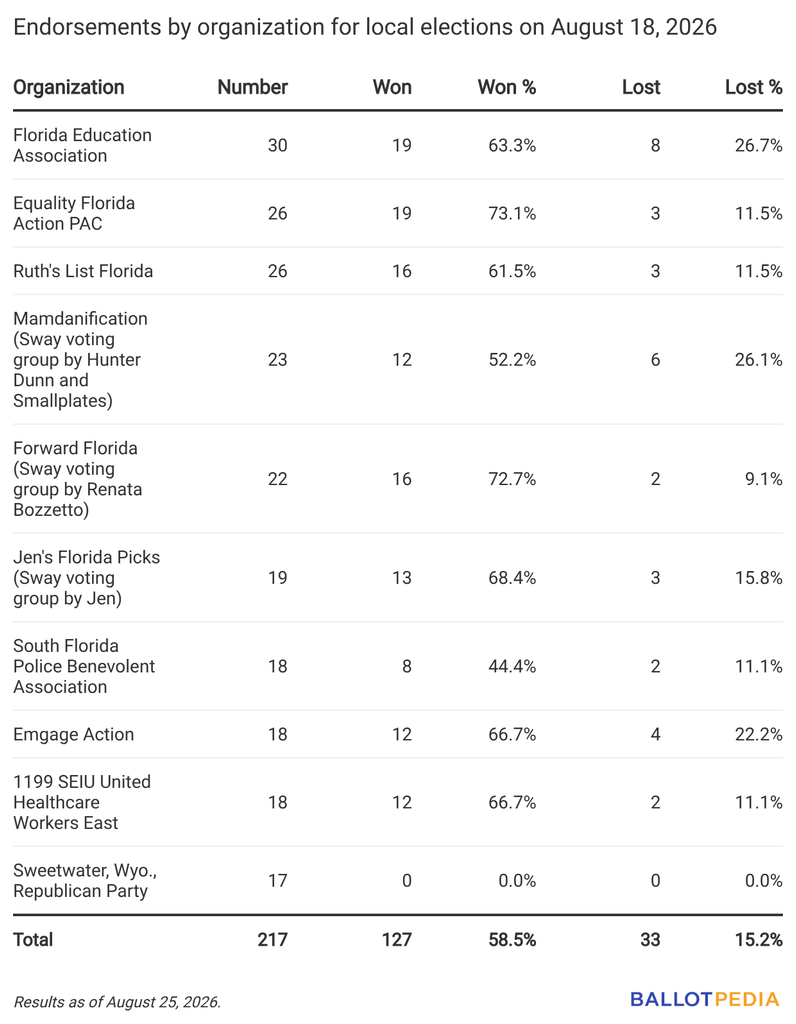
Collectively, the 10 RECs that endorsed the most candidates in local elections on Aug. 18 endorsed 217 candidates. Of those, 127 (59%) won or advanced to the next election stage, while 33 (15%) lost. The table below displays these organizations and their endorsee success rates.
Partisan primaries
In partisan primaries, endorsements can help voters discern meaningful differences between candidates who otherwise share the same party affiliation: differences in policies, approaches to electability, commitment to principles, and more.
One such example from Aug. 18 was the Democratic primary for District 108 in the Florida House. Different RECs supported two of the three candidates in this primary:
- Daphne Campbell won the primary with 46.2% of the vote. Endorsements Ballotpedia tracked for Campbell included the Associated Industries of Florida and Florida Realtors PAC.
- Dinah Escarment finished second with 42.0% of the vote. Endorsements Ballotpedia tracked for Escarment included the Florida AFL-CIO, Florida Education Association, and Run for Something.
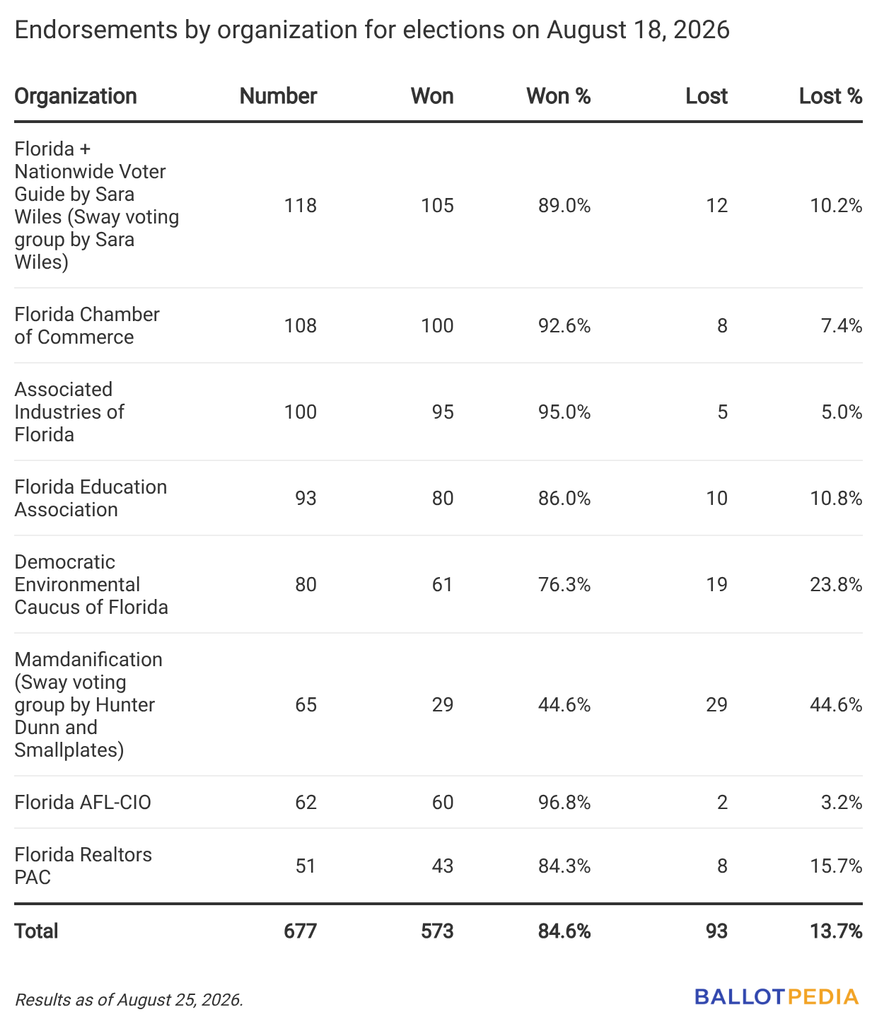
We identified eight RECs that issued more than 50 endorsements each in these primary elections. The table below displays the organizations and their endorsee success rates. Candidates endorsed by these organizations won 85% of their races, lost 14%, and the remaining races were uncalled.
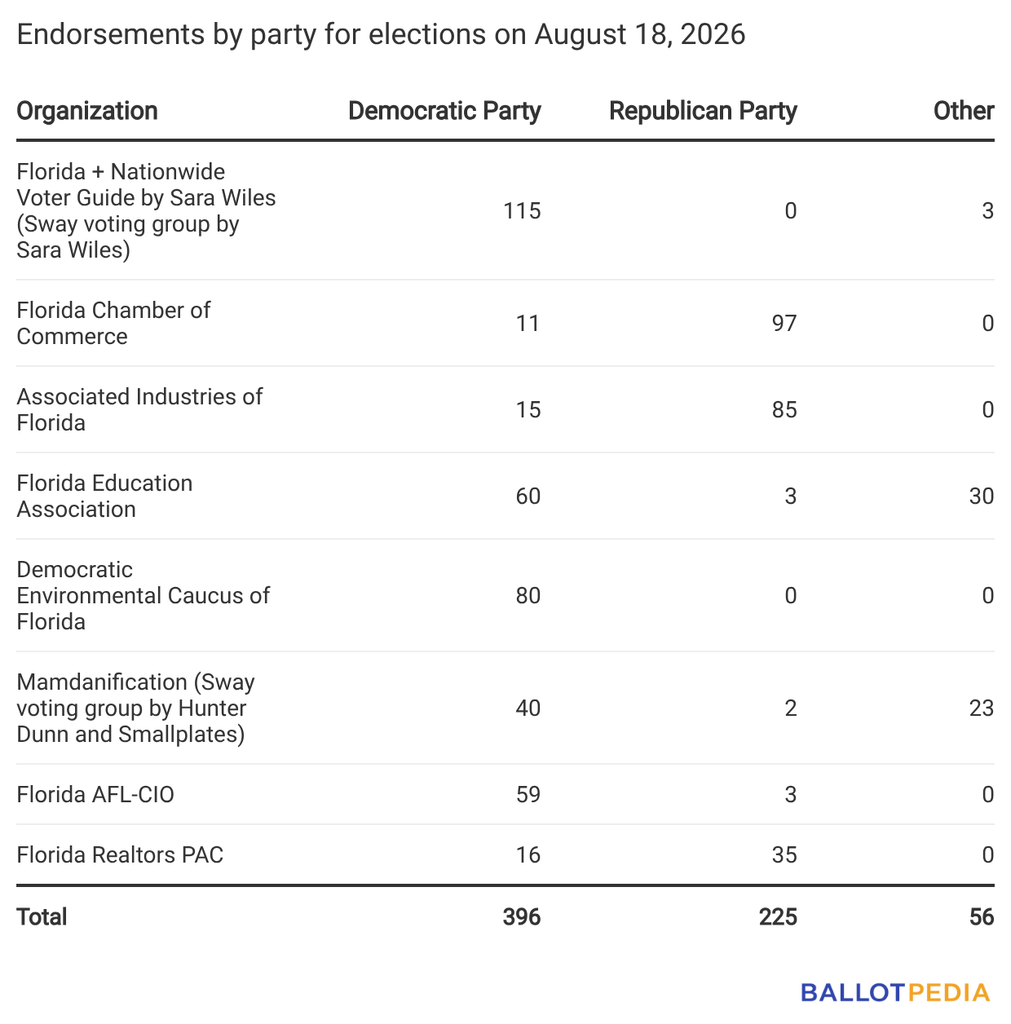
Among these organizations, all but two endorsed candidates from multiple political parties in these partisan primaries:
- Florida + Nationwide Voter Guide: This Sway voting group endorsed 115 Democratic candidates.
- Democratic Environmental Caucus of Florida: Endorsed 80 Democratic candidates.
The remaining organizations endorsed candidates from both major political parties in these partisan primaries. The table below displays the partisan affiliation for all candidates endorsed by these eight RECs.
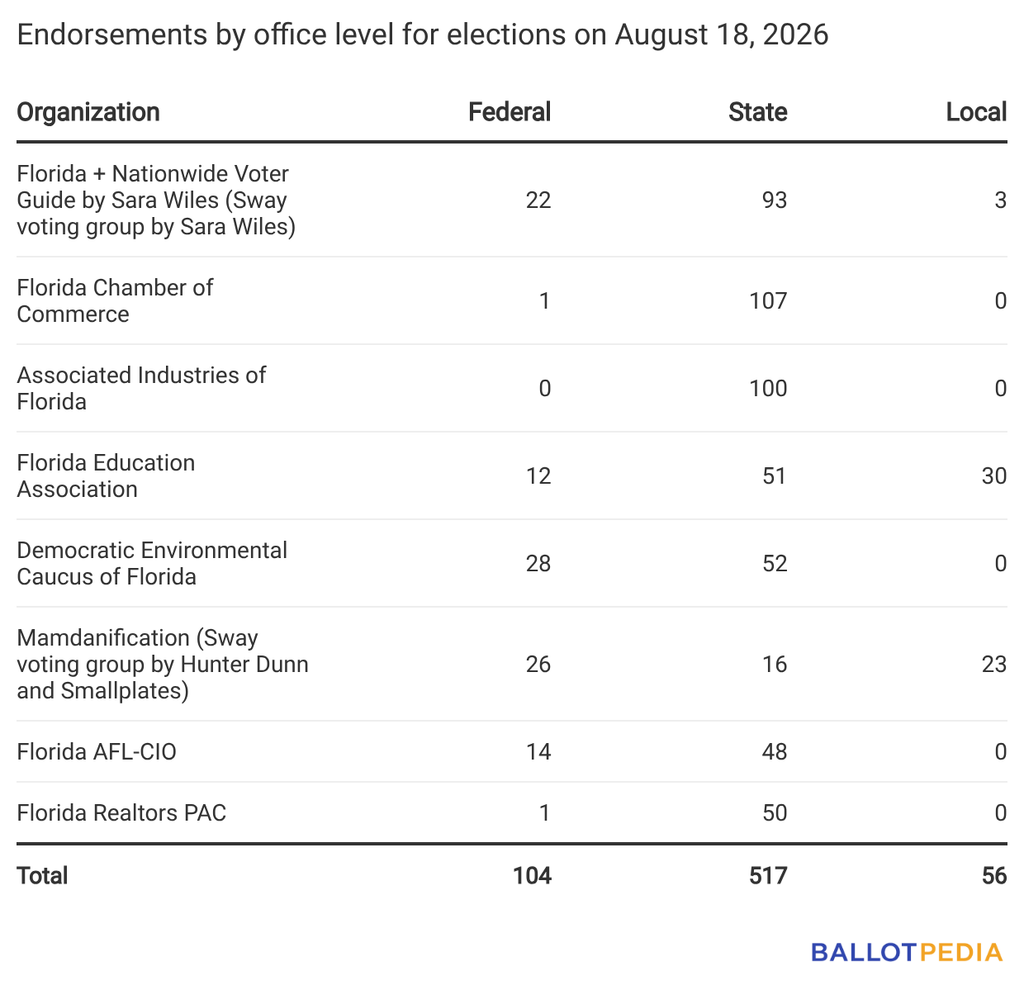
Endorsements by these eight RECs were mostly in state primaries (517), followed by federal primaries (104) and local primaries (56). Three of the eight RECs endorsed in local races. The table below displays endorsements issued by these RECs by level of government.
Endorsements are statements or actions that an individual or group provides in support of a candidate, but they are also much more than that. Endorsements reveal alliances, ideological leanings, and potential policy priorities in ways that campaign platforms and quotes from a candidate sometimes can’t. Endorsements also play a practical role in campaigns. Many endorsers — especially for statewide and national candidates — can provide candidates with volunteer support, access to possible campaign donors, and give candidates a degree of credibility and notoriety.
Ballotpedia is tracking endorsements made by organizations in races at all levels of government, with a particular focus on groups that endorse candidates at the local level. Endorsements are one component of Ballotpedia's goal to provide robust information — data that helps voters understand who a candidate is and what their political philosophy is — for every office on the ballot.