


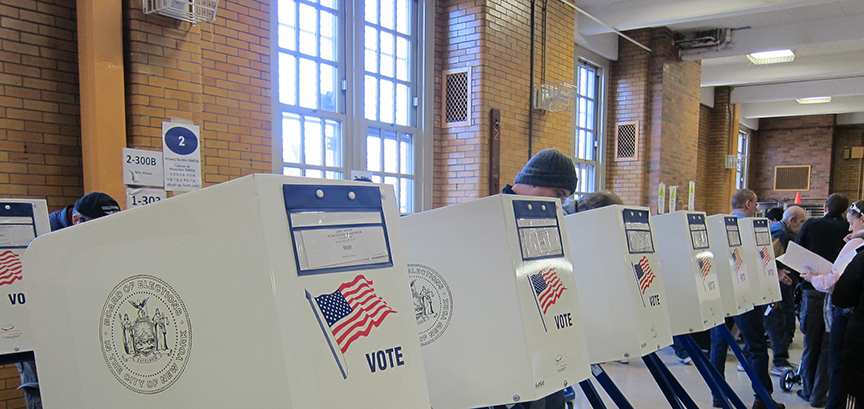
In 2026, voters in six states will decide—or have already decided—nine statewide ballot measures related to income or wealth taxes. On August 4, voters defeated Missouri Amendment 5, which would have required reductions in the individual income tax until the tax was eliminated in the state. The remaining eight measures will appear on the ballot in California, Colorado, Iowa, North Carolina, and Washington. Three measures will appear on the ballot in California—the only state in 2026 with multiple measures of this type on the ballot.
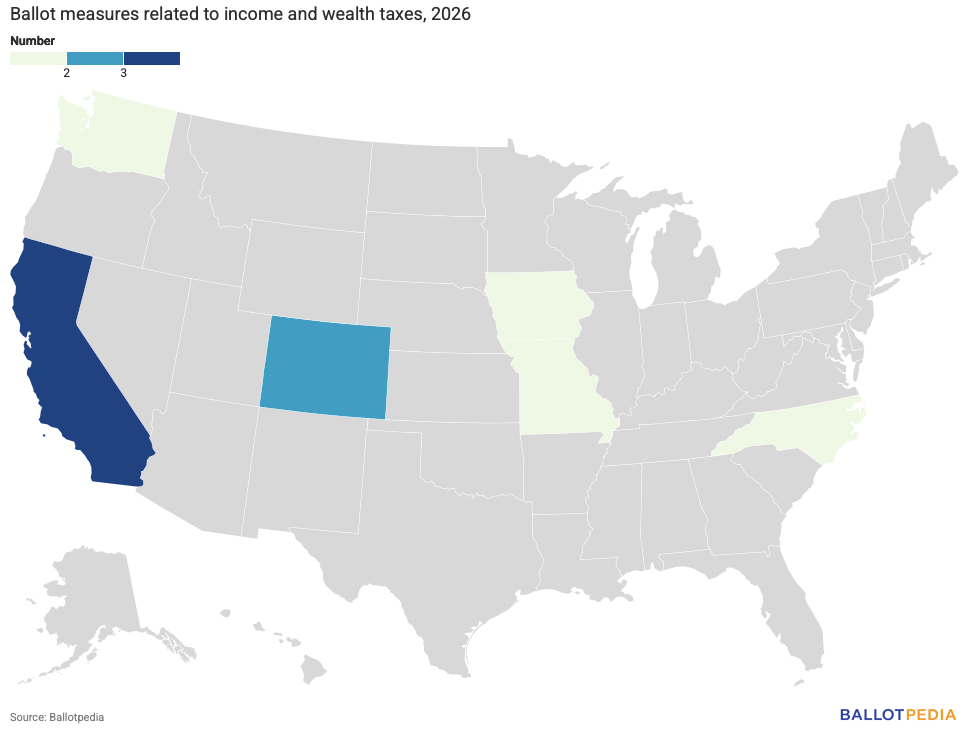
Income tax measures concern taxes on income, including wages, business earnings, investment income, and capital gains. Wealth tax measures concern taxes based on the ownership or value of assets or net worth.
Measures classified as allowing, creating, or increasing taxes authorize a previously prohibited or unauthorized income or wealth tax, establish a new tax, renew an existing tax, or increase tax liability by raising rates or expanding the taxable base. This can include measures that impose or increase taxes specifically on higher incomes or greater concentrations of wealth. Measures classified as prohibiting, capping, or decreasing taxes prohibit an income or wealth tax, restrict the authority or procedures used to enact or increase one, establish or lower a maximum tax rate, reduce tax liability, or repeal or eliminate an existing tax. This can include measures that prevent or reduce taxes on higher incomes, assets, or net worth.
Of the eight measures:
- Two would allow, create, or increase income taxes
- Five would prohibit, cap, or decrease income taxes
- One would allow, create, or increase wealth taxes
- One would prohibit, cap, or decrease wealth taxes
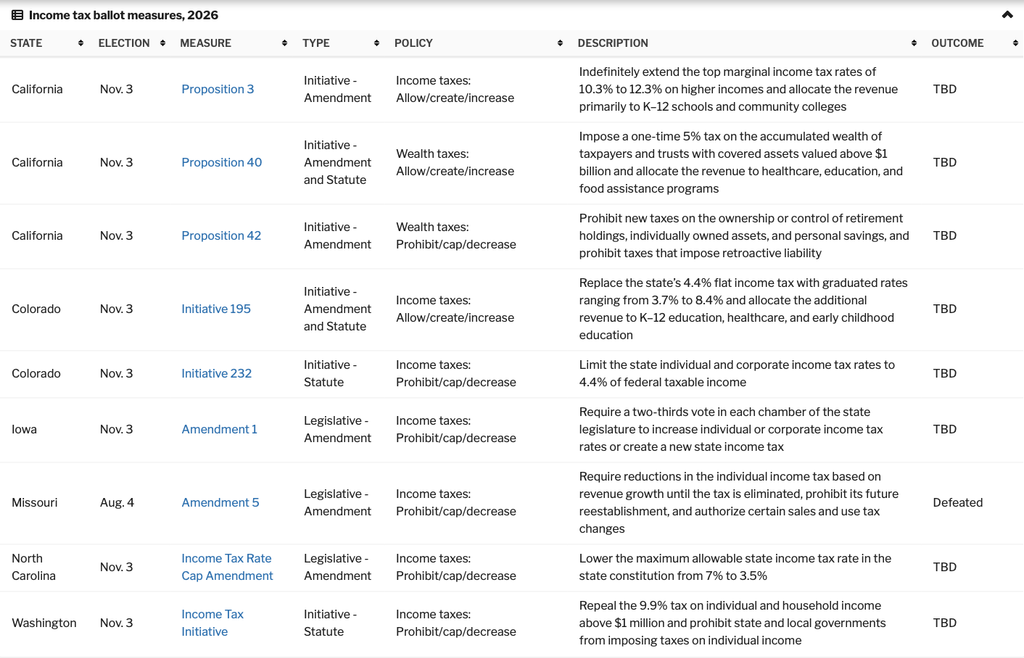
Of the measures, three were referred to the ballot by state legislatures, while six were placed on the ballot by a citizen initiative. The three measures that would allow, create, or increase income or wealth taxes were placed on the ballot through a citizen initiative.
The measure with the most contributions supporting and opposing the measure is California Proposition 42, with the campaign reporting $52.7 million in contributions supporting the measure. The second-highest is California Proposition 40, with campaigns reporting $31.4 million supporting the measure and $11.2 million opposing it. For a full look at campaign finance information on these measures, as well as endorsements and polling, click here.
Between 2000 and 2025, voters decided 40 statewide ballot measures related to income and wealth taxes. Voters approved 20 measures and defeated 20.