


With the Nov. 3 general election approaching, states across the country are recruiting poll workers to serve on Election Day and during the early voting period.
Poll workers perform a variety of functions. They may help set up or break down polling places, greet and check in voters, issue and transport ballots, and perform other tasks to support the election.
States have different laws and requirements governing who may serve as a poll worker, how much they are paid, and what training they must complete.
Forty-two states require poll workers to be registered to vote. Forty-five require poll workers to be residents of the state, county, municipality, or precinct where they work.
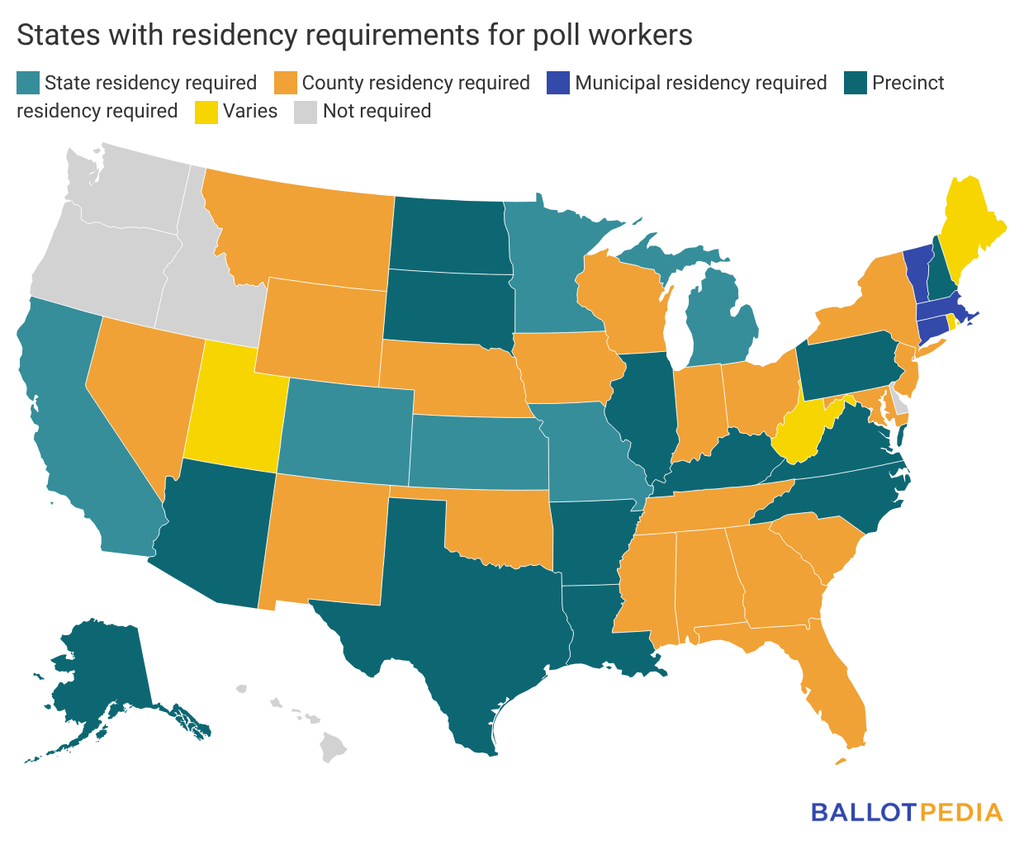
Of those 45 states:
- Six require poll workers to be residents of the state.
- Nineteen require poll workers to be residents of the county where they work.
- Three require poll workers to be residents of the municipality where they work.
- Thirteen require poll workers to be residents of the precinct where they work.
- In four states, the requirement varies by election type.
Among the states that require poll workers to reside in a specific local jurisdiction, some make exceptions due to poll worker shortages.
Forty-four states require poll workers to undergo some form of training, whether in person or online. Six states do not have a statewide training requirement, though some counties and municipalities in those states may have mandatory training of their own.
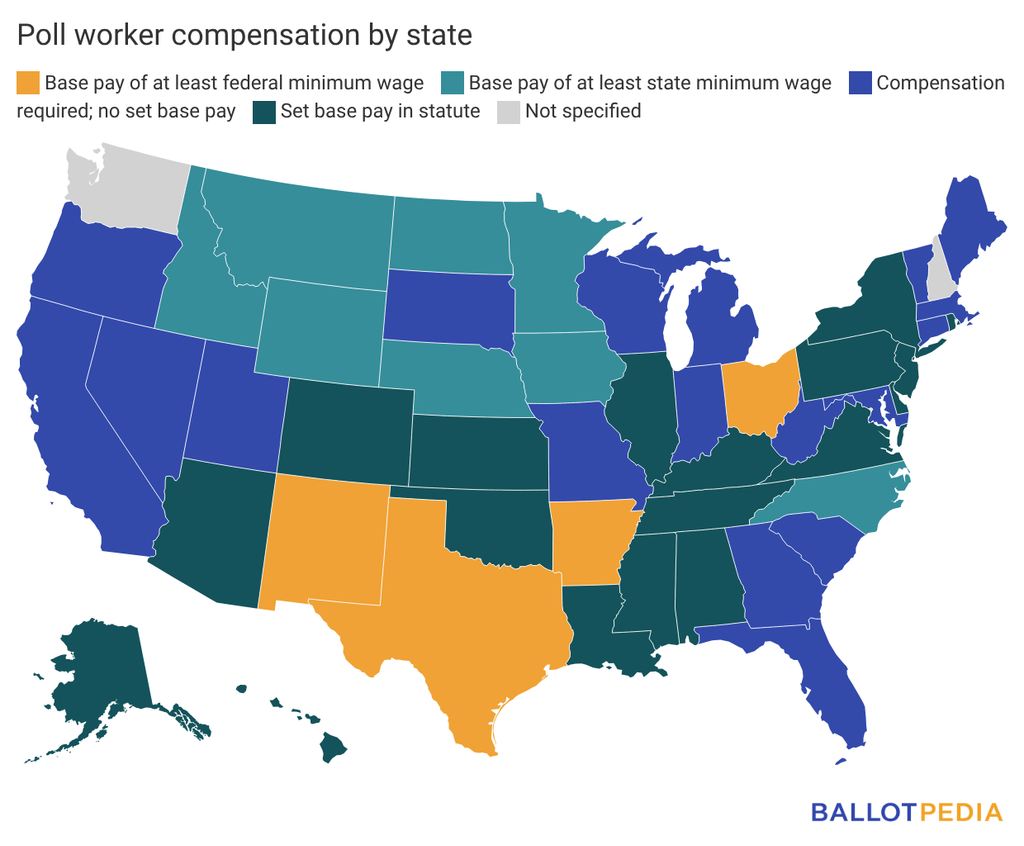
In 48 states, poll workers must be compensated for their work. In some of those states, poll workers may choose to serve as unpaid volunteers. Two states, New Hampshire and Washington, have no statewide pay requirements, though counties and municipalities may still elect to pay poll workers.
Eight states require poll workers to be paid at least their state's minimum wage, four states set the base pay rate at the federal minimum wage, and 18 states set a base pay rate in statute. Eighteen other states require compensation but do not prescribe a minimum rate.
In 2026, 11 states have enacted 14 bills related to election workers or volunteers. Idaho became the first state to allow individuals to serve as poll workers in lieu of jury duty. A county must identify a shortage of poll workers in order for the option to be offered to prospective jurors. Anyone who serves as a poll worker instead of reporting for jury duty is not paid.