


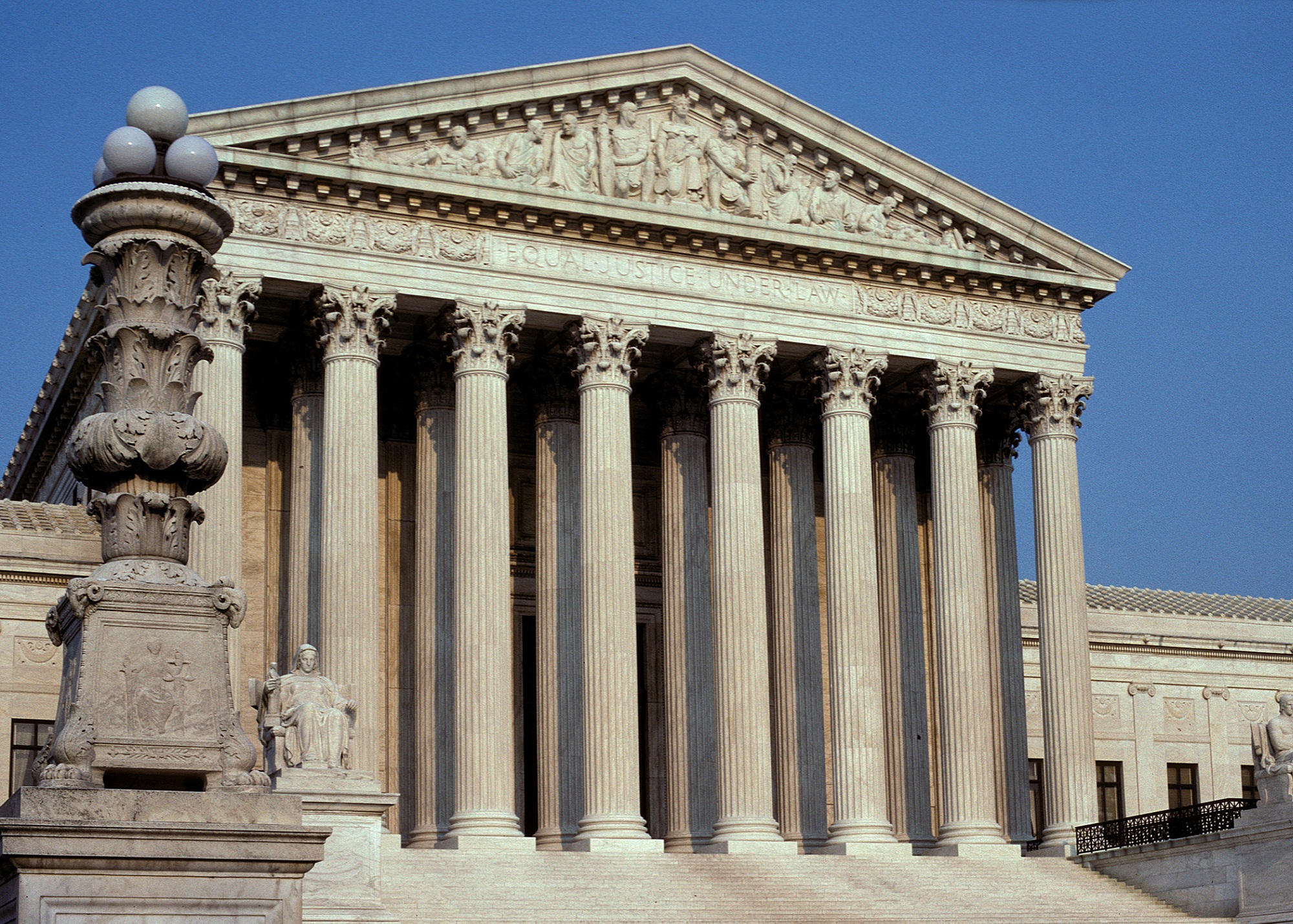
On Sept. 25, the U.S. Supreme Court stayed a lower court ruling that blocked the federal government from using an expanded version of the Systematic Alien Verification for Entitlements (SAVE) system for voter registration and list maintenance. The SAVE system provides information about individuals' immigration and citizenship status.
The interim docket ruling allows the U.S. Department of Homeland Security (DHS) to grant states access to the expanded version of SAVE ahead of the 2026 election.
U.S. Citizenship and Immigration Services (USCIS), which runs SAVE, describes the database as providing "point in time immigration status and U.S. citizenship information to federal, state, local, territorial, and tribal agencies.” USCIS is a division of DHS.
In 2025, President Donald Trump (R) issued an executive order requiring DHS to give state and local election officials free access to "appropriate systems for verifying the citizenship or immigration status of individuals registering to vote or who are already registered."
In response, USCIS made changes to SAVE, including pulling Social Security Administration records into the database and allowing states to conduct bulk searches.
In September 2025, the League of Women Voters and other parties filed a class action complaint, alleging the changes to the database violated federal law. On June 22, 2026, Judge Sparkle Sooknanan of the U.S. District Court for the District of Columbia blocked DHS from allowing states to access the expanded version of SAVE. Sooknanan said the changes violated federal data privacy laws and statutes governing administrative rules and regulations.
The U.S. Department of Justice appealed the decision to the U.S. Court of Appeals for the District of Columbia Circuit, which ruled 2-1 to deny the request to stay the decision. The federal government then sought a stay from the Supreme Court.
In an unsigned order, a majority of justices said that, on the merits, they would likely reverse the district court's ruling that the modified version of SAVE violated federal law. In addition, the order said that the lower court order would harm the federal government's ability to respond to inquiries from states and that it "inhibits the Federal Government's efforts to assist state and local agencies in the proper administration of the midterm elections."
The order said that while the National Voter Registration Act prohibits states from using "any program the purpose of which is to systematically remove the names of ineligible voters from the official lists of eligible voters" within 90 days of a federal election, the modified SAVE database could still be used to search for individual voters.
In a dissenting opinion, Justice Ketanji Brown Jackson said she believes the modified database violates federal law and that "the harm caused by burdening or disenfranchising even a few lawful voters outweighs the nonexistent harm that the Government experiences when it is prevented from taking an action that it likely lacks the authority to take."
Jackson was joined in her dissent by Justices Elena Kagan and Sonia Sotomayor.
Nationally, 28 states have registered with the federal government to use SAVE for voter list maintenance or voter registration. Of those 28 states, 22 have Republican trifectas, two have Democratic trifectas, and four have divided government.
Some states have statutes requiring SAVE or other government data to be used to regularly check the citizenship status of registered voters or of individuals registering to vote for the first time. Currently, 27 states have statutes that require or authorize election officials to obtain citizenship data from state or federal agencies as part of the voter list maintenance process.