


Welcome to Ballot Bulletin: Ballotpedia's Weekly Election Policy Digest. Every Tuesday, we deliver the latest updates on election policy around the country, including nationwide trends and recent legislative activity.
In this week’s edition, we cover 12 bills state legislatures acted on last week and look at laws on youth voting and pre-registration across the country ahead of the November election.
The state of election legislation in the U.S.
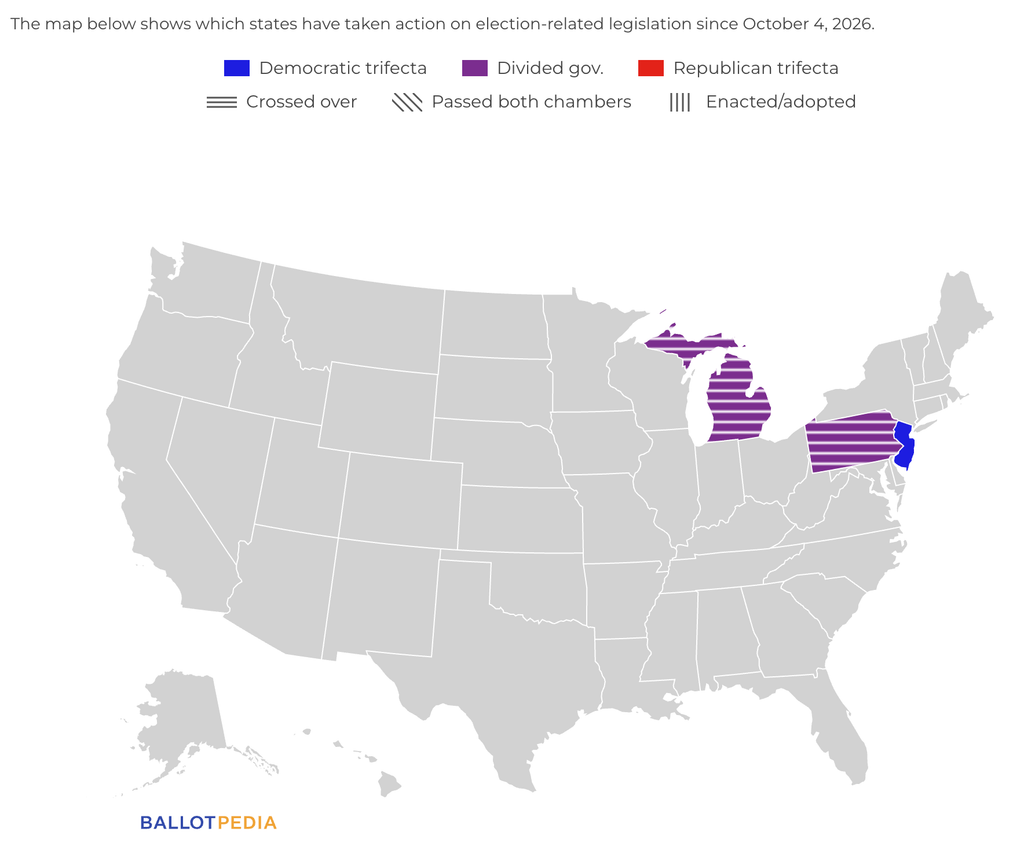
Lawmakers in three states acted on 12 election-related bills last week. Five state legislatures are in regular or special sessions. Last week, no bills were enacted, no bills passed both chambers of a state legislature, and no bills were vetoed.
Of the bills acted on last week, six (50%) are in states with Democratic trifectas, none are in states with a Republican trifecta, and six (50%) are in states with divided government. The most active bill categories last week were voter registration and list maintenance (four), and enforcement and election fraud, counting and certification, election law disputes and voting rights, and ballot measures (three each).
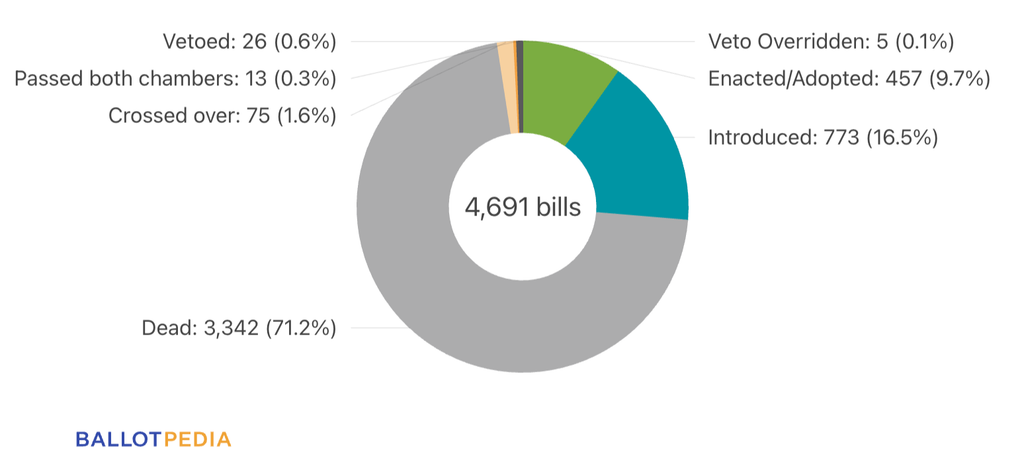
We are currently tracking 4,691 election-related bills across the country. The chart below breaks down the status of those bills based on where they stand in the legislative process:
Enacted bills
No bills were enacted or adopted last week.
Bills passing both chambers
No bills passed both chambers of a state legislature last week.
To see a full list of bills awaiting gubernatorial action, click here.
Vetoed bills
No bills were vetoed last week.
To see a list of all bills vetoed this session, click here.
All bills
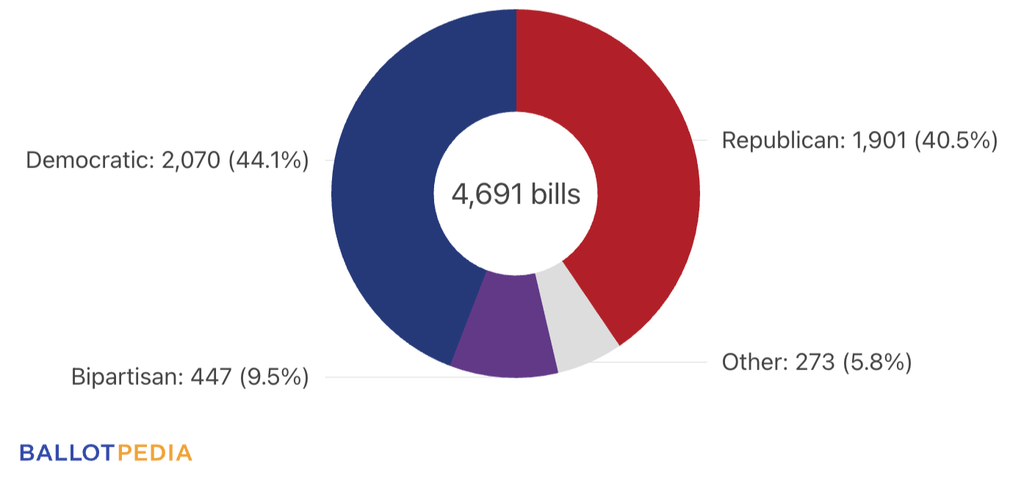
The chart below shows all bills Ballotpedia is currently tracking, broken down by partisan sponsor.
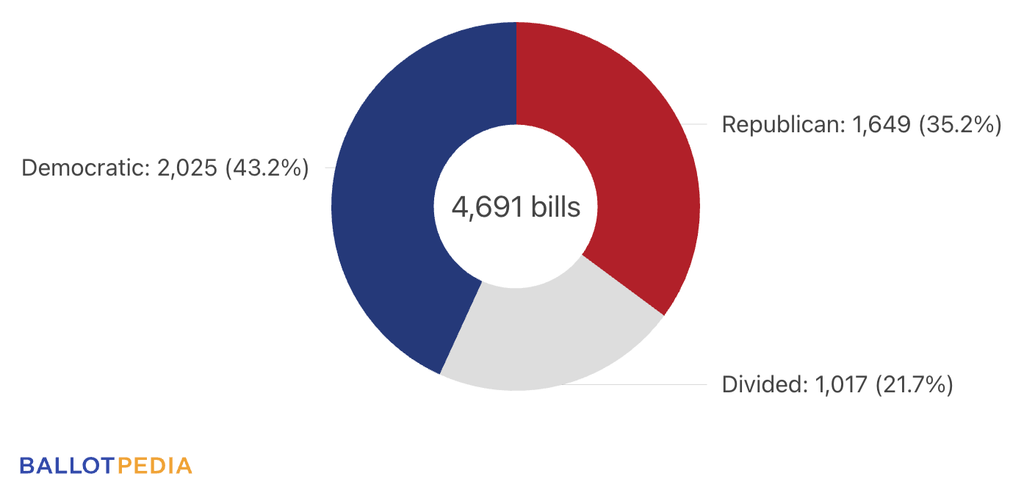
The chart below shows all bills Ballotpedia is currently tracking, broken down by trifecta status.
In the news
On Oct. 5, a Montana judge blocked a 2025 state law requiring voters to include their date of birth on absentee ballot applications and submitted ballots. Under the blocked law, officials must verify that the date provided matches the voter's registration information. If the two dates do not match, voters have until 5 p.m. on the day after the election to cure the issue, otherwise the ballot is rejected.
Two groups, Disability Rights Montana and Big Sky 55+, filed a lawsuit in May 2025 alleging that the requirement violated the state constitution. The state of Montana argued that the law is constitutional and necessary to maintain public confidence in state elections and to prevent election fraud.
In his ruling, Lewis and Clark County District Court Judge Mike Menahan granted summary judgment in favor of the plaintiffs, ruling that the law violates the right of suffrage contained in the Montana Constitution. Menahan wrote that “the State has failed to meet its burden of proving HB 719 is reasonable and serves a legitimate state interest or that its asserted interests are more important than the burden on the right to vote.”
In a statement, Richie Melby, a representative for the Montana secretary of state’s office, said, “This type of mass confusion is why courts shouldn’t get involved when the election is underway.”
Here are other news stories from across the country:
- On Oct. 8, the New Jersey League of Women Voters and three voters sued the Ocean County Board of Elections in the first lawsuit filed under the state’s voting rights act, which was enacted in July. In the lawsuit, the plaintiffs allege that some Bay Head residents were sent notices stating they may not be eligible to vote in the municipality because their tax bills were sent to an address in another town. The board’s chairman said they acted properly in sending the notices.
- On Oct. 6, a U.S. district court judge let stand a 2026 New Hampshire law prohibiting the use of student IDs for voting purposes. However, U.S. District Court Judge Joseph Laplante ruled that student IDs must be allowed for voter registration and as evidence that a voter without an acceptable form of ID could present to the supervisor of the checklist in order to establish their identity. The New Hampshire Secretary of State’s office has appealed the ruling.
- On Oct. 5, the U.S. Supreme Court vacated a lower court ruling upholding the legality of Washington’s legislative boundaries and sent the case back to the district court in light of its ruling in Louisiana v. Callais. In 2022, a group of voters challenged the state’s legislative districts, arguing they violated the federal Voting Rights Act. A U.S. district court judge approved new lines in 2024, but a state lawmaker and another voter asked the Supreme Court to reconsider the case in light of Callais, arguing that race was illegally used in drawing the new maps. The 2024 maps will be in effect for the Nov. 3 election.
Policy spotlight: This city will consider whether to allow 16-year-olds to vote
The story below is adapted from a recent Ballotpedia News story by Andrew Bahl.
On Nov. 3, voters in Culver City, California, will decide on a ballot measure that would allow 16- and 17-year-olds to vote in city and school district elections.
If approved, Culver City would become the fourth municipality in California and the 16th nationally to allow individuals less than 18 years of age to vote in at least some local elections.
Currently, 16-year-olds in Albany, Berkeley, and Oakland are permitted to vote in school board elections. Sixteen-year-olds in Newark, New Jersey, are also eligible to vote in school board races, while 16-year-olds in 10 Maryland municipalities, as well as Brattleboro, Vermont, are permitted to vote in local municipal elections.
Implementation of the Culver City ballot measure would be contingent on funding and logistical systems being in place. A similar measure in 2022 was defeated, with 50.05% of voters opposing the measure.
During a city council meeting, council member Bryan Fish said, “I think this is something the city should support. We're not the first — Oakland, Berkeley, other cities across the country, Albany. It is a growing movement.”
Council member Dan O’Brien said, “I don't think 16-year-olds and 17-year-olds should be voting on issues where they are electing people who are going to choose how our money is spent, or they're voting on measures that involve taxes.”
The 26th Amendment to the United States Constitution, ratified in 1971, lowered the minimum voting age in the U.S. from 21 to 18. This does not prevent jurisdictions from allowing individuals to vote in local elections before the age of 18.
Seventeen-year-olds in 22 states and the District of Columbia are also permitted to vote in state, congressional, and presidential primaries if they will be 18 by the subsequent general election. In two other states, these voters can vote in Democratic presidential primaries or caucuses.
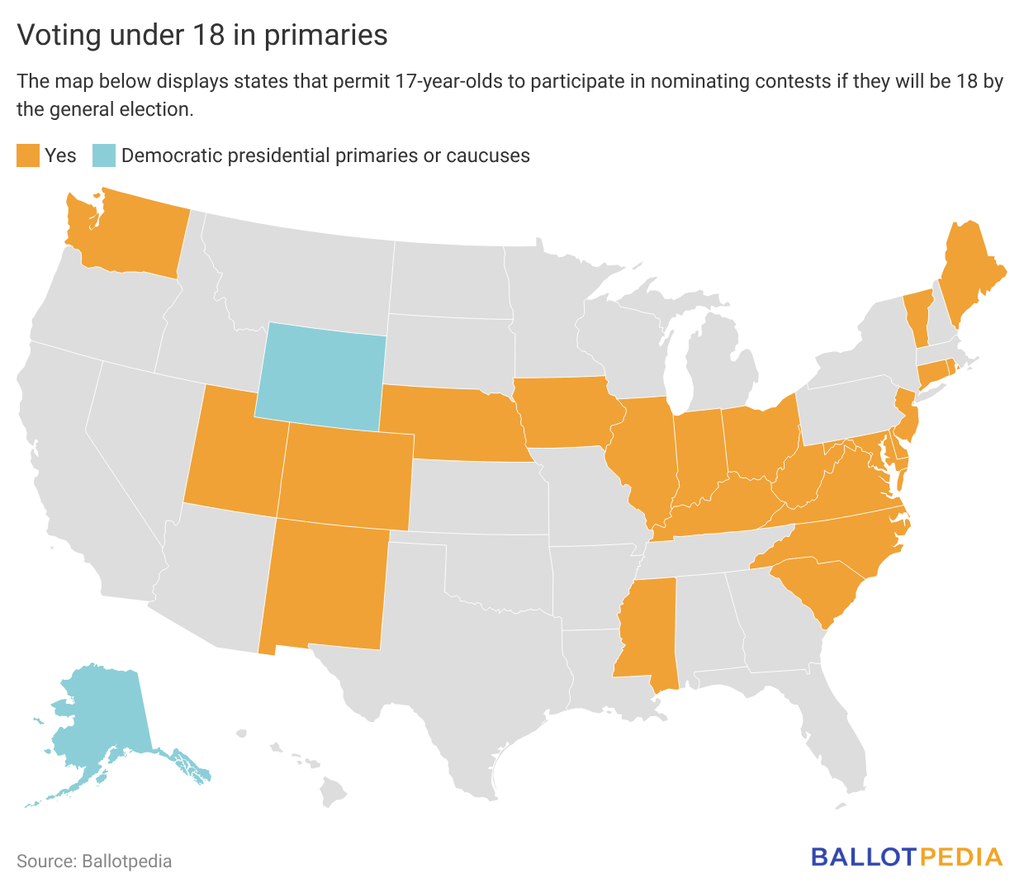
Laws in several of these states either require these voters to use a special ballot or prohibit them from voting on certain parts of a primary ballot, such as a public question or ballot measure.
In all 49 states with voter registration, individuals less than 18 years of age may pre-register to vote. Those voters fill out a voter registration form that is on file with election officials. Once a person turns 18, they are registered to vote and able to cast a ballot.
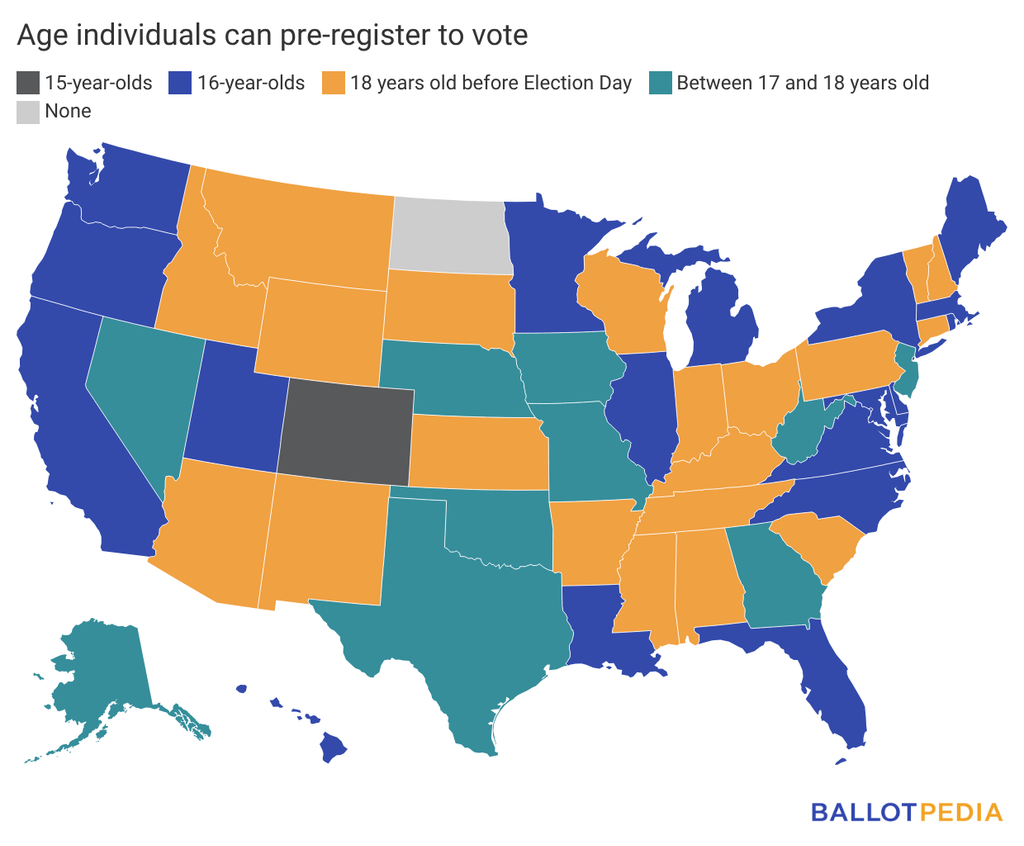
Twenty states allow anyone who will be 18 by the next election to pre-register, while 10 states allow at least some 17-year-olds to do so. Eighteen states and the District of Columbia allow 16-year-olds to pre-register, while Colorado allows pre-registration for 15-year-olds.