


Welcome to Hall Pass, a newsletter written to keep you plugged into the conversations driving school board governance, the politics surrounding it, and education policy.
In today’s edition, you’ll find:
- On the issues: The debate over district-provided housing for teachers and staff
- School board filing deadlines, election results, and recall certifications
- Culver City could become the 16th municipality to allow 16-year-olds to vote in local or school board elections
- North Carolina school board adopts policy preventing schools from blocking teachers union representatives from visiting campuses
- Extracurricular: education news from around the web
- Candidate Connection survey
On the issues: The debate over district-provided housing for teachers and staff
In this section, we curate reporting, analysis, and commentary on the issues school board members deliberate when they set out to offer the best education possible in their district. Missed an issue? Click here to see the previous education debates we’ve covered.
Home prices and rents have become a growing topic of national attention, with housing policy emerging as a central issue in the 2026 midterm elections. Housing policy has even shown up in ballot measure campaigns. This year, voters in four states will decide six statewide measures on housing.
Rising housing costs have also created challenges for school districts. School board members and superintendents, for example, have cited a lack of affordable housing as a barrier to recruiting and retaining teachers. In response, some districts have begun partnering with developers to build apartments on district-owned property for teachers and staff.
According to a 2025 National Council on Teacher Quality (NCTQ) analysis of 72 urban districts, average home prices and rents increased by 47% and 51%, respectively, from 2019 to 2025. At the same time, the group found that average starting salaries for teachers in those districts increased 24% during that period. The NCTQ is a nonprofit that researches and advocates for policies that it says produce more effective teachers.
Some states and districts are stepping in to address teachers' housing more directly. In California, a 2016 law allows districts to develop affordable housing and reserve units for teachers and staff. Districts in Mountain View, Monterey, and San Diego have announced or completed housing projects. Districts in Colorado, North Carolina, Texas, and elsewhere have also explored building or built housing on district-owned property.
Today, we present competing arguments about whether districts should build employee housing.
Chad Aldeman, an education writer and founder of Read Not Guess, a reading program for children, says districts should be cautious about building housing for employees. Aldeman says bureaucratic hurdles have snarled past efforts, leading to delays and higher-than-expected costs, and that in some cases teachers have made too much to qualify for the units reserved for them. Aldeman says many districts have used their increasing revenue to expand the workforce instead of raising salaries, making them at least partly responsible for why teachers struggle to afford housing. Aldeman says that to address affordability concerns, cities need to build more housing generally for low-to-moderate income workers, not just teachers.
David M. Greenwald, the founder and editor of Davis Vanguard, a nonprofit news organization in Davis, California, says the Davis Joint Unified School District (DJUSD) should follow the lead of other districts in California, which have built housing on district-owned property specifically for teachers and their families. Greenwald says JDUSD has struggled to attract and retain teachers because of high housing costs, and it should view teacher housing as a public good — that is, as infrastructure necessary for not only a healthy school system but also a thriving city.
In Dozens of Districts, Teachers Can’t Afford to Live Near Their Schools | Chad Aldeman, The 74
“But even if individual school boards cannot solve this big, societal trend, education policymakers are not helping. In fact, their choices have made the housing affordability problem worse. How? By not turning rising revenues into higher salaries, they’ve chosen to prioritize a larger education workforce over a better-paid one. In turn, that makes it harder for teachers and other school employees to afford housing in the places where they work.
“As I noted in a recent project for The 74, school spending is keeping up with or even outpacing inflation in many parts of the country, but those investments are not translating into higher compensation for district employees. If those salaries had merely kept up with total education spending, they would be 34% higher. At the national level, that would have worked out to a $22,000 raise for the average school employee”
The Education-Housing Link — Why Davis Must Build for Its Teachers | David M. Greenwald, Vanguard News Group
“Davis has always prided itself on being forward-thinking, environmentally conscious, and committed to high-quality education. Embracing educator housing is not only consistent with those values—it’s essential to preserving them. By following the lead of Berkeley, Santa Clara, and San Francisco, Davis can join a small but growing group of communities that are treating teacher housing as a public good.
As the Housing California Educators report notes, education workforce housing doesn’t just benefit schools—it benefits entire cities. It brings families back into the community. It revitalizes parks and sports leagues. It reduces traffic congestion and pollution from long commutes. And it signals that the city values the people who educate its children.”
School board update: filing deadlines, election results, and recall certifications
In 2026, Ballotpedia will cover elections for more than 30,000 school board seats. We’re expanding our coverage each year with our eye on covering the country’s more than 80,000 school board seats.
Election results from the past week
Ballotpedia covered an election on Oct. 13 to recall Amanda O'Bryan from her position representing Position 2 on the Lake County School District 7 school board, in Oregon.
The election was conducted by mail. Results posted as of Oct. 13 show 897 votes in favor of recalling O’Bryan and 276 opposed.
Recall supporters said O’Bryan had exhibited “a pattern of misconduct that has eroded trust and harmed our school community.” O’Bryan, in response, said, “I believe this recall is political retaliation for my willingness to ask difficult questions, challenge decisions, and vote in the best interests of LCSD7 students and families.”
According to the County, ballots postmarked Oct. 13 and received within seven days of the election will be counted. Final results will be available Nov. 4.
Click here to learn more about this year’s school board recall elections.
Upcoming school board elections
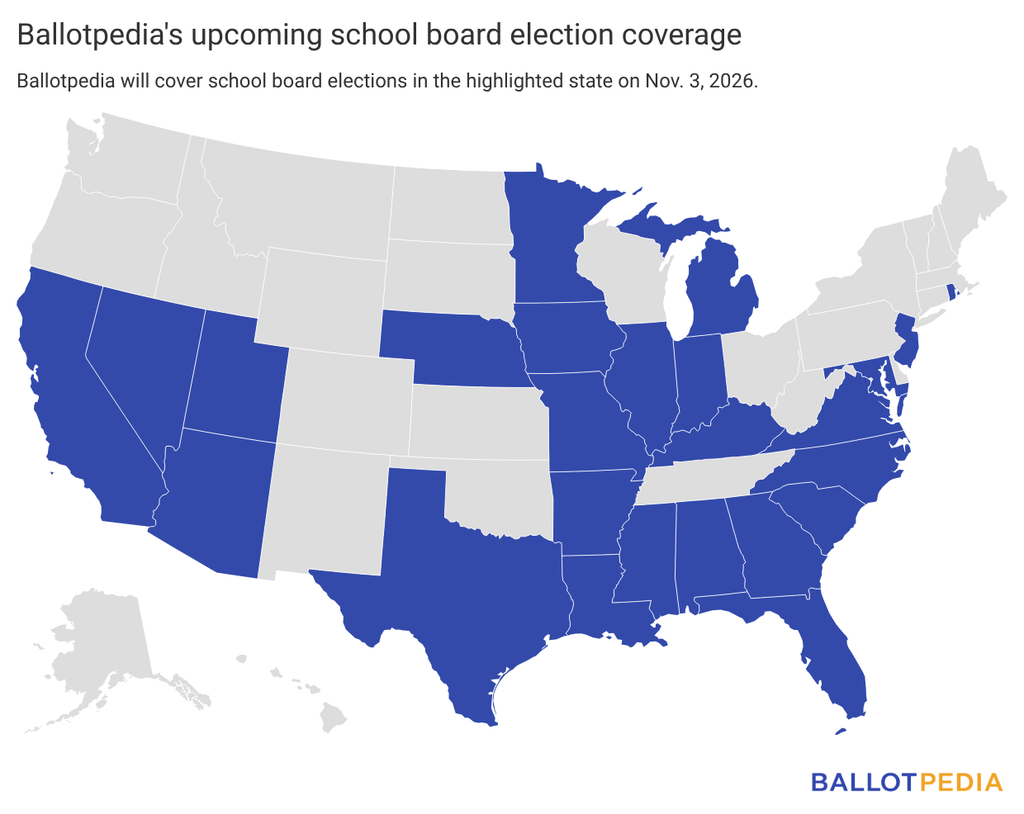
Ballotpedia will cover school board elections in 25 states on Nov. 3.
Culver City could become the 16th municipality to allow 16-year-olds to vote in local or school board elections
Over the past few weeks, we’ve spent some time in these virtual pages on the noteworthy Nov. statewide ballot measures that address K-12 education. If you missed out or want to check them out again before Election Day, click to read parts one and two.
Today, we’re going to take a quick look at a local measure in California that would lower the voting age in school board and municipal elections. This measure is one of 392 local measures Ballotpedia is covering in California on Nov. 3. Click here to see the full list.
On Nov. 3, voters in Culver City, California, will decide on a ballot measure that would allow 16- and 17-year-olds to vote in city and school district elections. If approved, Culver City would become the fourth municipality in California and the 16th nationally to allow individuals under 18 to vote in at least some local elections.
Currently, 16-year-olds in Albany, Berkeley, and Oakland are permitted to vote in school board elections. Teens 16 and older in Newark, New Jersey, are also eligible to vote in school board races. If approved, Culver City would become the fifth jurisdictions that allows some students to participate in school board races
In the Jan. 24, 2024 edition of Hall Pass, we covered the Newark City Council’s decision to allow teens 16 and older to vote in school board elections and the surrounding debate.
Sixteen-year-olds in 10 Maryland municipalities, as well as Brattleboro, Vermont, are permitted to vote in local municipal elections.
Implementation of the Culver City ballot measure would be contingent on funding and logistical systems being in place. A similar measure in 2022 was defeated, with 50.05% of voters opposing the measure.
During a city council meeting, council member Bryan Fish said, “I think this is something the city should support. We're not the first — Oakland, Berkeley, other cities across the country, Albany. It is a growing movement.”
Council member Dan O’Brien said, “I don't think 16-year-olds and 17-year-olds should be voting on issues where they are electing people who are going to choose how our money is spent, or they're voting on measures that involve taxes.”
The 26th Amendment to the United States Constitution, ratified in 1971, lowered the minimum voting age in the U.S. from 21 to 18. The 26th Amendment does not block jurisdictions from allowing individuals to vote in some or all local elections before the age of 18, though some states may have constitutions or laws prohibiting such a move.
Seventeen-year-olds in 22 states and the District of Columbia are also permitted to vote in state, congressional, and presidential primaries if they will be 18 by the subsequent general election. In two other states, these voters can vote in Democratic presidential primaries or caucuses.
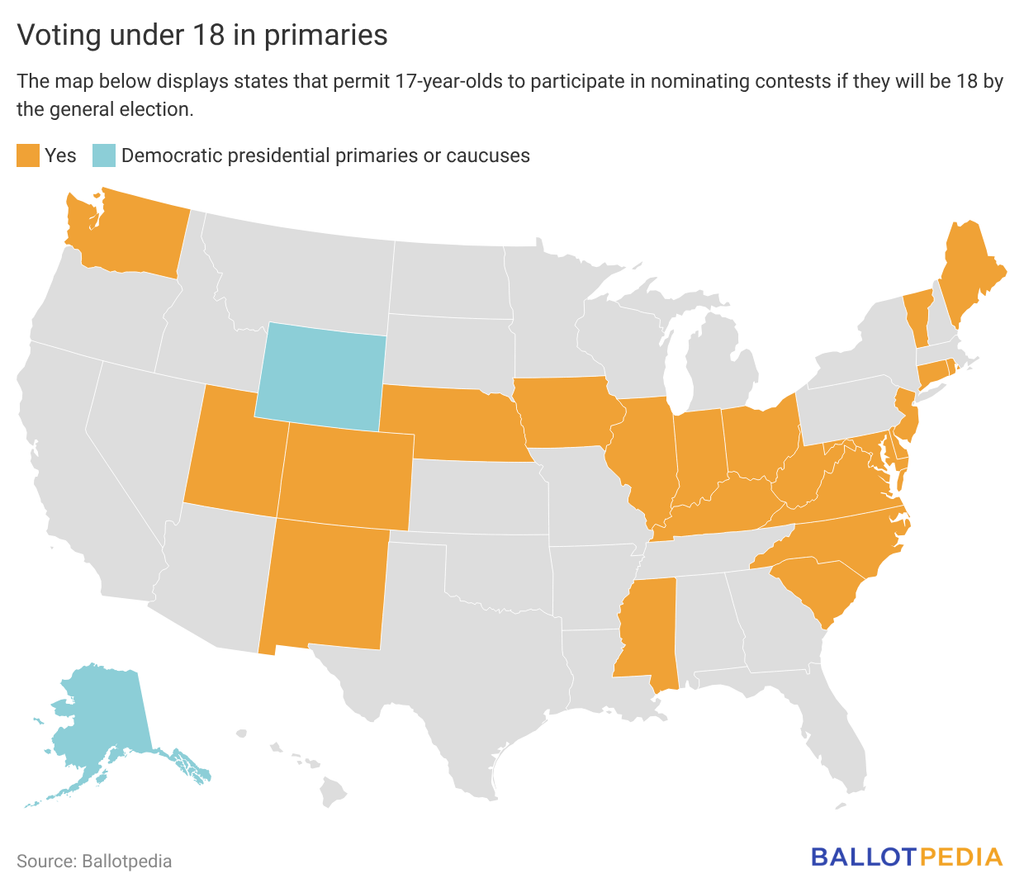
Laws in several of these states either require these voters to use a special ballot or prohibit them from voting on certain parts of a primary ballot, such as a public question or ballot measure.
Click here to learn more about the laws around voting under 18.
North Carolina school board adopts policy preventing schools from blocking teachers union representatives from visiting campuses
On Oct. 6 in North Carolina, the Wake County Public School System school board voted 8-0 to adopt a policy allowing professional organizations, such as teachers unions, to meet with teachers on school grounds. The policy requires that these representatives follow general visitation rules, which place restrictions on when and where guests can meet with teachers.
The Wake County Public School System is the largest district in North Carolina, with roughly 161,500 students.
Why it matters: The board adopted the policy because members had heard from teachers that principals weren’t allowing representatives from the North Carolina Association of Educators (NCAE), the state’s largest teachers union, to enter schools.
- The new policy allows employee association representatives to enter campus and speak with members before and after the school day, as well as during breaks and lunch periods. Association representatives can also ask to be present on campuses during new back-to-school events and other gatherings.
- The board expedited the approval of the policy. Normally, the board adopts policies following votes made during two consecutive meetings, but members voted to waive that requirement and adopted the policy following one vote. Board member Christina Gordon, who works for the NCAE, recused herself from the vote.
Go deeper: State law requires that “all education employee associations have equal access to employees at schools and that schools not favor nor endorse an education employee association.” Schools could choose to allow all groups access to their campuses or none.
- Board member Chris Heagarty said, “We've had a policy in practice for access for years. This year it seems like there's been a different enforcement, which is why these changes were needed.”
What they're saying:
- Board member Wing Ng said: “It will allow more of our educators to see that there are options, there are choices. You don’t have to belong to any organization. You can belong to the organization that fits your values, your priorities.”
- Becky Lew-Hobbs, the president of the county’s Moms for Liberty chapter, said: “Are you really going to give equal access to all the educational associations? Or is this just a way to give NCAE à la carte access to all the schools and continue to intimidate and bully staff who are conservative and don’t ally with their political agenda?”
By the numbers: The number of North Carolina teachers who were members of employee associations declined from 49% in 2008 to 21% in 2021.
State of play: North Carolina state law prohibits public employees, including teachers, from engaging in collective bargaining with districts.
- Teachers in the Tar Heel State have several employee associations from which to choose, including the Carolina Teachers Alliance (CTA). The CTA was formed in 2021 as an alternative to the NCAE, which organizers said supported the teaching of subjects like Critical Race Theory.
- North Carolina has a divided government. Republicans control both chambers of the state legislature while Democrats control the governor’s mansion.
Zooming out: Laws in other states, including those with both Republican- and Democratic-controlled governments, allow employee associations to interact with members at specified times on school grounds. Examples include:
- Oklahoma (Republican trifecta): “No school district, employee of a school district, or employee organization shall deny by any means, including a collective bargaining agreement, a statewide professional educators’ association equal access to employees of the school district, to the same extent that access is granted to other educators’ associations.” The law specifies that access includes posting information on school district bulletin boards and using district meeting rooms during nonworking hours.
- California (Democratic trifecta): “Employee organizations shall have the right of access at reasonable times to areas in which employees work, the right to use institutional bulletin boards, mailboxes, and other means of communication, subject to reasonable regulation, and the right to use institutional facilities at reasonable times for the purpose of meetings concerned with the exercise of the rights guaranteed by this chapter.”
Extracurricular: education news from around the web
This section contains links to recent education-related articles from around the internet.
- Set up for success or destined to fail? Oregon’s accountability plan is latest test for a long-struggling schools system | OPB
- Education Savings Accounts: Boon or Boondoggle? | Education Next
- Blue state taxpayers are funding red state scholarships — and their governors don’t care | Washington Examiner
- What the Trump administration’s recent guidance on school discipline gets wrong | Brookings
- New York opts into national school choice program | K-12 Dive
- Public schools without boundaries 2026: Ranking every state’s K-12 open enrollment policies | Reason Foundation
- Margaret Spellings and Arne Duncan: The Ed. Agenda We Can Agree On | Education Week
Take our Candidate Connection survey to reach voters in your district

Today, we’re looking at survey responses from Tricia Mitchell Kim and Jessica Neufeld, two of the three candidates running in the Nov. 3 general election to represent District 4 on the Austin Independent School District school board, in Texas.
Edward Bradfield is also running in the race, but had not completed the survey as of this writing.
Five of the nine seats on the board are up for election this year. The Austin Independent School District is the ninth largest in the state, with roughly 72,000 students.
As a reminder, if you're a school board candidate or incumbent planning to run this year, click here to take the survey. If you complete the survey, your answers will appear in your Ballotpedia profile. Your responses will also appear in our sample ballot. If there is an election in your community, share the link with your candidates and urge them to take the survey!
Mitchell Kim’s career experience includes working as a healthcare executive. Here’s how she answered the question, “What are the main points you want voters to remember about your goals for your time in office?”

- “My highest priority is to provide strong leadership so Austin ISD can retain local control, instead of being taken over by the Texas Education Agency. I am a high-level communicator and problem analyst, with an uncommon capacity for both analytical and emotional material. I can tolerate and support many different ways of seeing our district. I am very data driven and thorough, yet comfortable with uncertainty. I understand that a big part of a trustee's role at this time is to hold space for our community's grief. This is not going to be a fun job, because we have many hard decisions ahead of us.
- I am committed to student success on every campus. My knowledge of improvement processes will help me to support the systems already in place and deepen conversations about how AISD can replicate their successes.
- I am an MBA who comes from union people. Thinking about workers and how business decisions impact workers is integral to my work and world view. I am very concerned about the impact that necessary budget cuts will have on the front-line staff who are being asked to perform a harder job, with more students and less planning time, than ever.”
Click here to read Mitchell Kim’s other survey responses.
Neufield’s career experience includes working as an attorney. Here’s how she answered the question, “What are the main points you want voters to remember about your goals for your time in office?”

- “We cannot keep being surprised by our own district. Last year's budget shortfall arrived too late for anyone to do anything about it. I want the budget built with community input early, and regular reporting to the board on a detailed, line-by-line version, so problems surface while there is still time to fix them. The same goes for bond construction, closed campus properties, and academic growth: define the process, set the metrics, report on a real cadence. That is how you catch issues early, and how a community comes to trust what it is told.
- My top priority is building trust between the district and the community, and among school communities that have been set against one another. That means supporting campuses and improving collaboration between campuses and central office. It means listening to teachers, principals, and staff about curriculum, planning time, and professional development, and actually meeting those needs. Through ATX116 I have spent two years building relationships across the district for exactly this reason. Pride and trust drive investment, investment drives engagement, and engagement is what makes a district thrive.
- AISD is at real risk of a state takeover. In other Texas districts, this has meant an appointed board of managers replacing elected trustees, which removes the community's voice from decisions about our kids' schools. The broader challenge is a concerted effort to dismantle and then privatize Texas public education through underfunding, vouchers, charter expansion, and takeovers. We meet it by holding the district accountable to our shared vision while pushing for a state system that resourced our schools rather than hamstringing them. If a takeover comes, an elected trustee becomes organizer, watchdog, and advocate. I am not waiting to be elected to fight back against a takeover. In October of last year, I spoke at a rally against the harm”
Click here to read the rest of Neufield’s responses.