


In 2026, 164 statewide ballot measures were certified for the ballot in 40 states. The average FKGL for ballot titles, also known as ballot questions, was 17, which corresponds with a first-year graduate student. The average FRE for ballot titles was 18.
The ballot language for the 164 statewide ballot measures in 40 states in 2026 is written at an average reading level equivalent to 17 years of education, which corresponds to a first-year graduate student reading level. This is a decrease from 2025, when the average reached 21 years of education—the highest since Ballotpedia began tracking the data in 2017.
Ballotpedia's readability report offers insights into the educational level voters might need to comprehend statewide ballot measure titles and summaries.
Using the Flesch-Kincaid Grade Level (FKGL) and Flesch Reading Ease (FRE), the report measures how accessible these texts are based on objective factors, such as the number of syllables, words, and sentences in a text. It's important to note that these scores focus solely on language structure, not the complexity of the ideas themselves.
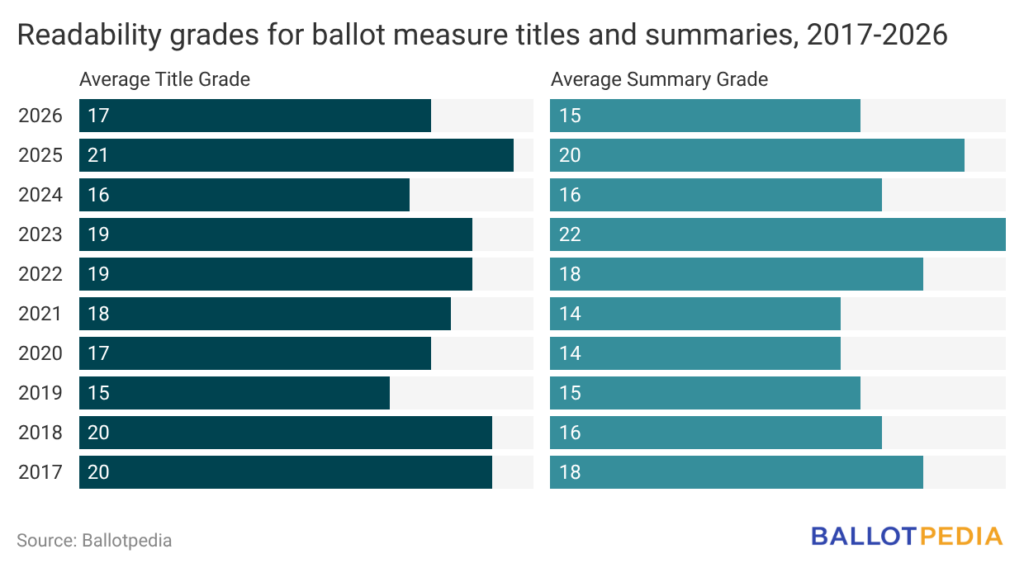
From 2017 through 2026, the annual average ballot title grade level ranged from 15 in 2019 to 21 in 2025. The average of the 10 annual scores was 18.2. The 2026 score of 17 was 1.2 grade levels below that average and four grade levels below the 2025 peak. It tied with 2020 for the third-lowest score during the period, above 2019 and 2024.
Below are some highlights from the annual report, which is available here.
Since 2017, Ballotpedia has tracked the readability scores of statewide ballot measures. The following table shows the average ballot title grade, word counts, summary grade, and the number of measures for each year. The year with the lowest ballot title grade was 2019, with 15, and the year with the highest was 2025, with 21.
In 2026, the states with the lowest average grade level for a ballot title or question were Kentucky, Massachusetts, and Tennessee, with a score of 10 years of education. The highest average score was 33 in Colorado, which had 14 measures on the ballot. The average number of words in a ballot title was 81, ranging from nine words in Alaska to 598 in Kansas.
The difference in average grade levels between citizen-initiated measures and legislatively referred measures was one year, with initiatives having an average of 18 years of education and referrals having an average of 17 years. The difference between constitutional and statutory measures was two years, with constitutional amendments averaging 18 years and statutes averaging 16 years.
Since ballot measures often consist of multiple pages of legal text, each state assigns a person or group to write a shorter title for voters to read on the ballot. Those who write the ballot titles include attorneys general, secretaries of state, lieutenant governors, state boards, state legislatures, or the initiative proponents themselves. Lieutenant governors and secretaries of state had the lowest average title grade, at 13, while state boards had the highest average title grade, with a score of 29.
The following individual ballot measures had the highest or lowest grade level scores or word counts:
- The ballot measure with the highest ballot title grade level, at 48, was Colorado Amendment 83, a constitutional amendment to establish a right to hunt and fish. While no formal education level, including post-graduate, corresponds to a 48th-grade level, this indicates that the language structure is advanced or difficult, at least based on the FKGL.
- The ballot measure with the lowest ballot title grade level, with a fifth-grade reading level, was Idaho's Official State Gun Question, an advisory question to provide voter preferences on the official state gun.
- The longest ballot title, with 927 words, was Kansas Elections for Supreme Court Justices Amendment, which was defeated in August, with 61% of voters opposed. It would have amended the state constitution to authorize the election of state Supreme Court justices and abolished the existing state Supreme Court nominating commission. Kansas requires the full text of the constitutional amendment to be printed as the ballot title.
- The shortest ballot title, with five words, was Alaska Ballot Measure 3, which would amend state law to provide that "Only a person who is a citizen of the United States" may vote in any election.