


Welcome to Hall Pass, a newsletter written to keep you plugged into the conversations driving school board governance, the politics surrounding it, and education policy.
In today’s edition, you’ll find:
- On the issues: The debate over classroom technology
- School board filing deadlines, election results, and recall certifications
- Voters decided the most education-related state ballot measures since 2006
- Extracurricular: education news from around the web
- Candidate Connection survey
On the issues: The debate over classroom technology
In this section, we curate reporting, analysis, and commentary on the issues school board members deliberate when they set out to offer the best education possible in their district. Missed an issue? Click here to see the previous education debates we’ve covered.
What role should technology play in schools? Today, we consider two differing perspectives on limiting technology in the classroom.
Brian Fitzpatrick, the national research manager at the Thomas B. Fordham Institute, says that, in general, classrooms should be free of digital devices like cellphones, laptops, and tablets. Instead, Fitzpatrick says students should learn to use technology, such as AI, in dedicated computer labs. Fitzpatrick draws on research he conducted which shows that 76% of students admit to misusing technology daily, including using AI to cheat during in-class tests. Fitzpatrick says that the best studies find devices are more likely to distract students than facilitate learning, and that the costs of student access to technology outweigh the benefits. Fitzpatrick says that although classroom technology is likely a net negative for most students, he can imagine exceptions — in STEM-oriented magnet schools, for example. Fitzpatrick says decisions about classroom technology should ultimately be made at the local level.
Lina Ehroh, the senior director of communications at the Overdeck Family Foundation, says the push to remove digital devices from the classroom, though rooted in understandable concerns, will have unintended consequences for students and teachers. The problem, Ehroh says, is that the current debate over technology too often fails to distinguish between devices and applications with no educational relevance and the tools designed to improve teaching and learning. Ehroh says technology, when used narrowly and appropriately, can help address classroom challenges, particularly staffing shortages in high-need areas. She says that, when used appropriately, education technology can provide students with individualized support, including virtual tutoring and translation and accessibility tools, and prepare them for a digital future. Ehroh says AI should never become a crutch for students, but that AI tools could help teachers spend less time on administrative tasks and more time helping students. She says that although schools have not always used technology wisely, the challenge going forward is figuring out how to harness it to improve learning outcomes.
Ditch School-Issued Laptops and Bring Back Computer Labs | Brian Fitzpatrick, The 74
“Some treat these distractions as an unfortunate downside to weigh against the benefits of access to modern classroom technology. Yet the evidence on this front is misleading. Yes, dozens of studies out there claim a benefit to universal access to laptops. But they are overwhelmingly small-scale and low-quality. The best studies to date on the impact of issuing laptops to every student are underwhelming at best and negative at worst. Our recent research isn’t a causal study and won’t settle this debate, but it reveals one pressing reason for why research on devices that provide access to almost all human knowledge is so mixed: For too many students, these devices enable distraction rather than learning.
There is nothing wrong with the computer lab or laptop cart model, where technology is treated as a tool with limited use cases, rather than a universal educational aid. But in most schools and districts, it is past time to stop handing over one-to-one devices to students. The average classroom in this country should be phone, tablet, smartwatch, and laptop free most of the time, and the easiest place to start is school-purchased tech.”
Is the Backlash Against Tech in Schools Going Too Far? | Lina Eroh, Education Week
“Many of the conditions that fueled the growth of ed tech remain today. Teachers are overwhelmed. Students continue to struggle academically, particularly in math and reading. Districts face persistent staffing shortages, especially in high-need communities, making promising interventions like high-dosage tutoring difficult to staff.
When designed to address specific problems and implemented as intended, technology can help tackle these challenges. Curriculum-aligned instructional tools can at least modestly accelerate student learning. High-dosage tutoring delivered in a hybrid or virtual setting can provide students with individualized support even when human tutors are scarce. Translation and accessibility tools can expand access for multilingual learners or students with disabilities. AI-supported assessment tools can help teachers provide more timely feedback while freeing up time for instruction and relationship-building.”
School board update: filing deadlines, election results, and recall certifications
In 2026, Ballotpedia will cover elections for more than 30,000 school board seats. We’re expanding our coverage each year with our eye on covering the country’s more than 80,000 school board seats.
Upcoming school board elections
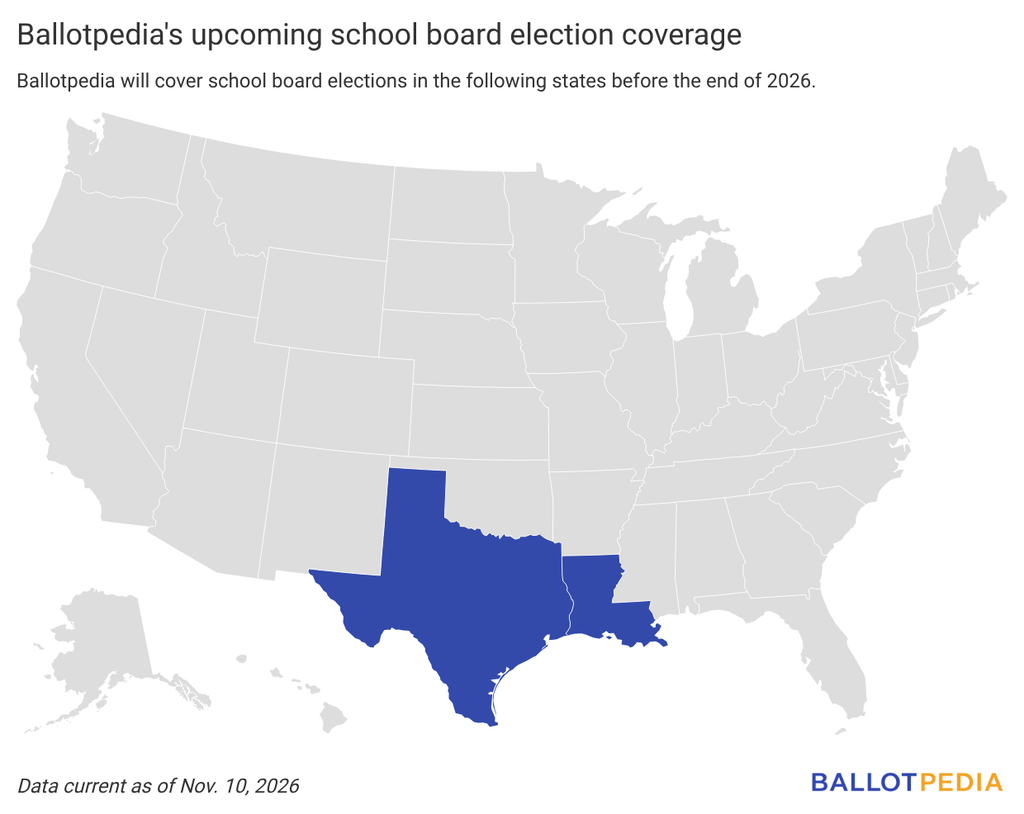
Ballotpedia will cover elections in Louisiana and Texas on Dec. 12.
Voters decided the most education-related state ballot measures since 2006
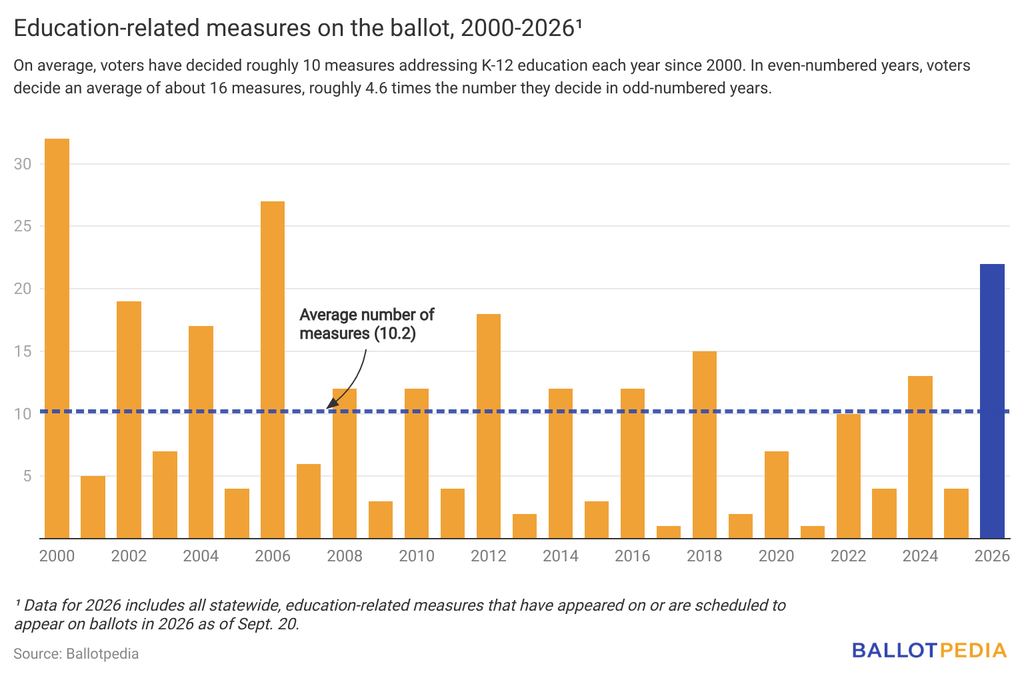
On Nov. 3, voters in 11 states weighed in directly on K-12 education, deciding 20 statewide measures that addressed athletics, free school meals, school funding, affirmative action, and more. Voters decided a total of 22 statewide education-related measures in 2026, the most in a single year since 2006. Louisiana voted on two education-related measures in May. We previewed some of the measures on the ballot this year in earlier editions of Hall Pass. Click here and here to read those previews.
Between 2000 and 2026, an average of 10 statewide education-related measures appeared on ballots each year.
This is the second part in our series on what the midterm elections mean for K-12 education. Click here to read the first installment, where we looked at elections for state superintendents and state boards of education. Here’s a rundown of Nov. 3’s noteworthy results.
Gender identity and sports participation
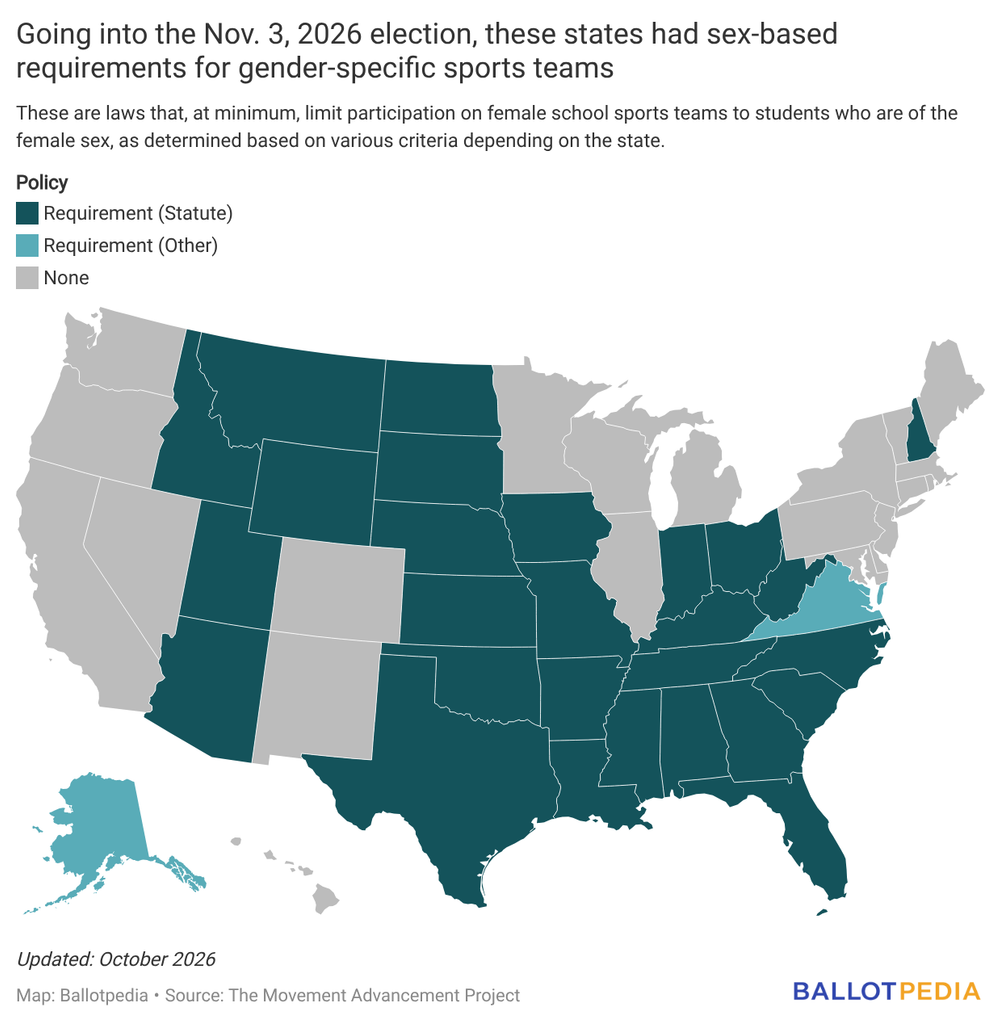
Voters in Arizona, Colorado, Nebraska, and Washington approved four measures requiring student athletes in K-12 public schools to compete in the sports category that matches their sex.
- Arizona Proposition 318: Voters approved the measure, a legislatively referred state statute, 59-41%. It prohibited schools and athletic associations from authorizing a student, athlete, employee, or other individual from using a restroom, locker room, shower room, or other private space not designated for their sex. The measure defined sex as the "biological status as male or female as recorded at birth on the individual's original birth certificate,” and prohibited girls or females from participating on sports teams that are designated for boys or males. Going into the election, Arizona had a divided government, with a Republican-controlled legislature and a Democratic governor. As a result of the election, Democrats gained a majority in both chambers of the Arizona State Legislature. Arizona will have a Democratic trifecta in 2027. Democrats gained a supermajority in both chambers of the General Assembly on Nov. 3.
- Colorado Proposition 134: Voters approved the measure, an initiated state statute, 52-48%. It required school- and association-sponsored athletic teams to be classified in one of three categories: (1) males/men/boys, (2) females/women/girls, or (3) coeducational or mixed. It provided that teams designated for females, women, or girls would not be open to male students or participants. Teams designated for males, men, or boys would not be open to female students or participants unless no corresponding female team was offered for that sport. The measure did not limit participation in teams designated as coeducational or mixed. Colorado has a Democratic trifecta. Democrats expanded their numbers in the General Assembly on Nov. 3, gaining a supermajority in both chambers.
- Nebraska Initiative Measure 442: Voters approved this measure, an initiated constitutional amendment, 68-32%. It amended Article VII of the Nebraska Constitution to require schools to "designate each athletic team or sport as one of the following based on biological sex:" male, female, or co-ed. It prohibited "athletic teams or sports designated for females, women, or girls" from being "open to students of the male sex." The requirements apply to teams sponsored by public schools and to private school teams that compete against public school teams. Nebraska has a Republican trifecta. Going into the election, Republicans had a supermajority in the unicameral Nebraska State Senate. Democrats picked up enough seats on Nov. 3 to end the supermajority.
- Washington Initiative 638: Voters approved the measure, an indirect initiated state statute, 56-44%. It required school districts and nonprofit organizations that regulate interscholastic activities to "prohibit biologically male students from competing with and against female students" in sports with separate team or individual competitions for male and female students. The ballot initiative required students seeking to participate in athletic activities designated for female students to submit documentation from their healthcare provider verifying "the student’s biological sex [based on]... reproductive anatomy, genetic makeup, or normal endogenously produced testosterone levels." Washington has a Democratic trifecta. Democrats gained a supermajority in the House on Nov. 3.
Within days of the election, the American Civil Liberties Union of Washington sued on behalf of the state teachers union and a group of families to stop Washington’s Initiative 68 from taking effect. Separately, the Seattle Public Schools school board voted unanimously to authorize litigation against the initiative. In Colorado, Gov.-elect Phil Weiser (D) said, “We’re going to have to take a look at these anti-trans measures and what adjustments are necessary and appropriate.” Because Colorado’s Proposition 134 was an initiated state statute, the General Assembly can change or repeal it with a simple majority.
The approval of the measures follows the U.S. Supreme Court’s June 2026 decision in the consolidated cases West Virginia v. B.P.J. and Little v. Hecox. In that decision, the justices ruled 6-3 that laws requiring athletes to compete in the category that matches their sex are consistent with federal law. Click here to read Hall Pass’ deep dive into the cases.
Funding
Voters in California, Colorado, Minnesota, and New Mexico approved measures that would increase funding for districts. Here’s how those elections played out.
Voters approved measures in California, Colorado, Minnesota, and New Mexico. In California, Proposition 3 indefinitely extended the top marginal tax rates on single filers earning at least $361,000 or joint filers earning at least $721,000. The initiative maintained the division of the revenue generated from the increased marginal tax, with 89% to K-12 schools and 11% to state community colleges, deposited into the Education Protection Account (EPA). Colorado voters approved Proposition NN and Amendment 87, both with implications for K-12 funding. Amendment 87 established a graduated income tax, ranging from 3.7% to 8.4%, and directed future revenue to the Colorado Future's Account, which covers K-12 public schools, healthcare, and early childcare. Proposition NN, a legislatively referred state statute, increased the revenue threshold at which the state is required to issue tax refunds under the Taxpayer’s Bill of Rights (TABOR) and directed additional revenue toward K-12 education. That includes educational programs, increasing teacher pay, reducing teacher turnover, limiting class sizes, and preparing students for the workforce.
In Minnesota, voters approved a measure that will direct more of the state’s Permanent School Fund to districts each year. Meanwhile, voters in New Mexico said yes to issuing $20 million in general obligation bonds to fund the acquisition of library resources in the state, including school libraries.
Other education-related measures
Voters in Alabama approved a measure that will require all public schools to broadcast or arrange for the performance of the first stanza of the Star-Spangled Banner at least once per week. It passed 59-41%. Alabama voters also gave their approval to a measure that requires local school boards to adopt policies mandating that every school conduct the Pledge of Allegiance at the beginning of the day and allow student-initiated and student-led prayer. That measure passed 63-37%.
Defeated measures
Voters defeated five of the 20 statewide, education-related measures on the Nov. 3 ballot. In Arizona, voters opposed Proposition 320, which would have required districts with more than 7,500 students, or school districts in counties with a population greater than 500,000, to spend at least 60% of their budget on direct instructional expenses. Proposition 320 itself did not define direct instructional expenses. The Grand Canyon State also said no to Proposition 142, an affirmative action measure that would have prohibited the state from requiring an applicant, student, or employee to endorse "promoting preferential treatment toward or discrimination against an individual or group on the basis of race or ethnicity.” The measure would have also prohibited the state from requiring enrollment in a course or training that promotes the creation of a race-based diversity, equity, and inclusion or intersectionality in modern American society. Sixty percent of voters opposed the measure, while 40% approved of it.
In North Dakota, voters defeated Measure 2, which would have required all public schools to provide one free breakfast and one free lunch to students each school day, establishing the Healthy School Meals For All (HSMFA) program in the state. The vote was 50.61% opposed and 49.39% in favor.
And in Washington, voters defeated Initiative 1, the Parental Right to Review Education Materials, Receive Notifications, and Opt Out of Sexual-Health Education Initiative. The measure would have re-enacted 2024’s Initiative 2081, which the Washington State Legislature modified through a 2025 bill. Among other things, voter approval of Initiative 1 would have restored parental notification rights for medical services provided to a child at school and reinstated original timelines and procedures for parental review of education records and classroom materials.
Click here to read more about education-related ballot measures.
Extracurricular: education news from around the web
This section contains links to recent education-related articles from around the internet.
- Are the Public Schools in Massachusetts Districts Truly Open to the Public? | The 74
- School Phone Bans Are Gradually Improving Test Scores, New Evidence Shows | The New York Times
- An Architect of the Ed. Dept.'s Dismantling Will Leave the Agency | Education Week
- Empty seats and underutilized buildings at public schools | Reason Foundation
- Artificial Intelligence and the Future of K-12 Education: What Do Parents Want? | Institute for Family Studies
- Classroom Screen Time: What Makes It Worthwhile? | EdCircuit
Take our Candidate Connection survey to reach voters in your district
Today, we’re looking at responses from Dionne Nichols-Condoll (D), who is running in a Dec. 12 school board election in Louisiana. We’re also looking at responses from Pamela Mathai, who was scheduled to run in a Dec. 12 runoff election in Texas but ended up winning after her opponent withdrew.
Nichols-Condoll (D) is running in the general election for Jefferson Parish School Board District 5, in Louisiana. Simeon Dickerson (D) is also running in the election, but had not completed the survey as of this writing. Dickerson and Nichols-Condoll advanced from the Nov. 3 primary with 44% and 35% of the vote, respectively. A third candidate, Roxanne Modica (D), received 21%.
Jefferson Parish Schools is the largest district in Louisiana, with roughly 47,000 students.
Nichols-Condoll's career experience includes working in education administration. Here’s how she answered the question, “What are the main points you want voters to remember about your goals for your time in office?”
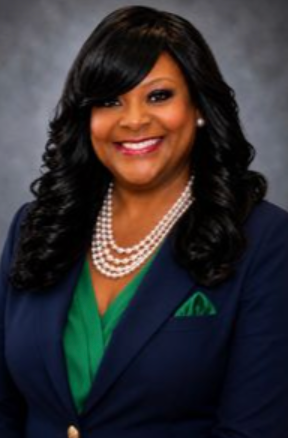
- “I bring more than 28 years of education experience, including service as a teacher, assistant principal, principal, and district-level leader. I understand how school decisions affect students, families, teachers, and school communities. District 5 deserves an experienced board member who is prepared to ask thoughtful questions and focus on results.
- Every student deserves access to a strong education and the support needed to succeed. I will advocate for early childhood education, stronger literacy outcomes, appropriate special education services, and the resources students need to learn. I will also listen to families and work to make sure their concerns are heard.
- Strong schools require support for teachers, responsible use of public funds, reliable transportation, and open communication with families. I will work for accountability and collaboration across Jefferson Parish Schools. My campaign is grounded in Access, Advocacy, and Accountability: Your Voice, My Fight.”
Click here to read the rest of Nichols-Condoll’s responses.
Pamela Mathai won her runoff election for an at-large seat on the Austin Independent School District school board after her opponent, Cynthia Soliz, withdrew. Mathai and Soliz advanced from the Nov. 3 general election with 42.9% and 42.8% of the vote, respectively. A third candidate, Kirk Becker, received 14.3%.
Austin ISD is the ninth-largest district in the state, with roughly 72,000 students.
Mathai's career experience includes working as a teacher. Here’s how she answered the question, “What areas of public policy are you personally passionate about?”
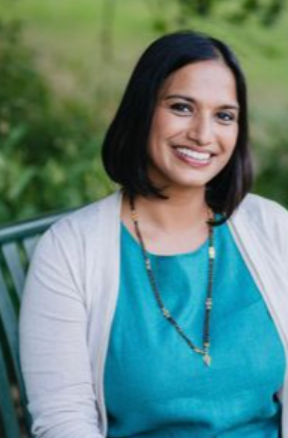
“At the legislative level, we must continue to advocate for an increased basic allotment for students to match the national average and adjust for inflation. We must also continue to fight against vouchers, tax credits, and other programs that redirect public tax dollars to private schools. As a mother to a child with special health needs, I see how unjust it is that public tax dollars go towards private schools that do not face the same accountability standards and admission requirements as public schools. We must prioritize passing legislation that ends the chronic underfunding our public schools so that all children have access to the education they deserve.”
Click here to read the rest of Mathai’s responses.
As a reminder, if you're a school board candidate or incumbent planning to run in 2027, click here to take the survey. If you complete the survey, your answers will appear in your Ballotpedia profile. Your responses will also appear in our sample ballot. If there is an election in your community, share the link with your candidates and urge them to take the survey!