


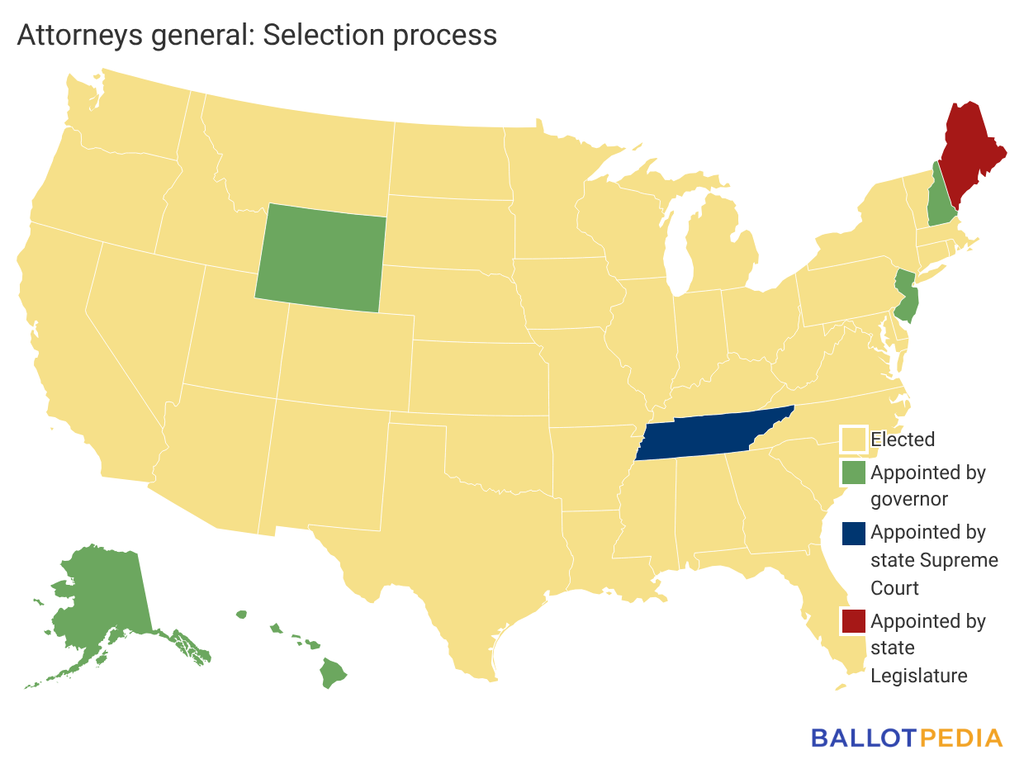
On Dec. 2, Maine will be the first state in the nation to begin its 2027 legislative session, and shortly after legislators are sworn in, they will select the state’s constitutional officers, including its attorney general. Maine is the only state in the country where legislators choose the state's attorney general. Attorneys general are directly elected in 43 states (including 30 that held elections on Nov. 3), appointed by the governor in five states, and, in Tennessee, appointed by the state’s supreme court.
This year, Anne Carney (D) and Timothy Shannon (D) are competing for the Democratic nomination to succeed term-limited Attorney General Aaron Frey (D).
Carney has served as state senator for District 29 since 2020, winning re-election on Nov. 3, 78.5% to 21.5%. Carney says, “This is a moment when Maine needs an attorney general ready to defend our constitutional rights and our state from day one.” Shannon is an attorney, former town councilor for Yarmouth, and runner-up for the position in 2018. Shannon says, “The Trump administration is a threat to our country, our state and our democracy, and it’s had a negative effect right here in Maine.”
According to the Maine Morning Star’s Emma Davis, while Carney and Shannon both said that their priorities would include opposing the Trump administration and consumer protection, the candidates described how they would approach litigation on these issues differently.
Shannon said that while he thinks multistate lawsuits are important, he also thinks Maine should focus on its own lawsuits to protect interests unique to the state. Shannon said, “That’s a more robust undertaking for the office. It’s a bigger lift, but it’s potentially a much bigger reward.”
Carney said she would consider “what is most efficient and effective” in terms of using state resources when deciding whether to join multistate lawsuits or file a lawsuit on behalf of Maine specifically.
As of Nov. 18, 95 multistate lawsuits had been filed against the second Trump administration. Click here to see how that compares to past administrations.
Before the formal vote, legislative Democrats and Republicans choose their nominees for state constitutional offices via secret ballot during caucus meetings. Both chambers of the Legislature then meet in a joint session to officially select the winners. To win the election, the top candidates must receive a majority of votes across both chambers. That amounts to at least 94 legislative votes across all 186 seats in the Legislature.
As a result of the 2026 elections, Democrats will have a 114-72 majority in the Legislature. According to specific chamber projections by State Navigate, Democrats will have a 90-61 majority in the House and a 24-11 majority in the Senate. Democrats have a supermajority in the Senate for the first time in more than 40 years.
In addition to the attorney general, the legislature also picks the secretary of state, the state treasurer, and the state auditor. Secretary of State Shenna Bellows (D) and Treasurer Joe Perry (D) are running without challengers. State Auditor Matthew Dunlap (D) will not be up until 2028.
Click here to read more about Maine’s Attorney General office and here to read more about Maine’s elections in 2026.