


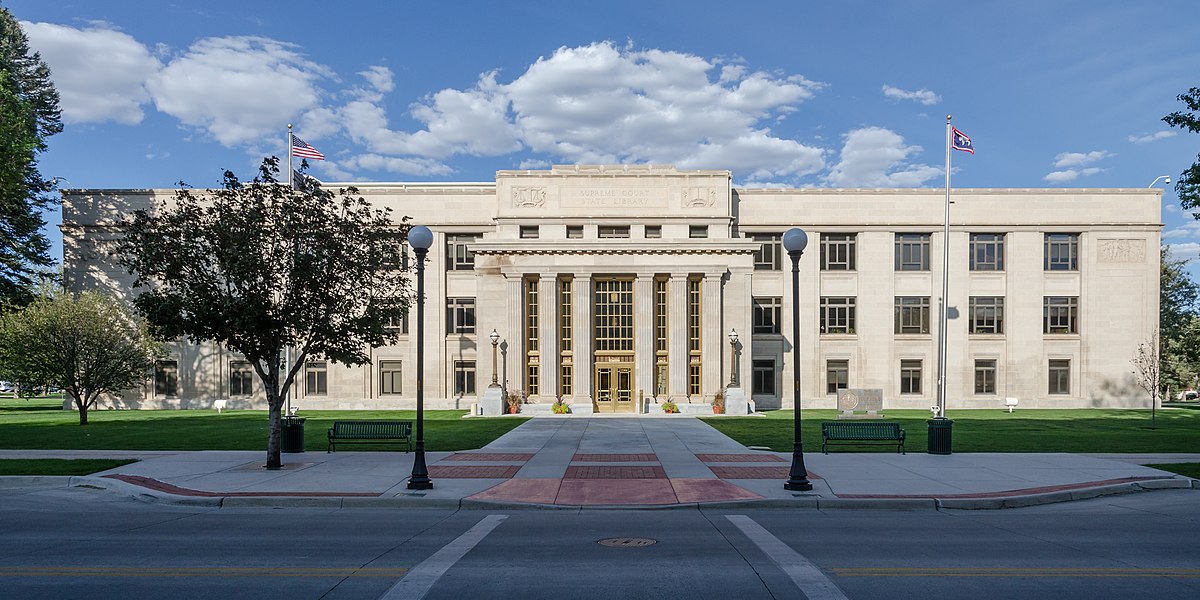
The Wyoming Supreme Court ruled on Jan. 6, 2026, that abortion constitutes a healthcare decision protected under a constitutional provision guaranteeing the right to make one’s own healthcare decisions.
On Nov. 6, 2012, voters approved Amendment A, which provided that "Each competent adult shall have the right to make his or her own health care decisions." Before the state Supreme Court, Wyoming argued that Amendment A was submitted to voters in response to the Affordable Care Act, also known as Obamacare, and did not involve discussion of abortion. The majority's opinion stated, "The record supports this assertion, and we do not disagree. However, that does not change the fact that the plain language of the amendment the voters ratified went beyond addressing concerns with the Affordable Care Act and granted '[e]ach competent adult' 'the right to make his or her own health care decisions.'"
Between 2010 and 2012, Alabama, Arizona, Ohio, and Oklahoma also passed constitutional amendments regarding the Affordable Care Act. Voters in Colorado and Florida rejected amendments. Supporters called these Healthcare Freedom Amendments. Those amendments were designed to prohibit requiring a person to participate in a healthcare system, such as a health insurance mandate. While Wyoming Amendment A addressed this concept, the proposal also established a constitutional right for adults to make their own healthcare decisions.
The Legislature passed House Bill 152 (HB 152), titled the Life is a Human Right Act, in 2023. HB 152 held that “abortion as defined in this act is not health care. Instead of being health care, abortion is the intentional termination of the life of an unborn baby.” HB 152 prohibited persons from performing abortions, with exceptions. The majority's opinion stated that a statute does not and cannot define the scope of constitutional rights.
Chief Justice Lynne Boomgaarden wrote the majority's opinion, which said, "The State did not meet its burden of proving the Abortion Laws are necessary to achieve a compelling government interest or are narrowly tailored to avoid unduly infringing on a woman’s right to make her own health care decisions."
Justice Kari Gray dissented. She agreed that abortion is healthcare under Amendment A. However, Amendment A also allowed for reasonable and necessary restrictions on these rights "to protect the health and general welfare of the people or to accomplish the other purposes set forth in the Wyoming Constitution." She wrote that the state's abortion laws are a reasonable and necessary restriction "on the right of a pregnant woman to make her own health care decisions for the purpose of preserving prenatal life at all stages of development."
Gov. Mark Gordon (R) responded to the court's ruling, saying, "This ruling may settle, for now, a legal question, but it does not settle the moral one, nor does it reflect where many Wyoming citizens stand, including myself. It is time for this issue to go before the people for a vote, and I believe it should go before them this fall. A constitutional amendment taken to the people of Wyoming would trump any and all judicial decisions."
A two-thirds vote is required during one legislative session for the Wyoming State Legislature to place a constitutional amendment on the ballot. That amounts to a minimum of 42 votes in the Wyoming House of Representatives and 21 votes in the Wyoming State Senate, assuming no vacancies. Republicans hold 56 of 60 seats in the House, and 29 of 31 seats in the Senate. The state legislature is expected to convene on Feb. 9, 2026.