


Voters in Montpelier, Vermont, will decide on 12 measures on the Town Meeting Day ballot on March 3, including a measure that would advise the mayor and city council to adopt a pledge to "join others in working to end all support to Israel's apartheid regime, settler colonialism, and military occupation."
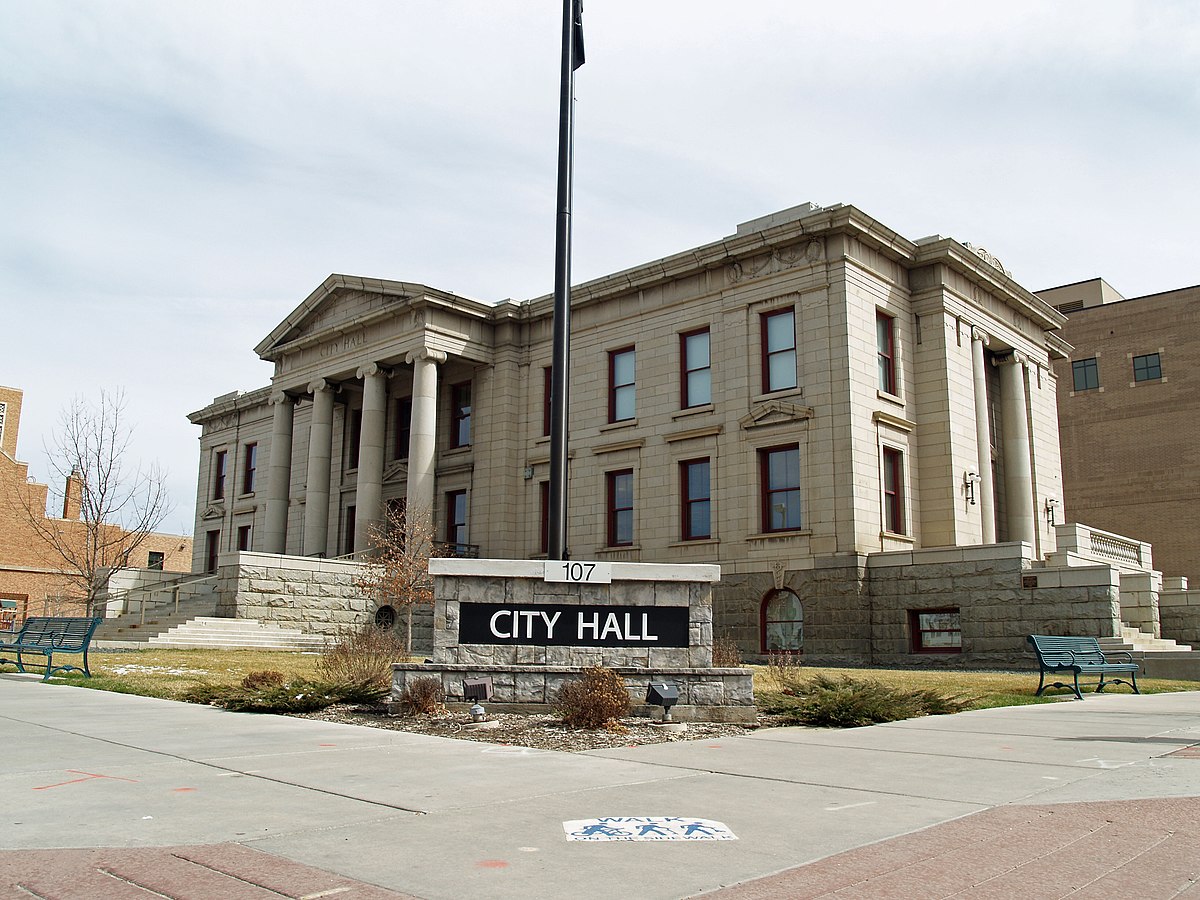
Town Meeting Day is held at Montpelier City Hall on the first Tuesday of March. Polls are open from 7:00 a.m. to 7:00 p.m. Vermont law makes Town Meeting Day a holiday for employees of the state and allows other employees in the state to take unpaid time off to attend.
At the Town Meeting, voters elect local officials and cast votes on ballot measures concerning the city budget and other policy issues.
One of the measures, Article 12, would advise the mayor and city council to adopt a pledge that:
- affirms "a commitment to freedom, justice, and equality for the Palestinian people and all people;"
- opposes "all forms of racism, bigotry, discrimination, and oppression;"
- declares Montpelier an apartheid-free community; and
- pledges "to join others in working to end all support to Israel's apartheid regime, settler colonialism, and military occupation."
Montpelier residents voted on a similar measure in 2025, when it was defeated by about 57%. Four other municipalities in Vermont also weighed in on this issue in 2025, with three approving the measure and one rejecting it.
Another measure, Article 1, would provide for electing the following officials:
- a mayor for a term of two years;
- one council member each from districts one, two, and three for two-year terms;
- one commissioner for the Green Mount Cemetery for a five-year term;
- one commissioner for the Green Mount Cemetery for a term of one year to complete a five-year term;
- one commissioner for the Green Mount Cemetery for a term of four years to complete a five-year term; and
- one parks commissioner for a term of five years.
Additionally, Article 11 would modify tax stabilization contracts between the city and businesses to:
- establish a time limit of ten years for the contracts;
- establish contract valuations may be from zero percent to one hundred percent (0% to 100%) of the valuation of the real or personal property additions and/or renovations which would otherwise be fixed on such property in the year the contract takes effect;
- establish that contracts apply only to real or personal property additions and/or renovations whose assessed valuation exceeds $25,000;
- require contracts to go through two public hearings by the city council before final approval; and
- establish that the valuation fixed by contract be redetermined at the contract ratio upon general reappraisal.
Two measures, Article 3 and Article 4, would provide for the compensation of the mayor and city council members, respectively:
- $4,080 for the mayor
- $2,040 for each council member, for a total of $12,240
The remaining seven measures will appropriate funds for various projects:
- Article 2: Appropriates $13,287,636 for the payment of debts and expenses of the city from the city charter;
- Article 5: Levies a special assessment to raise $62,000 in property taxes for buildings in the downtown area for the improvement of the downtown streetscape;
- Article 6: Issues $8 million in bonds for the purpose of constructing water and wastewater system improvements;
- Article 7: Appropriates $138,175 to the Montpelier Community Fund for non-profit organizations and individual artists;
- Article 8: Appropriates $480,504 for the Kellogg-Hubbard Library, a free, nonprofit library that serves Berlin, Calais, East Montpelier, Middlesex, Montpelier, and Worcester;
- Article 9: Appropriates $3,750 for the Mosaic Vermont, a nonprofit organization that supports victims of sexual violence; and
- Article 10: Authorizes $23,500 in expenditures for Central Vermont Home Health & Hospice.
In 2025, voters in Montpelier approved 13 out of 14 Town Meeting measures. In 2024, voters approved 10 of 11 Town Meeting measures. In 2023, voters approved 15 measures.
In 2026, Ballotpedia is covering local ballot measures that appear on the ballot for voters within the 100 largest cities in the U.S., within state capitals, and throughout California. You can review the coverage scope of the local ballot measures project here. Ballotpedia also covers electoral system-related ballot measures, like ranked-choice voting, outside of the largest cities.